

![Hedonism: Brainwashing the Children [Planned Obsolescence Part 3 by Agent131711]](https://dropinblog.net/cdn-cgi/image/fit=scale-down,format=auto,width=700/34264201/files/featured/hedonism-brainwashing-children.png)

I showed you the conspiracy to make us pay no less than three times for every item. I then showed you another conspiracy to make us volunteer to pay additional times. Now what if I said there was yet another plot to make children addicted to spending money? So addicted that, with the aid of their parents, they will forever live in debt?...
This is a series; be sure to READ PART 1 first! Click here to read part 1.
When I was in high school, we didn’t have cell phones, but pagers were becoming a thing. Most of my friends didn’t have a computer in their house. Because the internet wasn’t mainstream yet, MTV and magazines were a major source of news as well as a pastime for a large portion of teens. MTV was off-limits for me because my mom said it was garbage, but it was on our television because my dad loved sports, and MTV came with the cable package, so there was no way they could get rid of it without also getting rid of Dad’s sports. That in itself is interesting, isn’t it? Dad can have sports, but you will also take this Freemasonic trash for your kid. So, as a child, I was ordered to never look at that channel, which obviously meant every time my parents left the house, I would run to the TV and see what was forbidden. Now, looking back, I can clearly see that not only was it garbage, but it was garbage that had an immense impact on my generation, the 1990s youth, especially the ones who were openly allowed to watch it.
One show that came out right after I graduated was MTV Cribs.
This show, although about the houses of celebrities, covertly encouraged pissing away money by overspending it on expensive brands: buy a $5,000 watch because your favorite musician owns a collection of them. Only wear designer shirts and jeans, and, of course, you gotta have the flashy car because Master P and DMX would never drive a Ford Focus.

What I didn’t know was that, decades before MTV went on the air, there was a nationwide scheme targeting teens because it was discovered that young people were the new market for hedonism. An executive for McCann-Erickson, an advertising agency, said back in 1965 that he would drive past a schoolyard filled with children and see them not as people but as “happy little dollar signs.”
Soon, the toy market was booming to the tune of a billion and a half dollars every year. During the Christmas season in December, each day, toy stores in the US were ringing up six million dollars worth of toys every hour. At this time, every child accounted for 20 dollars worth of toys, equal to 171 dollars in today’s currency value.
By 1970, those happy little dollar signs had become big business, and by big business I mean a 20 billion dollar a year market. Each teen in America could be counted on to spend at least 400 dollars annually, and it was a war for their money, or, more appropriately, their parents money. $400 might not sound like much, but this was 50 years ago. 400 dollars back then is worth nearly three-and-a-half thousand today—and this is per year, per child.
Back then, one advertising network urged its ad executives to “Get them at the get age,” and Seventeen magazine knew precisely what that meant. The mag emphasized that its readers were at the age where they were forming buying habits. This was the time to pounce. They knew these not-yet-legal individuals were more impulsive, unskilled, and manipulatable than their parents. A new firm, Teenage Public Relations, Inc., emerged to guide advertisers into the teenage market. Teen magazine established the Teen Customer Testing Board, which was designed to help advertisers lure these youngsters into buying products. And just like that, more and more young people products started rushing to market: teen deodorants, breast developer hormone supplements, hair dyes, pimple removers—the list goes on and on—all products that young people the decade prior didn’t need, but this new generation required. For the first time ever, kids were asking for leather parkas and socks to match their new outfits, and parents saw this as meeting the child’s needs to keep them happy.
Much emphasis began being put on the size of young girls breasts. Sadly, the target of this campaign was girls aged 10. Those who did not develop quickly were shamed and skillfully manipulated into having inferiority complexes. This allowed for “training bras” to be pointlessly sold to flat-chested girls. Some of these bras offered padding to artificially increase the cup size of the child.
No sooner than the 10-year-old market was flooded with unnecessary bras, the advertisers targeted 9-year-olds. Is this not horrifically evil? Could you imagine telling your 9-year-old son he needs to stuff a sock in his underwear because his apparatus is too tiny? Imagine the long-term psychological harm!
Decades ago, Life Magazine conducted a survey in which it discovered that American teenagers surrounded themselves with, quote, “a fantastic array of garish and often expensive baubles and amusements.” This junk included 20 million dollars worth of lipstick (equal to 170 million in today’s currency value). Shopping had gone from something that was done out of necessity to a pastime. Cigarettes were pushed on the youth, and the smoking industry, which was dying due to the cancer scare, was rapidly rebounding. The coffee industry promoted itself by providing useful teen magazine content, which was always accompanied by a coffee recipe. Then something happened…
The credit card market realized it had found the ultimate consumer: junior credit cards. The card companies targeted children as young as 14. These companies knew if they could get kids in the habit of buying on credit, which is debt, they would forever repeat the same. The president of New York’s Bowery Savings Bank said that teaching the young to spend on credit was “something like teaching the young to use narcotics.”
A booklet was created by an association of finance companies working in conjunction with a national association of school officials. This book was called Using Consumer Credit. It was widely distributed in the American school system.
This push to charge everything was run in conjunction with the age of marriage being driven down. You see, prior to this point in time, a man would establish himself as a provider, then he would be carefully selected by a woman who wanted to make sure Dad would always be around to care for the family. She knew it was her role to stay home and raise all of the children while keeping the house tidy. She knew she would await his daily return from work with dinner already on the table, but in exchange for her lifelong dedication to her husband, it was mandatory that the man she selected was capable of upholding his role.
After she selected him, the man would then seek the parents blessing. The parents would ensure he can care for their daughter as well as they have, and the couple would move forward with being wed. But now times were changing. People as young as 18 were being wed—people with no job security, no real skills, and no way to truly support themselves, and often without the parents approval. And these young people had been brought up to spend, spend, spend. A shiny new home, a nice car, expensive clothing, lipstick that matched nail polish, and the seated lawn mower—and all this money had to come from somewhere. That somewhere was either debt or the parents.
Now let’s skip ahead to my generation. When I was in high school, we had lots of free things we could do. A large group of us would go skateboarding behind businesses. It seemed few minded as long as we behaved. We would bring paintball guns to school, leave them in the car, then after school go play paintball in the woods until dusk. Aside from the cost of the skateboard, the paintball gun, and paintballs, the activities were free and unknowingly gave us five-plus hours of exercise. Because we didn’t have cell phones, we would hang out at friends’ houses and talk. And speaking of that, because we didn’t have cell phones, the way you found out if your friend was home was by showing up at their house. This wasn’t seen as rude; you just knocked on their door. If you interrupted dinner, their family invited you to grab a plate.
Fast forward to today: skateboarding has been restricted to a skateboard park that is small and dominated by kids who are good at skating, thus intimidating beginners. I sure wouldn’t have wanted to go there to learn the ropes. Plus, the place is monitored, so there is no being silly; it is strictly skate-and-leave. If you dare skate behind a Walmart, security will quickly throw you off the property.
The areas we used to play paintball in have become neighborhoods. The other local woods are now pretty much off-limits, and these days, if a group of teens were caught running around in the woods with paintball guns, police wouldn’t hesitate to arrest them. Of course, there are now places you can pay to paintball, but this costs money.
My point is that there is nothing free left for a teen to do, so unless they are involved in team sports (which also costs money), they turn to the computer. When they leave the house, the cash register starts ringing. They stop to get something to eat and then go shopping. Perhaps hit the movie theater. What really woke me up to this was a few years back when my son said he and his friends didn’t know what to do. I said, “Go have a bonfire in our backyard.” His reply was what got me. He said, “But what do we do after we light the fire?” I threw my hands in the air and said, “Talk! You talk!” The idea of a group of kids sitting by the fire and talking dumbfounded him. This was the precise moment that how much times had changed hit me. I don’t know why, but I never truly saw it before.
So we arranged the bonfire. As expected, a little before dusk on a beautiful Saturday evening, a group of young men and women showed up, many of whom I had never seen before. The spouse and I decided we would make a nice meal for them. But these kids, instead of going outside and enjoying each other’s company, were all standing in our kitchen as we were trying to cook. We had to usher them outside. I didn’t realize it then, but it hit me while writing this, that teens have become so unfamiliar with the outdoors that it was more natural to stand in a kitchen!
After only three hours, the group dispersed so that they could all go to their houses, hop on their computers, and play a multiplayer video game together. Tragic, isn’t it? I then enjoyed their fire on that beautiful weekend evening.
My son regularly attempts to organize a mini drop-in soccer game with his friends but runs into the issue that there is nowhere to play. The good fields are exclusively for schools and teams. They do sneak onto the fields, but good grief, why do people have to sneak onto these fields to use them for their intended purpose and nothing more?! Taxes fund these places, which my child and his friends cannot use. The few decent park fields are always taken up. The city clearly knows there are more people interested in the fields than the number of fields, so how hard would it be to simply cut the grass at some of these abandoned schools and throw a couple nets in there? Instead of doing that, they have been taking away the nets and basketball hoops from the abandoned schools to ensure that nobody can enjoy them. How much harm is done by leaving basketball nets accessible so people can throw some hoops?
I have reached the point where I don’t even know what to suggest my child do for fun because everything costs money, and what is free is unavailable. Even our local lakes cost money to access.
Spending time with friends is no longer “just show up and knock.” Everything has become so scheduled that you now have to text them in advance to find out if they want to do something and then pick a time. It’s all just so sad, isn’t it? And when there is nothing to do, it forces kids back to their electronics because there is always something to do on the internet.
Imagine growing up where your human interaction is primarily through a computer screen or headset, and it is through these games that children are not only monitored and brainwashed, but they are sold products! Buy a booster pack; pay for an armor upgrade; this new skin is only available today; mystery boxes are on sale for $2.99.
To get back to the topic of marketers, children, and hedonism.
As you already know, this campaign began rolling out in the 1950s and was gaining steam in the 1960s. Much emphasis was put on the clothing the child wore, which was ultimately the clothing the parents bought, unless the child worked a part-time job, and, back then, there was such a thing as entry-level positions, and they did hire kids, so buying your own clothing in high school was not uncommon.
Most of you can probably relate to this: When I was in high school in the 1990s, you were expected to dress like the clique you hung out with. If you were a jock, you needed the letterman. Preps needed polos and skinny jeans. If you were goth, you wore black from top to bottom and painted your nails to match, and don’t forget the eyeliner. The popular girls wore the magazine clothes and jewelry and always had their hair and makeup done. If you were a skater, you also needed to dress the part because you couldn’t enjoy skateboarding unless you were wearing logo tees featuring skateboard brands and jeans with legs so wide you could fit two people in them.
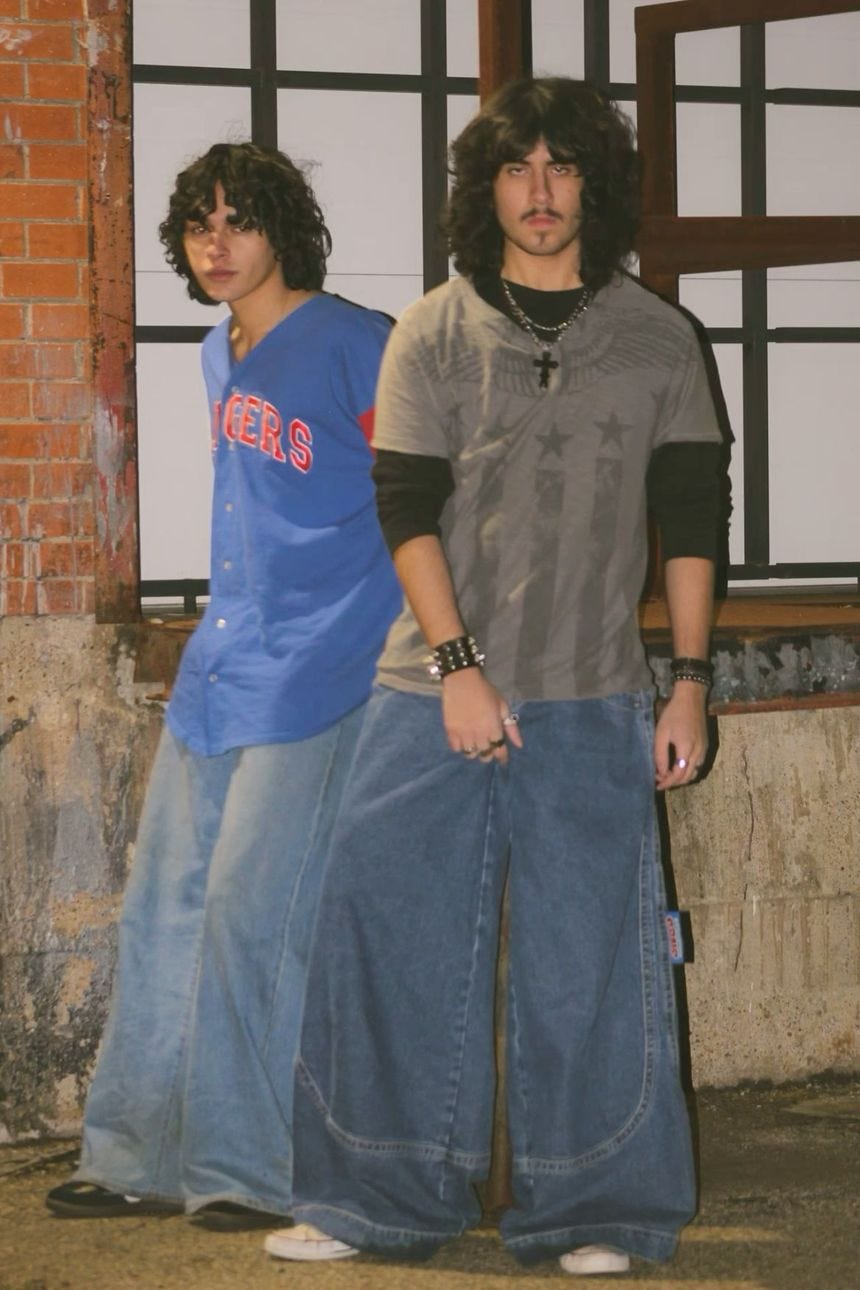
If you were with the gangster clique, you needed to imitate Jay-Z, Tupac, or Notorious B.I.G., and by imitate, I mean mimic the outrageous behavior shown on MTV and in magazines. Since you couldn’t afford a gold chain, you had to buy a fake one, even two or three, depending on the trend that year—and don’t forget the massive charm. For fuck’s sake, you absolutely must have a giant pendant weighing down your neck.

There wasn’t any place for a five-dollar tee shirt kid and should you be that kid, the other children knew to shun you for no other reason than your clothing.
Let’s loop back to MTV Cribs: is it happenstance that, in the year 2000, MTV released a show targeting young, impressionable teens that showed us lifestyles of overindulgence? Houses with twelve bedrooms, each with its own bathroom, seven high-end cars in the driveway, and rappers who now had ridiculous gold chains encrusted in diamonds.
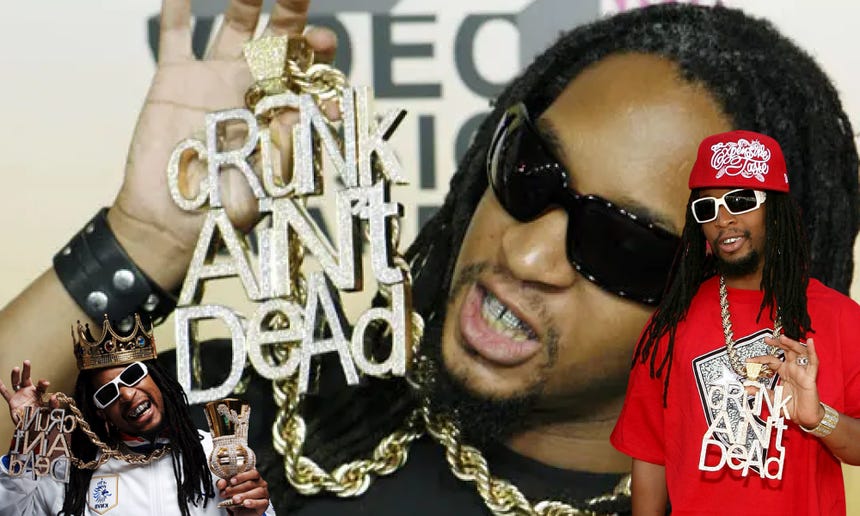
All exactly as the marketing executives planned back in the 1950s. What a brilliant scheme—now that adults were already buying expensive doubles and paying at least three times over because they are manufactured to fail, target children who are at the age of working their first job. Convince them that what they need, more than anything else in life, is a Louis Vuitton belt. Tell them a belt from JC Penney is an embarrassment. The children are taught to idolize the celebrities and, unrealistically, want to imitate them. A child, making minimum wage, begins saving for a ridiculously priced garment that is no different from a lesser-priced version of the same, aside from a logo.
And by the way, it turns out that the vast majority of the jewelry those celebrities wear isn’t real, meaning it’s not actually theirs. It is often loaned to them from jewelers in exchange for the free advertising when they wear it. Same with the clothing. It is mailed to them by designers because the designers know if Snoop Dogg was photographed wearing their trucker hat, the youth and young adults of the country would beg their parents for it or rush to buy it themselves. That is how influential the media is.
The icing on the cake of lies is that many (most?) of the cars shown on MTV Cribs were not the celebrities actual cars. They would rent high-end vehicles for the taping of the episode—but the deception is even worse than that. Those mega mansions, with some exceptions, weren’t their real homes either. The celebs were directed by MTV to rent those too. If this sounds unbelievable, let me give you a few examples of the outright deception.
Ja Rule rented a mansion for his appearance, and its owner later sued him for making a huge mess and allowing a film crew into a place he didn’t actually own.
Bow Wow, who would in later years keep pretending to be richer than he is, claimed he owned a bunch of nice cars that were actually branded with the name of a Miami luxury car rental service.
Robbie Williams borrowed Jane Seymour’s house for his segment.
50 Cent rented the fancy cars he showed off during his appearance, even though he was already very rich when he appeared on the show.
JoJo, the 13-year-old early 2000s pop star, was actually living in hotels when her segment was shot and pretended her uncle’s house was her own.
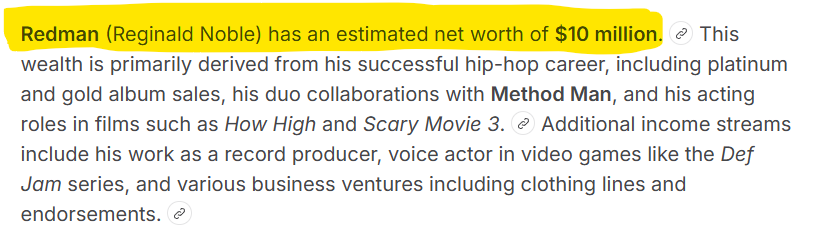
Rapper Redman was one of the few participants in MTV Cribs who refused to rent a house for his taping, so when he showed his home, the world saw that it was a normal house—nothing like the mega mansions shown in other episodes.
Another celeb who refused to go along with the scheme was Steve-O from the show Jackass.
If anyone knows how the entertainment industry works, it is slavery in which the artists / model / actor is financially raped. It is a very dark industry, but that is a different topic for a different day. The celebrities who own the massive mansions don’t even get to live in them because they are enslaved to the companies that own their careers. And even if they did get to live in their mansions, what is one to do with 12 bedrooms? The point is, this scheme of overindulgence is nothing more than a clever marketing tactic, designed to get us to spend every last penny we make. And this scheme never was about selling us two expensive cell phones that we have to repurchase no less than three times each; this is just the conspiracy that is right below the surface. The real conspiracy was much deeper.
Be sure to subscribe so articles like this can be sent straight to your email:
________________________________________________________________
Did you know that we have a massive announcement coming July 4th?!

I have been trying to figure out where people can subscribe to get this announcement, meaning which platforms are most-to-least likely to ban me, and I have concluded the safest bets are here or WhatsApp. No, I don’t like WhatsApp either, but until we have a solution that people will actually use (keywords: actually use), we have to work within the system that is available to us. That said, our WhatsApp channel is just for information. It’s not a chat channel. We will be releasing a huge chat community very soon. More on that shortly. If you would like to contribute to the costs to establish a massive community, you can donate on Ko-Fi or Buy Me a Coffee.
![The History Heist: How They STOLE History & REWROTE IT [WWII Part 6 by Agent131711]](https://dropinblog.net/cdn-cgi/image/fit=scale-down,format=auto,width=700/34264201/files/featured/history-heist.png)

![The Real Reasons We Live Paycheck-to-Paycheck & The PSYOP Behind It All [Planned Obsolescence Part 2 Agent131711]](https://dropinblog.net/cdn-cgi/image/fit=scale-down,format=auto,width=700/34264201/files/featured/0573e31b-ff1a-4ed9-ab55-dd72cfda033f.png)
![Hidden History: King Edward & The Cabal: Operation Destroy Germany [WWII Part 3 by Agent131711]](https://dropinblog.net/cdn-cgi/image/fit=scale-down,format=auto,width=700/34264201/files/featured/wwii-part-3.png)
![The Shadow Conspiracy to Make Us Pay 3x for EVERY Item [Part 1 by Agent131711]](https://dropinblog.net/cdn-cgi/image/fit=scale-down,format=auto,width=700/34264201/files/featured/54df78ba-d6cf-4a1f-9456-8c25628f3105.png)
![The Secret Door in the Clean Juice Factory [By Agent131711]](https://dropinblog.net/cdn-cgi/image/fit=scale-down,format=auto,width=700/34264201/files/featured/the-secret-door-in-the-clean-juice-factory.webp)

![WWII Part 2: The Secret Pact You Never Knew About [WWII Part 2 Agent131711]](https://dropinblog.net/cdn-cgi/image/fit=scale-down,format=auto,width=700/34264201/files/featured/42323fe6-68eb-489e-b3fd-3d58661edd7d-1.png)
![The Artificial Intelligence Takeover IS UPON US [by Agent131711]](https://dropinblog.net/cdn-cgi/image/fit=scale-down,format=auto,width=700/34264201/files/featured/ai-takeover.png)
![Introduction to WWII: Laying the Foundation for What Is to Come [WW2 Part 1 by Agent131711]](https://dropinblog.net/cdn-cgi/image/fit=scale-down,format=auto,width=700/34264201/files/featured/40313432-85c6-4c51-9ab3-b94a534b1804.png)
![All Hell Broke Loose: The Secret History of WWII [Part 4 by Agent131711]](https://dropinblog.net/cdn-cgi/image/fit=scale-down,format=auto,width=700/34264201/files/featured/wwii-part-4.png)