

![The Real Reasons We Live Paycheck-to-Paycheck & The PSYOP Behind It All [Planned Obsolescence Part 2 Agent131711]](https://dropinblog.net/cdn-cgi/image/fit=scale-down,format=auto,width=700/34264201/files/featured/0573e31b-ff1a-4ed9-ab55-dd72cfda033f.png)

Here’s how a covert operation to upend traditional American lives was released on the unknowing public and how that operation changed everything… This is a series; be sure to READ PART 1 first! Click here to read part 1.
Next: Part 3 Brainwashing the Children
THE PAY TWO MORE TIMES SCHEME
While we were being shafted by manufacturers intentionally creating products designed to break, thus forcing us to have to buy every item an average of three times, another scheme was brewing: a scheme designed to get us to voluntarily turn over double the cost—yes, double, meaning pay twice over for every item we were already forced to buy three times over….
This story begins where you would least expect: carpet. Yep, carpet, meaning the floor covering. It started with Home Furnishings Daily publishing that there were three ways to increase rug sales. The first was to convince people they needed wall-to-wall carpet. The second was to convince people that more rooms in the home required carpet; no longer was it just the family room; it could now be the kitchen, even the bathroom, hallways, bedrooms, etc. And the third was to get people to “trade up,” meaning they only intended on having budget carpeting installed, but they ended up being convinced to purchase higher-priced carpeting. The Carpet Institute advertised that “Home means more carpet on the floors.” If you wanted your house to be a home filled with cherished memories, there was only one way to achieve it: plush flooring in every room.
Deodorant makers then began promoting a new concept that there was a need for couples to purchase men’s deodorant as well as women’s deodorant; this meant a wife no longer needed to share with her husband because that was now disgusting. A single bathing suit doesn’t cut it anymore; you need an assortment. Even the world’s largest wedding ring manufacturer upped the ante by popularizing the double ring. Now, not only did people need one ring, they needed two: one for the engagement and a second for the wedding. In no time, the idea of buying doubles was pushed across all industries; lipstick needed to match nail polish, so it was important to buy both items in matching shades; eyeglasses needed to match attire, so a single pair of spectacles would no longer do; and even Kleenex jumped on board, advertising that, if you wanted to have a proper house, the color of the box of tissues should match the room it was placed in. American Telegraph and Telephone got on the bandwagon, claiming that it was important to have a phone in multiple rooms.
Then, home goods manufacturers began promoting that no home is complete unless it has two of everything. The president of Servel, Inc. [appliances] announced that the American standard of living now called for two refrigerators in every home. Of course, now that you have two fridges, you need two ketchups, two mustards, two milks, and so on.
The chief of the washer division of the American Home Laundry Manufacturers Association declared that a well-equipped home should have two washers and two matching dryers. This led to the concept that each room in the home needed its own personal bathroom. And, of course, each member of the household needed his own radio. Radio manufacturers boasted that when the personal radio campaign was underway, they increased sales from one to three radios per household.
Soon, home builders began promoting two houses for every family: your traditional home and a second home in the country. J Walter Thompson, a leading advertising agency, wrote in business journals that the “two-house families” are the individuals who can be sold three to four bathrooms, two to four television sets, and four to twelve beds—think of the possibilities because these people can be convinced to buy anything. Thompson then began the two-car campaign, an “aggressive advertising and selling campaign” designed to overcome the public’s habit of sharing a vehicle. The advertising executives realized that, in order to get people to purchase multiple vehicles, they would need to “re-educate” them—those are their exact words; re-educate them. For this, they partnered with Chevrolet. The advertisements informed the public that they are currently victims of “one-car captivity.” Television critics, including John Crosby, said things like, “You peasants who own only one car are chained to the land like serfs in the Middle Ages.” The good news was that the solution was available—buy a second vehicle—and it worked. By the 1960s, one family out of every six owned a second car.
THE ATTACK OF THE ADVERTISERS
Now that the public was willing to purchase two or more of every item, it was time to roll out the second phase of the plan: the trade-up. The lawn mower industry convinced men that a push mower wasn’t just bad; it was actually shameful. The solution, no matter how small your yard was, was to purchase a high-priced power mower. The shame campaign worked, and before the 1950s had ended, 90 percent of people owned a power mower. But it didn’t stop there. The next campaign was to shame the power mower owners because their lawn mowers didn’t have seats. An additional marketing campaign was run, which implied that should you choose to use a lawnmower without seats, you risk having a heart attack due to bodily stress from all the exertion required to push along the power mower. To avoid embarrassment and a heart attack, hundreds of thousands of American males and families began investing in seated mowers, which cost ten times the amount of the push mower.
This was when manufacturers began tying retail promotions into completely irrelevant holidays, such as half-off beds to celebrate Memorial Day. Easter became a great time to shop. Mother’s Day and Father’s Day became days when tangible gifts needed to be purchased because you can’t tell your parents you love them without shelling out at least $20.
Before the 1960s, General Foods reported that a typical American family was being exposed to 1,518 advertisements per day. They noted this does not include all of the junk mail stuffed into mailboxes across the nation, which, at the time, was totaling 16 billion pieces of mail per year, which was four times higher than what was being mailed a decade prior. While you might assume the cost of junk mail was strictly the financial burden of the companies sending the garbage, which everyone walks from the mailbox to the trash, it was not and is not. Back then the American taxpayers were ponying up nearly 200 million dollars each year to cover the debt incurred by the post office to deliver the trash.
Simultaneously, stoves were becoming bigger and bigger, with more and more buttons being added. In the early 1960s, stoves were being released that had 28 push buttons and dials. A technical expert from the British Standards Institution examined a new model of stove and was confused as to why there was 18 inches of space between burners. It was explained to him that the Americans were on a buying frenzy for bigger-sized items. By spacing out the burners, they could make the stove larger, despite the larger size serving no actual function other than taking up space in a home.
To create the need for the purchase of larger refrigerators, ordinary pantry items began suddenly requiring refrigeration.
The furniture industry then realized too many people were handing down furniture, and this act was putting a major dent in their prospective earnings, so they created a campaign of humiliation aimed at both the gifter and the recipient of the furniture.
Now that families were completely sold on buying two cars, it was time to get them to trade up too. In a 34-year period, Chevy vehicles grew four feet in length! The Bel Air was the most expensive vehicle the company offered, so there was little interest in it; families felt they didn’t need all of the added features.
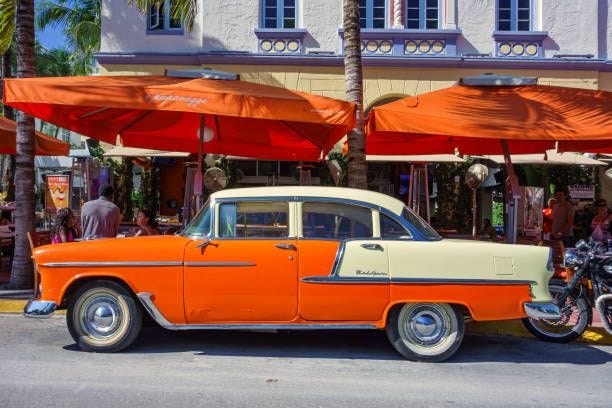
But, through marketing, Chevrolet convinced the public that their most expensive model was a necessity, and, by 1958, it was their best-selling vehicle. No sooner than it was the most popular, Chevy released the Impala, which became the vehicle everyone needed.

While the public was entranced by advertising campaigns, what wasn’t realized was that the basic items were being dropped entirely from product lines. Come the 1960s, the only options to choose from were expensive and really expensive. The average consumer never did the math; otherwise, he would have figured out that he now has to work an average of 53 more hours to afford the cheapest model offered. These vehicles not only cost substantially more upfront, but the upkeep was also higher. Because these vehicles were bigger, heavier, faster, and had more features, it could no longer be expected that parts in them would last a lifetime. Now buyers should plan that they will have to replace everything at least once, in some cases, many times over. These larger vehicles also consumed more gasoline.
And while that was going on, another new concept had hit the market: installment charges. Since these upgrades were no longer affordable, the only way to purchase them was by paying in installments, and that came at an added cost, above and beyond interest on loans. This cost was not factored into the 53 additional hours of labor required to purchase the cheapest make, nor does it consider the added cost of upkeep or gasoline.
Skipping ahead in time: When I purchased my first car, it was $700. The minimum wage at the time was $4.25, so I had to work 165 hours to afford it. 30 years later, my son is looking for his first vehicle, and the market is so terrifying that most of his friends are buying salvage titles because that is all a teen working an entry-level job can afford. Outside of salvage titles, you can either buy a new vehicle, which, after all associated costs, is going to put you around $30,000, or you can buy a used vehicle, typically with a lot of miles on it and often in need of immediate repair, for $12,000 and up.
My son makes $20 an hour, which is nearly double the minimum wage in our home state, Michigan, and is five times what I earned back in the 1990s, yet for him to purchase a $12,000 vehicle, he would have to work 600 hours! Even if he was able to find a rare gem, a $7,000 vehicle that is not a salvage title, he would still have to work 350 hours to pay for it; that is nearly double what I had to work to afford my first car! Additionally, he wants to be an engineer, so he is in his second year of college. On top of the cost of the classes, at his school, there is no longer a college bookstore where you can purchase used books for cheap and then sell them when you are done. He is required to lease eBooks for $100 to $250 per piece—and he doesn’t even get to keep the books! They auto-return after so many weeks. Now you may be thinking, as I was, that there has to be a better way, but there is not, because the colleges have figured out that by attaching a unique pin code to the virtual book purchase, you are forced to buy the book to access the pin to get your homework assignments and other required materials! It’s robbery! And he’s in community college! I can’t imagine what will happen when he transfers to a university for his final years.
These days, as a student, unless you can get scholarships to fund college, the only options are for the parents to go into debt, borrowing against their assets, draining their retirement funds, savings, and so on, or for the young student to plunge himself into lifelong debt. These have become the only two options because, unlike when I went to college, it is now so unaffordable that the student cannot work a part-time job to pay for it. What a scam! Fortunately, my son received huge scholarships. My other child did not and had to choose a different path in life. So, how did we get here?
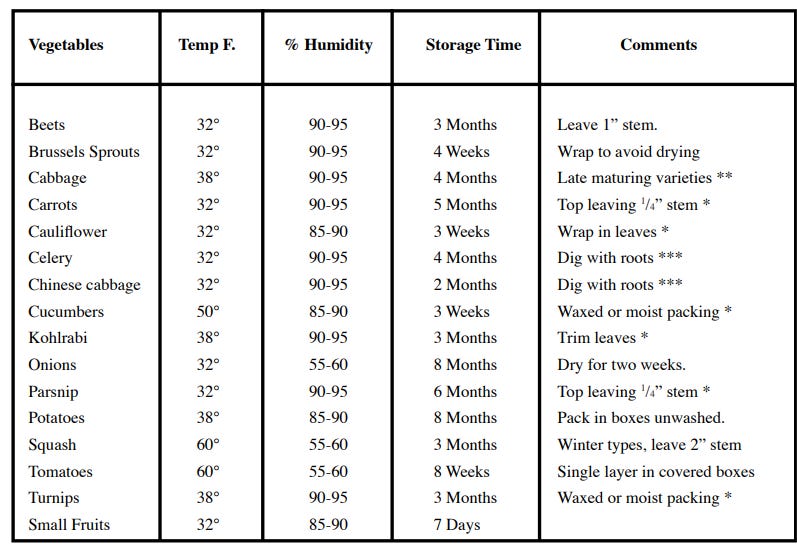
Americans, prior to the 1950s, prided themselves on being hard-working and frugal. We were a nation of “waste not, want not,” in which you ate every last scrap on your plate, and if there ever were leftovers, Mom would make them into a stew the following evening. When I was growing up, we had so much stew that to this day, it is one of the few things I dislike. Because we wasted nothing, not even the apple or orange peels, we didn’t need a garbage disposal. Potato peel scraps weren’t scraps. They were wrapped in newspaper to prevent dampness and allowed to sprout. People knew how to store vegetables to make them last as long as eight months.
We saw our sturdy, solid wood dining room table set as an heirloom because it once belonged to our great-great-grandparents and was handed down generation to generation, often when a couple wed. Housewives would boast that they only paid a few cents for their wonderful linens. But the advertisers cursed our simple, happy lives, which they referred to as “puritanism.” They wanted to destroy and replace them. So the psychological operation was never truly about the color of a box of Kleenex or the style of lawn mower in your garage; it was about selling hedonism—seeing our personal pleasure as the most important thing.
Through the advertisers re-education campaign, we were taught what once was a treasured heirloom is now embarrassing, outdated junk. They schooled us to believe that being wasteful was a sign of success, being frugal was for the poor, and being poor was shameful. Root cellars became closets to store junk, and a good life was not determined by happiness or the amount of love and laughter in your home; it was determined by the logo on your automobile and the square footage of your house. Gratification became tied to self-indulgence, and the advertisers pushed it hard. The idea that you deserve something became more important than if you could afford something and more important than if you needed it in the first place. Acting on a whim became acceptable as long as you felt pleasure, and people who did not abandon the traditional puritan ways were called “penny pinchers” and other condescending terms, while sayings like “pamper yourself” became actively used to justify overindulgence. And all of this comes with a price tag that is so high that, come 1998, both parents needed to work. The mother could no longer stay home and raise the children. Bringing up the kids was now a daycare’s job, and, of course, daycare costs money. Because of this, the parents looked forward to when the children would begin school, because school, unlike daycare, is free, but little did they know, school is exactly where the overseers of the psychological operation want the children to be…
NEXT READ: Hedonism: Brainwashing the Children [Part 3]
If you're not subscribed, be sure to do so, so that Part 3 is sent to your email when it is released:
________________________________________________________________
Did you know that we have a massive announcement coming July 4th?!

I have been trying to figure out where people can subscribe to get this announcement, meaning which platforms are most-to-least likely to ban me, and I have concluded the safest bets are here or WhatsApp. No, I don’t like WhatsApp either, but until we have a solution that people will actually use (keywords: actually use), we have to work within the system that is available to us. That said, our WhatsApp channel is just for information. It’s not a chat channel. We will be releasing a huge chat community very soon. More on that shortly. If you would like to contribute to the costs to establish a massive community, you can donate on Ko-Fi or Buy Me a Coffee.
![The Shadow Conspiracy to Make Us Pay 3x for EVERY Item [Part 1 by Agent131711]](https://dropinblog.net/cdn-cgi/image/fit=scale-down,format=auto,width=700/34264201/files/featured/54df78ba-d6cf-4a1f-9456-8c25628f3105.png)

![Hedonism: Brainwashing the Children [Planned Obsolescence Part 3 by Agent131711]](https://dropinblog.net/cdn-cgi/image/fit=scale-down,format=auto,width=700/34264201/files/featured/hedonism-brainwashing-children.png)
![WWII Part 2: The Secret Pact You Never Knew About [WWII Part 2 Agent131711]](https://dropinblog.net/cdn-cgi/image/fit=scale-down,format=auto,width=700/34264201/files/featured/42323fe6-68eb-489e-b3fd-3d58661edd7d-1.png)
![Hidden History: King Edward & The Cabal: Operation Destroy Germany [WWII Part 3 by Agent131711]](https://dropinblog.net/cdn-cgi/image/fit=scale-down,format=auto,width=700/34264201/files/featured/wwii-part-3.png)
![The Secret Door in the Clean Juice Factory [By Agent131711]](https://dropinblog.net/cdn-cgi/image/fit=scale-down,format=auto,width=700/34264201/files/featured/the-secret-door-in-the-clean-juice-factory.webp)
![Introduction to WWII: Laying the Foundation for What Is to Come [WW2 Part 1 by Agent131711]](https://dropinblog.net/cdn-cgi/image/fit=scale-down,format=auto,width=700/34264201/files/featured/40313432-85c6-4c51-9ab3-b94a534b1804.png)


![The Artificial Intelligence Takeover IS UPON US [by Agent131711]](https://dropinblog.net/cdn-cgi/image/fit=scale-down,format=auto,width=700/34264201/files/featured/ai-takeover.png)
![Donald Trump & 9/11: The Connections You Never Knew About [THE FINAL CHAPTER - Agent131711]](https://dropinblog.net/cdn-cgi/image/fit=scale-down,format=auto,width=700/34264201/files/featured/chatgpt-image-jun-7-2026-04-34-22-am.png)
![All Hell Broke Loose: The Secret History of WWII [Part 4 by Agent131711]](https://dropinblog.net/cdn-cgi/image/fit=scale-down,format=auto,width=700/34264201/files/featured/wwii-part-4.png)

