

![The Secret Door in the Clean Juice Factory [By Agent131711]](https://dropinblog.net/cdn-cgi/image/fit=scale-down,format=auto,width=700/34264201/files/featured/the-secret-door-in-the-clean-juice-factory.webp)
Let me tell you a short story. This tale is of a sugar-free juice manufacturer located in Kentucky. The company was called Sun Up Foods. Their unsweetened OJ was such a hit that the company grew rapidly over six years, grossing nearly $70 million in annual sales by 1990. In fact, it grew so big that it became one of our nation’s largest wholesalers of blended orange juice. It’s fair to say that everything was great for the juice maker until the day it wasn’t.
I’m not sure what specifically led to this point in time; perhaps it was just a typical manufacturing facility inspection, but whatever the reason, it was on this specific day that investigators found something quite puzzling inside of the juice manufacturing plant: a mysterious electrical panel that looked like something out of an old episode of Star Trek.
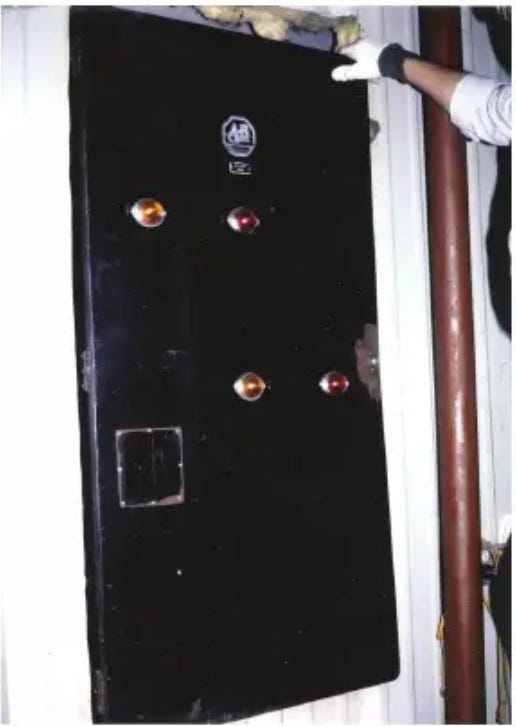
As they inspected the bizarre panel, they discovered it wasn’t a panel at all. It was actually a secret door. Upon opening the door, they found that it led to a hidden storage room. Inside that room were tanks filled with a strange liquid. Whatever this liquid was, it was connected to a PVC and stainless-steel plumbing system, and it was being pumped out of the secret storage room and into the walls of the juice manufacturing area.
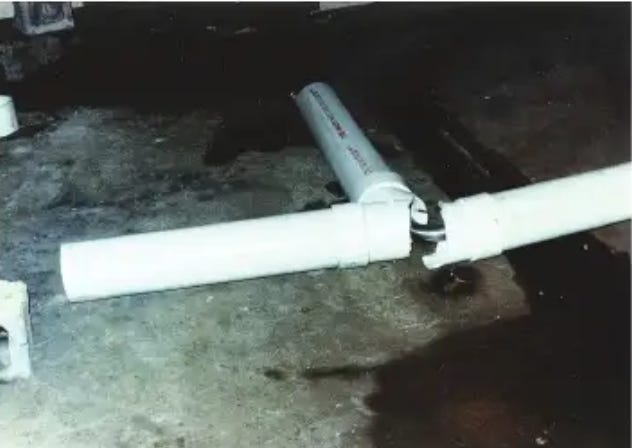
But when detectives tried to hunt down where the lines ran from the walls, they appeared to be for sewage. It just didn’t make sense. It was time to take a closer look at the contents of the steel tanks. What they found came as quite a shock. They discovered that in the holding tanks was liquid beet sugar.
As the scandal began to unfold, detectives learned this plot was far bigger than anyone could have guessed. The stainless steel piping system was engineered to secretly connect the liquid beet sugar tanks to legitimate piping lines inside of the walls of the building. The system was brilliantly designed to make these pipes appear to be nothing more than sewage plumbing. It was so well manufactured that, during inspection, detectives discovered that the hidden line carrying the sugar could be shut off entirely and the outside pipes could be closed to conceal the sugar line hidden within. Yes, the whole, pure, unsweetened orange juice, which had become one of America’s favorite beverages, was actually being secretly dosed with sugar.
As detectives began following the paper trail, they learned that massive deliveries of beet sugar occurred only under the cover of darkness and were accompanied by fraudulent invoices created by a broker who made it look like he was billing Sun Up for orange concentrate. When employees would arrive the morning following a sugar delivery, they were told to burn the bags marked sugar and to never speak of it—don’t even use the words “sugar” or “beet sugar,” period. To keep abreast on adulteration detection technology, representatives from Sun Up Foods attended seminars on adulterated food detection techniques.
In the end, seven executives were charged with substituting cheap sugar for expensive orange solids and selling the product as unsweetened juice. Consumers who paid the extra dollar to avoid sugar were defrauded of over 20 million dollars between 1984 and 1989.
Sadly, this is far from the only incident of this nature.
Beech-Nut Nutrition Corporation, whose primary plant facilities were in Canajoharie, New York, was the second largest maker of baby foods in the United States. It was so big that it held 15 percent market share, second only to Gerber. With the success of its products, Beech-Nut expanded into juice, and by 1978, apple juice accounted for 30% of the company’s sales. Within a decade, the company was buying nearly all of its juice concentrate from a supplier called Interjuice.
Interjuice, through its distribution firm, Universal Juice Company, claimed to be importing its concentrate from Israel to its Queens, New York, facility. In 1978, two Beech-Nut employees went to Queens to visit the supplier and see the manufacturing process. Although factory officials showed the Beech-Nut representatives the warehouse area, they would not let them into juice concentrate processing rooms.
The following year, something happened. We don’t know specifically what, but we know people within the Beech-Nut organization began asking their company to terminate the contract with Interjuice and find a different supplier. They claimed the price was far too low—something fishy was going on. One employee began asking his company to please have the juice tested for adulteration. It was at this time that Beech-Nut made a surprising decision, and that decision was, instead of simply testing the juice, to instead have the juice supplier sign an agreement stating that should there be problems with the contents of the juice, Interjuice would accept financial responsibility.
In June of that year, private investigator Andrew Rosenzweig visited Beech-Nut’s Canajoharie plant to tell executives about an investigation he was working on behalf of the Processed Apples Institute Inc. (an association of companies making apple-based products). For unbeknownst reasons, the Apples Institute had become suspicious of Interjuice and brought Rosenzweig on board to find out if their suspicions were correct.
During his investigation, Andrew discovered documents in a dumpster near Interjuice’s Queens plant as well as a new juice adulteration test. This led Andrew to perform a stakeout of the plant. It didn’t take long for the investigator to put the pieces together: the juice manufacturer wasn’t actually making juice; they were making sugar water. Just sugar water.
The reason for Mr. Rosenzweig’s visit to Beech-Nut was to inform them of a huge discovery. You see, as part of his stakeout, he tailed a tanker truck of sugar water, and to his surprise, that sugar water truck was delivered to none other than Beech-Nut. Andrew could say, without a shadow of a doubt, that what Beech-Nut was selling was fraudulent.
It was at that time that Beech-Nut was offered the opportunity to join the other juice companies in a lawsuit against Universal, but strangely, Beech-Nut refused. This action was puzzling—but it gets worse.
Two months later, in August, a state official told Beech-Nut that “little, if any, juice had been found in one sample of product.” If the baby juice manufacturer didn’t know before, they sure knew now; their so-called “pure juice” product was fake. There was no escaping it. But this is not where the tale ends. Instead of doing the right thing and disposing of the sugar-water-fake-juices, Beech-Nut officials arranged for nine semi-trailers to take the entire inventory currently in stock—26,000 cases of juice—across state lines into New Jersey. According to later court testimony, it was here that the sugar waters were to be discounted and sold “fast, fast, fast.”
These fake juices were then marketed to mothers looking to save money. In a newspaper ad, Beech-Nut exclaimed, “Buy 6 bottles of Beech-Nut pure infant apple juice, get 6 free!”
The FDA doesn’t typically step in unless the harm or act is so egregious that they are forced to act, and this case was one of those. When beginning their investigation, the FDA first grouped Beech-Nut with other “innocent victims” of the Interjuice/Universal scam, such as the companies associated with the Processed Apples Institute Inc. But the FDA soon discovered things may not be as they seemed. Beech-Nut’s lawyers not only stonewalled the FDA, but they also spent substantial effort hiding tainted inventory. It was because of this that the FDA decided that the juice maker was not such an innocent victim after all and was instead a part of the ploy.
At some point along the timeline, Beech-Nut canceled its contracts for the bogus product, and, in October 1982, the company finally issued a national product recall for its “pure” apple juice products, but it only did so due to pressure from the FDA. Now you may be thinking that surely this is where the story ends, but it is not.
Beech-Nut continued to sell mixed juice products made from the contaminated inventory well into the following year. Then, once the product had been dumped, Beech-Nut sued Universal for selling them a fraudulent product.
Beech-Nut, its president, Neils L. Hoyvald, and its head of operations, John F. Lavery, were indicted on 470 counts by a federal grand jury in November 1986. A year later, the company pleaded guilty to having foreknowledge of the crime. For this, they were hit with more than 200 felony counts as well as food and drug law violations for selling fraudulent apple juice. But despite the indictments, the company had grown substantially. It now controlled 20 percent of the US baby food market.
Tragically, the food fraud doesn’t stop with these two entities. Peninsular Products of Warren, Michigan, Flavor Fresh Food Corp. of Chicago, and eight individuals pleaded guilty after being indicted on federal charges of conducting an eight-year conspiracy to add sugar and illegal preservatives to more than 32 million gallons of citrus juices sold under various private labels in many states. I repeat, 32 million gallons.
Paramount Citrus Association, of Mission Valley, California, pleaded guilty in Philadelphia to selling adulterated juice to the federal government since 1985. The defendants also paid nearly $7 million to settle civil claims by the government. Meanwhile, Everfresh Juice Co., which was owned by the owner of the Toronto Blue Jays, had to pay more than $2 million to settle lawsuits that accused them of using sugar and illegal preservatives in their juices for more than a decade. Alarmingly, the cases were filed in 1990 under a secrecy order to prevent the public from learning all of the details.
________________________________________________________________
Be sure to subscribe so articles like this can be sent straight to your email:
________________________________________________________________
Did you know that we have a massive announcement coming July 4th?!

I have been trying to figure out where people can subscribe to get this announcement, meaning which platforms are most-to-least likely to ban me, and I have concluded the safest bets are here or WhatsApp. No, I don’t like WhatsApp either, but until we have a solution that people will actually use (keywords: actually use), we have to work within the system that is available to us. That said, our WhatsApp channel is just for information. It’s not a chat channel. We will be releasing a huge chat community very soon. More on that shortly. If you would like to contribute to the costs to establish a massive community, you can donate on Ko-Fi or Buy Me a Coffee.

![Hidden History: King Edward & The Cabal: Operation Destroy Germany [WWII Part 3 by Agent131711]](https://dropinblog.net/cdn-cgi/image/fit=scale-down,format=auto,width=700/34264201/files/featured/wwii-part-3.png)
![The Artificial Intelligence Takeover IS UPON US [by Agent131711]](https://dropinblog.net/cdn-cgi/image/fit=scale-down,format=auto,width=700/34264201/files/featured/ai-takeover.png)
![Hedonism: Brainwashing the Children [Planned Obsolescence Part 3 by Agent131711]](https://dropinblog.net/cdn-cgi/image/fit=scale-down,format=auto,width=700/34264201/files/featured/hedonism-brainwashing-children.png)

![The Real Reasons We Live Paycheck-to-Paycheck & The PSYOP Behind It All [Planned Obsolescence Part 2 Agent131711]](https://dropinblog.net/cdn-cgi/image/fit=scale-down,format=auto,width=700/34264201/files/featured/0573e31b-ff1a-4ed9-ab55-dd72cfda033f.png)
![All Hell Broke Loose: The Secret History of WWII [Part 4 by Agent131711]](https://dropinblog.net/cdn-cgi/image/fit=scale-down,format=auto,width=700/34264201/files/featured/wwii-part-4.png)
![Germany is CAPTURED: The Secret Plot to Steal the Kingdom [WWII Part 5 by Agent131711]](https://dropinblog.net/cdn-cgi/image/fit=scale-down,format=auto,width=700/34264201/files/featured/germany-is-captured.png)
![The Shadow Conspiracy to Make Us Pay 3x for EVERY Item [Part 1 by Agent131711]](https://dropinblog.net/cdn-cgi/image/fit=scale-down,format=auto,width=700/34264201/files/featured/54df78ba-d6cf-4a1f-9456-8c25628f3105.png)
![WWII Part 2: The Secret Pact You Never Knew About [WWII Part 2 Agent131711]](https://dropinblog.net/cdn-cgi/image/fit=scale-down,format=auto,width=700/34264201/files/featured/42323fe6-68eb-489e-b3fd-3d58661edd7d-1.png)
![The History Heist: How They STOLE History & REWROTE IT [WWII Part 6 by Agent131711]](https://dropinblog.net/cdn-cgi/image/fit=scale-down,format=auto,width=700/34264201/files/featured/history-heist.png)
![Introduction to WWII: Laying the Foundation for What Is to Come [WW2 Part 1 by Agent131711]](https://dropinblog.net/cdn-cgi/image/fit=scale-down,format=auto,width=700/34264201/files/featured/40313432-85c6-4c51-9ab3-b94a534b1804.png)

