

![HELP! I'm Being STALKED! [Flock Part 1 by Agent131711]](https://dropinblog.net/img/qgpivitn/700/flock-1)
NEXT READ: Flock's Secret Warehouse [Part 2]
I hear so many people say when referring to their personal data being collected by tech companies, or, in this case, law enforcement, “I don’t care because I have done nothing wrong.” Some add comments like, “Only criminals care if their data is collected.” Yet these same people will not take me up on my offer to plant a listening device in their bedroom or give me permission to sit outside their son’s school and video record him. Further, they refuse to provide me with access to their Google Photos album. Why is that? They’re not doing anything wrong, and I have no ill intent. I’m just a writer, and unlike Big Tech, I have no use for their data; I just want to cruise through it to see what I can learn about them for entertainment purposes; nothing malicious, nothing profitable. So I guess it is ok for strangers to read all of our communications, GPS track us, eavesdrop on our families, monitor how fast we drive, and log every purchase we make only if we don’t know who the strangers are or what they are doing with our information, but once we can point to an individual, whether that be our next-door neighbor, Uncle Jim, or an ex-lover, we call it spying, harassment, and stalking. And even if we have done nothing wrong, we still don’t want the guys from the oil change place to have access to our medical data. In fact, should they obtain it, we see this as both a data breach and a massive invasion of privacy. Strange how we think, isn’t it? Now let’s get into this Flock thing.
To begin, an overview of Flock is as follows:
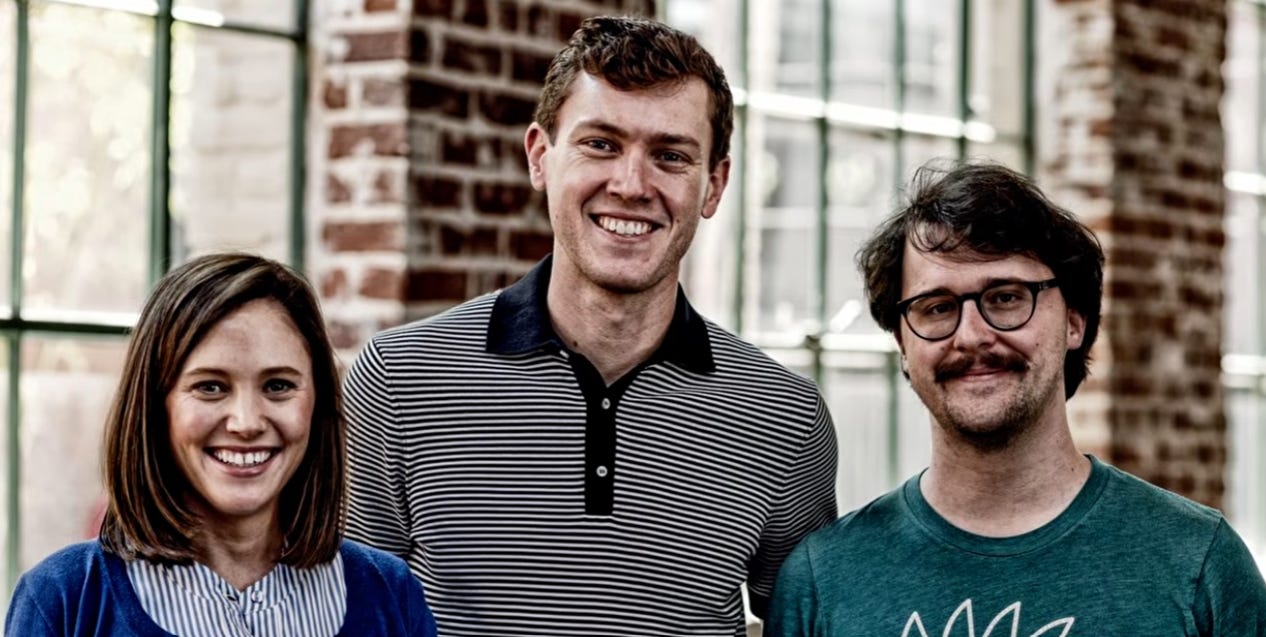
Flock Group Inc., DBA Flock Safety, was founded in 2017 [allegedly] by this trio of Georgia Tech nerds.
They started off by making automatic license plate readers (ALPR), which, as it turned out, read a lot more than license plates.
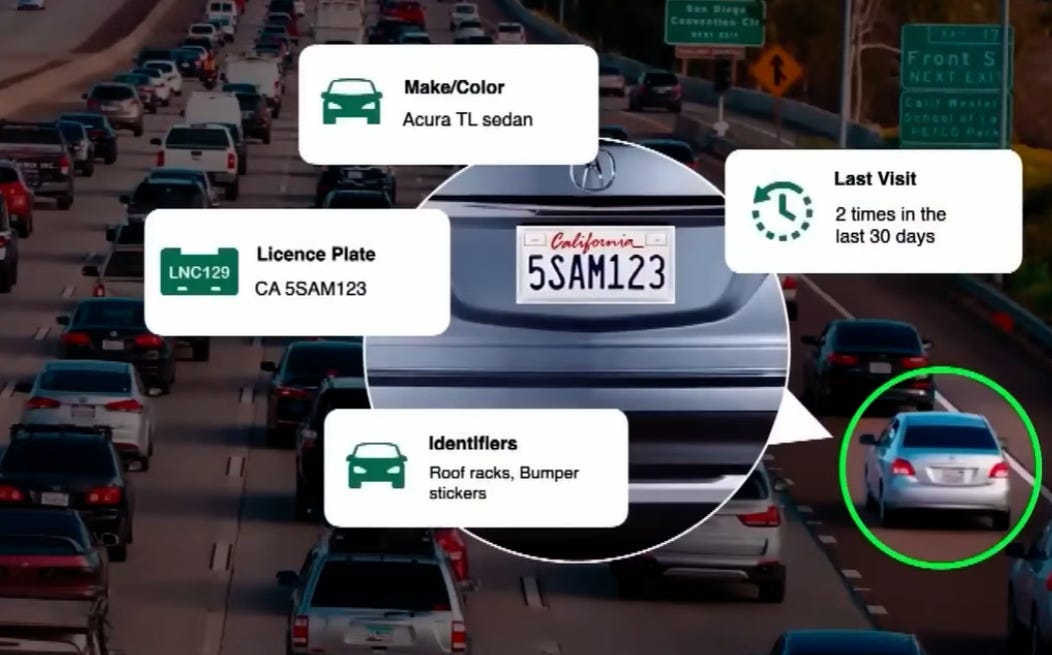
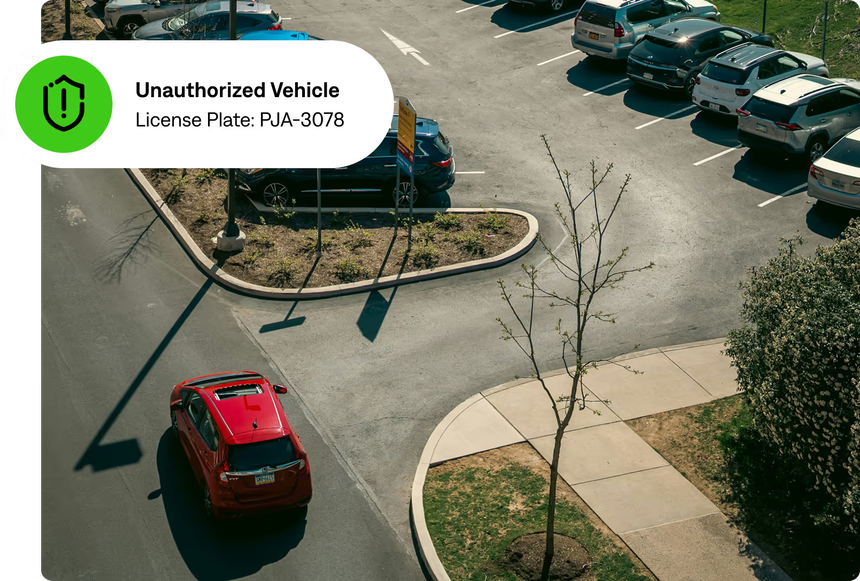
The cameras can also read and identify bumper stickers as well as damage to vehicles, which can be shared with insurance companies as well as thousands of other vehicle characteristics. All of the collected information, along with GPS coordinates, is then placed into a database where it is stored “ordinarily” for a month but can be kept “longer,” which means any amount of time.
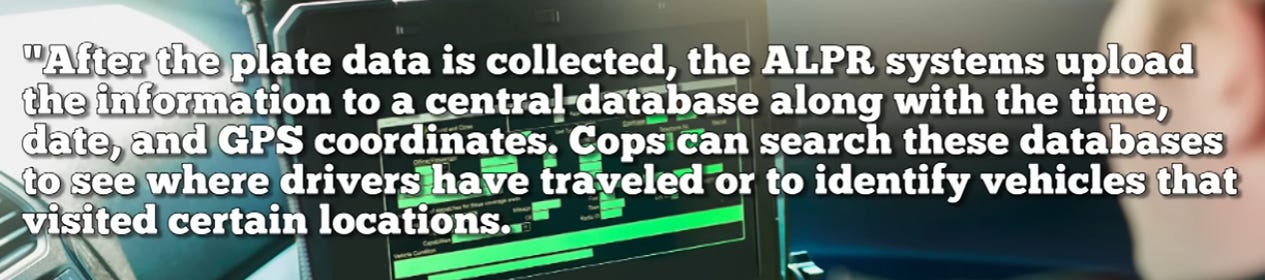
This data is then instantly searchable by law enforcement.
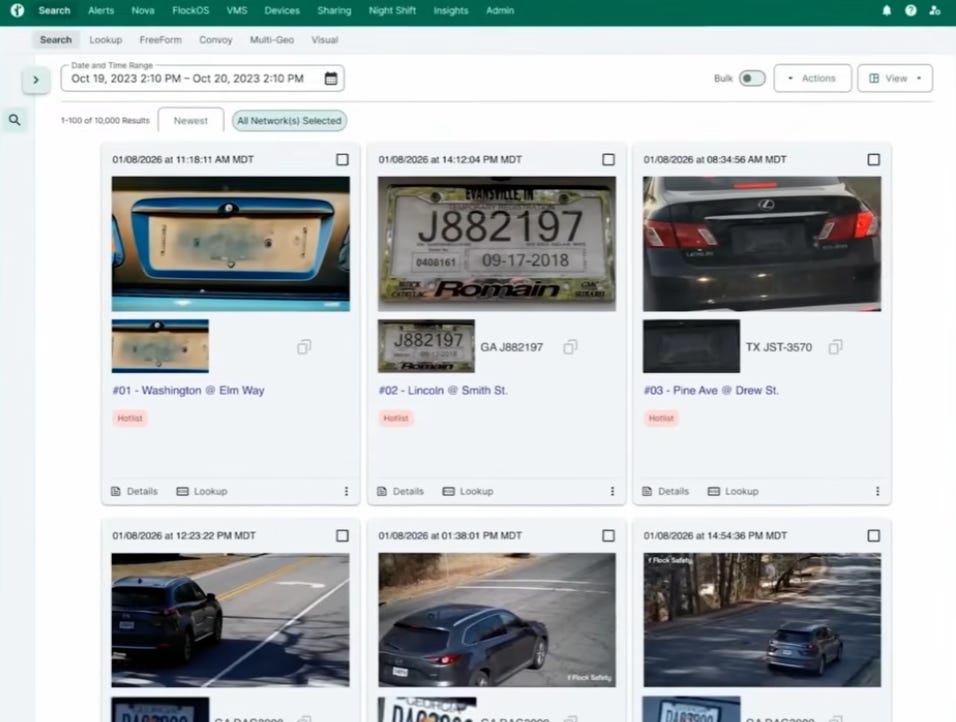
Additionally, police can add suspicious license plates to the system. So, for example, you threw an awesome “Don’t Commit Crime, The Government Doesn’t Like Competition” bumper sticker that you got from Shadowbanned Library on your F-150, and a cop sees it and deems you to be a potential conspiracy theorist.

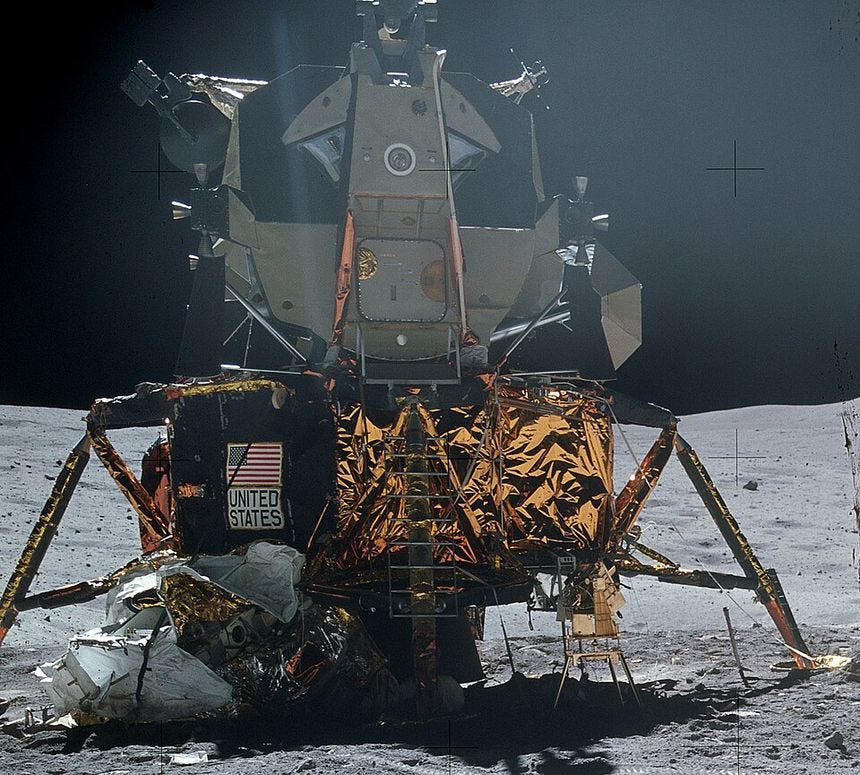
He can now type your plate into the network so everyone can be on the lookout for the guy who might believe 9/11 was an inside job or that this piece of shit didn’t actually go to the moon.
A police officer on Reddit posted, “And here’s what bothers me [about Flock]: if you drive around the same city every day like most people do, those reads start adding up. Go to the same gym every morning? Same grocery store every Sunday? Same girlfriend’s apartment every weekend? Same office Monday through Friday? Over time, that history can reveal a pretty detailed pattern of your life. You weren’t being investigated. You just happened to exist in public while the government collected data on where your car was seen.”
The ACLU added:
There’s no reason the technology should be used to create comprehensive records of everybody’s comings and goings—and that is precisely what ALPR databases like Flock’s are doing. In our country, the government should not be tracking us unless it has individualized suspicion that we’re engaged in wrongdoing.
I’m not always the biggest fan of the ACLU, but they nailed it. We are supposed to have the right to privacy and peace.
Now for the people like my mother who think this really isn’t that big of a deal—after all, they’re just some standalone poles with license plate readers that are being used to catch criminals; let me tell you, it is way deeper than that. For starters, anyone can purchase one of these cameras, and they are going up everywhere. Public and private businesses and school buses are equipped with them, as are public safety vehicles, garbage trucks, and now package delivery trucks.
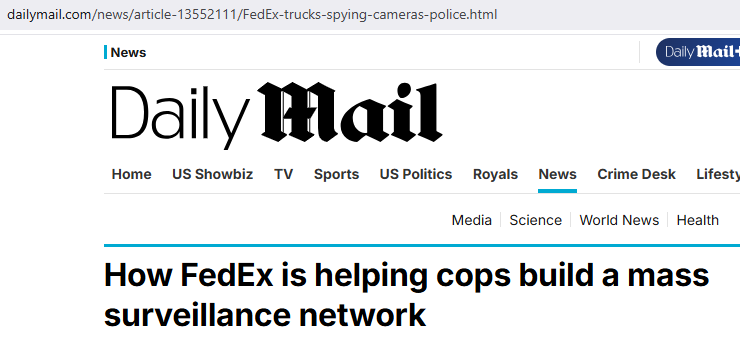
This means not only is your route to and from your job being surveilled and uploaded to the cloud (including each GPS coordinate as well as a photo of the ding in your back bumper), but now all day, every day, vehicles equipped with ALPRs are crawling every street in America, tagging every license plate in every private driveway, and storing that data.
Think about it more: At 7am, the school bus scans you, your wife, and your daughter’s cars on your property. Your daughter then leaves for college, so when the garbage truck comes by at 8am, the two remaining vehicles get scanned a second time. FedEx deliveries begin at 9, and it’s your day off, so your wife has left, but your vehicle is scanned. When lunch rolls around, you decide to order Uber Eats, and that driver is scanned from the burger shop to your front door. Folks, you’ve only been awake for five hours, and strangers, including your government, know exactly how you spent your morning, that you eat meat, and that you don’t mind ordering fast food through delivery services. This information was gleaned from a single morning. Imagine the abundance of data that can be gathered with 24/7 surveillance for a month, or a year, or a decade, let alone a lifetime—and this is all from watching your residence.
Representative Scott Perry of Pennsylvania added, “Flock cameras now log approximately 20 BILLION vehicle scans every month. That’s not targeted policing of bad guys. That’s mass collection and surveillance - not safety.” To put this into perspective for you, there are roughly 270 million adults in America. Assuming every single adult owns a vehicle, that means every single American is having their vehicle scanned by Flock over 74 times per month. Did you ask to be scanned at least twice per day? I sure didn’t.
But if you think it’s just license plates and scanning is harmless if you’re not doing anything wrong, check out what this individual from Corona, California, said in a Substack post,
“I want to be clear what these cameras actually are, and I say that as somebody with 20 years of experience in IT. I’ve served as the chief network architect for Fortune 500 companies, I’ve designed data centers, and today I work on cloud infrastructure for one of the largest loan origination companies in the country. I’m not speculating on how this technology works. I’ve read their patents and I know how it works.
Flock advertises these cameras as simple license plate readers. But their own patents tell a different story. They’re AI-powered surveillance machines that capture every passing vehicle and person and transmit that data to a private corporate cloud, making it queryable by a multitude of state and federal agencies. The city of Corona does not control that database, and Corona residents have no public record rights against a private company’s servers.”
It continued on, “Our daily movements are being harvested by a $7.5 billion corporation, that only answers to venture capital investors, not to us. Flock did not reach that valuation on their per-camera subscription fees. That math doesn’t add up.
The city council should also understand who they’re doing business with. Flock CEO was asked whether the company had any federal contracts. He said no. That was a lie. Public records revealed that Flock had been secretly running a pilot program giving the US Border Patrol access to local police camera data without the knowledge of the cities that paid for the cameras.
Now consider who’s behind the company and where your data flows. Flock integrates directly with Palantir, a data fusion platform, with a $30 million contract with ICE. Peter Thiel, the founder of Palantir, is also one of Flock’s primary investors. These are not separate companies with separate agendas. They are connected actors that are building a connected infrastructure. Palantir’s own CEO stated publicly just this month that his technology is being used as a political instrument, designed to reduce the political power of certain voters. And that’s the ecosystem that our Corona cameras are feeding into…”
The Substack post went on to say that the author looked into the Flock patents more and outlined “Patents describe broader object detection, including tracking people and pedestrians, patents like US11416545B1. The system uses a centralized cloud database for nationwide queries. Data goes to Flock’s private cloud, AWS-based, encrypted. Nationwide lookup is common, 75%+ of customers are enrolled enabling cross-jurisdictional searches. Residents have no direct public records access to the corporate servers. This creates a mass surveillance network feeding a private company’s infrastructure.”
I’d like to point out the importance of Flock being a private company. I have addressed this repetitively in my articles. Because it is private, there is no way to FOIA information. This means what is being done with the information Flock gathers is a total blackout. The best we can do is FOIA what local police are doing with it when they have access to use it and hope to get a response. More interestingly, when a Texas woman had her vehicle broken into and $4,000 worth of items stolen, including a handgun, she asked if San Antonio police could use all the local Flock cameras throughout the neighborhood to track the burglars. They said they do not have access to them and cannot use them. If that is the case, people in San Antonio are being watched and logged by people other than the police.
So this is the point in my article where those who are in the “I don’t care, I’m not doing anything wrong” camp now justify it by saying, “Flock stops criminals, so in this case it’s a good thing.” - And this is precisely what the agenda wants you to think because the only way they can pull this shit off is through “greater good” reasoning. Once “the greater good” is removed from the equation, nobody wants mass surveillance, right? So, to play to “the greater good” people—real people who really do think us all surrendering every last ounce of privacy will stop all crime and we will all be safe—a mass psychological operation must be run on the populace. This psyop involves the mockingbird media broadcasting half-truths. Here’s how this works:
It starts with a black psyop in which the folks in on the scheme themselves put into the media (which they are partners with) that Flock cameras are reading text messages and photos. They claim they are making copies of your phone contents. Content creators on TikTok, Instagram, and Twitter rush to share the information, so it becomes a popular topic; however, it is false. The media rush to debunk the rumor, which they themselves created. Through the debunking, they can accomplish several things.
First, they ease the public’s fears; no, Flock does not copy your phone. It doesn’t even read your texts. Phew!
Second, the media can then shift focus back to the license plate reading and stopping crime.
Third, they automatically diffuse future rumors. By debunking the current rumor, all of the people who were worried about their phones being copied now have been assured no such thing is happening; it’s tinfoil hat nonsense. So when people start screaming that the cameras are doing something else—something they really are doing—people automatically assume this is also false.
That said, what the media isn’t telling you is that the purpose of the black psyop was to use half-truths to manipulate public perception. Reality is, although the Flock license plate reading cameras are not reading your phone, there are Flock cameras everywhere that now have microphones to record audio. Flock claims the special audio is designed to record gunshots and screaming, but this is not the case.
Meet Isaac, a student who discovered his college was surrounded by Flock microphone cameras.
Transcript: “I’m Isaac; I’m just a student, and my school picked up, I think, 48 of these [Flock cameras] over the course of the last two years. I noticed on campus there were a bunch of these little devices with a Flock logo.
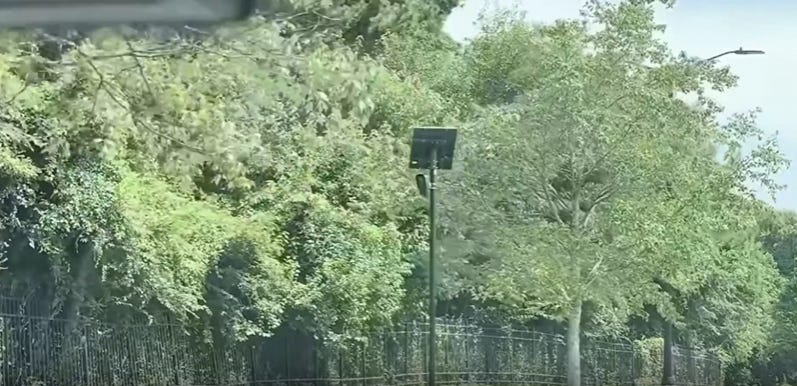
It turned out that they were microphones.
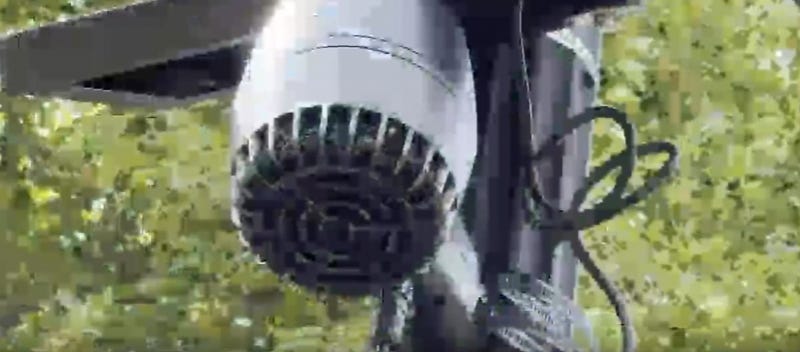
I looked into them, and I found a press release from Flock where they explicitly stated that they were only gunshot detectors and they would delete anything outside of a gunshot. I think about two months after I started looking into it, they sent a software update over the air, so now all of these microphones that are spread all over my college campus, they are just actively listening for voices now, which is very uncomfortable, and I’m not particularly happy about that.”
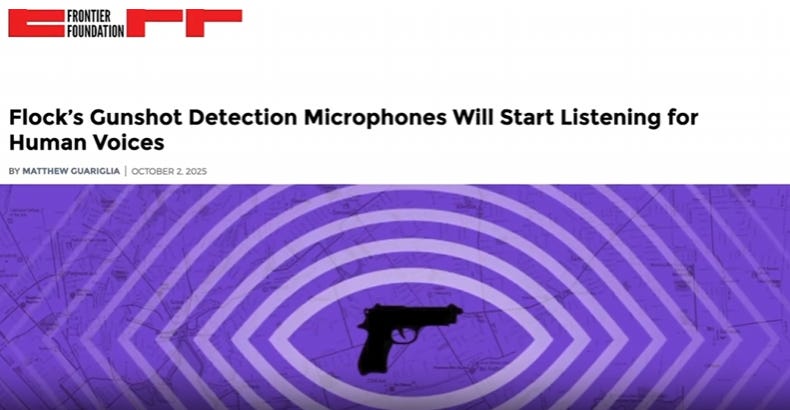
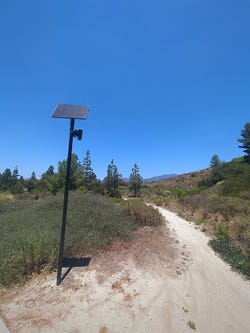
How creepy is that? If what you have heard so far isn’t bad enough, here is a Flock camera on an isolated hiking trail. Clearly the path isn’t large enough for a vehicle.
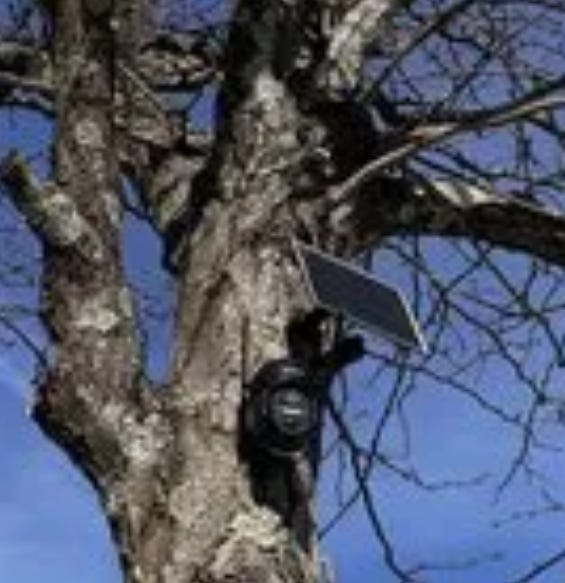
This person found one affixed to a tree.
This one is in a park, pointed directly at the slide.
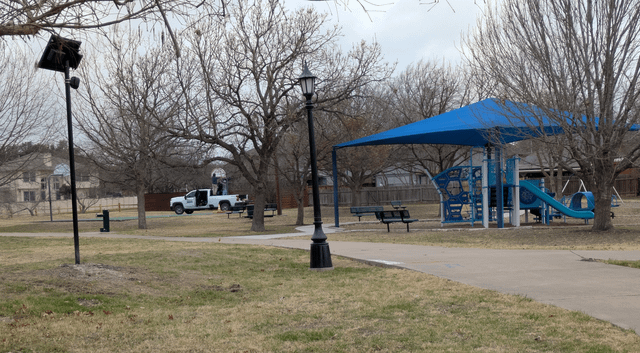
As you could have guessed, this is because they are not reading license plates; they are reading us.
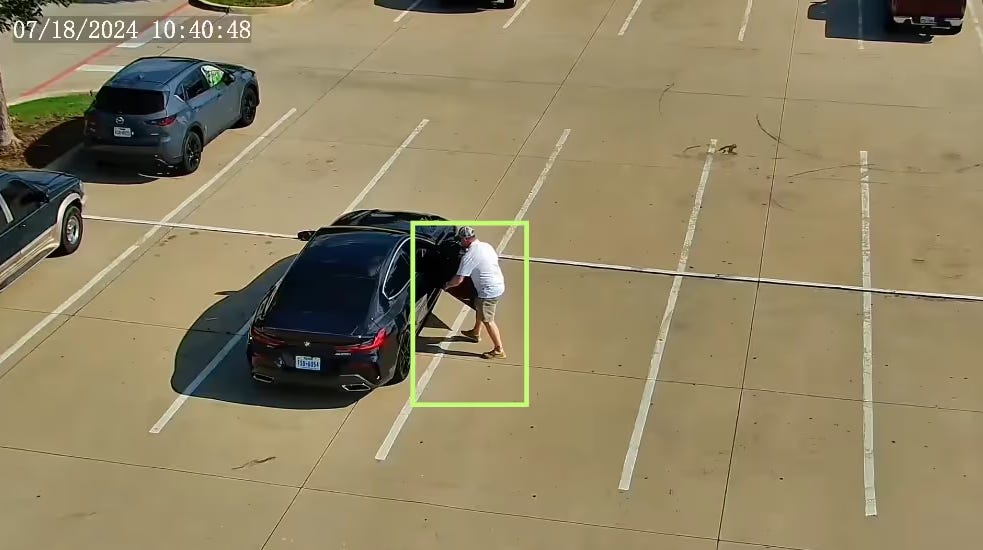
Being that these cameras read bumper stickers, one should assume they also read t-shirts, tattoos, jewelry, and anything else with text or an image.
And here’s where the story gets even more disturbing. Remember how, at the very beginning of this publication, I asked why people who claim they don’t mind being surveilled because they are doing nothing wrong wouldn’t let me video their son at his school? Well, this situation has happened. Corporate Flock employees were caught watching live feeds of children at the Marcus Jewish Community Center. Although Flock now denies it, public records requests by resident Jason Hunyar proved that Flock employees viewed cameras labeled “Gym Mendel – 1” and “Main Pool Right.” Later, Vice President Bob Carter accessed the “Gymnastics” camera. But this didn’t happen only a couple of times. Hunyar claims Flock also remotely viewed his son’s daycare, and, in total, private cameras were accessed by Flock over 1,000 times—and this was what one dude from Georgia discovered. This is nowhere near the extent of what is going on. But it’s worse than that.
Back in 2025, Flock was in the process of developing a new product called Nova, which they referred to as a “public safety data platform” (Greater good! wink, wink). The purpose of Nova was to supplement all data collected during license plate scans with additional information. “What exactly is that additional info?” you ask. It turns out it’s everything—and I do mean everything. To be more specific about the types of information Nova compiles, think about your public internet searches, voting records, marriage records, home ownership details, current and past addresses, email addresses and phone numbers, roommates, children, relatives, social media accounts, and even your Strava bike rides. Basically, any data that is anywhere on the internet is instantly compiled into a nice big packet for whoever is running the query to thumb through, all without a warrant because Flock is a private company, and Flock does not need a warrant to compile your life’s story. Oh, and let me mention the supplemental data also included everything Nova could obtain from hacked websites and the dark web. So this would include your credit card information, passwords, social security number, health data, biometric and genetic data, financial records, and more. Nova was already in use by law enforcement in 2023 as part of an early access program. [*Flock claims they have ceased using hacked information, but since the company is private, there is no way to confirm this.] This means that when a police officer pulls you over because your white Honda Civic allegedly matches a vehicle used in a crime, before the officer even gets to your door, he knows you voted for Trump, you enjoy working out, you lease a small house, you are twice divorced, and you habitually search for gun videos on the internet because you are a massive advocate of the 2nd Amendment. Now the police officer can subconsciously form biases against you, not because your vehicle matches one allegedly used in a crime, but because his aunt was killed due to gun violence and he hates Trump. Do you see the problem here? And if you don’t, the city of Norfolk, Virginia, was concerned for the same. They pointed out that these cameras can be used “to create a suspect where one does not exist.” For example, a police officer casually flipping through camera footage suddenly realizes that you walk down a back alley every afternoon. Now the officer wonders why. He ponders if you could be getting narcotics. After all, police are aware that there is a dealer who has an apartment on that alley, and it’s not the best part of town, so there appears to be no legitimate reason for you to be frequenting the alley unless you are engaged in illegal activity.
Before you know it, you are being investigated for simply walking in a public place. Now that an investigation is open, police can begin subpoenaing your life. All of this is because of constant surveillance warrantless cameras. Little did the police know, there is an attractive woman that also lives in that alley. Every day at 3pm she leaves for work, so if you make it just in time, you can strike up a conversation with her in hopes of scoring a date.
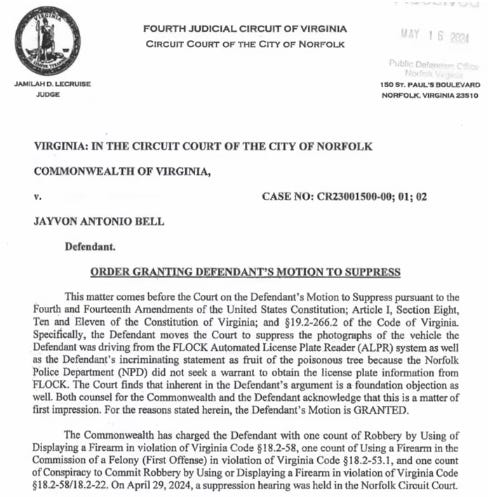
Flock’s defining feature is its nationwide network in which cities, without the permission of their citizens, opt in to share the information their systems gather with all other users of the technology. This means because the camera at the Taco Bell by your house picked you up on it, police in New Mexico can now learn your identity and watch footage of you. Being that you have never been to New Mexico, there is no reason why your identity should have ever come across their radar. But all of this is really only the beginning of the story—just a little insight into what many in the public already know.
NEXT READ: FLOCK’S SECRET WAREHOUSES & FRONT COMPANIES [Part 2]
Hey! Thanks for reading. If you haven’t yet, be sure to sign up for my six-week course, The False Flag Masterclass. It starts September 24th! Check out the promo below.
Best of all, the class is only $25 total for all six weeks! No subscription is needed, and there is nothing else to buy. This class will be livestreamed, but if you can’t make the stream, the replay will be available after the stream has ended. Check out the week-by-week syllabus and enroll on Shadowbanned Library.

Also, be sure to pick up a ticket to Truth Be Told! Five of your favorite content creators will be giving a one-hour presentation on the topic of their choice. Come watch Unbekoming, David Parker, Jamie Andrews, Medicine Girl, and me put on a 6-hour show on September 17th! Get your ticket today.
Be sure to subscribe so my articles get sent to your email!
Want to support my work? Buy Me a Coffee or Make a Ko-Fi Donation:
If you want to make sure you are updated when new articles, eBooks, events, and podcasts are released, be sure to sign up for WhatsApp notifications:
![Flock: The Secret Warehouse & Front Companies [Part 2 by Agent131711]](https://dropinblog.net/img/8pbc3ou5/700/flock-2)
![Epstein, Ring Doorbells & Axon: Israel Controls America's National Security [Flock Part 3 by Agent131711]](https://dropinblog.net/img/afe1quuw/700/epstein-ring-axon)
![The Never Before Told Story of CANCER [Part 1 By Agent131711]](https://dropinblog.net/img/bcfo1a94/700/cancer-thumbnail-1)
![What You Never Knew About The Prison Industrial Complex [Part 1 by Agent131711]](https://dropinblog.net/img/hj2cfvje/700/prison-profits-thumbail)
![The Shadow Conspiracy to Make Us Pay 3x for EVERY Item [Part 1 by Agent131711]](https://dropinblog.net/img/oqgniipj/700/54df78ba-d6cf-4a1f-9456-8c25628f3105)
![Introduction to WWII: Laying the Foundation for What Is to Come [WW2 Part 1 by Agent131711]](https://dropinblog.net/img/wzsg3blx/700/40313432-85c6-4c51-9ab3-b94a534b1804)
![Donald Trump Exposed: The Judge, The Helicopters & The Shell Companies [Trump Part 1 by Agent131711]](https://dropinblog.net/img/87657icz/700/trump-1-2)
![Introduction to THE EVOLUTION HOAX [Part 1 by Agent131711]](https://dropinblog.net/img/jt64njoq/700/evo-1)
![The UN's CHLD PRN0GRAPHY Ring [Pizzagate Part 17]](https://dropinblog.net/img/0ni3husw/700/un-child-1)
![FAKE AND GAY: The Pedophile Takeover of US Government - a scandalous true story [Part 1]](https://dropinblog.net/img/nhkjr6b6/700/9f581d16-2ca3-452e-b8c9-3848784309ea-1400x788)
![The Playboy Shadow Mansions, the CIA & Drug Trafficking [PART 1]](https://dropinblog.net/img/7mad1n66/700/playboy-copy)

