

![What You Never Knew About The Prison Industrial Complex [Part 1 by Agent131711]](https://dropinblog.net/cdn-cgi/image/fit=scale-down,format=auto,width=700/34264201/files/featured/prison-profits-thumbail.png)

Next Read: Part 2
THE MONEY FLOW
It starts with our labor, which is illegally taxed. Labor is a trade: my time for your money. There has never been a law passed by Congress that approved the taxation of this trade. The income tax applies to “gains,” which means profits. There is no profit in a trade because, in a trade, both sides see what they are giving and receiving as being of equal value. Thirty dollars pay for one hour’s time is a simple trade; I will spend the next hour making you a spreadsheet, and you will give me $30 for it. I wrote about this in Is Income Tax Illegal? That said, if you don’t pay the illegal taxation, the government and banks have six ways from Sunday to destroy your life, so this situation is the carrot or the stick, but it’s not a normal stick; it’s a spiked whip attached to a stick that is being controlled by someone who doesn’t care if you live in the prison system or flat-out die. The options here are bleak.
So the money flows from the taxation of our labor, as well as the completely legal taxation of business profits (“gains”), to Uncle Sam, who then pays for every public service, then has so much money left over that it can be pissed away on assorted schemes—schemes that are far beyond our wildest imaginations.
Now, when the state wants to build a new prison (meaning using their citizens’ money to build a structure to incarcerate them), the public is supposed to vote on whether to let them. This occurs by voting ‘yes’ or ‘no’ on a prison bond. Should they vote ‘yes,’ the citizens have given the state the thumbs up to pay for the new prison. Therefore, the size of the prison system, in theory, is limited by the amount of tax money the public approves. And, pretending voting isn’t rigged, the public has the right to vote ‘no,’ which would smash the states’ dreams of incarcerating more of its residents. But because people don’t want more government oversight, and people don’t want more of their fellow man rotting behind bars, and because every single election can’t end in a ‘yes’ vote (that would look very suspicious), something had to be done to skirt around the system. This “something” was the introduction of private money into the prison system. These private funds come as “finance capital,” which does not have to be voted on, so there is no way to block it. This capital is supplied mainly by private prison corporations and investment banks. And because of it, the prison industry has been able to grow far beyond its ‘democratic’ [voting] limits. Investors in the for-profit prison system include American Express and General Electric (SEE! THERE THEY ARE AGAIN! It’s always General Electric!) So how did we get here?
THE CCA
The story about the for-profit prisons is as follows: Winthrop Rockefeller was elected as Arkansas State Governor in 1967, and no sooner than he took office did a huge report magically appear on his desk. This 67-page document was provided to Mr. Rockefeller by the Arkansas State Police. It claimed there was “systematic corruption and brutality at Tucker Farm, where inmates and prison officials alike engaged in torture, beatings, and bribery.” Now you would think the most simple solution would be to punish those involved in the criminal behavior and replace the prison officials, but that is not what happened. Instead, Rockefeller’s solution was to turn the prison system into a business that is controlled by an outside company (or a business that is sometimes controlled by the government itself.)
Come 1983, Corrections Corporation of America (CCA) was launched to do exactly that. CCA, the largest for-profit prison company in the United States, was founded by T. Don Hutto, Robert Crants, and Tom Beasley.
Robert Crants, whose real name is Doctor Robert Crants—I don’t mean he is a doctor; I mean his first name is literally Doctor—co-founded Corrections Corporation of America with his former roommate, Thomas Beasley.
Thomas Beasley helped fight our drug wars in Vietnam, the Panama Canal, and Nicaragua. Come 1983, he had just ended his term as chairman of the Tennessee Republican Party and was ready for a new venture, so why not prisons?
T. Don Hutto grew up watching prisoners work on a prison plantation. He later became Director of the Arkansas Department of Corrections. Hutto was also involved in both military and television broadcasting.
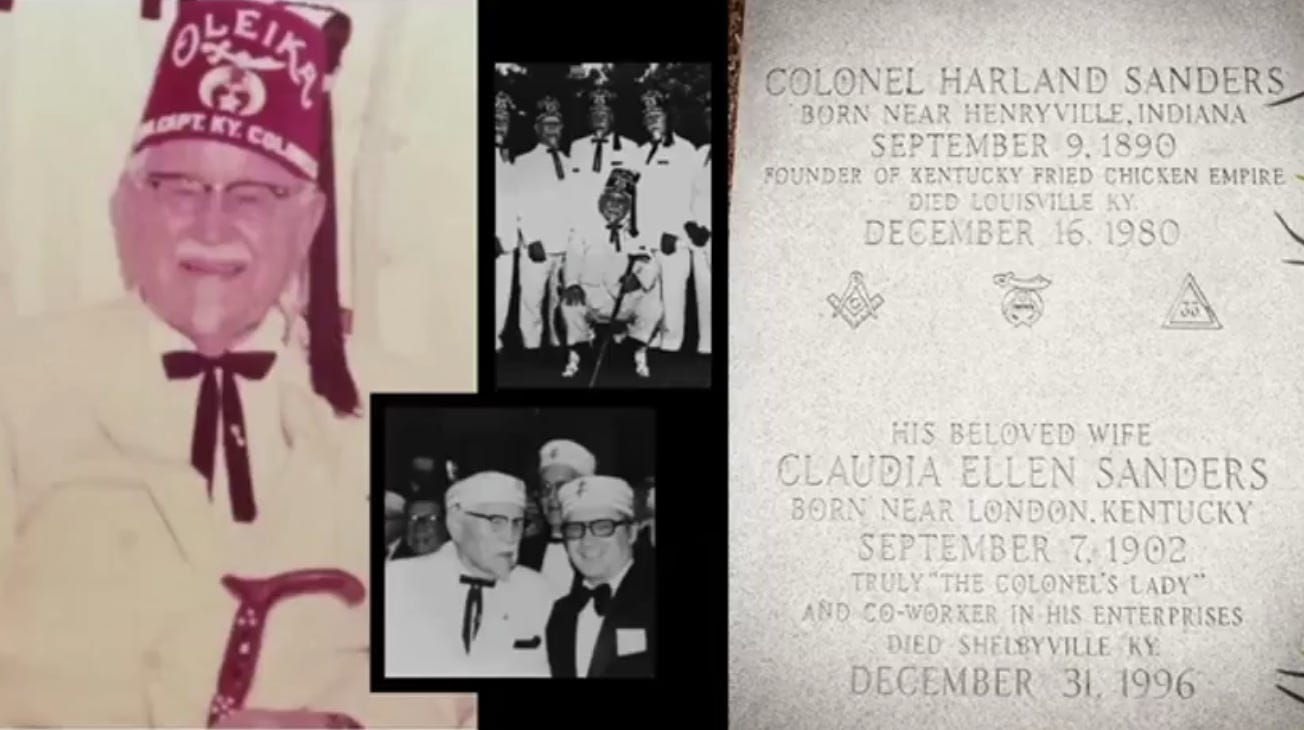
One of the main investors of the Crant-Beasley-Hutto for-profit prison scheme was Jack C. Massey, a name that doesn’t sound familiar but actually is. Mr. Massey owned both Kentucky Fried Chicken (KFC) and Wendy’s restaurants. Now, if you want some irrelevant history about KFC, Colonel Sanders, the Kentucky Fried Chicken guy, owned the company before Massey. The Colonel was a Rockefeller associate through Shell Oil Company and a 33rd Degree Master Freemason.
Meanwhile, the Ku Klux Klan (KKK) was born out of the Knights of the Golden Circle (KGC). In fact, “Ku Klux” comes from the Greek word “kyklos,” which means “circle,” as in “golden circle.” Here’s the KKK logo that the media now hides from us.

Now let’s compare the KFC logo to the KKK logo. Once you see it, you can never unsee it…

So there’s the Knights of the Golden Circle, which is KGC, out of which came the KKK. Then there’s KFC, which shares a strikingly similar logo as the KKK. And behind the KKK-looking chicken company logo is a 33rd-degree Freemason. Any questions? I will do a full series on the Knights of the Golden Circle because it is absolutely fascinating stuff, so be sure to subscribe.
And by the way, someone once pointed out that the KFC logo looks like a head on a stick figure body, and I can now never unsee that either.

Sorry for getting off track there. Back to the prisons: Before we can learn about the prison industrial complex and for-profit prisons, we have to learn how we got here.
THE WAR ON DRUGS
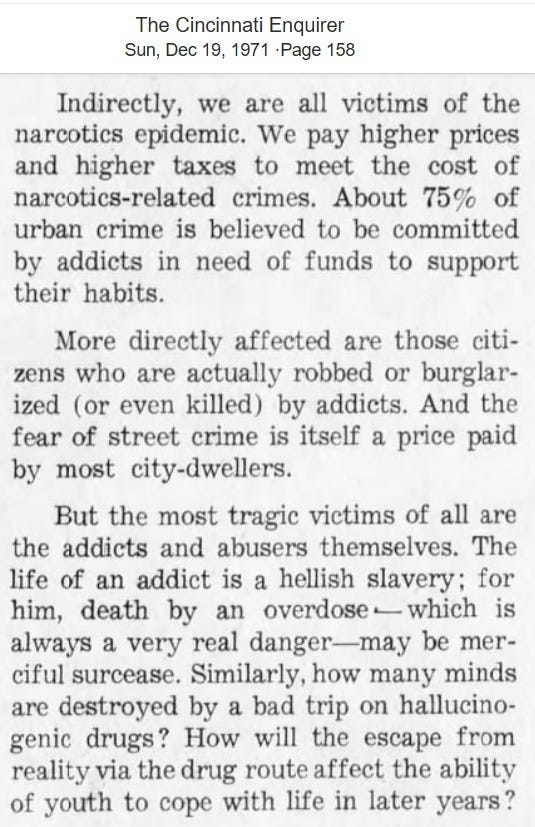
To quote from Pizzagate, in the early 1970s, “The newspapers began to report that the populace was paying higher prices and higher taxes due to narcotics-related crimes. That much is true; the mafia and CIA were indeed driving up the cost of living to never-before-seen levels, but that is not what the papers were referring to. The news claimed 75% of urban crime in the United States was being caused by drug addicts looking for a fix (I find this to be highly unlikely, borderline ridiculous, but that’s what they claimed). They went on to say many people were being robbed and killed by these horrible addicts. Innocent city-dwellers had fallen victim to street crime. “But the most tragic victims of all,” they said, “were the abusers themselves.” The only answer was that someone needed to save America from these addicts and save the addicts from themselves. And, as you already know, the only way to save everyone was through further government control, more policies, and, of course, more money pumped into some government scheme.
The solution to the alleged problem became the War on Drugs, which officially began in 1971 when President Richard Nixon declared drug abuse “public enemy number one” during a press conference. Note that he said drug abuse, meaning drug use, was the problem, not the drugs themselves.
It is a mix of offensive and hilarious that it was Nixon who announced the War on Drugs, given that he’s the guy who was overseeing both the CIA’s and the mafia’s drug dealings and helping launder the proceeds. But the whole thing was never about stopping drugs. I mean, if they truly wanted to stop it, they would do as Castro did and demolish their drug labs and stop importing them.
Under Nixon’s War on Drugs, states that enlisted in the war got paid. Federal money was awarded to states based on arrest numbers. Between 1969 and 1972, his administration distributed $1.5 billion in state and local law enforcement grants. Nixon's aides later admitted the administration intentionally associated hippies with marijuana and Black people with heroin to justify heavy criminalization.
WATCHTOWER
While the US government was importing narcotics and waging war on its own people for using their drugs, Operation Watchtower began. In only four months time, the CIA purchased more than one million pounds of cocaine—that’s equal to 500 tons! These drugs were bought in Panama as part of the first phase of a partnership with our new ally, Panama’s General Manuel Noriega.

For reference, this is what 16 tons looks like.
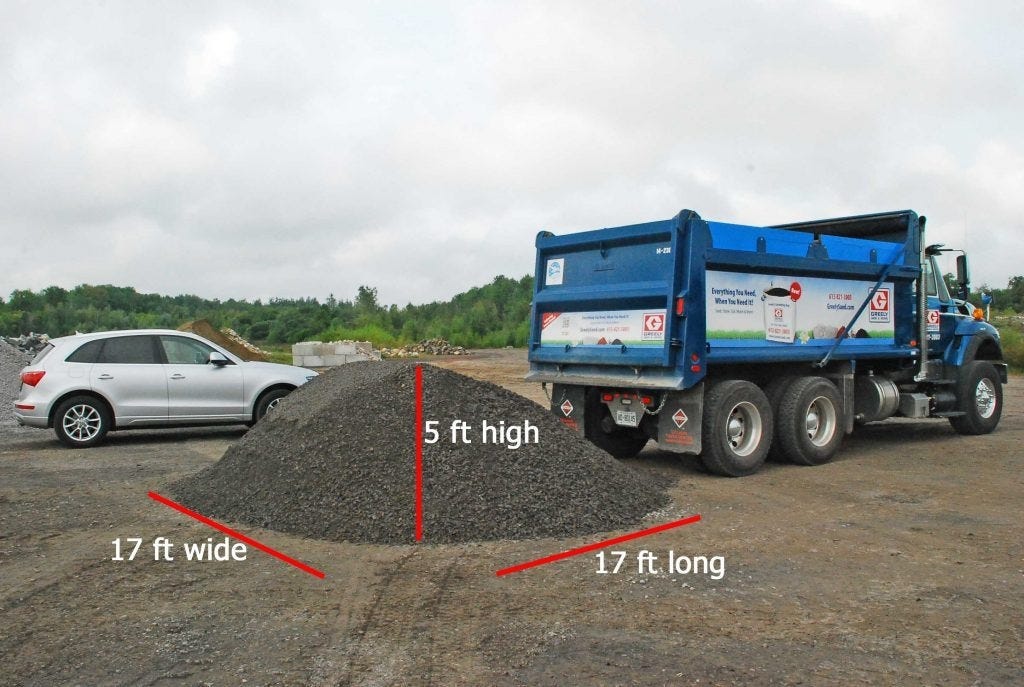
Now multiply that by 32 and imagine it as cocaine. That is the amount our brave, heroic CIA acquired in a few months time. That’s a helluva lotta drugs to move without suspicion. Here’s how they did it for this mission:
From Panama, the cocaine was transported to El Salvador, Costa Rica, and Honduras. From there, it was to be flown into Mena Airport in Arkansas. Recall who was governor of Arkansas: Winthrop Rockefeller.
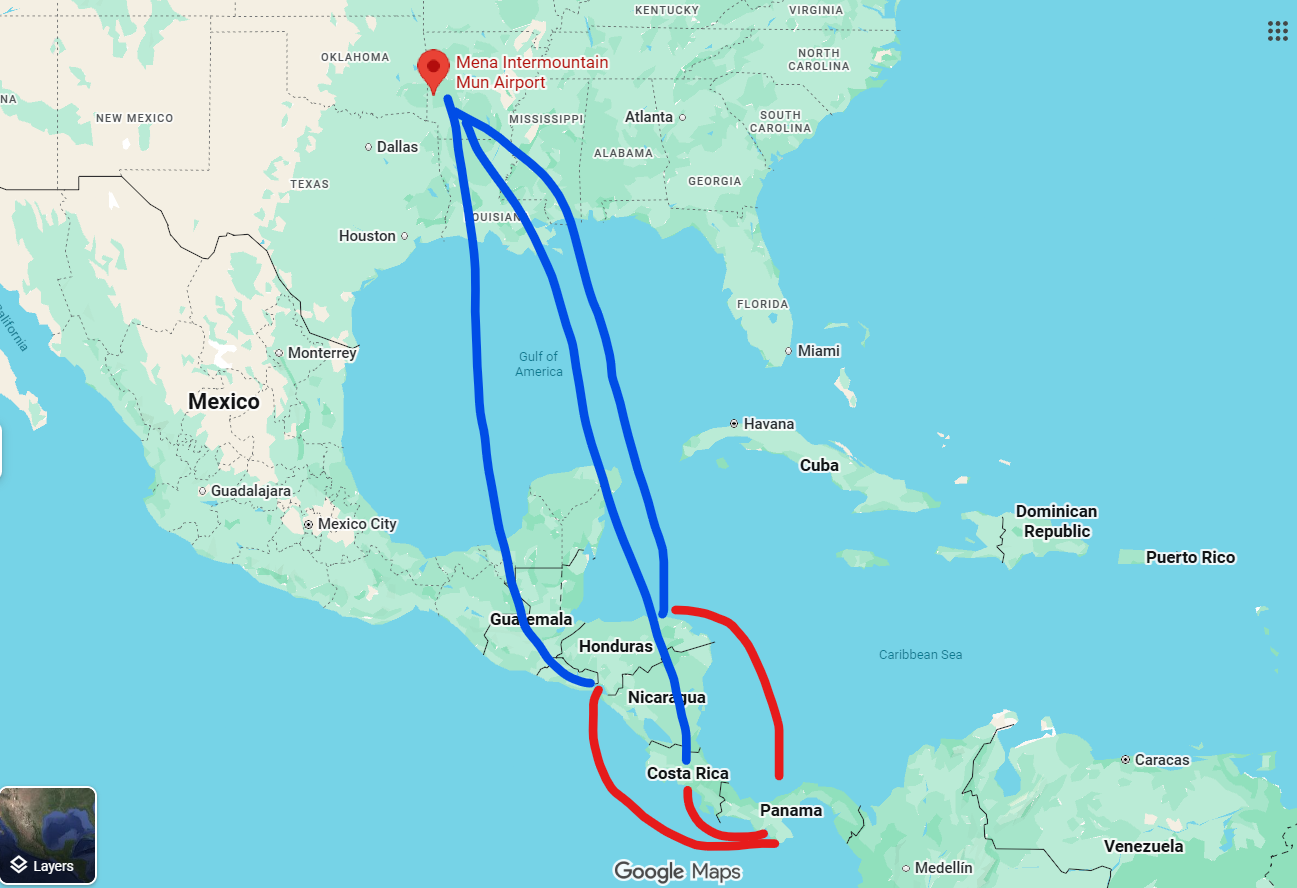
Once in Arkansas, the CIA already had buyers lined up. After the product was sold, it was time for Colonel Albert Vincent Carone to go to work. Carone was a full colonel in the US Army, a detective in the New York Police Department, and a made man in the Genovese crime family. It was his job to launder the profits through a variety of banks and the stock market. The entities used for laundering included the BCCI, BNL, BCP, the Intermaritime Bank of New York, various intelligence assets at the NYSE, the LSE, the Chicago Commodity Exchange, the Chicago Board of Trade, the Chicago Board of Options Exchange, and the Continental Illinois National Bank and Trust Company of Chicago. So all of Noriega’s CIA cocaine - which was purchased with tax dollars combined with money from our government’s trafficking operations - all went into the banks and stock markets to enrich the same individuals involved in the scheme because they own the banks and their companies are a part of the stock markets, which they also control.
While that was going on, the DEA, which was just founded to aid in Nixon’s War on Drugs, was also involved in drug trafficking. Their role was guaranteeing the Medellin (Colombian) cartel safe passage for their cocaine into US markets. (The Medellin was Pablo Escobar.) Note that this is the first real point in which we see the US government acting as a business partner directly with the cartel, who we already know is an ally of the mafia, just as select high-ups within the government are.
But this publication isn’t about our government building a global drug empire, so back to the story of the rise of the prisons:
BRAINWASHING
As you can imagine, getting police to attack their fellow man, especially for low-level offenses, required some manipulation. The traditional form of police operations is known as the “professional” model. This is “cops vs robbers,” in which police are the good guys who are protecting the good citizens by locking away the bad guys. The purpose of this simple model is to stop criminal disturbances in the community. But this model cannot be applied to a soccer mom with a couple of non-prescribed pain pills in her purse, a college kid selling dime bags of marijuana to his buddies, or a little boutique store owner that was tricked into buying knockoff products because the seller convinced her they were real. This is because these are not “bad guys.” So, to overcome this hurdle, a new type of training needed to occur. This is what was referred to as a “siege mentality.” This new training, which came from the military, was essentially brainwashing: “us versus them,” with “us” being the police and “them” being everyone who is not a part of law enforcement.
Through “us versus them” training, citizens were dehumanized so that police would find it easier to violate “them.” It allowed officers armed with military weaponry to debase citizens based on assumption and profiling. Through profiling, “innocent until proven guilty” became “presumption of guilt.” And “protect and serve” became “seek and destroy.” This siege model focuses purely on crime control rather than crime prevention, and it isolates the police from the people and therefore isolates them from the communities in which they serve, which was the entire purpose.
This new training began in Los Angeles, Philadelphia, and many other cities nationwide. This is what led to a major division between the people and police; it really did become “us versus them” because citizens felt they could no longer trust law enforcement, and, as police brutality began breaking out across the nation, the division became even greater.
In Los Angeles, the LAPD became fully militarized for the War on Drugs. For the first time in history, battering rams and massive displays of force were seen on neighborhood streets. People were stopped and searched for walking down sidewalks or standing on street corners. No-knock warrants became common.
The War on Drugs expanded to the War on Crime and the War on Gangs. Soon, police brutality and harassment became acceptable, provided it was done under the guise of keeping the town safe. Innocent people, including children, were swept up in unwarranted searches in which absolutely nothing was found to justify the harassment. Soon, the number of people incarcerated in American jails and prisons escalated from 300,000 to 2.3 million.
[Note: Not all police are bad. As I have said time and time again, there are vast amounts of wonderful officers who truly care. It is unfair to those officers to be lumped in with the bad apples.]
Let’s jump back to the prison industry:
INCENTIVIZING PUNISHMENT
The exact same year the first for-profit prison system was established (1983), the first annual drug control budget was $100 million. Come 1986, the Anti-Drug Abuse Act changed the entire system. You see, the system used to be focused on rehabilitation, but now it was designed for punishment. Instead of getting people off addictive substances and helping them get back on track, their lives could be taken from them. This act mandated a minimum sentence of 5 years without parole for possession of 5 grams of crack cocaine. To put this into perspective, five grams of crack are equal to five sugar packets. And five years was the least punishment a judge could assign. Life in prison and 40-year punishments were not uncommon.
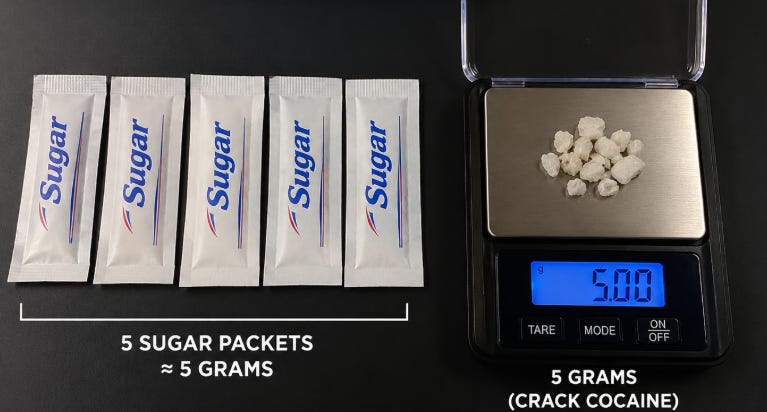
The act also authorized billions of dollars in spending on enforcement efforts. It provided grants and increased funding to state and local law enforcement agencies and rewarded jurisdictions for increasing arrests, prosecutions, and incarceration rates; meanwhile, it reduced funds allotted to treatment programs. Additionally, asset forfeiture was expanded. Here, legislation allowed police to keep seized assets from drug-related crimes. This created a financial incentive for agencies to increase the frequency of tactical squad operations, particularly targeting small-scale dealers. As you can see, it was at this time that the federal government incentivized destroying lives. Asset forfeiture was then expanded to include drunk driving and tax evasion.
The incentive to make arrests led to police setting people up, stings, staged buys, raids, and a new industry: informants. An informant is an individual who the police caught in some manner. It could be the soccer mom, college kid, or the little boutique owner. Despite popular belief, the vast majority of informants are not high-level drug dealers who are aiding in taking down a drug kingpin. These are everyday people, many of whom are young adults—even as young as high school. These kids, moms, dads, and small business owners can be sent on covert missions, with no experience or training, to set up whoever they bought the product off, which is almost always just another kid, mom, dad, friend, neighbor, or some other person who has never been a part of organized crime.
Occasionally, the sting mission can involve a higher-level dealer, often a person the informant had never heard of and had no dealings with, such as in the case of Rachel Hoffman of Tallahassee, Florida. Rachel was caught with 25 grams of pot and then manipulated by law enforcement. To get out of being charged with possession, Ms. Hoffman was provided with $13,000 in police money and sent undercover to buy 1,500 ecstasy pills, two ounces of cocaine, and two handguns from a large-time local dealer whom she knew nothing about. The dealer murdered her.
Anyway, arrests and incarcerations were incentivized, a network developed across our nation, a network in which local and state governments were desperate to lock people away because they wanted the funding. I should mention that it is the politicians who set prison and sentencing policy that also incentivize and manage federal, state, and local law enforcement through the War on Drugs. Simultaneously, these politicians accept campaign contributions from private corporations that lobby the politicians aggressively. These private corporations profit from the very prison system these conflicted politicians manufacture. Because private prisons make money from putting people behind bars, their lobbying efforts focus on bills that reduce freedom and expand prison terms. In some cases, such as Arizona’s SB 1070, the legislation is literally drafted by the lobbyists themselves! This is why there is no longer a system of rehabilitation. Combine this with the “us vs. them” mentality, and we have ourselves a recipe for disaster.
So, it was at this time that for-profit prisons came to be. And, not long after the War on Drugs began and the Anti-Drug Abuse Act went into effect, Corrections Corp of America, the business that was launched by Hutto, Crants, and Beasley, became a publicly traded stock.
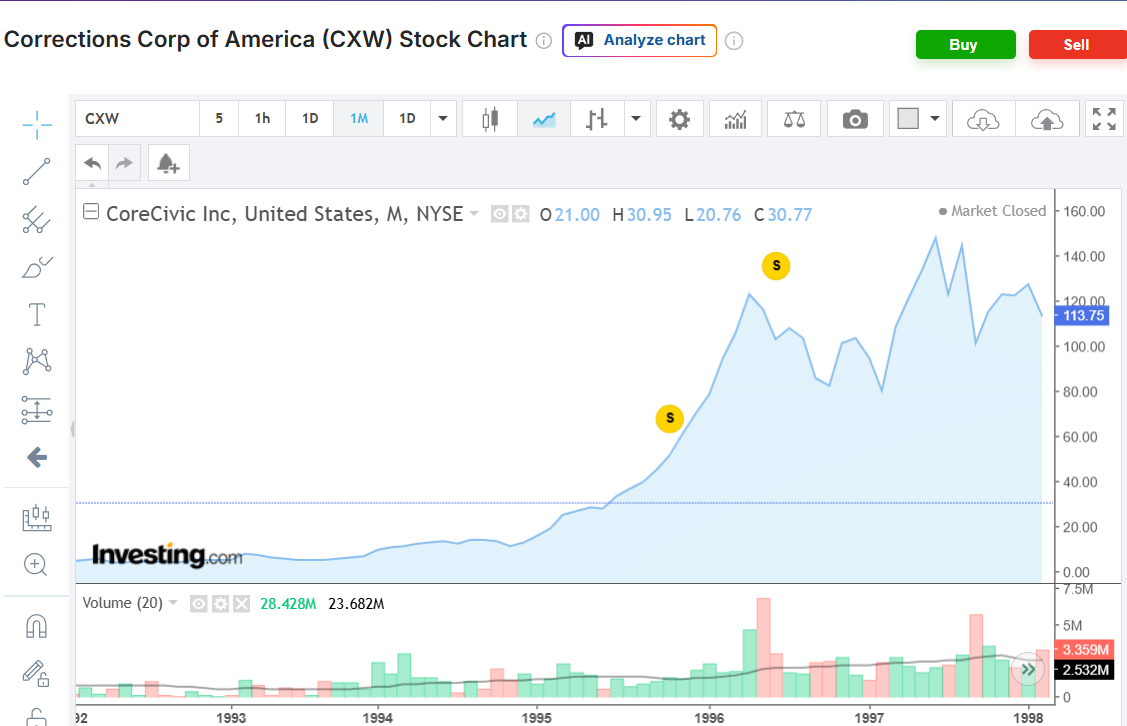
To quote the Brennan Center, “Crime in the United States peaked in 1991, but even as it declined, Washington’s appetite for crueler penalties and overreaching enforcement increased. The watershed moment was the enactment of the Violent Crime Control and Law Enforcement Act, often referred to as the 1994 Crime Bill, signed into law by President Bill Clinton.
By the time of the bill’s enactment, the violent crime rate had already fallen by 6 percent. By the time it took effect the following year, violent crime was down by 10 percent. Yet over the next decade, despite what would become the most dramatic drop in crime in the nation’s history, politicians chose not to lead the nation in urgently necessary conversations about the proper role of enforcement and punishment, but to feed the punitive machine they had built.
[This new legislation] mandated harsher penalties for people caught in the criminal legal system. It authorized the death penalty for dozens of existing and newly defined federal crimes, and it required life imprisonment for any conviction for a third violent felony, the infamous “three strikes and you’re out” policy. It also established a funding mechanism that incentivized and rewarded states for sending people to prison for very long periods of time… By 1998, incentive grants had been awarded to 27 states and the District of Columbia.”
With the new policies and incentives, from 1995 to 2003, the prison population in America increased by nearly 50%!
In 2005, Congress expanded previous laws providing funding for local police to create the Justice Assistance Grant (JAG) program. JAG offers funding that supports nearly any criminal justice system activity; as long as people are being busted, arrested, or prosecuted, the project can be funded through JAG. Soon, every single state, plus Washington, DC, and US territories, began utilizing JAG funds.
In a matter of time, America, which has only 5% of the world’s population, had 25% of the world’s prisoners, and prison would become a 50 billion dollar a year industry.
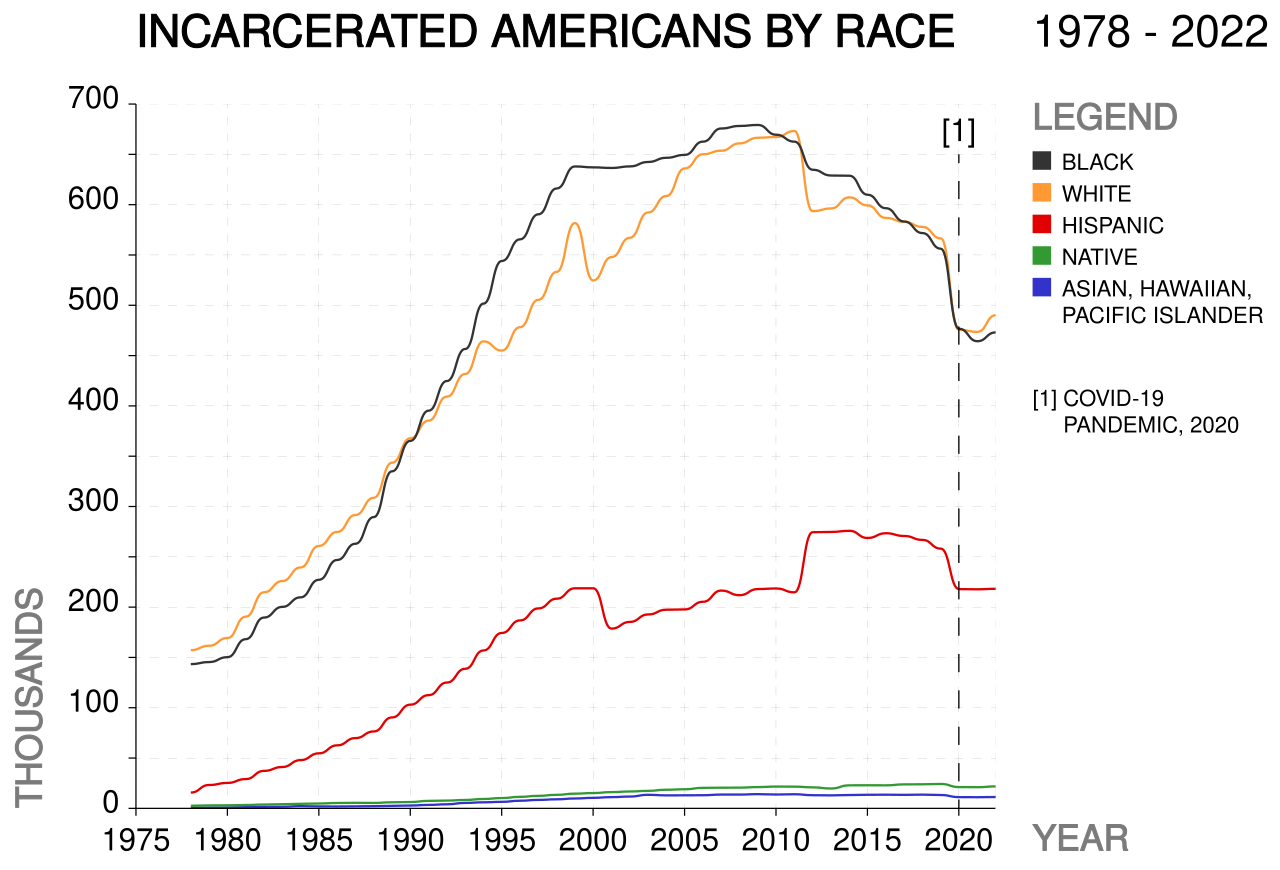
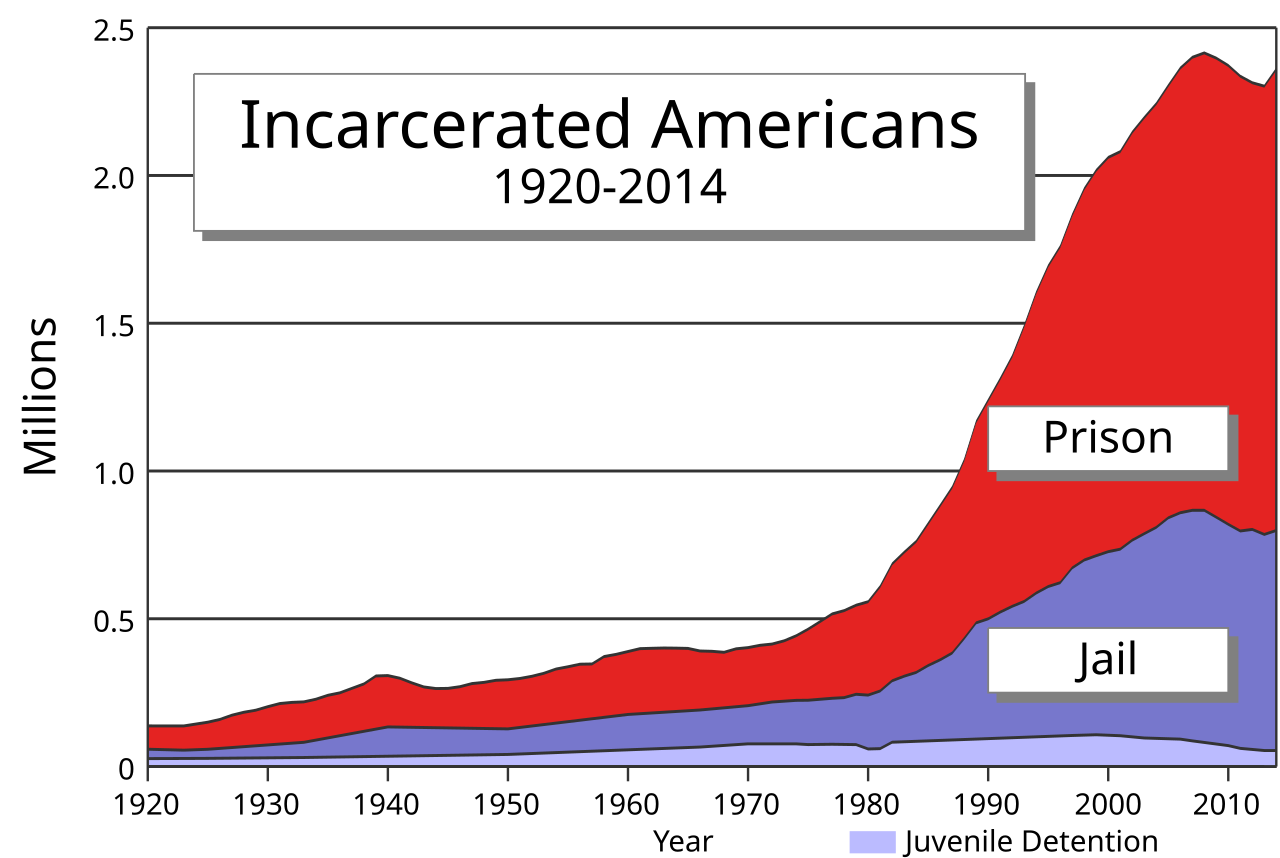
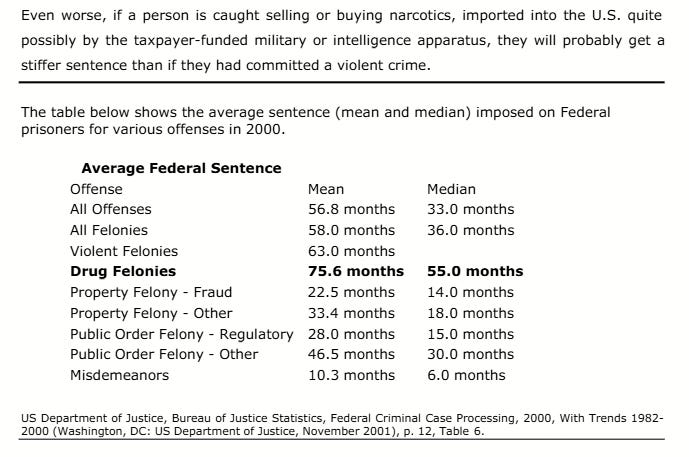
Drug-related crimes would receive the harshest sentences, with inmates serving longer prison terms than rapists, brutal assaults (including murder), and other crimes.
Soon, in the United States, one in every 32 adults would be locked into the prison system, whether that be behind bars, on probation, or on parole. To put these horrifying statistics into perspective, imagine being in your child’s classroom of 35 students. Each of those students has a mother and father, totaling 70 parents. Of that, two of them are currently incarcerated or otherwise trapped in the system. And this is not just in your daughter’s math class; it is in every classroom in the school. Those 70 parents each have two parents, totaling 140 people. Of that, four to five are locked away or entangled in the system. And at every step of the ploy, someone who isn’t the incarcerated American public is getting paid. The next shocking revelation is what goes on behind for-profit prison doors…
NEXT READ: Blackrock & Wall Street NEED Mass Incarcerations [Prison Profits Part 2]
___________________________________________________
Did you see that I am headlining a big event on September 17th, 2026? Five of your favorite authors will be giving one-hour presentations. Be sure to grab your ticket! You can learn more about Truth Be Told: The Mega Event and each presentation here. Check out the commercial below!
Want to support my work? Buy Me a Coffee or Make a Ko-Fi Donation:
If you want to make sure you are updated when new articles, eBooks, events, and podcasts are released, be sure to sign up for WhatsApp notifications:
![Blackrock & Wall Street NEED Mass Incarcerations [Prison Profits Part 2 by Agent131711]](https://dropinblog.net/cdn-cgi/image/fit=scale-down,format=auto,width=700/34264201/files/featured/prison-profits-part-2.png)
![The Mind-Blowing 1917 Cancer Journal - Tumors and More [Cancer Part 2 by Agent131711]](https://dropinblog.net/cdn-cgi/image/fit=scale-down,format=auto,width=700/34264201/files/featured/cancer-2.png)
![Donald Trump Exposed: The Judge, The Helicopters & The Shell Companies [Trump Part 1 by Agent131711]](https://dropinblog.net/cdn-cgi/image/fit=scale-down,format=auto,width=700/34264201/files/featured/trump-1-2.png)
![Introduction to THE EVOLUTION HOAX [Part 1 by Agent131711]](https://dropinblog.net/cdn-cgi/image/fit=scale-down,format=auto,width=700/34264201/files/featured/evo-1.png)
![Are Raisins and Grapes ACTUALLY Toxic To Dogs? [By Agent131711]](https://dropinblog.net/cdn-cgi/image/fit=scale-down,format=auto,width=700/34264201/files/featured/e6dfb138-526f-43e7-bca7-19f4109562e3-1400x788.webp)
![Is Garlic Harmful to Dogs? Let's Review the Studies [by Agent131711]](https://dropinblog.net/cdn-cgi/image/fit=scale-down,format=auto,width=700/34264201/files/featured/7045f3d8-f1ba-46f8-85b6-308832f0c180-1400x788.webp)
![Pizzagate: The Final Chapter + Explosive Testimony! Erika Kirk Victim Speaks Out [by Agent131711]](https://dropinblog.net/cdn-cgi/image/fit=scale-down,format=auto,width=700/34264201/files/featured/aaeb0ec7-142c-4792-b8fb-a17b103755c9-1536x1024.webp)
![Sound of Freedom: Hit Movie or One Big PSYOP? [Pizzagate Part 22 by Agent131711]](https://dropinblog.net/cdn-cgi/image/fit=scale-down,format=auto,width=700/34264201/files/featured/sound-of-freedom.png)
![A Second Look at Wayfair [Pizzagate Part 7 by Agent131711]](https://dropinblog.net/cdn-cgi/image/fit=scale-down,format=auto,width=700/34264201/files/featured/04392d5b-b667-4dc8-835a-452bfd4867ec-1400x788.webp)
![NXIVM: The Untold Story - What Exactly is Going On Here? [Pizzagate Part 4 Agent131711]](https://dropinblog.net/cdn-cgi/image/fit=scale-down,format=auto,width=700/34264201/files/featured/44049584-89f5-4164-859e-c7ee45197721-1400x788.webp)
![Jeffrey Epstein, DynCorp, Trafficking & Mossad: The Untold Story [Pizzagate Part 3 - Agent131711]](https://dropinblog.net/cdn-cgi/image/fit=scale-down,format=auto,width=700/34264201/files/featured/epstein-1400x788.png)
![Hidden in Plain Sight - How is This Legal? Art, Crime & The NEA [Part 1 by Agent131711]](https://dropinblog.net/cdn-cgi/image/fit=scale-down,format=auto,width=700/34264201/files/featured/2f562c5d-6f1b-4add-a25c-49a377922e7e-1400x788.webp)

