


THE BEACH CITY
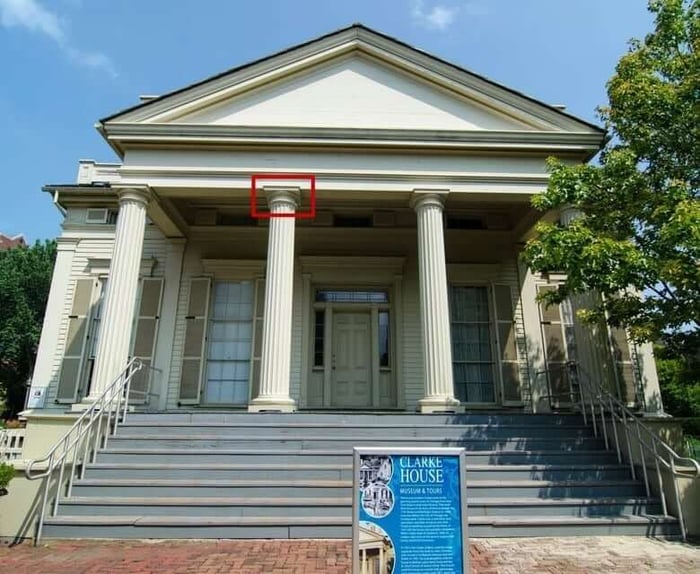
In 1827, the Charleston Mercury published Ancient Ruins Discovered. It said, “The heavy rains in October have produced an interesting discovery which may lead to others of great importance. On the beach of Capo Barro near Marsala, the earth was being washed away by the water, and it exposed the ruins of an ancient edifice which had been buried for so many ages.” (Edifice means a massive structure.) Buried in the ground were at least five bases of columns of equal distances from each other and a pavement of 16 palms in length (roughly 48 inches, or four feet). On the pavement was “great mosaic work”. They then discovered more bases and a capital of another column. A capital is the top part of a column:
A short distance away, they located a building with two doors. They were able to get inside it and found that the floors were made of white marble and the walls were covered in “soft stone stucco”. They then discovered additional buildings surrounded by walls that were still partially buried under the ground. Due to the rain, the visible part of the building was sticking out of the ground approximately two or three palms (6 to 9 inches).
Interestingly, if you type into a search engine “Capo Barro beach ruins,” you get no results. If you type Marsala beach ruins, it says there are no ruins on a beach in Marsala. If you keep looking, you’ll come across assorted tiny ruins, none of which seem to match the article:
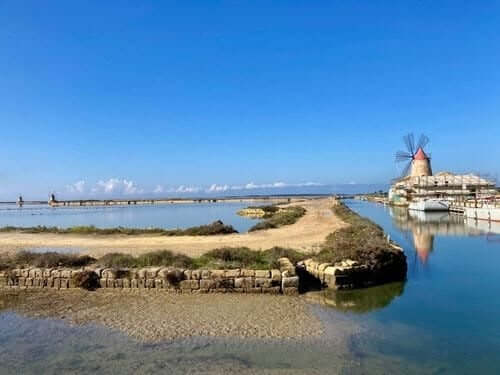
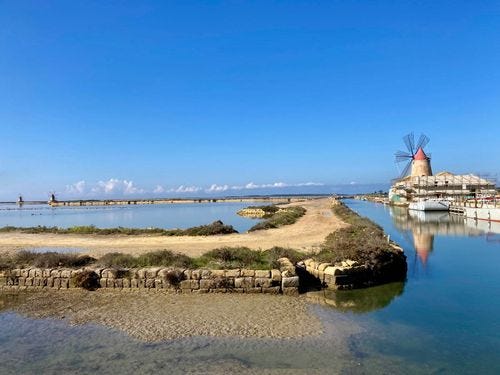
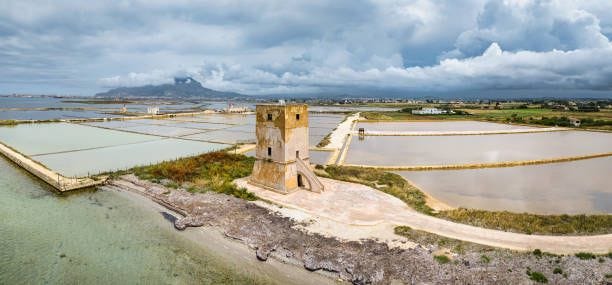 It seems these ruins have completely vanished…
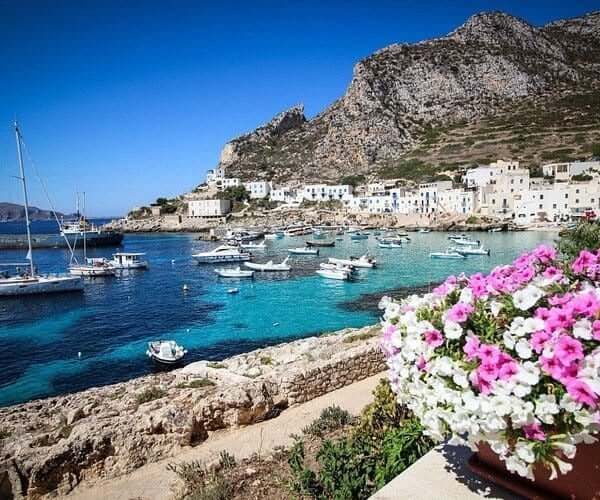
…but I have not been to Italy, so I can’t be sure.
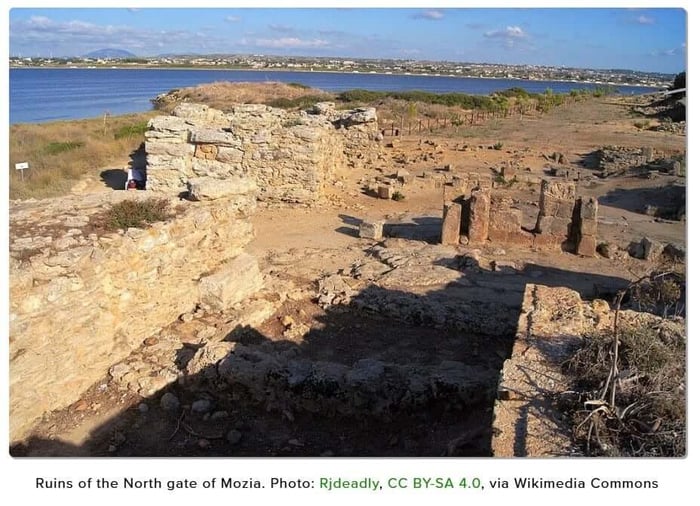
THE ANCIENT ROOMS
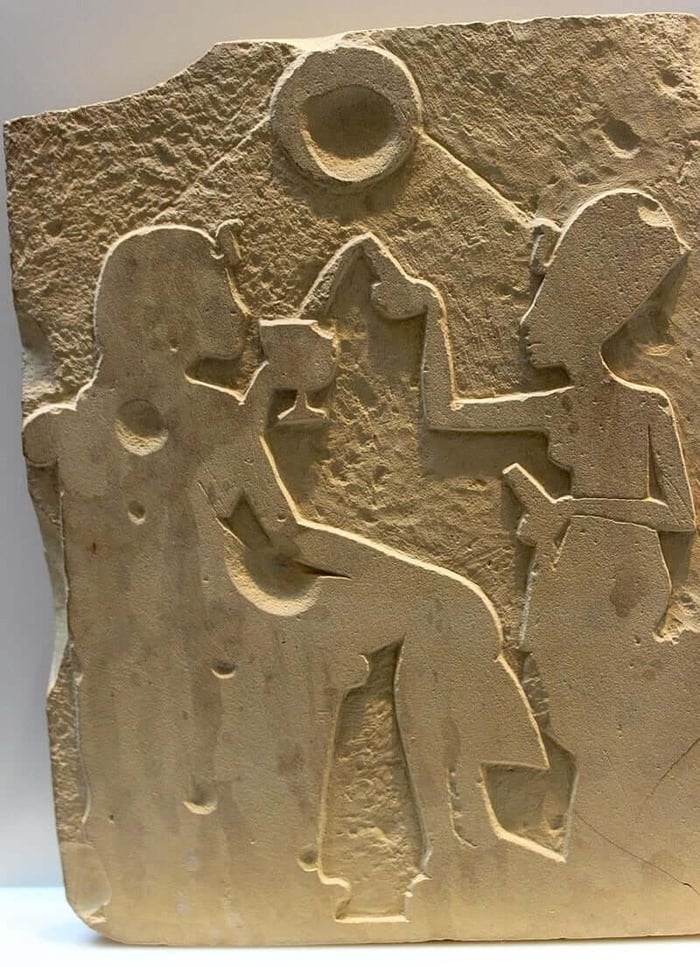
In 1848, ruins of buildings were discovered underground in Nineveh (modern-day city of Mosul in northern Iraq). The article said the earth had accumulated over them. At the time, they believed the buildings predated Christ by 1,200 years. The rooms they discovered were lined with slabs of marble covered with bas-relief. (Bas-relief is where you carve out around your art so your art protrudes, meaning the walls were made of marble with carvings that made the art stand out. Here’s an example of bas-relief in stone:)
The walls were joined by double dovetails made of iron. (This is a dovetail:)
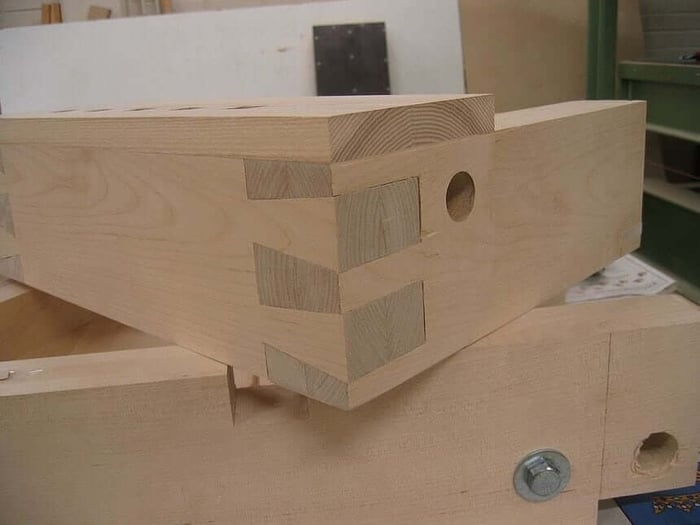
(So they did that with iron!) “The doorways were flanked by winged figures of greater height than the slabs. On all of these figures was the mark of blood as if thrown against them and allowed to trickle down. The walls were of sun-dried bricks” parts of them were covered with plaster and painted. The ceilings of the rooms featured beams made of perfectly preserved mulberry wood.
Even more puzzling, each room had a sewer system. There was a drain connected to a main sewer. In the midst of all of the ruins, they discovered a small chamber formed of arched bricks. They did not know what the chamber was for. What did they do with this amazing discovery? Pieces of the room were hauled away to be put in the British Museum. Once again, the ruins I was able to locate in former Nineveh, current-day Iraq, look nothing like what the article describes:
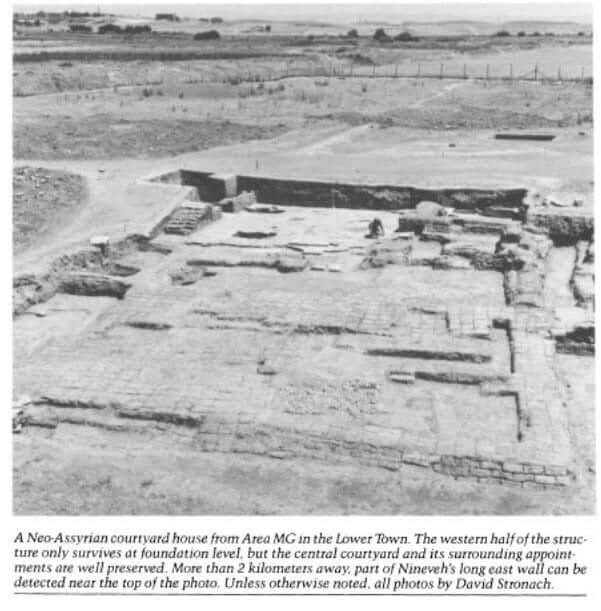
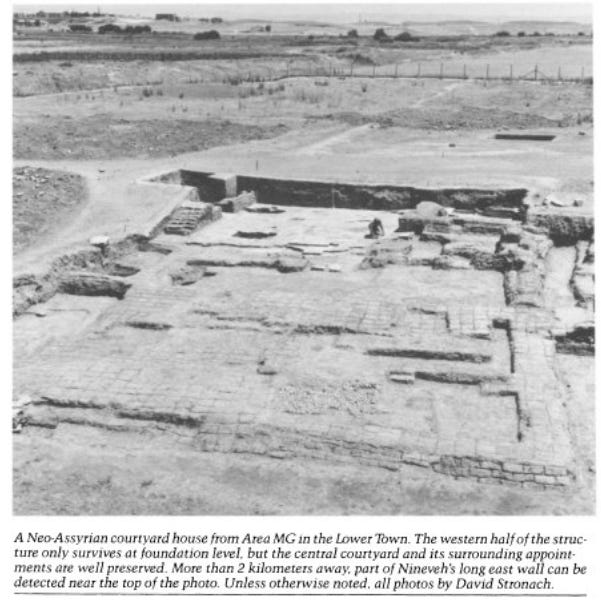
If these ruins stood for thousands of years and were discovered less than 200 years ago, they should be in the same condition they were upon discovery. But I guess this would be difficult when the site was dismantled to be gifted to the Brits.
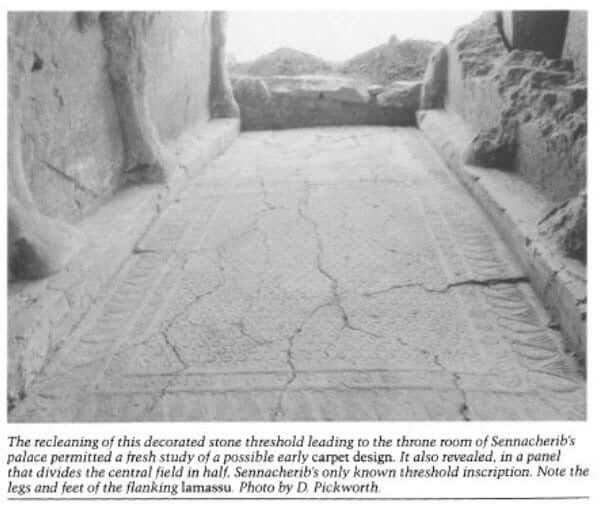
What we instead get are ruined ruins, and we are told this is because they just didn’t have the technology we have today. And yes, there was a sewer system, connected to each room, which they believe predated Christ by over 1,000 years. To put this into perspective, the District of Columbia’s sewage system, one of the oldest in the United States, began being installed around 1810, but it would take until the 1850s for sewer systems to begin becoming common. The sewer system discovered in the buried ruins in Iraq was thought to predate the Washington, DC sewer by approximately 2,800 years.
THE MASSIVE CITY IN THE MARSH
In 1870, the Cleveland Leader published Ancient Ruins Discovered. It said, at the mouth of Hebron in Rome, located near Dymes and Enos, they found vast ruins in the marshes. The marshes were so uninhabitable that no one had ventured into them. Here, they found an inscription saying the city was once Trajanopolis. There were fortified city walls measuring five kilometers (a half mile) in circuit, which were all buried underground. They had just finished unearthing them.
They also found remnants of vast suburbs extending over two square leagues. (A square league is approximately 4,428.4 acres, so they found about 9,000 acres of suburbs!). The acropolis contained ruins of massive structures, broken columns, pedestals, and assorted inscriptions. An acropolis is a defensible hilltop, meaning it was the highest point of a city, typically used by the military for defensive purposes but also used for religious purposes. Here is an acropolis in Athens, Greece: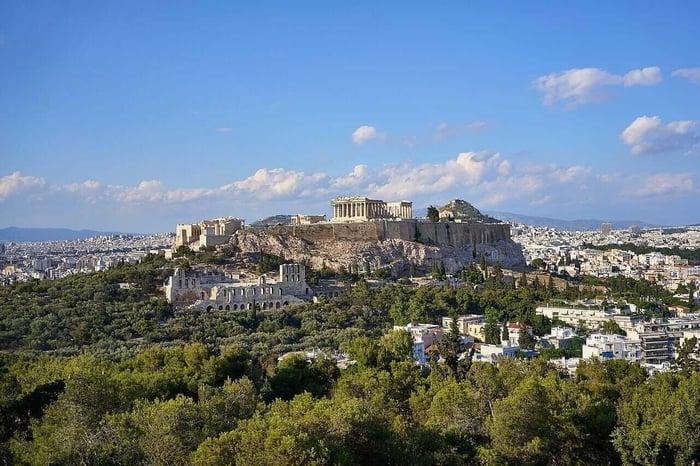
So it sounds like, within the marsh, was a hilltop, and on that hilltop were massive structures. This city also had sewers.
If you Google search Trajanopolis, you are redirected to Traianoupoli, and you get these two photos.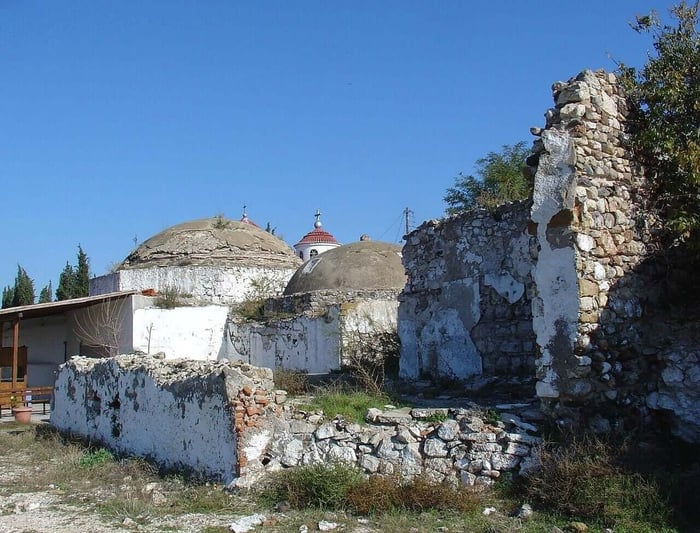
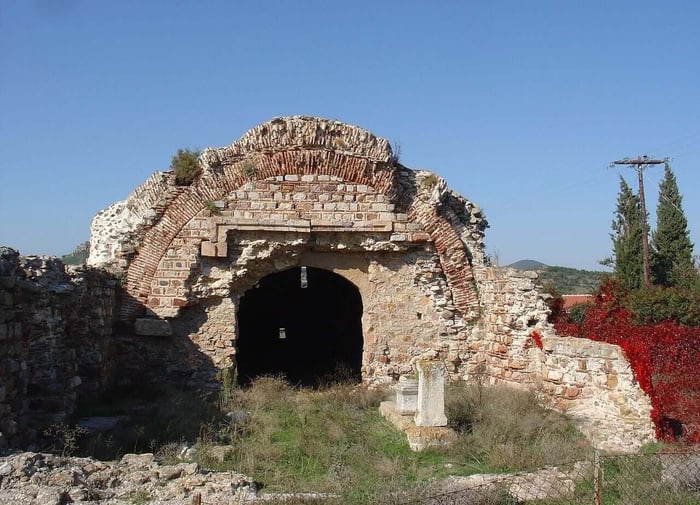
Neither of which looks like fortified city walls measuring a half mile, nor does it look like 9,000 acres of suburbs, let alone an acropolis with massive structures. If you look up Hebron Ruins in Rome, you get no results. If you try to locate Enos Ruins, you are told no such city exists. If you search for Dymes Ruins Rome, you are told there is a typo in your query.
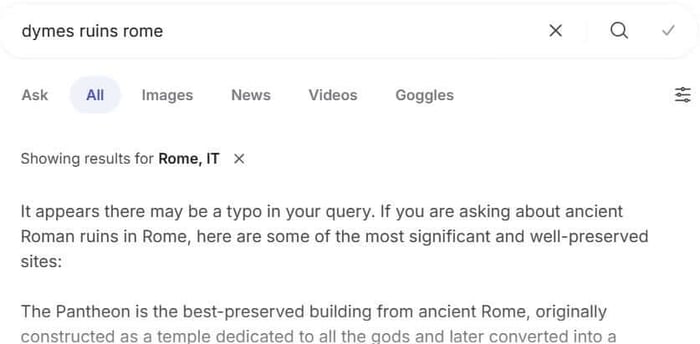
While trying to hunt down these incredible ruins, which were just discovered only 155 years ago, I came across a Reddit post in which someone was asking the same question that was on my mind: Where did all the ancient Roman ruins go?
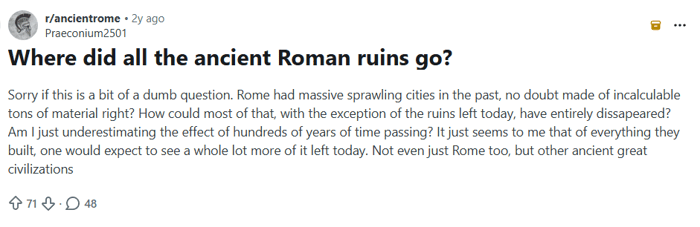
Next up…
THE COLORADO RIVER RUINS
In 1852, ancient ruins were discovered on the Colorado River near its junction with the Gila. The people who found it had come across an irrigated canal and followed it until they came upon a low table land area where they found these ruins. One of the discoveries was a fragment of a wall still standing, as well as the outline of a larger wall enclosing a building. The ground for many miles was strewn with broken pottery, grinding stones, pestles, and fragments of marine shells.
The article said there is no doubt that these valleys were once filled with a dense population, far enough advanced in civilization to build houses of several stories in height surrounded with regular outwork and irrigating their lands by canals extended miles in length, but they seem to have left no trace or tradition by which we can tell who they were.
THE NATIVES DIDN’T BUILD THEM
The next article is from 1842, and it is just called “Ruins.” It says, “The ruins discovered in Central America are regarded as almost too marvelous to be credible. They are described as equaling in extent, skill, and magnificence those of Egypt. They are more wonderful, as their existence have been entirely unknown… The natives that were in this country when it was discovered were incapable of constructing such masterpieces.” It would also point out that the few people who know the truth about the ruins are now dead, and it appears their publications have disappeared. That’s all the article says.
CITIES MORE ADVANCED THAN CURRENT DAY
In 1880, the Seymour Times published a rather lengthy article, which I am going to provide pieces of: “The remains of an ancient city found in New Madrid County, Missouri, was a hot topic for the Academy of Sciences in St. Louis. The ruins of the city and its fortifications have been traced for several miles and indicate a dense population. Remains of mounds serving either as watchtowers or cemeteries or both, in which reposed skeletons, drinking vessels, and other relics have been found in various parts of the area of the city.” They also found evidence of dwellings, streets, and avenues that spanned across large portions of the ground. Pottery ornamented with very accurate representations of fish, frogs, hedgehogs, various birds, including owls, geese, and ducks were discovered all over the place.
On the top of a hill in Ohio County, Kentucky, a discovery was made of an ancient causeway or excavation spanning across the brink of a hill. (A causeway is a route raised up on an embankment, so something like this was spanning across the upper edge of the steep or vertical part of the hill).
The causeway they discovered was 25 feet wide and a foot or more in depth. For reference, a typical street in the United States is 22 to 26 feet wide, so this ancient street is the exact same size as our modern streets for automobiles.
“In the bed of the causeway and about it are immense numbers of human bones. There are the ruins of a city with regular streets curved with stone and evincing a higher order of architectural knowledge and a greater civilization than any other prehistoric remains yet found in America. Traces of a similar city were also found in Montgomery County (California). So, in both California and Kentucky, vast ruins of incredible cities were found.
Before we move on to more of the article, let’s see if we can find these ruins today. Ohio County, Kentucky, is where the hill with a massive causeway was.
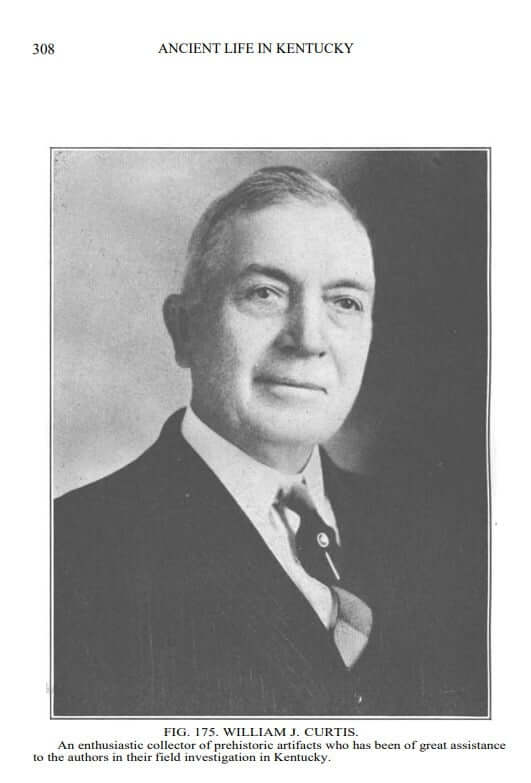
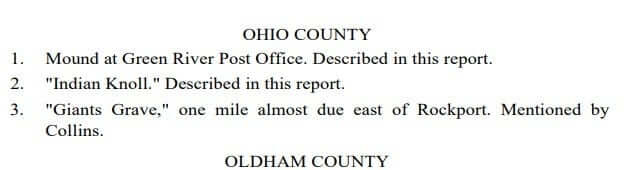
On the Ohio County website, there is a page called History. On this page, no such ruins are mentioned. In a document called Ancient Life in Kentucky,
There is a section called Ohio County. It lists only three archeological discoveries, none of which match the news article.
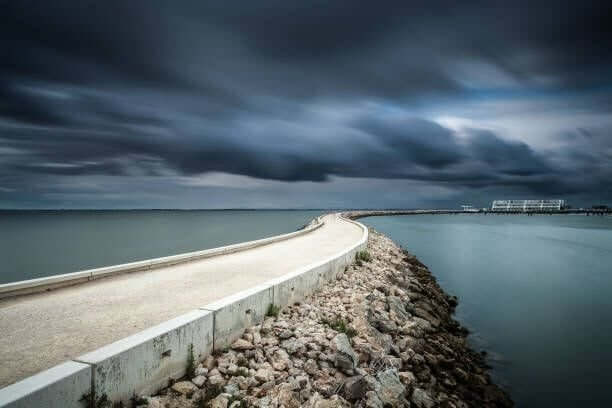
In a publication called These 10 Unbelievable Ruins In Kentucky Will Transport You To The Past, I hoped to find what is being described in the 1880 news article, but the closest match is this rock thing, which doesn’t sound anything like what was previously described.
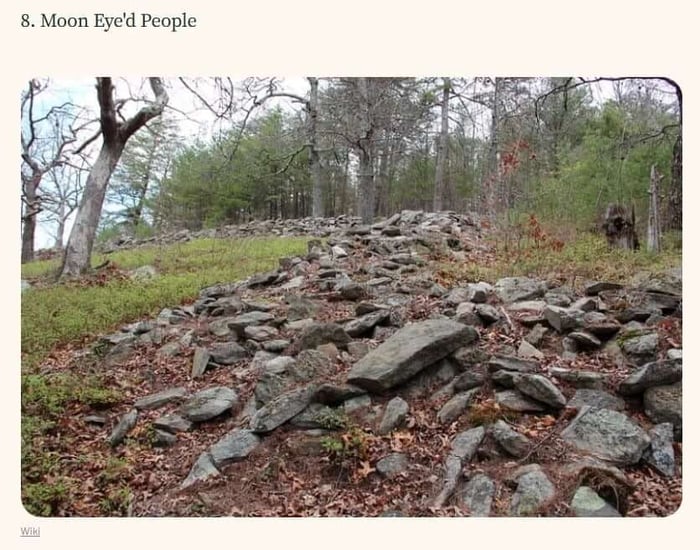
Let’s continue on with the publication. It said, “The remains of a city have been discovered under Table Mountain [California].” Under the mountain, you say? If we pull up the Table Mountain Wikipedia page, there is a single mention of ruins, and it says, “The small ghost town of Cherokee, California, is on the mountain, and is named because a small group of Cherokee Native Americans were brought there and established a small community.” There is this single photo of a crumbling stone house.
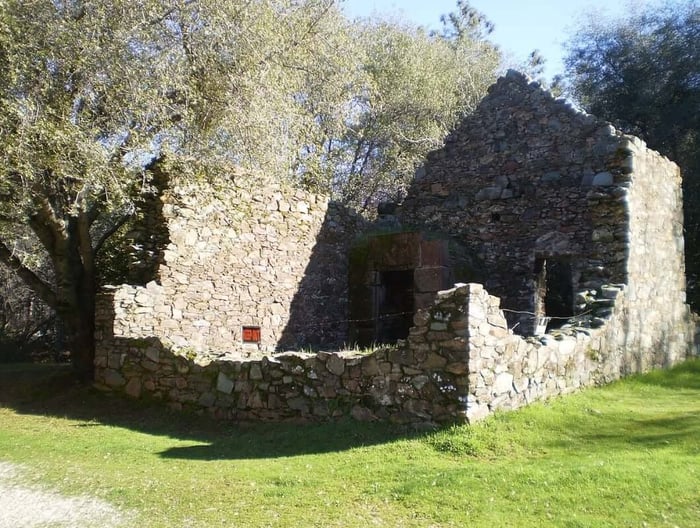
I then visited the Cherokee, California page and found another photo of a crumbling stone home.
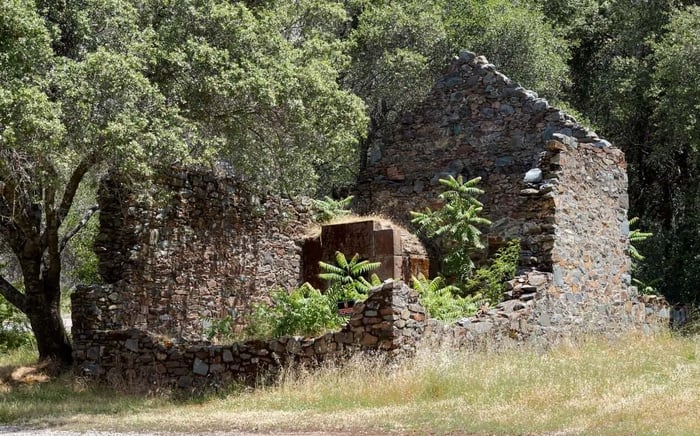
None of this seems to be ruins discovered under a mountain.
The article went on to talk about additional discoveries, “In the Allegheny Tunnel [Pennsylvania] under the head of the Old Blue River were a number of fossilized pine logs 7 feet long and 4 feet in diameter that had been piled together. This means the tunnel itself is so old that lumber inside of it fossilized.” The tunnel is a massive trench through the mountain measuring about 250 feet deep and nearly 4 miles long.
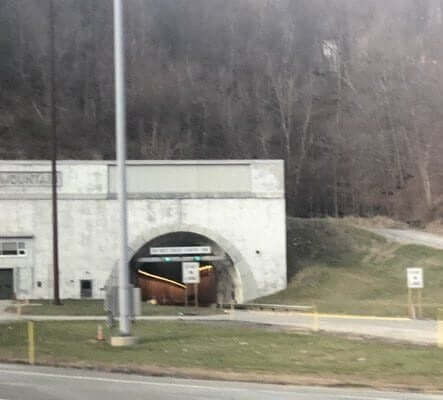
When I dug a fish pond in my backyard, I was struggling to get past six feet. Even with a pickaxe, the rocks were nearly impossible to get through. How do you suppose they got 250 feet deep? And four miles worth of it? To make things even more perplexing, according to Wikipedia, the Allegheny Tunnel began being built in the late 1800s and was completed in 1939. The reason this is perplexing is that the article appeared in the newspaper in 1880, and it stated the wood inside the tunnel was so old that it had fossilized.
In Harper’s Magazine, June 1876, an account was given of the ruins of ancient cities found in various parts of New Mexico, Utah, Arizona, and the southern and southwestern parts of Colorado. The paper said, “These ruins bear witness to a much higher state of civilization than that enjoyed by the people who now live in the surrounding country.” - Let me repeat that last line:
These ruins bear witness to a much higher state of civilization than that enjoyed by the people who now live in the surrounding country.
The article then went on to describe the buildings: “The buildings are of hewn stone, the masonry of which is well executed. Each successive horizontal layer breaking joints with the one below.” What they are saying here is that the hand-cut stone layers were staggered, row by row, to create a perfectly sound structure.
“The remains of cedar beams, which divided the house into two stories, are still seen. The walls were plastered with a layer of cement about an eighth of an inch in thickness. The floors have been leveled with cement similar to that on the walls. Glazed, painted, and ornamented pottery is abundant near each mound of ruins.” Do you ever wonder how the buildings end up underground but decor and such is laying on top of the soil?
When describing another discovery, the article stated, “To the west and southwest of Terra Amarilla is a county that also has ruined dwellings of fine fortification. Some of the ruins show traces of 400 rooms under one roof, and so large a population as this indicates would not have existed in the country as it is now or in an arid desert without permanent water.” Let’s go over that line again, too:
“Some of the ruins show traces of 400 rooms under one roof, and so large a population as this indicates would not have existed in the country as it is now or in an arid desert without permanent water.”
What they are saying is, in Terra Amarilla, New Mexico, they discovered ruins that proved there was a massive civilization, but, being that there was currently no reliable water source, it was mind-boggling as to how anyone could have ever lived there, let alone in such a large population. I should also mention, I don’t think there is currently a single ruin anywhere in this country that shows traces of 400 rooms under one roof, is there?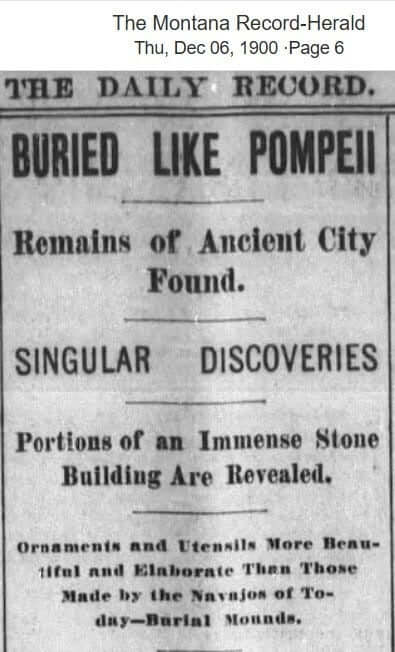
BIGGER THAN BUCKINGHAM PALACE
This one is important: In 1900, The Montana Record-Herald published “Buried Like Pompeii. Remains of Ancient City Found. Portions of an Immense Stone Building Are Revealed. Ornaments and Utensils More Beautiful and Elaborate Then Those Made by the Navajos of Today. Burial Mounds.”
I think this article is talking about New Mexico. It says the discovery was made in the Pajarsto Canyon, between Bland and Española.
The ruined building was 560 feet long and 450 feet wide, built entirely of stone. It was two or three stories high originally, but now, only walls measuring six to ten feet high remained standing. From this area, they excavated a buried room which measured 9 feet by 12 feet. In this ancient room was an old furnace or smelter, gold ornaments, and a piece of beautiful turquoise. Incredible pottery was also located. On one of the pieces of pottery was a painting of a building featuring a smokestack with smoke pouring out of it.

The room also contained a fireplace, and around the fireplace were a dozen large pots, each containing buffalo bones. Near the oven was scorched corn, together with bones from other animals. The paper said it appeared the inhabitants had abruptly abandoned the room while they were preparing a meal. The people fled while cooking dinner? And their city ended up buried? I’ve always been on the fence about the concept of a mud flood, but this sure seems to describe one.
They also discovered several baskets, far more beautiful than those woven by the Navajos of the time, but as soon as they touched them, they disintegrated. Iron knives, stone battle axes, polished stone reflectors, and several musical instruments were found, all well preserved. They estimated the total size of the building was 1,200 to 1,500 rooms, but only one had been fully unearthed as of the time of the publication. Does that not blow your mind? 1,500 rooms?! Underground?! For reference, Buckingham Palace has 775 rooms.
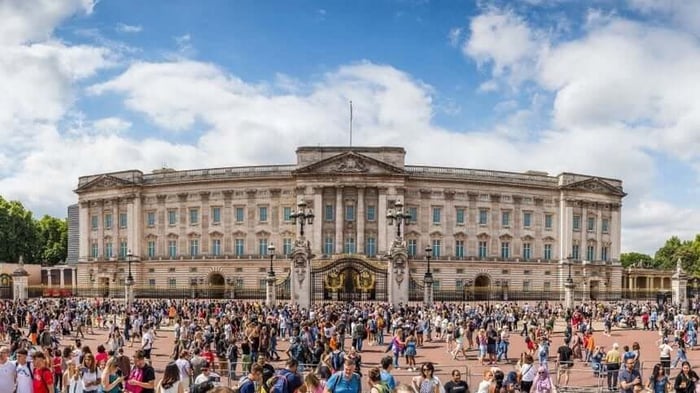
The buried building was double the size!
According to the paper, this incredible find was in the Pajarsto Canyon. When you try to look that up, the internet tells you no such thing exists and refers you to the “Pajarito Plateau” in New Mexico.
The article stated this discovery was made between the city of Bland and Espanola. Espanola is a current city in New Mexico, so we can put it on a map, but Bland is said to be a ghost town. Google estimates it to be approximately here:
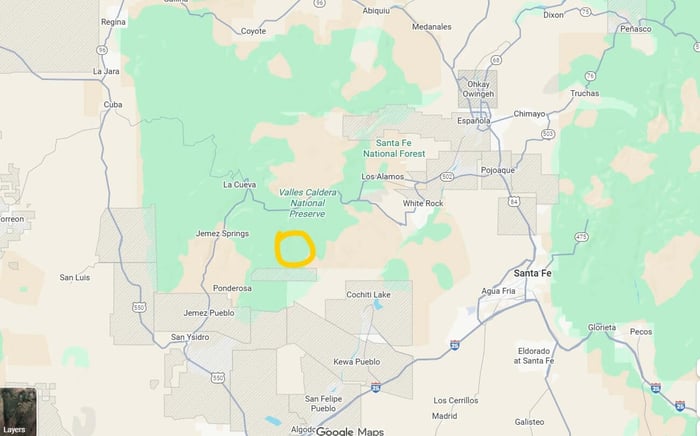
So somewhere in between these two points once was this massive 1,500-room building buried under the soil.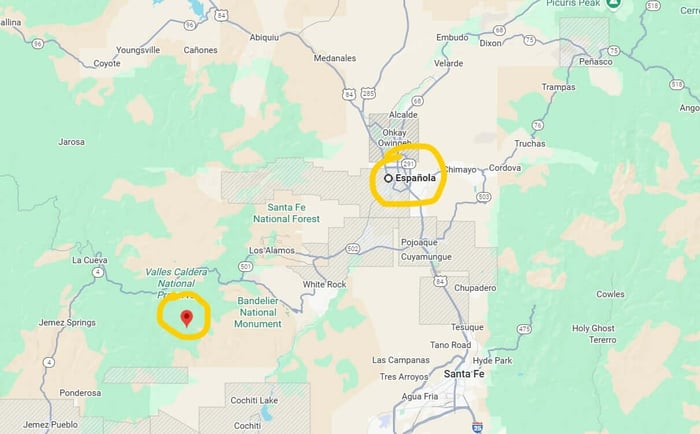
5-FOOT THICK WALLS IN THE MIDDLE OF NOWHERE
Here’s an intriguing one: in 1892, an abandoned Ancient City was discovered in New Mexico. It was found in the middle of nowhere, 100 miles west of Socorro, over 75 miles from the closest railroad. It featured walls made of hand-cut, hewn sandstone, which measured three to five feet in thickness, totaling 30 feet long! As the discoverer continued to look, he found several acres of ruins. On the property were amazing houses, some without windows, built around a large central square. He found abandoned pottery, gardening tools, weapons of war, as well as tools, including hammers and drills. Inside one of the abandoned houses was the most beautiful pottery he had ever seen. Three-foot-tall jars were exquisitely decorated, all perfectly preserved.
FINAL THOUGHTS
When we combine everything we have learned: high-tech civilizations with magnificent buildings far beyond anything we can create today, all abandoned, dinner left burning on the stove, valuables left behind as if someone needed to abscond right that moment, complete desertion, yet there aren’t any human or animal remains discovered in the homes, nor is there any clothing, books, or toys. Surely people living in the blazing hot desert would wear some kind of shoes and body covering to protect them from the scorching hot ground as well as the cacti, but where are the shoes?
What about animals, wagons, or vehicles? How did these people haul giant marble slabs, huge beams of wood, boulders of stone, and iron for fucks sake? Go pick up your cast-iron pan in your kitchen, then imagine the weight of it as a giant wall beam. Without some form of transportation or strong animals to pull it, this seems impossible, yet no technology like this has ever been reported to have been found. How is this possible?
Then there are the buildings with hundreds to 1,000 or more rooms discovered, so covered in soil that only the top is sticking out of the ground, yet there aren’t bones of mass amounts of people trapped inside of them. To add to the oddities, pottery, shells, tools, and other small items are found on the surface, leading up to the buried structures, as if leading a pathway to them, meaning whoever those items belonged to seemed to know the buildings were located under the ground in those locations, yet they were unable to dig them out. What is going on here?
Here are the only options I see possible:
The mud flood theory could be real. People had an advanced enough amount of time to grab their small items and run, thus explaining how the wagons, vehicles, animals, people, and small items made it safely to the surface. But this would be a stretch because it would mean every last person made it to safety (alternatively, every last bone of a trapped person decomposed and entirely vanished, yet other items didn’t, and metal didn’t become covered in rust). But the thing that gets me is, the mud would need to come from somewhere, and it is as if the mud was dumped on it from above. I say that because these buildings that they are finding, the rooms themselves are not full of dirt. One would think if there was a flood of mud, the weight of the dirt would be so powerful it would knock down walls, break out windows, and permeate every last room, right?
If there wasn’t a mud flood, then what?What if it’s much darker than that? What if someone wanted to destroy a mass group of people, and they came in, armed, and drove them out? As the soldiers or a large group of bad guys took over, they demanded that the citizens flee. People were able to take their clothing, their family, and small items, throw them in their wagon or mode of transportation, and leave.
Then, to permanently obliterate the city, it was buried. Although this may sound extreme, solid stone buildings are difficult to dynamite (I learned this from researching the World’s Fairs.) Equally, they are difficult to set on fire (apparently until the late 1800s, when they began melting like wax).
With that in mind, burying the whole thing would be a great way to dispose of it. Hell, burying trash used to be so common here in the US that when I dug the pond I mentioned earlier, I found all kinds of garbage, even strange pieces of railroad. I sure would love to learn how those got there. Anyway, I don’t think it is out of the realm of possibility that it could have been intentionally buried like trash to condemn it. It would take a hell of a lot of dirt, but with a large group of laborers, I could see this as being a possibility. This would explain why the buildings are buried, but the rooms themselves are perfectly preserved and free from dirt: someone filled in soil around the structure to cover it.
Then I started thinking about this more. You know how they pretend to dig for dinosaurs? If you don’t know what I’m talking about, read The Dinosaur Hoax. What if there is an even bigger reason why they are digging? The dinosaur dig parks, which are owned by the government and elites and are off-limits to us (except for designated areas, which we can pay to access), happen to be in the same states as these insane discoveries: New Mexico, Colorado, and Arizona. Is that just a coincidence? Why aren’t there dig parks in Michigan, Vermont, and Minnesota? Surely if dinosaurs roamed the whole United States, there would be dig parks to find them everywhere. Yet these dig parks, aka off-limits lands, are in the same locations as buried, abandoned, and otherwise unexplainable history? Interesting, isn’t it?
______________________________________________________
I hope you loved this post! If you appreciate my research, please consider hooking me up with a coffee or making a Ko-Fi donation. These articles take a lot of time, and I do it for free because I love raising awareness, but the articles aren't actually free to write. There are surprisingly a lot of costs that go into being a journalist, and contributions REALLY help!









![Introduction to THE EVOLUTION HOAX [Part 1 by Agent131711]](https://dropinblog.net/cdn-cgi/image/fit=scale-down,format=auto,width=700/34264201/files/featured/evo-1.png)
![GMO Food? Lab Made Food? Or Outright FAKE FOOD? (Agent131711) [Part 1]](https://dropinblog.net/cdn-cgi/image/fit=scale-down,format=auto,width=700/34264201/files/featured/gmo-1400x788.png)

![The Playboy Shadow Mansions, the CIA & Drug Trafficking [PART 1]](https://dropinblog.net/cdn-cgi/image/fit=scale-down,format=auto,width=700/34264201/files/featured/playboy-copy.png)