


The question isn't if NASA has ever faked it; we know they have. The question is, how far would they go to make us believe an illusion?...
It started with me seeing this clip from Lost In Space, an episode of SGT Report featuring David Weiss & Jeran Campanella (Oct 4, 2022). At the 19:30 mark, David Weiss shows the following:
This is what Dave is referring to when he says it looks overinflated:
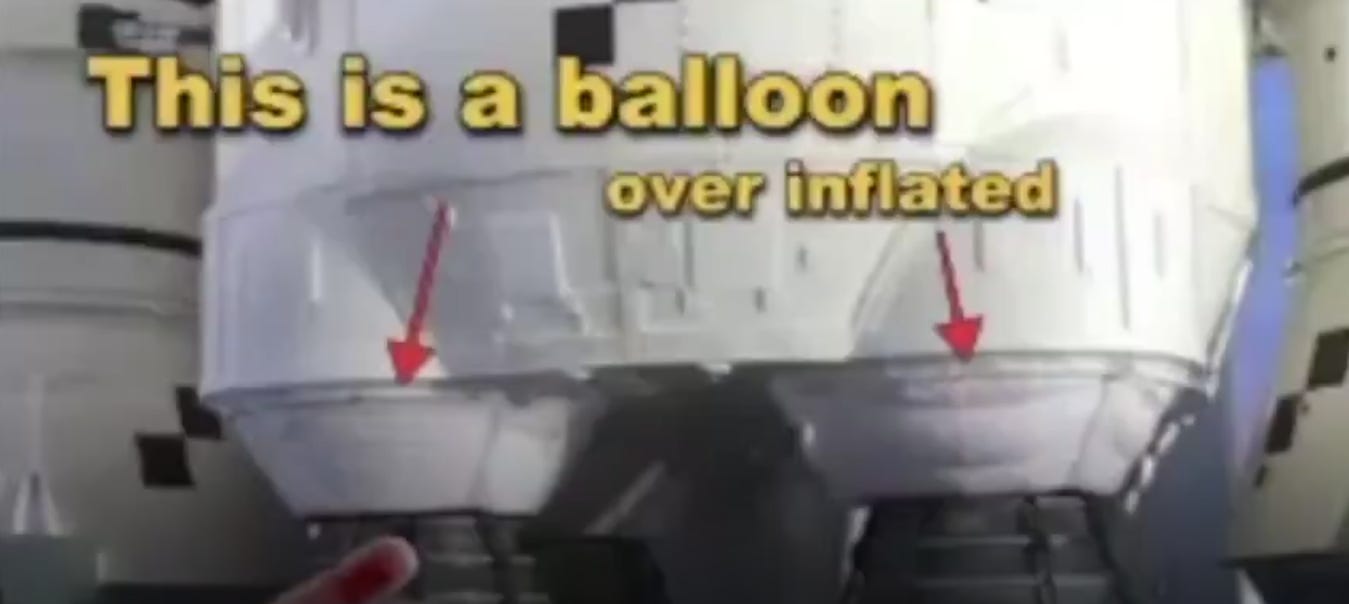

Is this a stretch of the imagination (pun intended)? An innocent manufacturing defect? Poor lighting? Or could what Dave is saying possibly be true? If you read my two-part series The Satellite Hoax, you already know NASA loves balloons. In fact, they love balloons so much that they are the world’s biggest buyer of helium. Their “satellites” are balloons, devices dangling from balloons, airplanes, and ground-based units, none of which are in outer space. When they say they put something into “Low Earth orbit”, it simply means it’s flying around in the sky. So is it out of the realm of possibility that rockets could all be balloons? More research was required.
As I have said numerous times before, the best predictor of future behavior is past behavior, so, other than using balloons for satellite trickery, has the government ever used balloons to deceive people before? It turns out, YES.
If we go back and look at still shots of the SGT Report clip, there’s the huge rocket:

And here it is, splitting open. Not only will you notice that there is nothing inside the rocket, but you will also notice some form of white vapor is being ejected from it.

As it begins to open more, we can see more vapor rushing out.

If we compare the rocket bursting open to a large science balloon popping in the sky, we see a quite similar phenomenon:

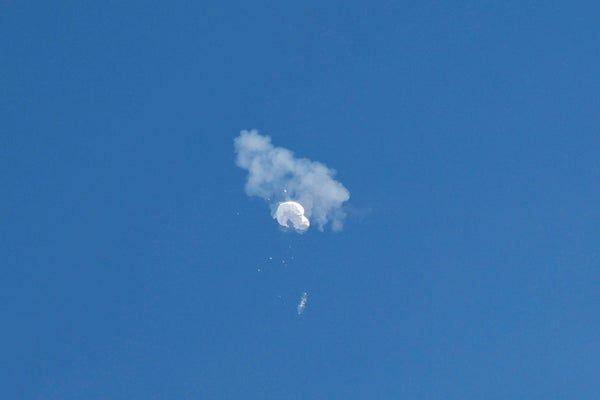
Intriguing, isn’t it?

My mission now was to locate footage of rocket failures, which, you would think, would be a really easy task, but for reasons I could not explain at the time, it was not.
I first came across this video:
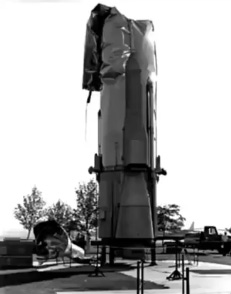
This looks like a deflated balloon or a space shuttle in need of Viagra, pronto:
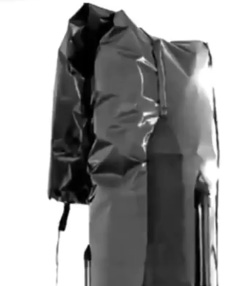
How do you explain that? If you truly want to believe it is metal that crumbled like tin foil, then you must ask yourself how this, or anything like this, is able to get to space. Commercial airplanes are not made out of foil, and they only go 30,000 to 42,000 feet (5 to 7 miles or 8 to 11 kilometers) above the ground. Commercial planes are sturdy. Look how thick the door is.
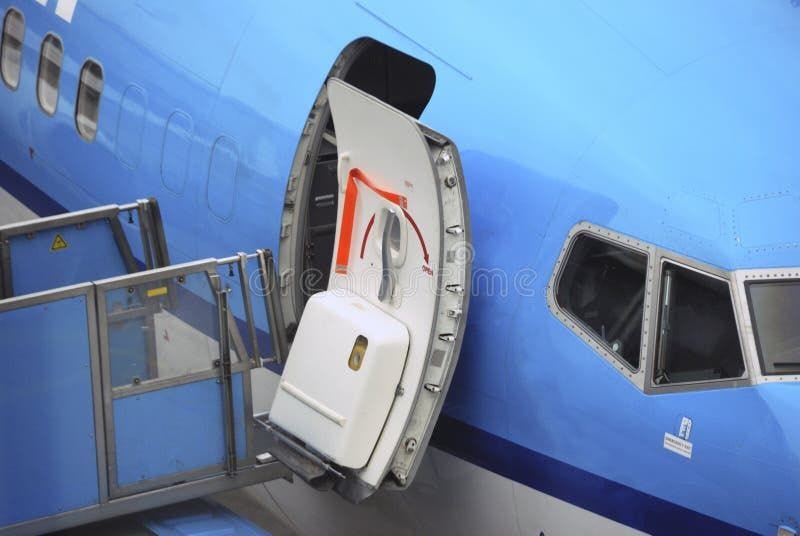
Now imagine how thick the door of a rocket would need to be to travel 280,000 miles above earth. According to NASA itself, the rocket’s walls must be made from 8-foot-thick steel and concrete to deal with the vacuum of space. For reference, this is an 8-foot-wide house.

Call me a crazy conspiracy theorist, but this just doesn’t look like the same thickness, nor does it look like steel and concrete.
Neither do these pieces that fluttered to the ground.

Next we will check out some rocket blast-offs. Keep in mind, we don’t get to see rocket launches up close.
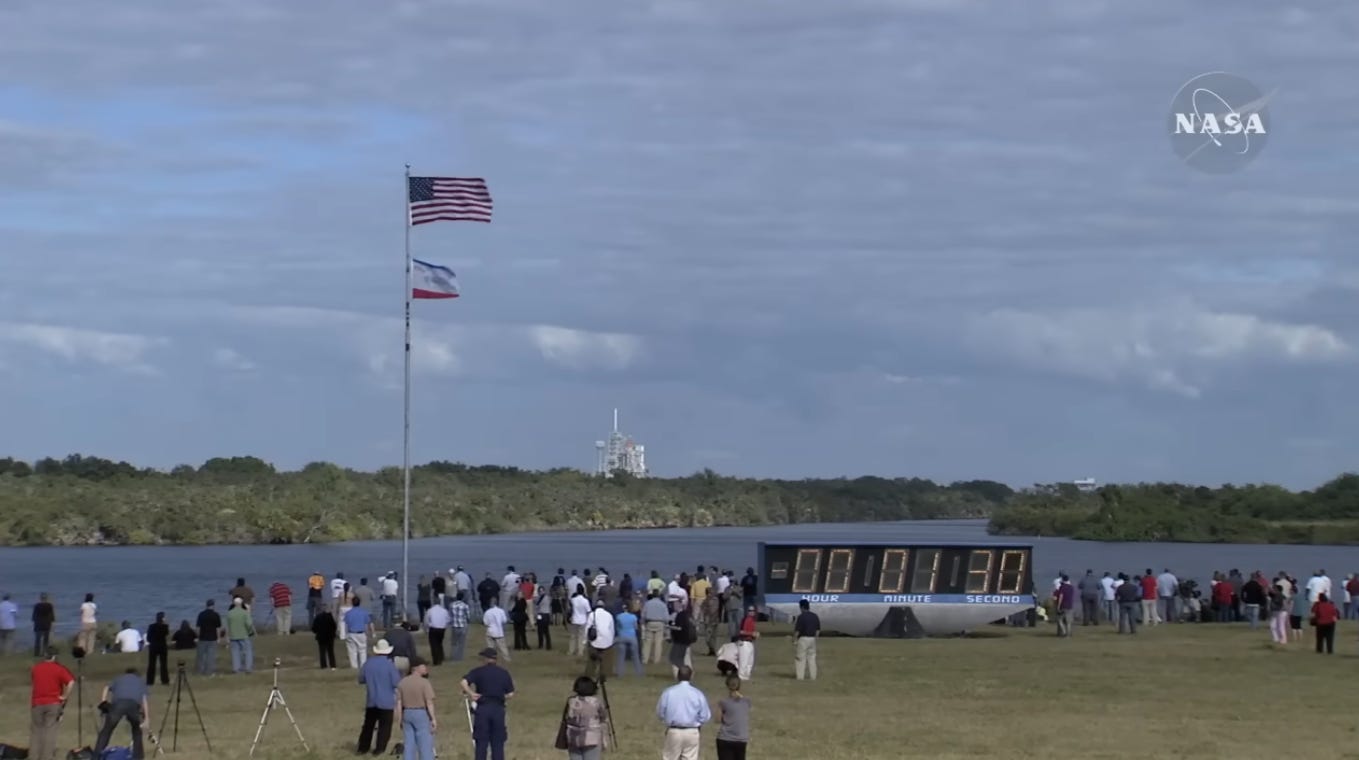
The closest place you can see a Cape Canaveral launch is over two miles from the launch pad. Most viewing locations are six to 14 miles from it.

This means what we see is what they decide we can see. They could be shooting up holograms, and we wouldn’t have any way to tell the difference from two miles distance. With that being said, we can look at what we are allowed to see.
I made you a 2-minute video compilation using some of Mr. Weiss’s footage showing NASA rockets vs footage I located showing a kids’ water bottle rocket science project:




![Is Garlic Harmful to Dogs? Let's Review the Studies [by Agent131711]](https://dropinblog.net/cdn-cgi/image/fit=scale-down,format=auto,width=700/34264201/files/featured/7045f3d8-f1ba-46f8-85b6-308832f0c180-1400x788.webp)