

Table of Contents
- Subscribe to Power of the Pulse to Receive Articles by Email
- Who Funded Zeolite?
- 1967: The First Conference
- 1973: Big Pharma gets involved
- 1977: A great example
- 1989: The game heats up...
- 1994
- What did they do with Zeolite?
- Addressing the Zeolite Zealots
- The Vitamin Cartels of the 90s
- A Conspiracy Theory Interpretation
- Fun with Patents
- Conclusion
- Subscribe to Power of the Pulse to Receive Articles by Email
This is the first part of a series exposing the Zeolie with indisputable proof.
The fundamental points against Zeolite are as follows:
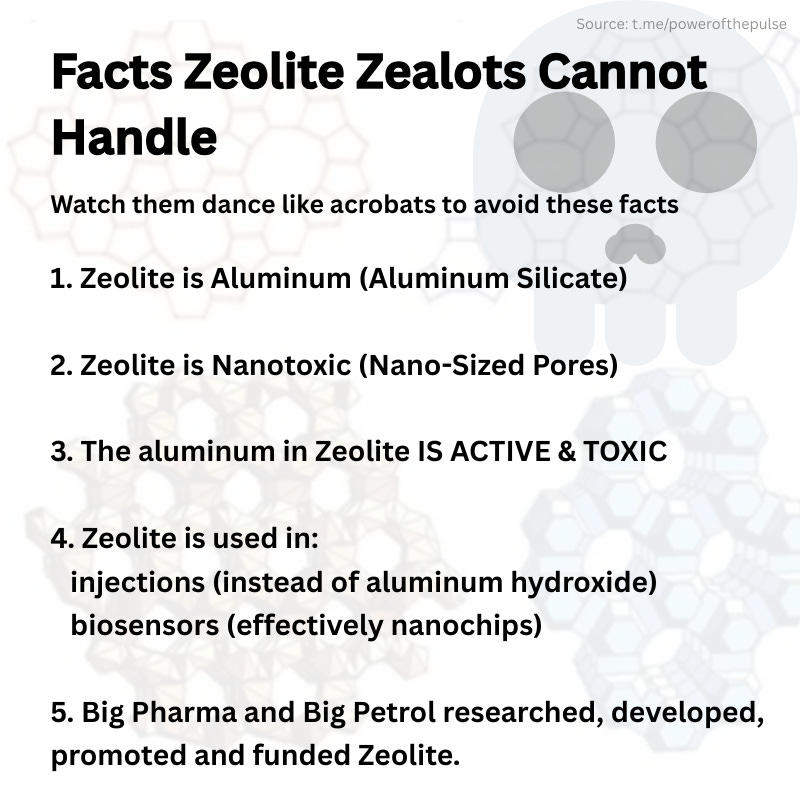
The series will progressively reveal increasingly powerful and shocking evidence of the Zeo-lie — until I finally release the evidence that completely destroys every single excuse Zeolite Zealots parrot.
This article focuses on Point 5:
Big Pharma & Big Petrol researched, developed, promoted and funded Zeolite.
Who Funded Zeolite?
The International Zeolite Conference (IZC) was established in 1967 to promote Zeolite and share scientific research.
This conference later led to the foundation of the International Zeolite Association.
According to their website “The International Zeolite Association (IZA) was organized in 1973 […] to promote and encourage the development of all aspects of zeolite science and technology.”
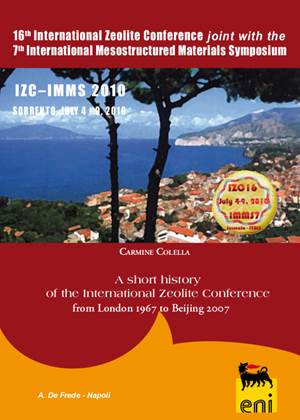
This article references A Short History of the International Zeolite Conference which documents information about each conference across the decades including the sponsors.
1967: The First Conference
In their first year, this is the participant list:
 Page 18
This list looks entirely Big Petroleum dominated:
- Mobil Oil Corp.
- Shell Development Co.
- British Petroleum Ltd.
If you look closely you will also notice chemical companies involved in other industries… foreshadowing what will later become blatantly clear.
These companies are:
- W.R. Grace
- Union Carbide
- Imperial Chemical Industries
Let’s take a quick look at these companies.
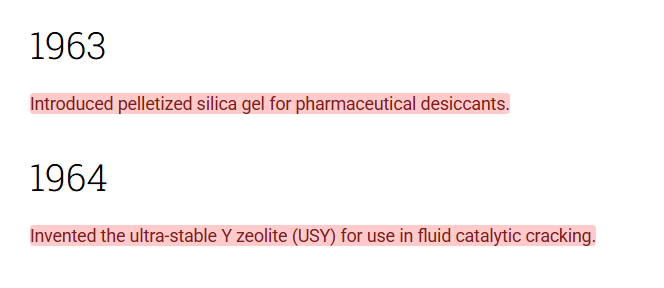
W.R. Grace
A chemicals and materials company that by the 1960s was producing materials for pharmaceuticals.
Union Carbide
Union Carbide is touted to have “pioneered what is known as the petrochemicals industry”.
They produce chemicals for industry, including pharmaceuticals.
They were involved in the pharmaceutical industry in that era as well — evidenced by their acquisition of a pharmaceutical company in 1965 (Neisler laboratories, Inc).
As we will come to find out, they play a historic role in Zeolites and industry.
Imperial Chemical Industries Ltd (ICI)
According to Wikipedia, ICI was “for much of its history, the largest manufacturer in Britain”.
The Wikipedia pages goes on to state:
Throughout the 1940s and 1950s, ICI greatly expanded its activities in the pharmaceutic sector; cumulating in the formation of a dedicated subsidiary, ICI Pharmaceuticals, in 1957.
Clearly, the above three companies were active in the pharmaceutical industry at the time of sponsoring this Zeolite conference.
A little bit of fun history regarding ICI:
In 1993, ICI separated its pharmaceutical bio-science businesses into the company Zeneca.
And in 1999, Zeneca & a Swedish pharma company named Astra AB merged to create AstraZeneca.
Now I don’t know about the rest of the world… but in Australia AstraZeneca provided a highly popular COVID-19 vaccine which was later removed from the market due to a ‘rare but serious side effect called thrombosis’.
And this is the company that was funding the Zeolite Conference in the 60s.
What a fascinating story :)
But that was just a taste of what is to come…
1973: Big Pharma gets involved
In the 70s, some researchers started suggesting possibly using zeolites for medical applications in the future.
The conference in 1973 attracted local press attention. They also interviewed the organizer of that year’s conference named Walter M. Meier.
Meier explained how zeolites can affect our daily life, e.g., enhancing the yield in the conversion of crude oil to gasoline, contributing to decontaminate air, increasing enormously the rate of some important reactions, acting as effective desiccant.
Finally, some outlooks for future were given with interesting prospects of utilization, especially in biology and medicine. - Page 34
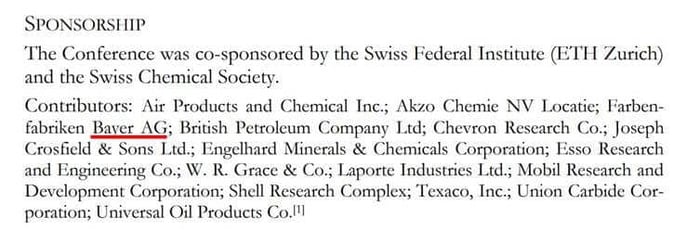
And that same year, look what company made their first appearance on the sponsors list:
 Page 31
Bayer.
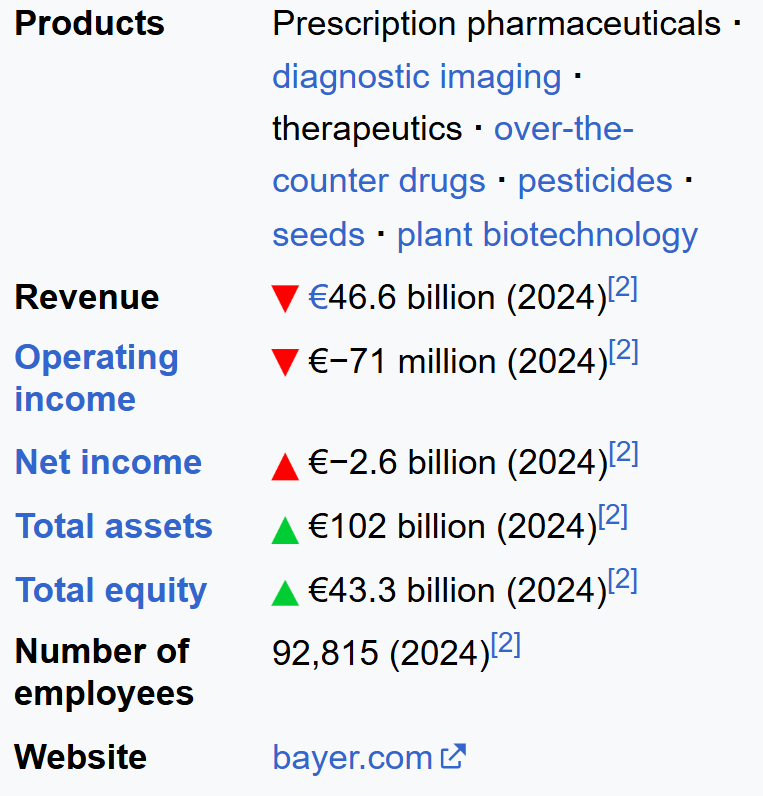
Yes, the Bayer behind Aspirin, contraceptives, antibiotics & agrochemicals.
The same Bayer that purchased people to test deadly chemicals on them.
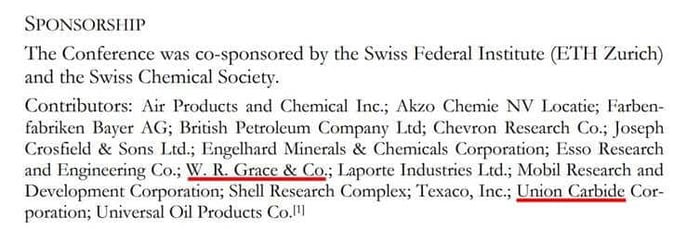
Note that in 1973, W.R. Grace & Union Carbide Corporation are still on this list.
 Page 31
Both companies (including a subsidiary of W.R. Grace & Co) are mentioned in the document 34 times in total.
Then we get to 1977.
1977: A great example
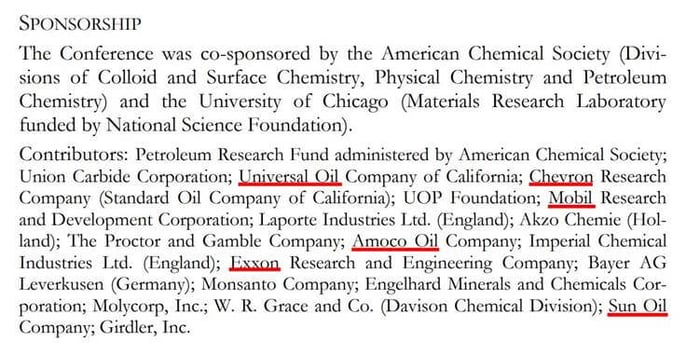
1977 is a great example of Big Petroleum & Big Pharma funding Zeolite.
The Big Petroleum sponsors are obvious:
- Chevron
- Exxon
- Mobil (before they merged)… & more
 Page 41
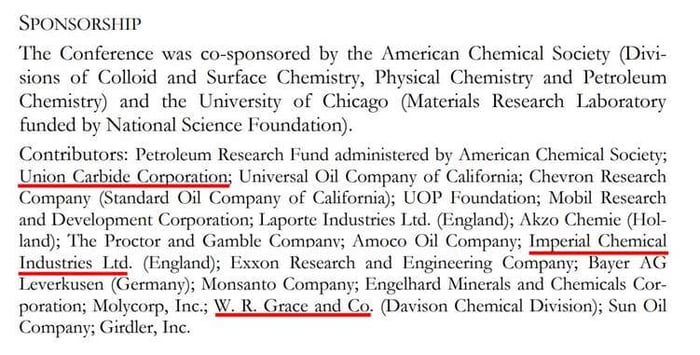
Union Carbide and W.R. Grace are sponsors as usual as well as Imperial Chemical Industries.
 Page 41
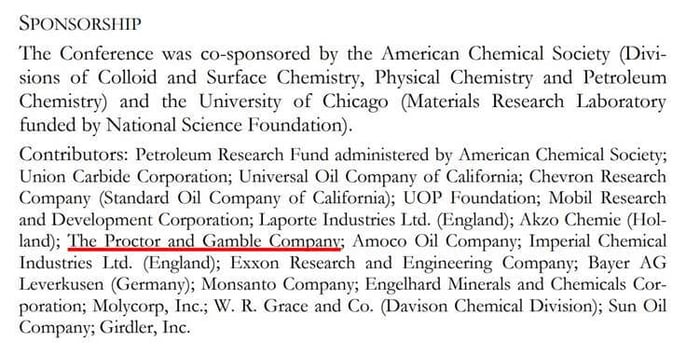
Procter and Gamble is an interesting addition to the sponsors list that year.
 Page 41
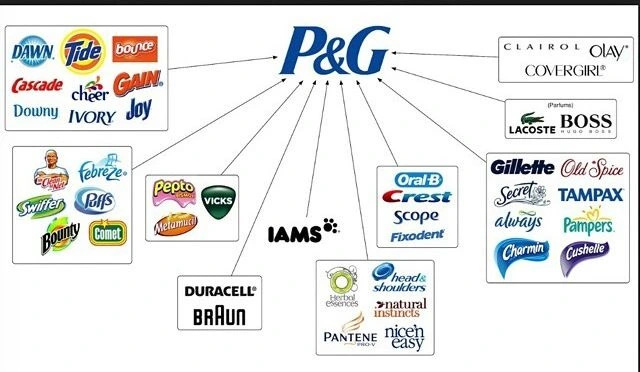
Yes, this Procter & Gamble:
And most importantly:
- Bayer: Big Pharma
- Monsanto: Big Agriculture (later purchased by Bayer for $66 billion cash?)
Both companies are well known for their benevolent gifts to society:
Monsanto invented glyphosate & manufactured Agent Orange.
Bayer is credited with being the first to commercially produce and market heroin as a cough medicine, giving it that name after the German word for heroic.
Funny how Zeolite promoters would have you believe it’s an ‘ancient mineral’, yet no-one would even know it existed if not for Big Petrol, Procter & Gamble, Bayer and Monsanto.
Shout-out to those companies for looking out for us so well 🙌
1989: The game heats up…
In the 70s, some researchers started suggesting possibly using zeolites for medical applications in the future.
The conference in 1973 attracted local press attention. They also interviewed the organizer of that year’s conference named Walter M. Meier.
Meier explained how zeolites can affect our daily life, e.g., enhancing the yield in the conversion of crude oil to gasoline, contributing to decontaminate air, increasing enormously the rate of some important reactions, acting as effective desiccant.
Finally, some outlooks for future were given with interesting prospects of utilization, especially in biology and medicine. - Page 34
And that same year, look what company made their first appearance on the sponsors list:
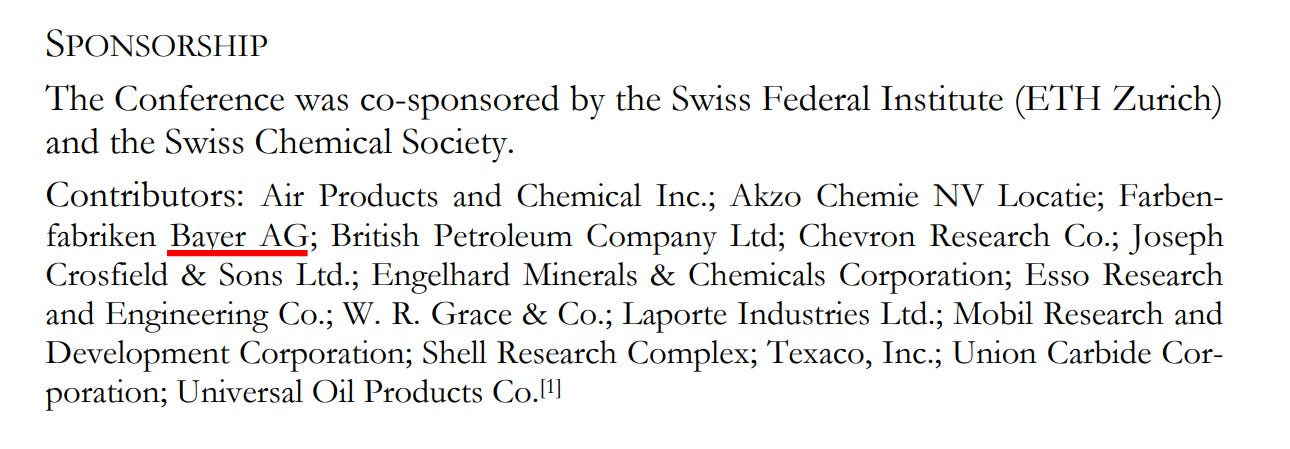
Bayer.
Yes, the Bayer behind Aspirin, contraceptives, antibiotics & agrochemicals.
The same Bayer that purchased people to test deadly chemicals on them.
Note that in 1973, W.R. Grace & Union Carbide Corporation are still on this list.
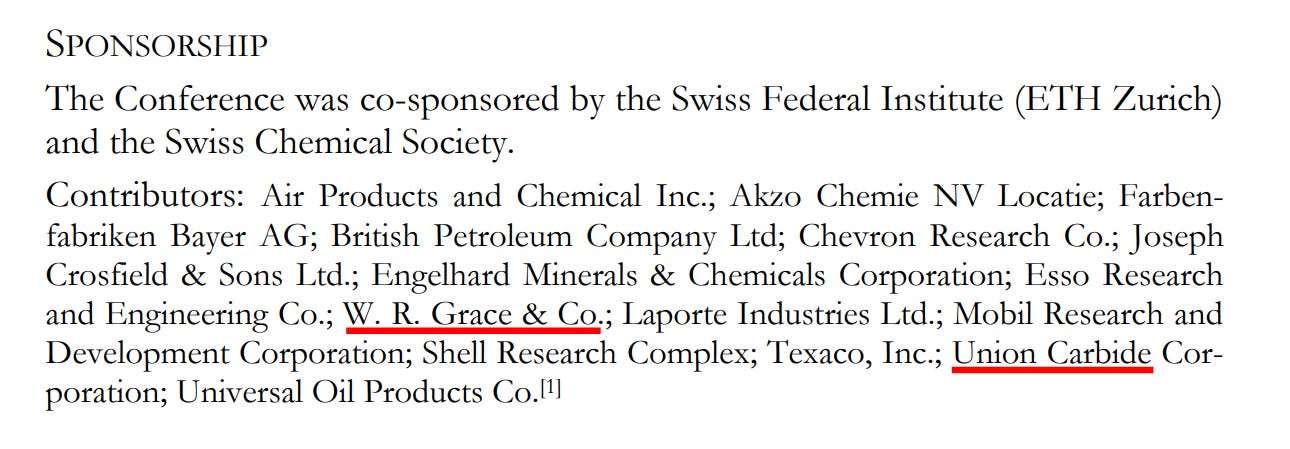
Both companies (including a subsidiary of W.R. Grace & Co) are mentioned in the document 34 times in total.
Then we get to 1977.
1977: A great example
1977 is a great example of Big Petroleum & Big Pharma funding Zeolite.
The Big Petroleum sponsors are obvious:
Chevron
Exxon
Mobil (before they merged)… & more
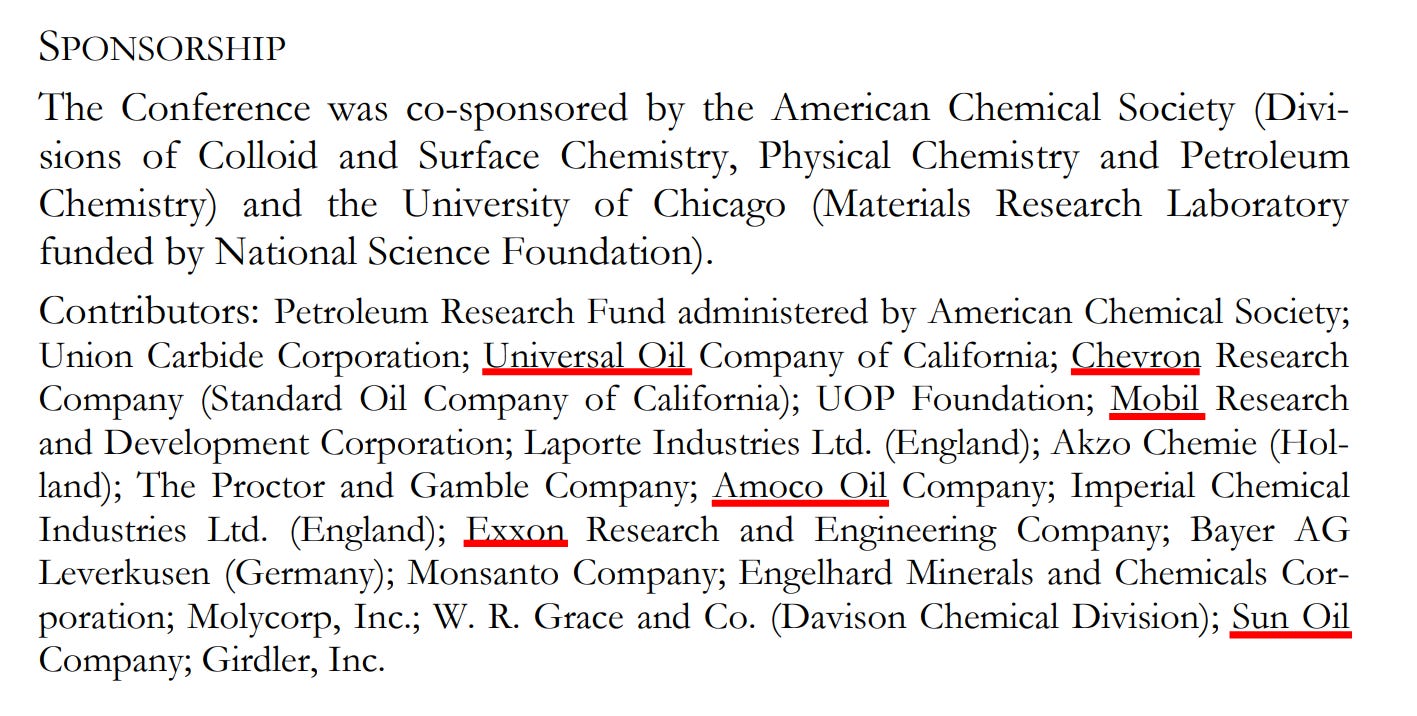
Union Carbide and W.R. Grace are sponsors as usual as well as Imperial Chemical Industries.
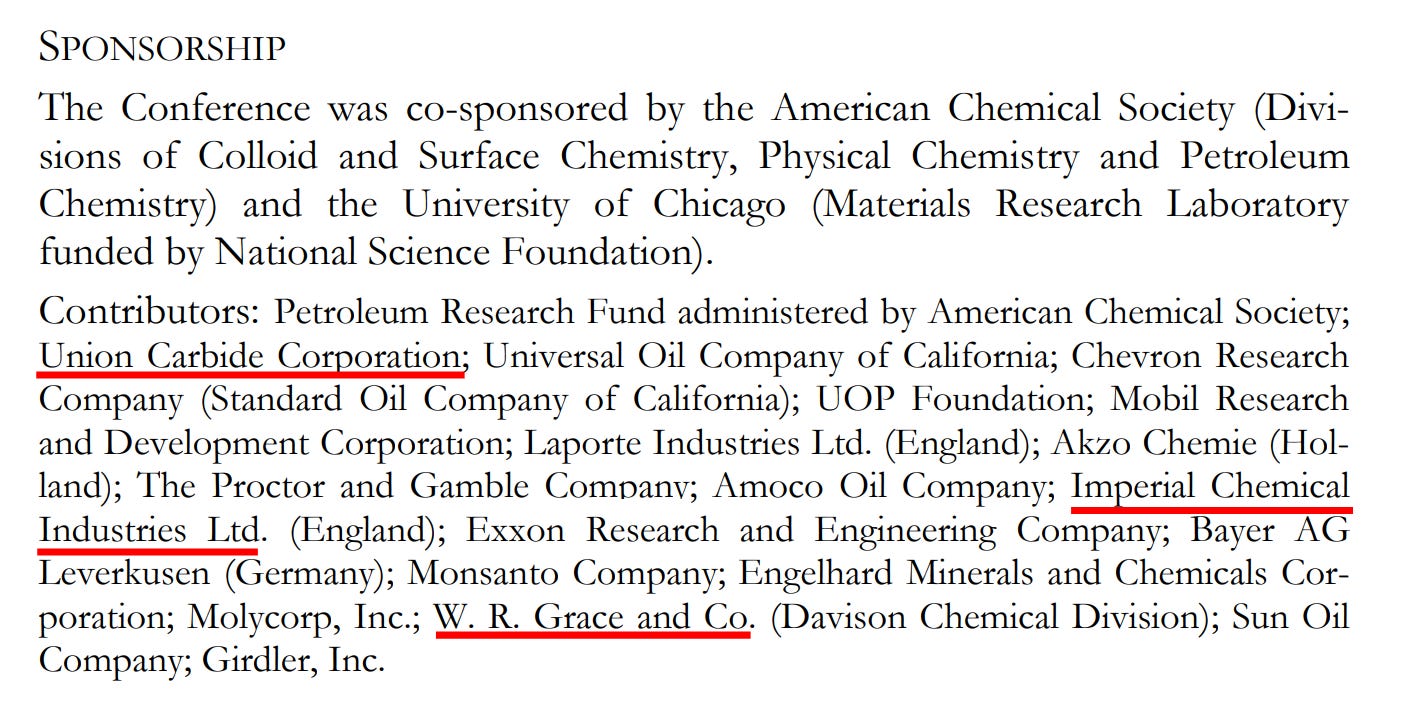
Procter and Gamble is an interesting addition to the sponsors list that year.
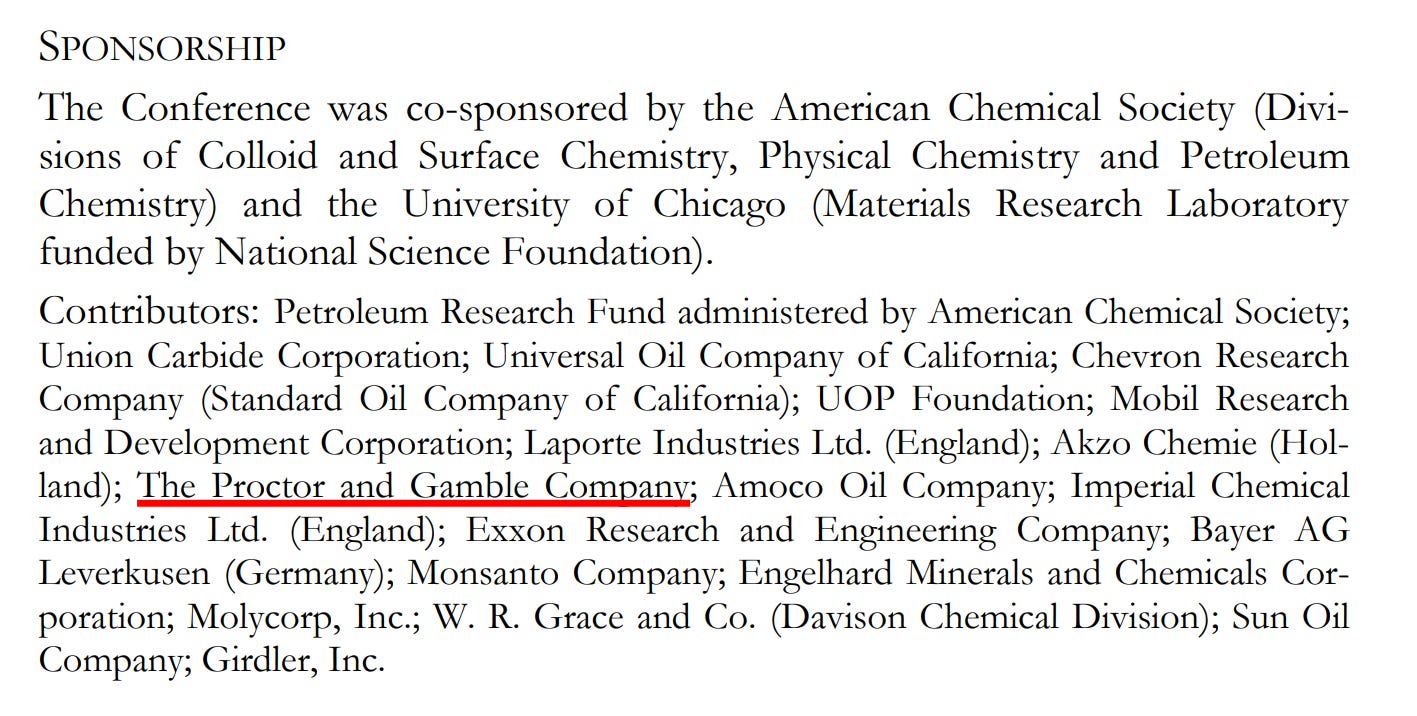
Yes, this Procter & Gamble:
And most importantly:
Bayer: Big Pharma
Monsanto: Big Agriculture (later purchased by Bayer for $66 billion cash?)
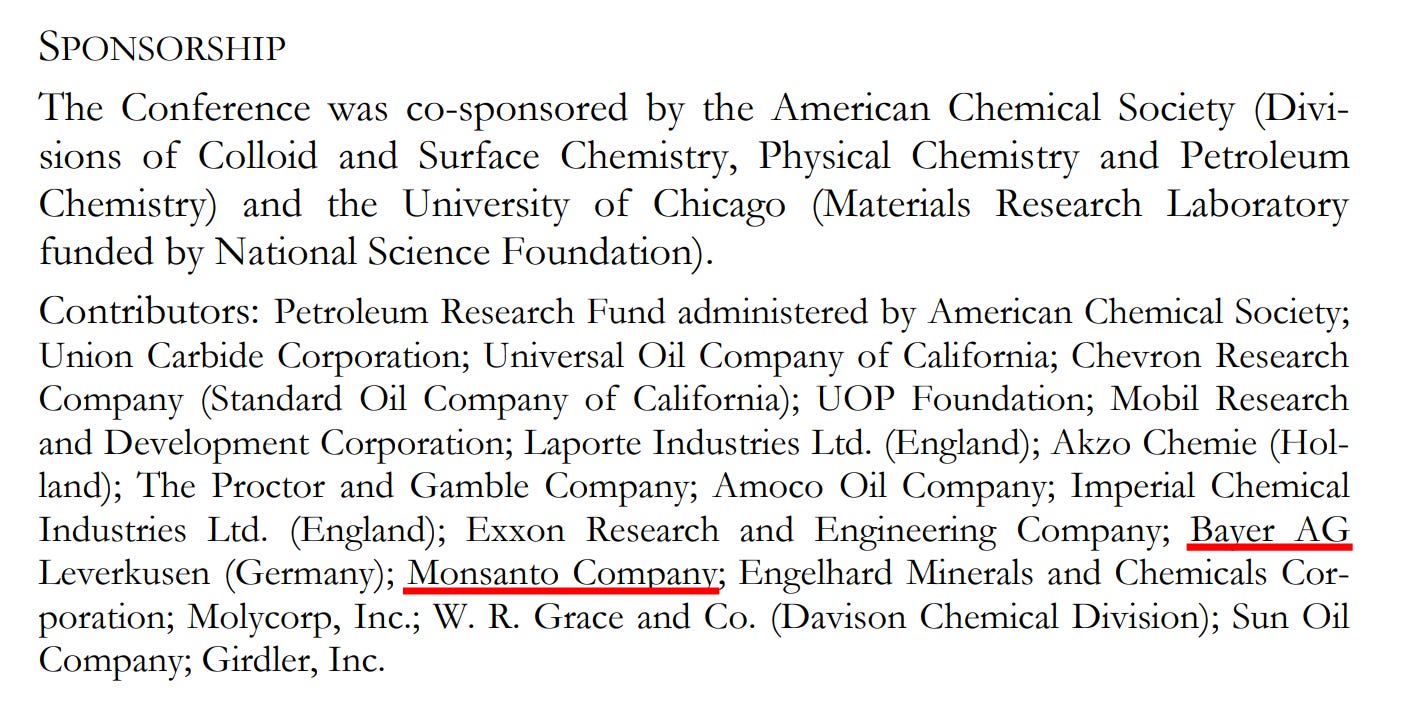
Both companies are well known for their benevolent gifts to society:
Monsanto invented glyphosate & manufactured Agent Orange.
Bayer is credited with being the first to commercially produce and market heroin as a cough medicine, giving it that name after the German word for heroic.
Funny how Zeolite promoters would have you believe it’s an ‘ancient mineral’, yet no-one would even know it existed if not for Big Petrol, Procter & Gamble, Bayer and Monsanto.
Shout-out to those companies for looking out for us so well 🙌
1989: The game heats up...
In 1989 Bayer returns along with ICI and W.R. Grace (represented by their German subsidiary) — and of course the usual Big Petroleum companies.
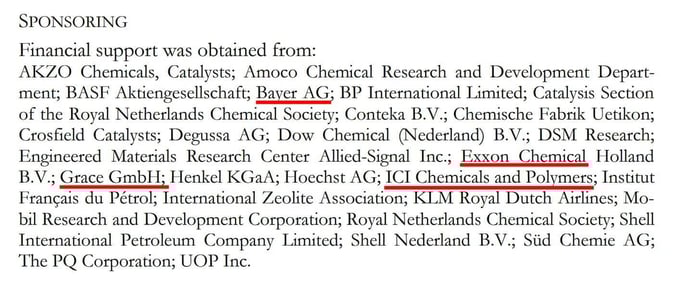 Page 77
There are also a number of interesting new sponsors that we will talk about soon:
BASF
Dow Chemical Company
Degussa AG
Henkel KGaA
Sud-Chemie
However one new name particularly sticks out… Hoechst AG.
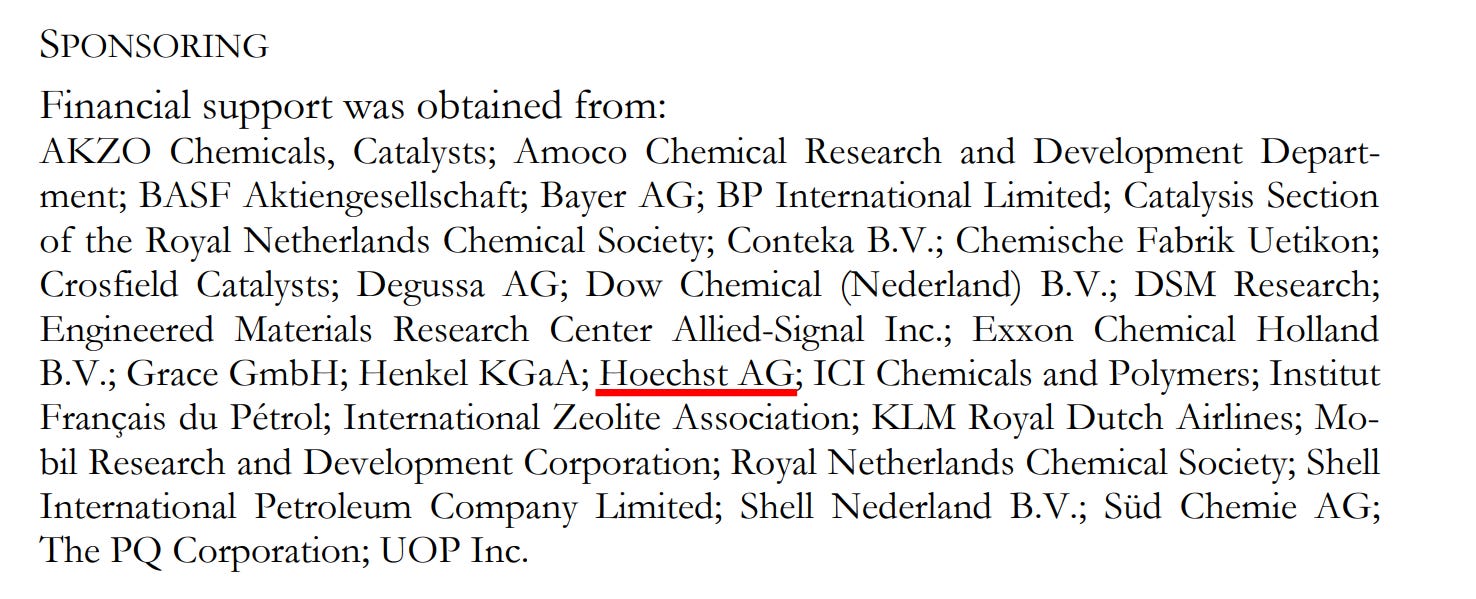
Hoechst
Hoescht was a chemical and pharmaceutical company that was part of the same chemical/pharmaceutical conglomerate as Bayer. They eventually became a subsidiary of Sanofi… another world-leading pharmaceutical.
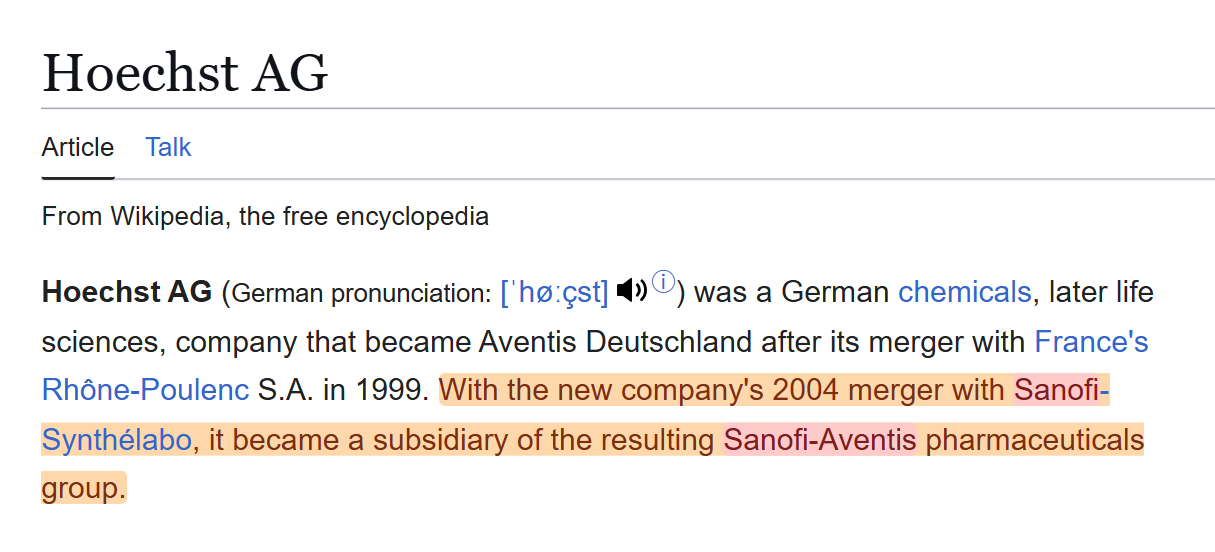
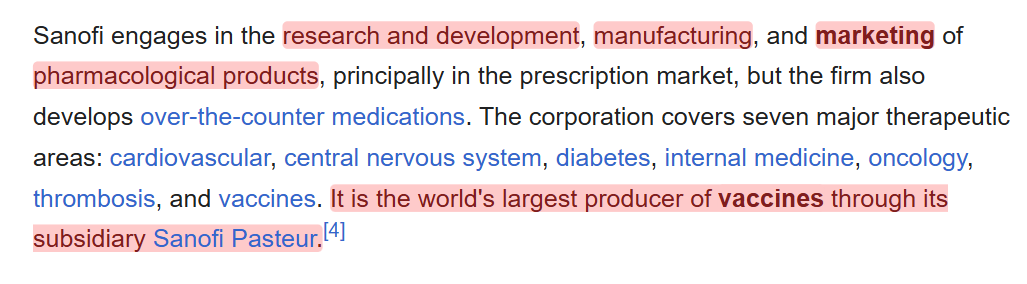
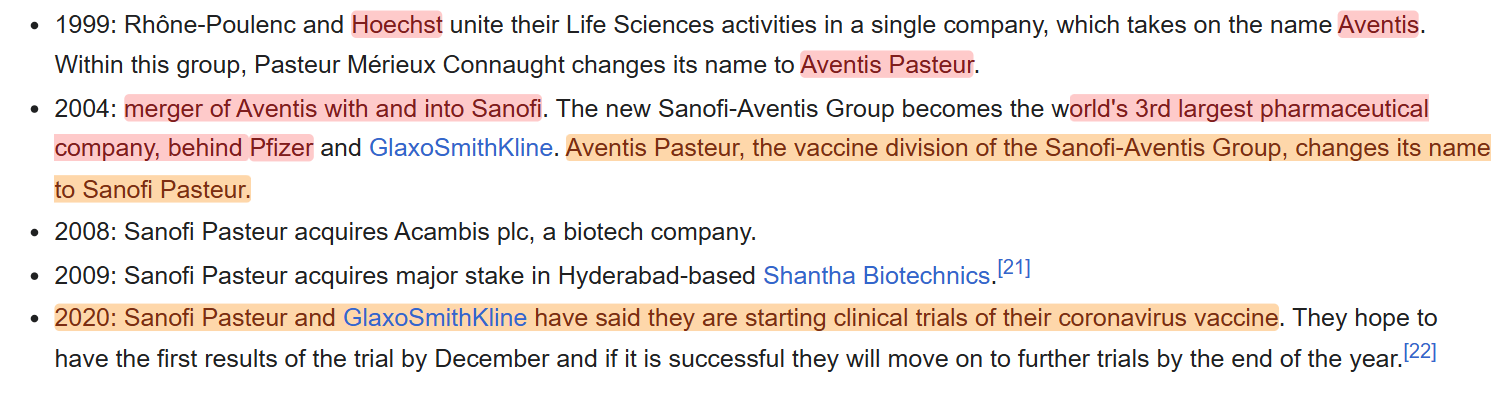
Note that Bayer, Hoechst and another chemical company named BASF all originated from the same chemical/pharmaceutical conglomerate named IG Farben.
In 1989 & 1994 all three companies sponsored the IZC.
Fun Facts about BASF:
BASF sold one of their businesses to AkzoNobel in 1999. Akzo sponsored the IZC 5 times (1973 - 2004).
BASF purchased Engelhard in 2006 for $4.8 billion. Engelhard sponsored the IZC 5 times (1973 - 1998).
BASF purchased one of the chemical companies owned by Degussa. Degussa sponsored the IZC 3 times (1989 - 1998).
BASF purchased seed and herbicide businesses from Bayer in 2017-2018 while Bayer was acquiring Monsanto.
In 2020, BASF and Bayer were sued and ended up paying millions in damages for a Monsanto-created herbicide that damaged crops and trees.Bayer sponsored the IZC 4 times.
BASF sponsored the IZC 2 times.
Monsanto sponsored the IZC 1 time.
Yet this is only the start.
1994
Same as 1989, Bayer, Hoechst and BASF were also sponsors in 1994.
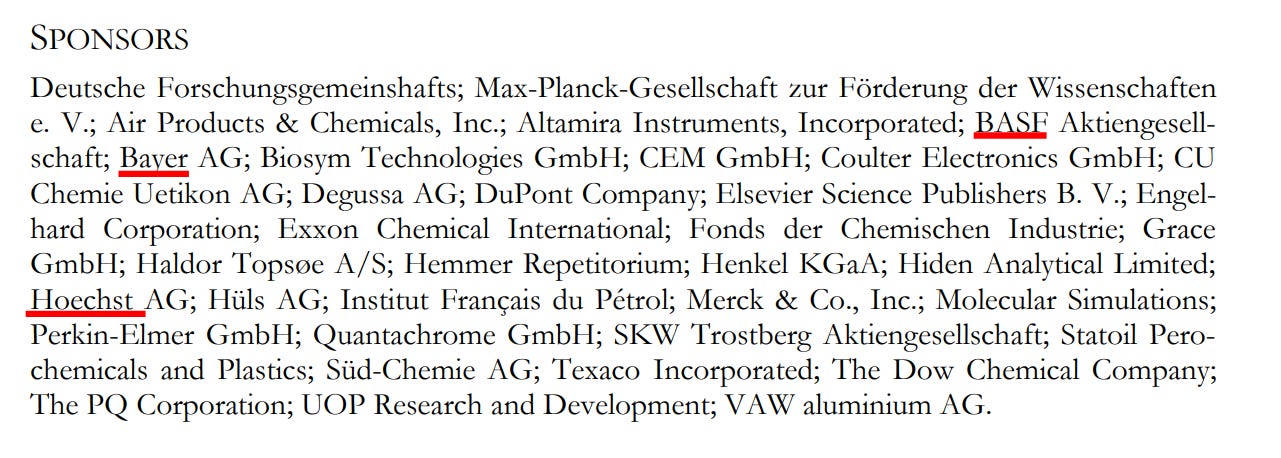
As usual you will find W.R. Grace, Exxon and other Big Petroleum sponsors such as Texaco.
Fun fact: W.R. Grace and Mobil have a long history of collaboration including in 2025. They also had legal battles regarding their Zeolite patents.
You may also notice a few new names in 1994:
DuPont
Coulter Electronics
Biosym Technologies GmbH & Molecular Simulations
And returning for the second time: Henkel KGaA
Let’s take a journey through the history and inter-relations of these companies.
DuPont
Ah yes… the company that created some of the most toxic man-made chemicals in existence… gaslighted the entire world for decades and then said “oopsies” and carried on.
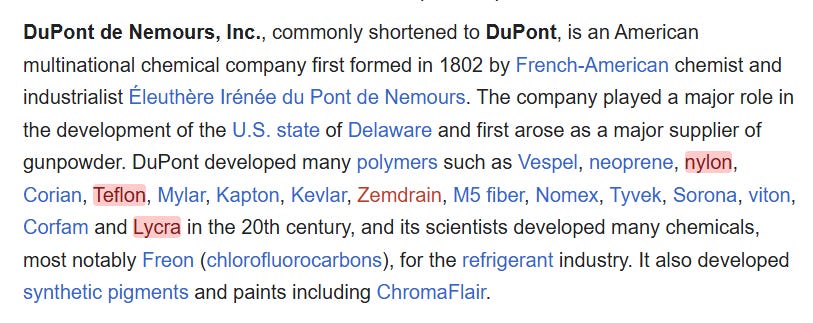
It’s interesting to read about the history of DuPont with numerous other entities that also funded the IZC.
They merged with the Dow Chemical Company which is another funder of the IZC sponsoring it 5 times between 1989 and 2001. A subsidiary of Dow Chemical Company also happens to be Union Carbide one of the IZC’s most regular sponsors.
Fun fact: Dow Chemical Company was a major Agent Orange manufacturer along with Monsanto.
In the early 20th century DuPont created the Atlas company which was purchased by Imperial Chemical Industries (ICI). ICI sponsored the IZC thrice and is now part of AkzoNobel which sponsored the IZC 5 times.
Source: https://en.wikipedia.org/wiki/DuPont
Bayer acquired a DuPont ‘Crop Protection’ business in 2014 which gave them rights to a host of pesticides for non-agricultural applications like railways, roadsides and even forests.
Coulter Electronics
Coulter Electronics manufactured, marketed and distributed a device most notably used as a cell counting technology in hospitals.
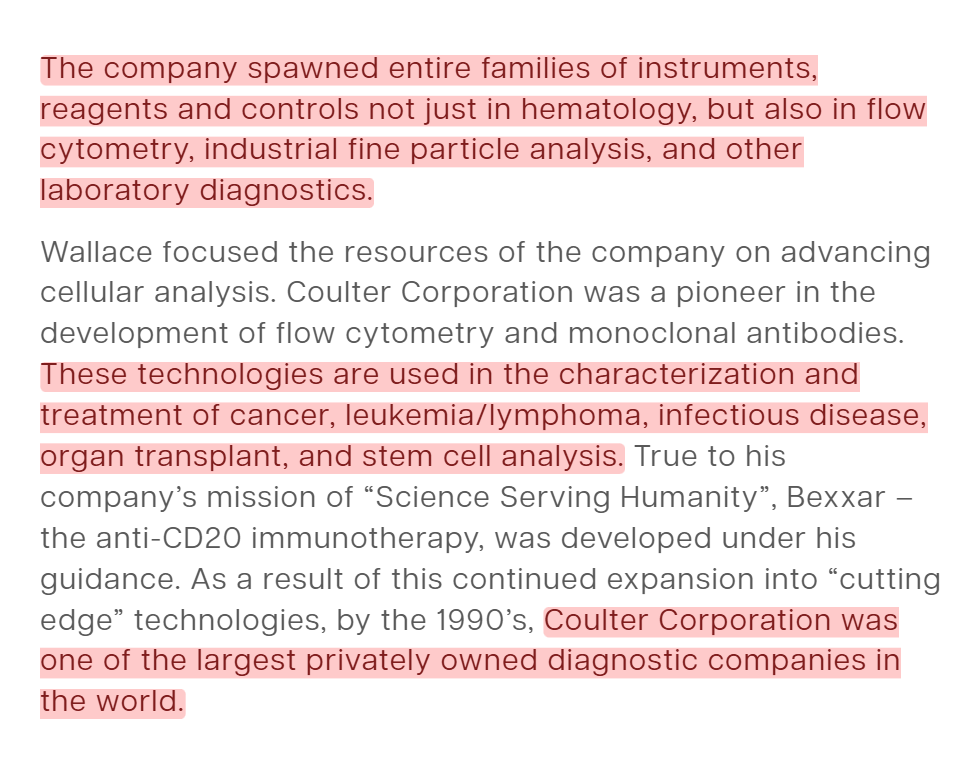
Just a few years after sponsoring the IZC, they merged with another ‘biomedical testing’ corporation, Beckman.
In 1986, Beckman acquired Hybritech Inc from Eli Lily, a notorious vaccine producing pharmaceutical that developed the infamous mercury preservative in vaccines named thiomersal.
And in 1996 they acquired Sanofi Diagnostics from Sanofi…
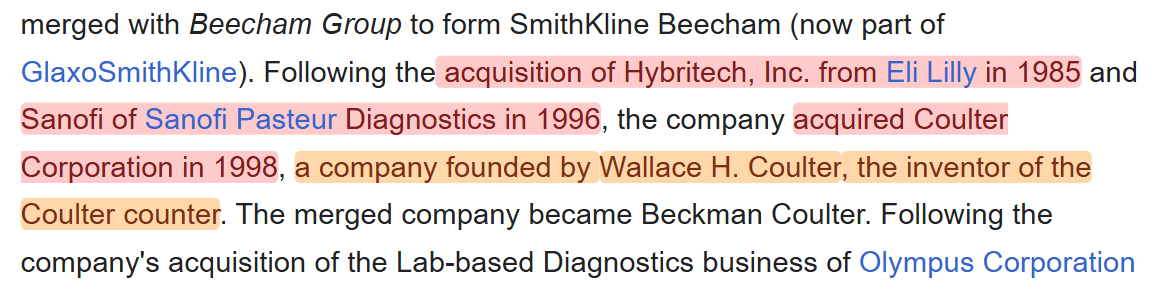
Fun fact: in the 80s Beckman was merged with SmithKline which is another pharmaceutical and biotech corporation that happened to collaborate with Sanofi on a ‘protein-based’ COVID-19 vaccine.
If you go to their site today, you will find their executives have also worked at Novartis, Merck, Johnson & Johnson, Henkel, Pfizer, Roche & Medtronic.
Biosym Technologies & Molecular Simulations
BioSym Technologies was a software company that developed molecular modeling software products for the biopharmaceutical, polymer and catalysis technology sectors.
Molecular Simulations was another molecular modelling company sponsoring the IZC in 1994. Just a year later they merged with Biosym Technologies.
Henkel
Basically the German version of Procter & Gamble.
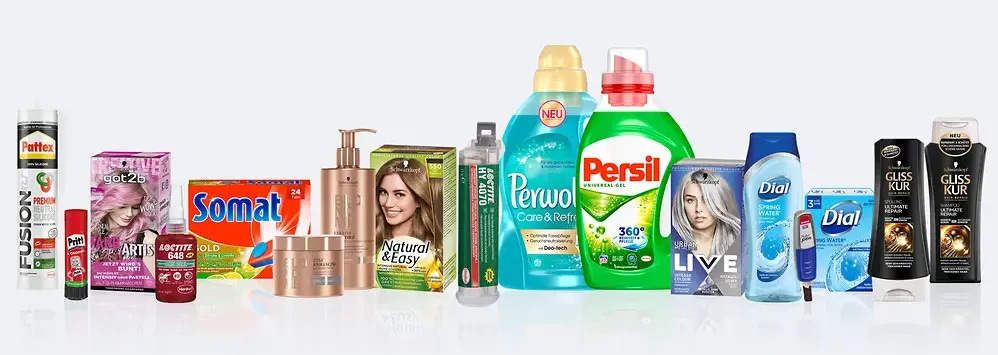
Fun fact about Henkel: in 2017 they presented awards to their top suppliers… one of the award winners was DuPont.
They also awarded a company named Evonik which is the modern company that encompasses 3 other IZC sponsors of 1994 mentioned later in this article (Degussa, Huls & Trostberg).
And finally, the most alarming fascinating sponsor of the IZC for 1994 is…
Merck
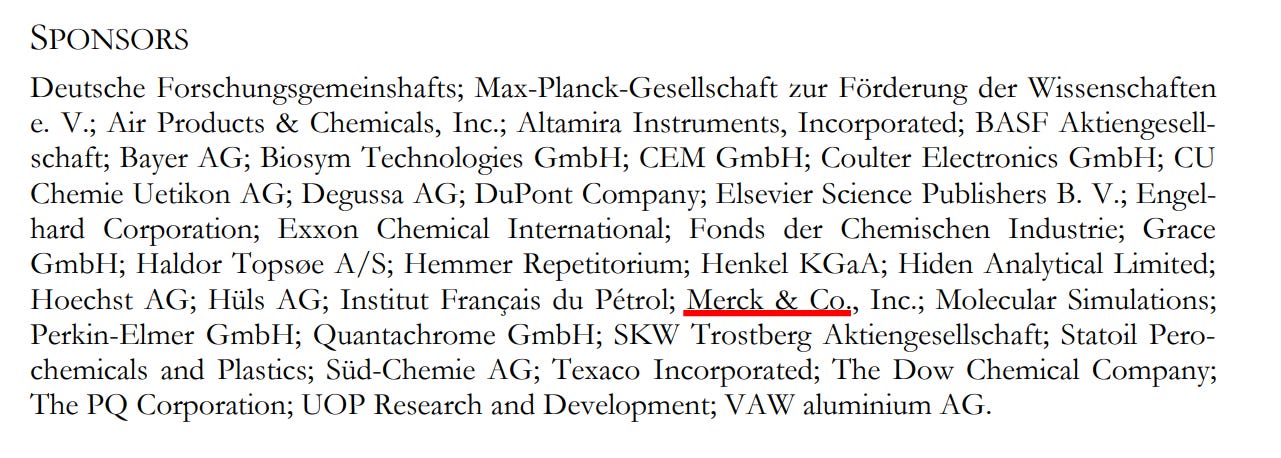
Of all the companies on this list, Merck has got to be the most… uh… benevolent?
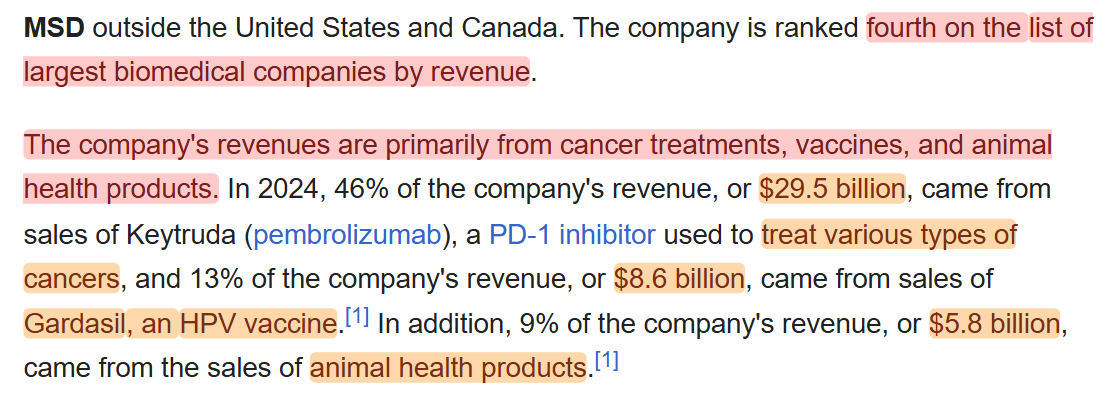
They were established as the American affiliate of Merck Group which is…

I recommend reading this shocking article about Merck and their involvement in establishing and running a government biological warfare program:
https://chemtrails.substack.com/p/merck-developed-biological-weapons
It seems that these are the kinds of people that poison you, then are SHOCKED that you got sick.
Ah don’t worry, it must be a detox reaction 🤪
I’m trying to keep the endless incestuity of the industry as a secondary point and focus on the funders of the IZC. If you’re interested in doing your own research, Merck seems to have connections with any company you can think of — notably DuPont, Bayer, AstraZeneca & Sanofi.
Merck & Dupont had a joint venture through the 90s named DuPont Merck Pharmaceutical Company. DuPont eventually bought Merck’s share for $2.6 billion.
Merck & Bayer have a history of collaboration. Buying each others businesses for billions of dollars and collaborating on pharmaceutical drugs.
Merck & AstraZeneca have a history of joint ventures from the 80s until today, with a joint venture that involves billions of dollars and a partnership that includes Eli Lily.
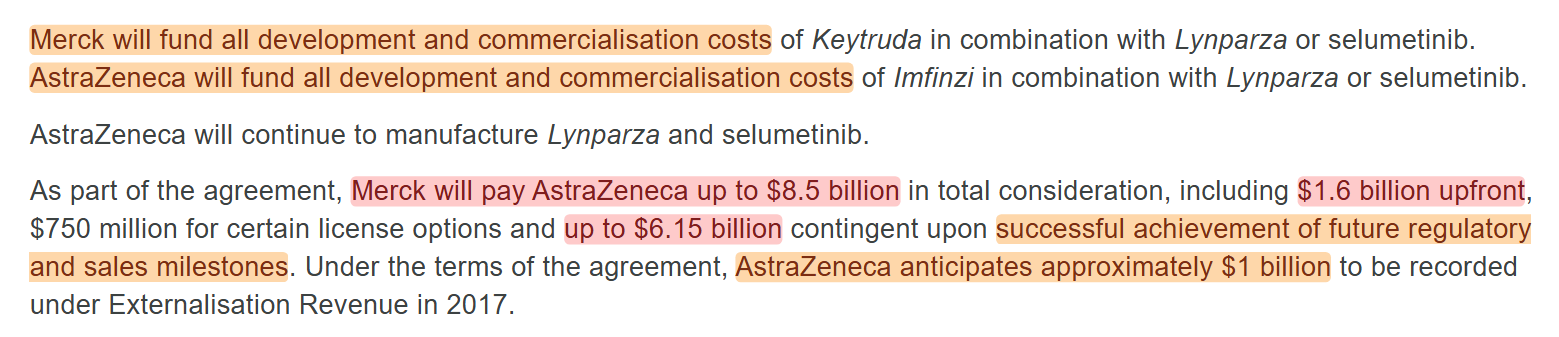
Additional notable mentions:
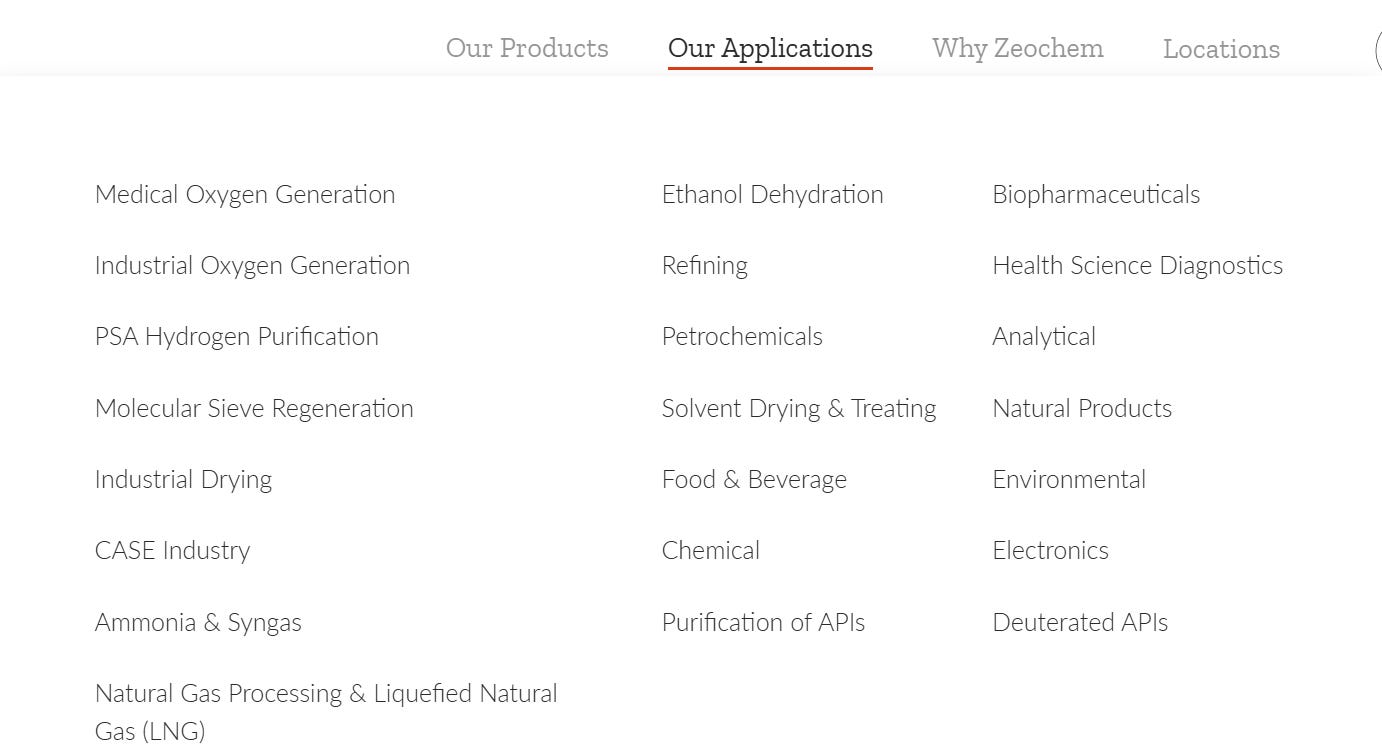
The PQ Corporation: chemical manufacturer that specializes in silica and silicates
They’re partially owned by a conglomerate that provided free hand sanitizer to hospitals in 2020 and has the capacity to produce a million bottles of hand sanitizer a month. They also have a Zeolite patent.PerkinElmer: a company that provides tools for the military and pharmaceuticals.
Degussa AG, Huls AG & SKW Trostberg: chemical companies. Huls was specialized in rubber and was majority owned by IG Farben (the same people that owned Bayer, BASF, Hoechst & Agfa). Degussa was highly involved with IG Farben and owned the rights to cyanide gas. Degussa & Huls merged in 1999 then SKW merged with Degussa-Huls in 2001.
If that wasn’t incestuous enough, in 2006, BASF bought one of the chemical businesses owned by Degussa.CEM GmbH: provides lab equipment such as ‘microwave solutions’ for analysis, biotechnology, environmental testing, supplements (particularly peptides) and food processing.
VAW Aluminum, an aluminum producer.
CU Chemie Uetikon: pharmaceutical & chemical company. They started producing molecular sieves in 1973.
In 1979 they founded a company named Zeochem as a joint venture with a subsidiary of Sud-Chemie (another IZC sponsor including in 1994 & onwards). Sud-Chemie have a number of Zeolite patents, and a shared Zeolite patent with VAW Aluminum.The remaining companies are mostly chemical companies in the catalyst field.
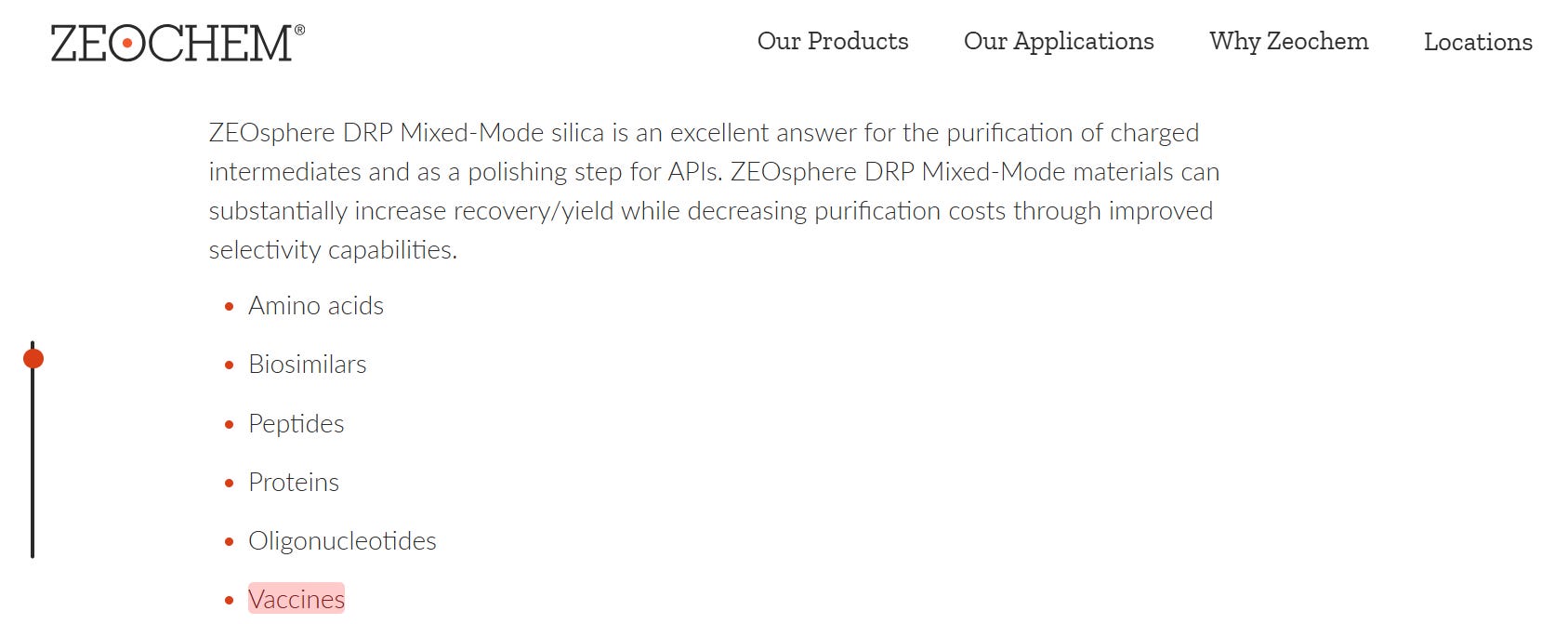
This is a review of the sponsors for the year 1994. Red denotes companies we’ve discussed and Orange denotes Big Petroleum companies.
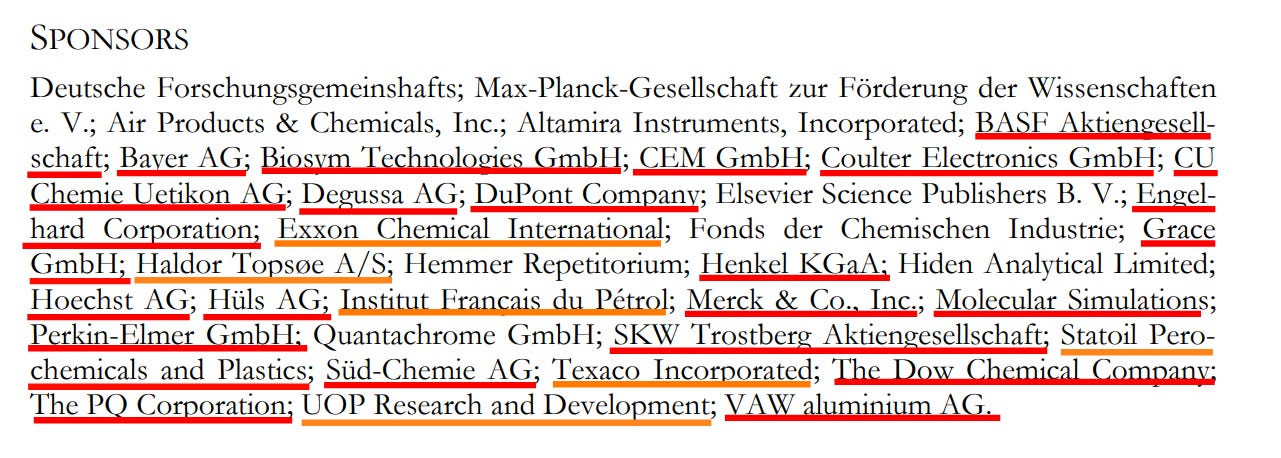
The section above documents how the most powerful industrial giants of our world funded the International Zeolite Conference across decades and by extension promoted its research, development and usage.
Why were all these companies so interested in Zeolite?
What did they do with Zeolite?
Mobil used and still uses Zeolites for petroleum refinement from crude oil into various products such as gasoline. This was initially done with the help of Union Carbide in the 50s/60s.
Use of the zeolite catalysts has been estimated to save the U.S. petroleum industry 200,000,000 barrels of imported crude oil a year. In their legal battles with W.R. Grace it is stated that one of their patented Zeolite catalysts increased gasoline yield by more than 20% over older alternatives.
Mobil has an endless array of Zeolite patents.Air Products and Chemical Inc use Zeolite in oxygen generation devices and have a Zeolite patent.
W.R. Grace announced in 2024 announced a ~$300 million expansion that involves upgrading facilities to enable more Zeolite work.
They are recognised as one of the largest global producers of Zeolite catalysts for petroleum refining along with BASF.
W.R. Grace sell numerous Zeolite productsSYLOBEAD® Molecular Sieves for Natural Gas, Petrochemical and Ethanol
PHONOSORB® Insulating Glass Adsorbents
CRYOSIV® Refrigeration Adsorbents
SYLOSIV® Zeolite Powders used as desiccant/drying agent for paints, coatings, adhesives, plastics/rubbers/silicones, cosmetic products and food products as well as having a diverse range of applications in general industry.
BASF is recognised as one of the largest global producers of Zeolite catalysts for petroleum refining along with W.R. Grace. According to this paper BASF offers a diverse range of Zeolite products, including numerous synthetically manufactured natural Zeolites.
In 2017 they invested in a third manufacturing plant for ‘specialty’ zeolites set to double their production capacity.
BASF also developed a Zeolite to clean diesel engines.
One of their employees seems to have been involved in a study removing lead from wastewater using natural clinoptilolite.CEM Corporation provides products useful for industrial Zeolite handling and synthesis.
PerkinElmer sell a Zeolite filter.
Henkel uses Zeolite in their laundry products and have a Zeolite patent (or two).
DuPont seems to have been more involved with Zeolites in the past… that hasn’t stopped them from pay-rolling an alleged world expert on Zeolites.
They also very kindly donated a library of over 3,000 unique zeolites and other microporous materials to the University of Kansas.Dow Chemical Company apparently developed a process for coating ceramics with Zeolite and also this: A zeolite-based ethylbenzene process adaptable to an aluminium chloride-based ethylbenzene plant. Dow has a joint patent with BASF.
Union Carbide is credited with pioneering synthetic Zeolite in industry from the 1950s. Their scientists discovered Zeolites that just a few years later became essential to the petroleum and gas industries.
Akzo uses Zeolite in an epoxy primer and has a Zeolite-related patent. Akzo used to sell Zeolite for industrial use and in fact opened a Zeolite manufacturing plant in Texas in the 90s.
Degussa was developing specialty Zeolites in the 90s and sold Zeolite. The company that acquired Degussa, Huls & SKW Trostberg still does, including an ‘ultrapure’ Zeolite.
Degussa apparently had a zeolite production plant in Zubillaga-Lantaron, Spain with the capacity to produce 50,000 tons of Zeolite per year. It seems that this plant may still exist and produces silicas.An article titled 17 Leading Zeolites Companies Shaping the Global Market Outlook to 2030 names 9 companies that sponsored the IZC.
This article names Albemarle Corporation as being a major Zeolite producer. This company is not mentioned for sponsoring the IZC however in 2004 they purchased the petroleum-related catalysts business of AkzoNobel.We can keep going — you get the point…
So if all these companies sponsored the IZC and use Zeolite in their respective industries… what about Zeolite and the pharmaceutical companies?
In the next section I will briefly answer this question and respond to the predictable parroted excuses used by Zeolite Zealots.
Addressing the Zeolite Zealots
Zeolite being researched, developed & funded by Big Petrol & Big Pharma is a FACT however it doesn’t necessarily mean that Zeolites are ‘bad’.
Zeolite Zealots will insist that the industry is only interested in ‘bad synthetic’ types of Zeolite.
"But they only use synthetic Zeolites"
Zeolite Zealots will claim that the industry is obsessed exclusively with synthetic Zeolites.
So explain this:
Mining and sales of natural zeolites increased from 12,000 tons in 1988 to 35,000 tons in 1994. - Source
This was attributed to use of natural Zeolite in animal feed and pet litter as well as fertilizer carrier, oil absorbent, odor control, aquaculture, horticultural applications, desiccants, gas absorbents, catalysts, and water purification.
And addressing the use of synthetic Zeolites — where does the idea of synthetic Zeolites come from? Real natural Zeolites!
They conveniently ignore that those synthetic Zeolites are lab-made replicas of naturally occurring Zeolite.
For example, the Zeolites named Zeolite X & Y that made history and are essential for petroleum refining are actually natural. It’s a natural Zeolite called Faujasite.
For efficiency and performance, they make it synthetically so that it doesn’t have to be mined but it is a Zeolite that occurs in nature.
Industrially speaking, synthetic Zeolites are purer (less contaminated), more uniform and perform significantly better. Synthetic Zeolites also offer industry the ability to fine-tune the perfect properties they need for their chemical processes.
Fundamentally, all Zeolites are nanostructured aluminum and silica. Zeolite salesreps and Zeolite apologists will try to make it sound like any synthetic Zeolite, including synthetic clinoptilolite is fundamentally different to magical natural clinoptilolite.
But is it? All are composed of aluminum and silica, they all have the same general porous structure, ionic properties, catalytic reactivity etc.
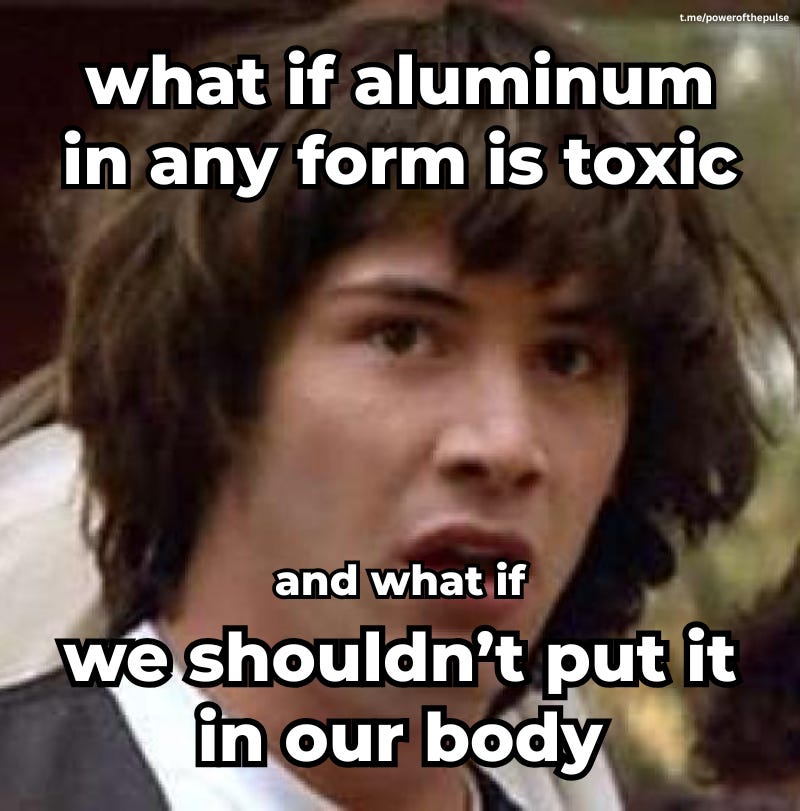
Even today, natural Zeolites are used in industry. By the logic of the Zeolite Zealots themselves that means natural Zeolites are also toxic.
Natural and synthetic Zeolites can and have been used for the exact same functions in industry… it’s just a matter of what’s cheaper, more efficient and most effective for that company.
Ion exchange occurs in a variety of substances and it has been used on an industrial basis since circa 1910 with the introduction of water softening using natural and later, synthetic zeolites. - Source
"But Clinoptilolite is different & special"
And of course Zeolite Zealots will insist that all Zeolites are bad but Zeolite Clinoptilolite is in its own distinguished category of venerable ancient healing.

They usually achieve this gaslighting with:
a blanket appeal to nature… anything natural is good
appealing to the authority of the FDA… saying the FDA has approved it as ‘safe’.
Sure, there’s plenty of research regarding Clinoptilolite Zeolite use for:
Biosensors
Drug Delivery
Electric devices in the body
Cancer Therapy (i.e. killing cells)
Personally I would be deeply concerned if I learnt that chemical & pharmaceutical companies had a clear interest in sauerkraut, or bone broth.
But that doesn’t necessarily mean Clinoptilolite is inherently bad.
And sure, there are some pharmaceutical products that use Zeolites (yes, including Clinoptilolite). Those pharmaceutical products will be the topic of future articles… and yes I will show you the connection between Zeolite and vaccines.
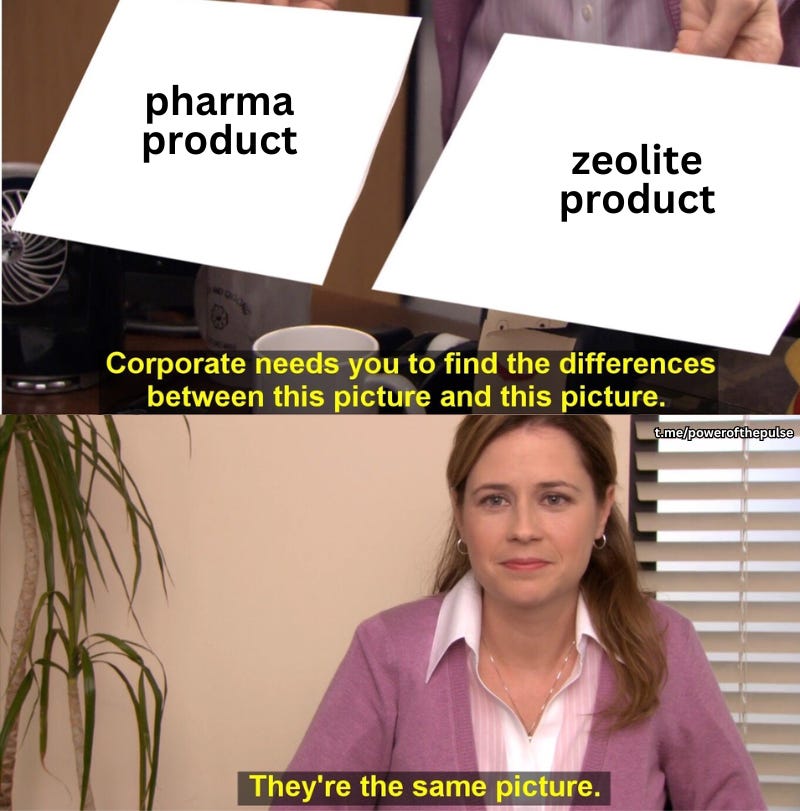
That doesn’t necessarily prove Clinoptilolite is toxic either.
There certainly is plenty of research that says Zeolite Clinoptilolite is a miracle detoxer.
Even the original German Merck company seems to think it’s wonderful: Modified natural clinoptilolite detoxifies small mammal’s organism loaded with lead II: genetic, cell, and physiological effects.
What proves that Clinoptilolite is toxic is it’s basic composition and structure.
Which is why they’ll do anything to avoid addressing the fact that Clinoptilolite is a nano aluminum silicate.
The Vitamin Cartels of the 90s
I was just about to wrap up this article when I discovered yet another bombshell.
I happened upon a document that discusses global vitamin cartels in the 90s.
Essentially, pharmaceutical and chemical companies across continents united to price-fix vitamin-related products resulting in an excess of $30 billion dollars in sales.
These vitamin-related products included supplements, pharmaceuticals, food products and animal feed.
Across the 90s, three companies with the most market share united and ran 16 sub-cartels corresponding to 16 vitamins with a total of 21 companies participating in one or multiple cartels.
All together they owned 93% of the worlds main vitamin-related markets.
Want to know who those three companies were?
Roche
One of the top 5 pharmaceutical companies.
Made $66 billion in revenue in the 2024-2025 financial year.BASF
Oh, hello.
Reminder: BASF is one of the largest global producers of Zeolite for the petroleum industry.Rhone-Poulenc
Chemical & Pharmaceutical company that merged with Hoechst AG in 1999 and later became Sanofi.
Today Sanofi has significant involvement in the supplements and vitamins sector.
Now that we’ve met the cartel ringleaders — who were the smaller heads?
Notable companies are:
Hoechst (before merging with Rhone-Poulenc)
Merck
Akzo
Degussa
Lonza (a more recent sponsor of the IZC)
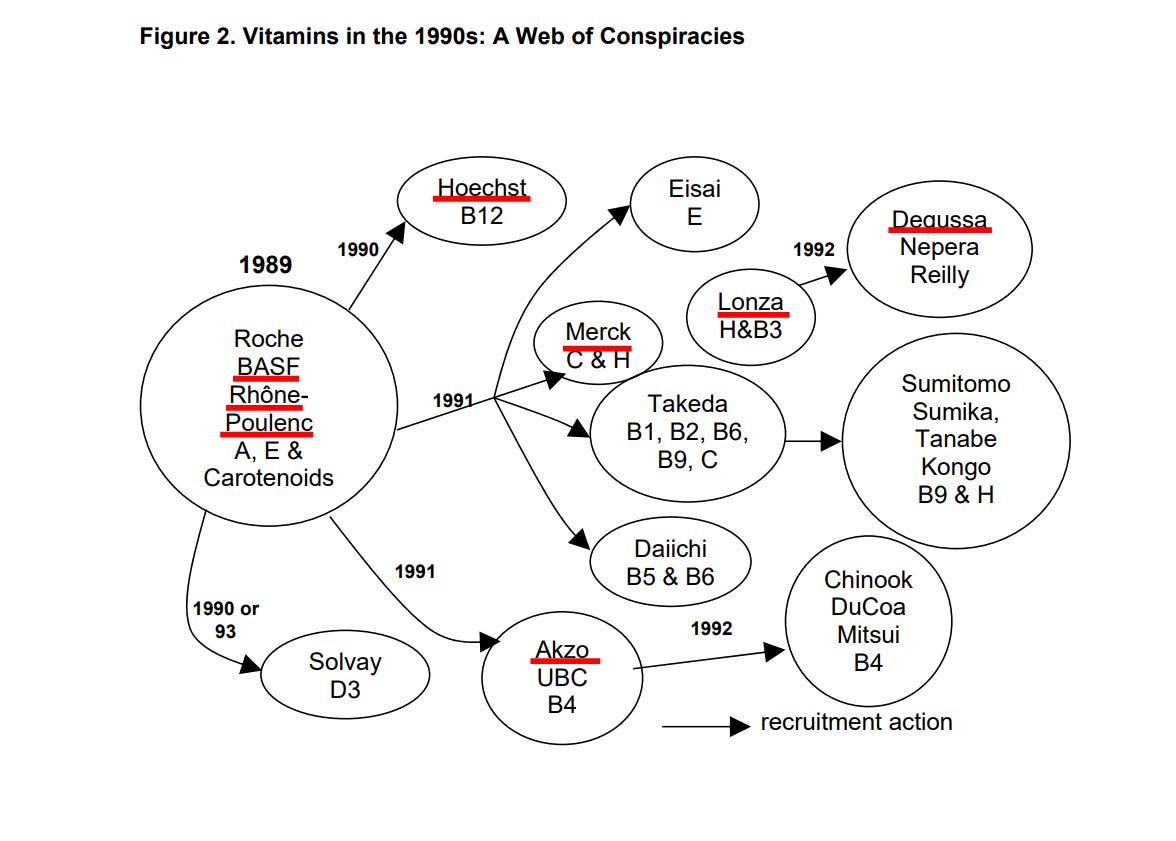
Why were the worlds leading Big-Pharma vitamin & supplement companies investing in Zeolite?
The price-fixing scandal is completely omitted from most Wikipedia pages on these companies. Also note that most resources on these companies do not even mention their extensive ownership of the worlds vitamin and supplement market.
A Conspiracy Theory Interpretation
I find the following sequence of totally coincidental events fascinating:
- 70s: Zeolite promoted as having a future in medicine and biology
- 80s: Extensive pharmaceutical industry involvement.
Involvement from major supplement-industry market owners. - 1989: BASF funds the IZC.
BASF and two other pharmaceuticals form the first vitamin cartels.
BASF is a major Zeolite producer and is the 2nd most powerful vitamins producer after Roche.
Fun fact: Methylene Blue was discovered by a head of research at BASF. - 1989: Hoechst, Akzo & Degussa fund the IZC.
Fun fact: Hoechst invented Fenbendazole. - 90s: Commercial interest in Zeolites peaking
Five companies involved in running global vitamin cartels were actively sponsoring the IZC at the same time. - 1993: Record year for natural Zeolites (mining & sales).
- 1994: Hoechst, BASF & Degussa fund the IZC again.
- 1994: Merck funds the IZC
Merck is known for their involvement and pioneering in the ‘supplement field’.
Fun fact: Merck invented Ivermectin. - 1999: the first Zeolite supplements are brought to market. Initially as a hangover medication, then for diarrhea, then as a magical detox agent.
Fun with Patents
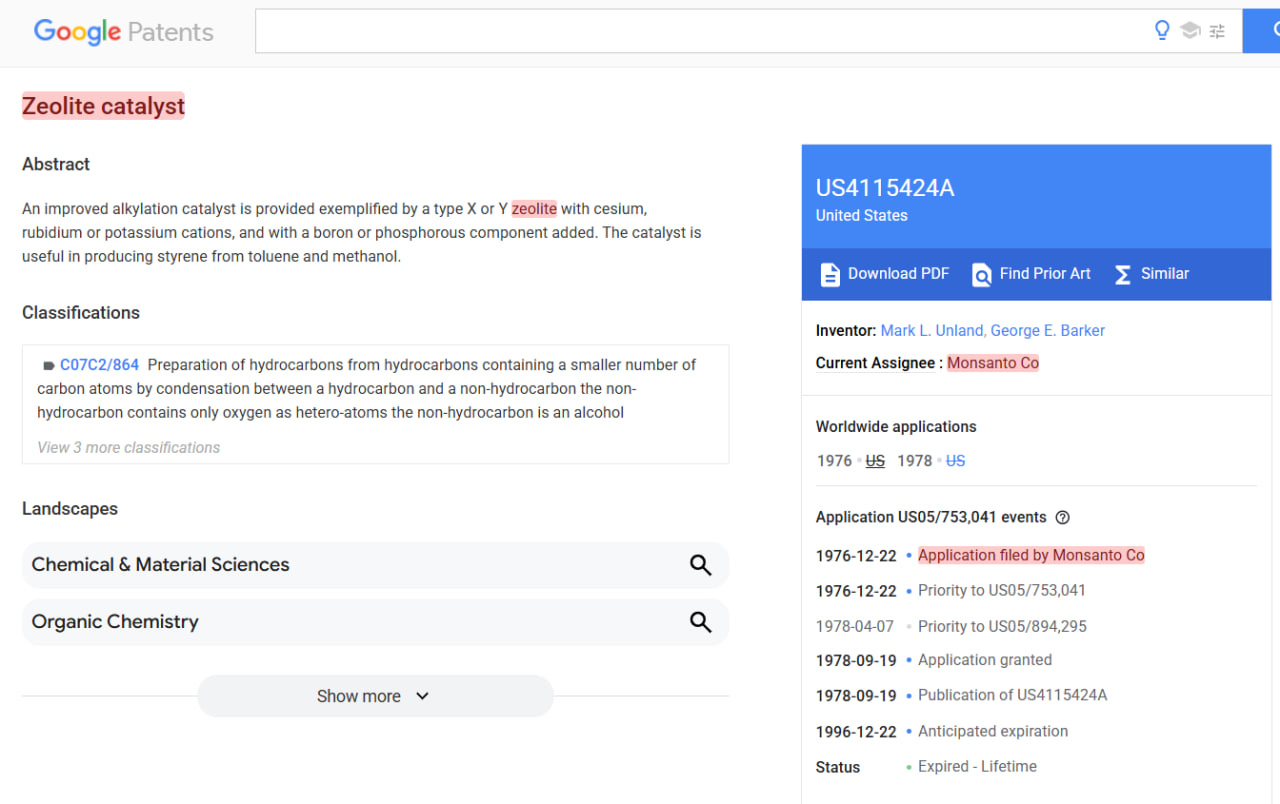
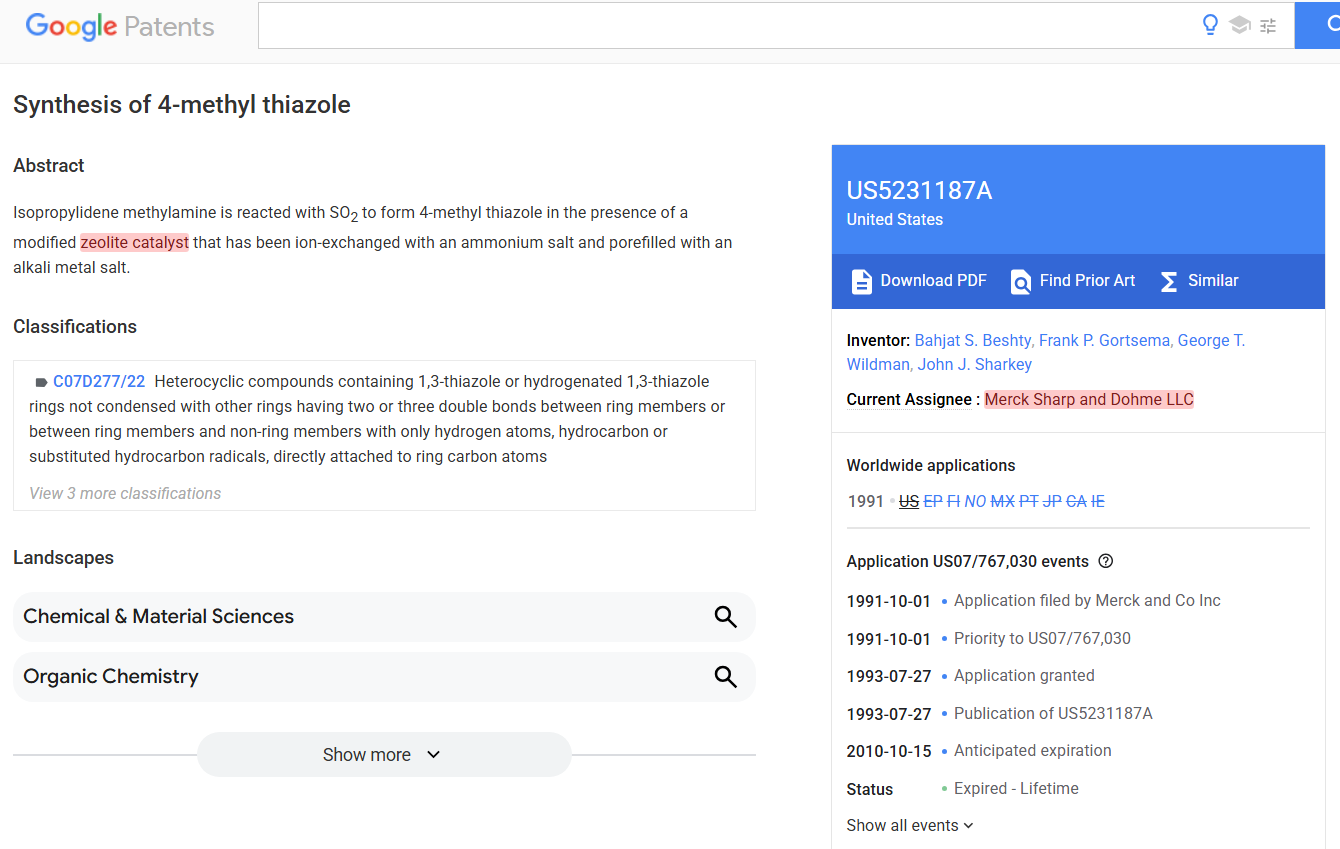
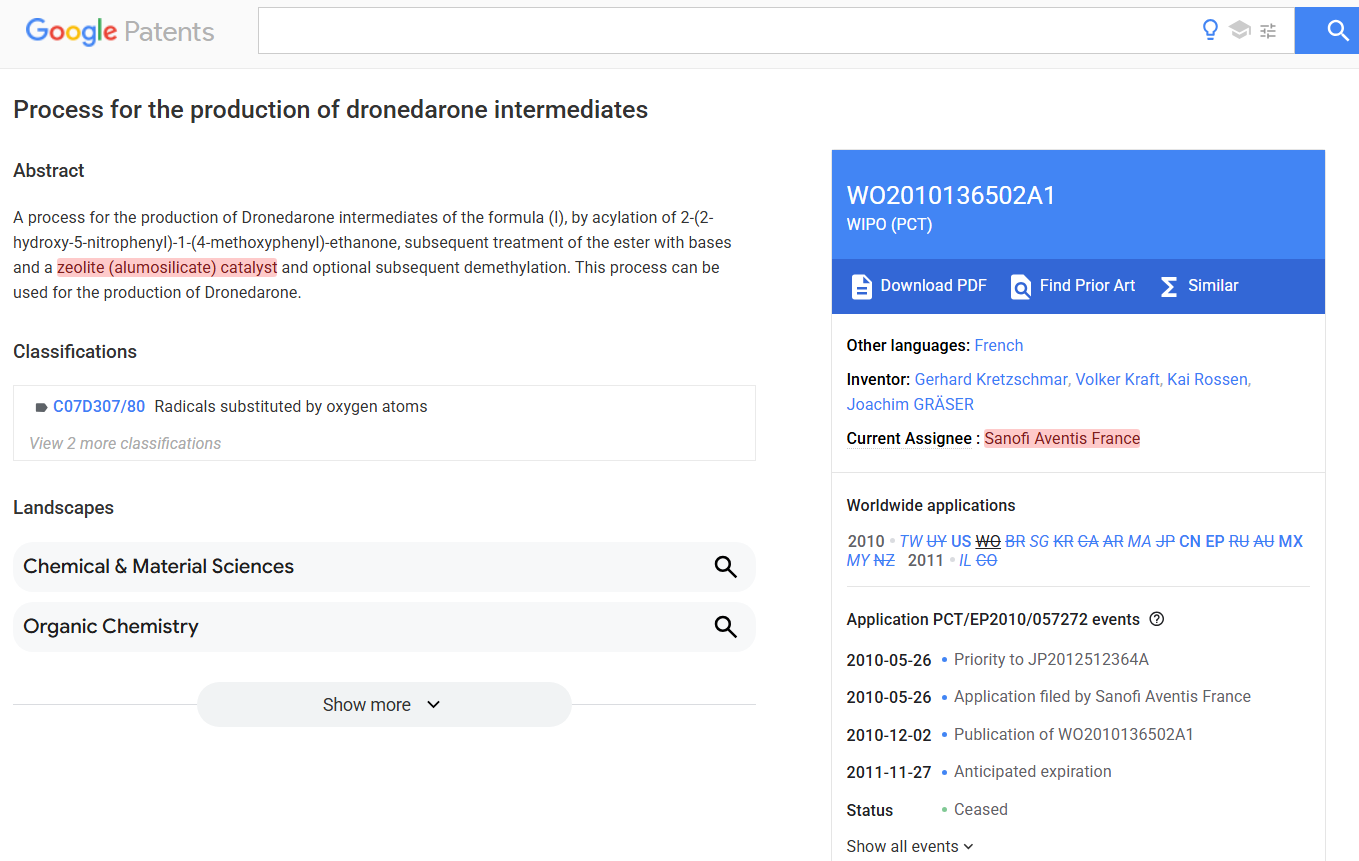
Here are some interesting patents owned by the sponsors of the IZC.
Monsanto Patent
Merck patent
Sanofi Patent
Bayer Patents
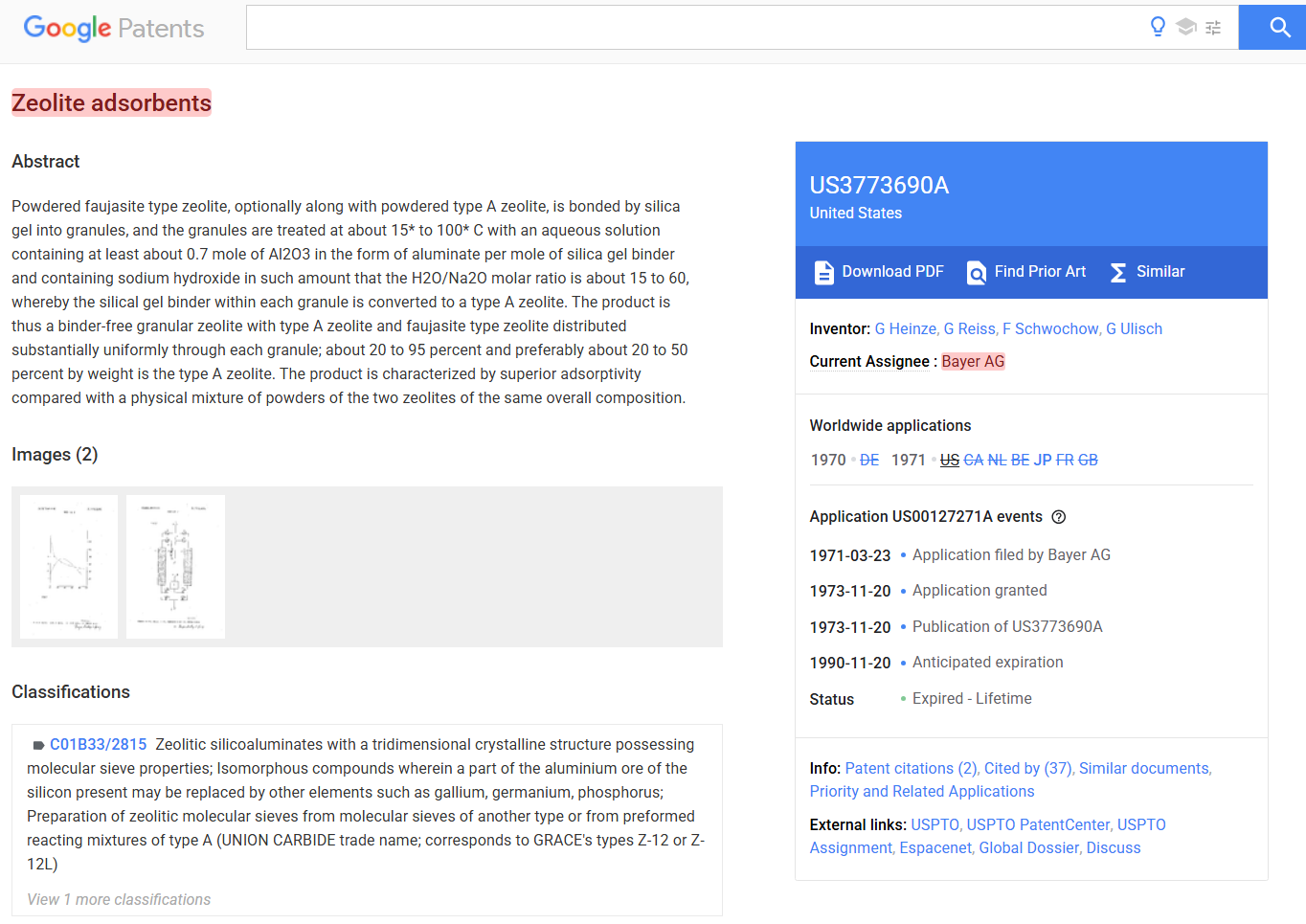
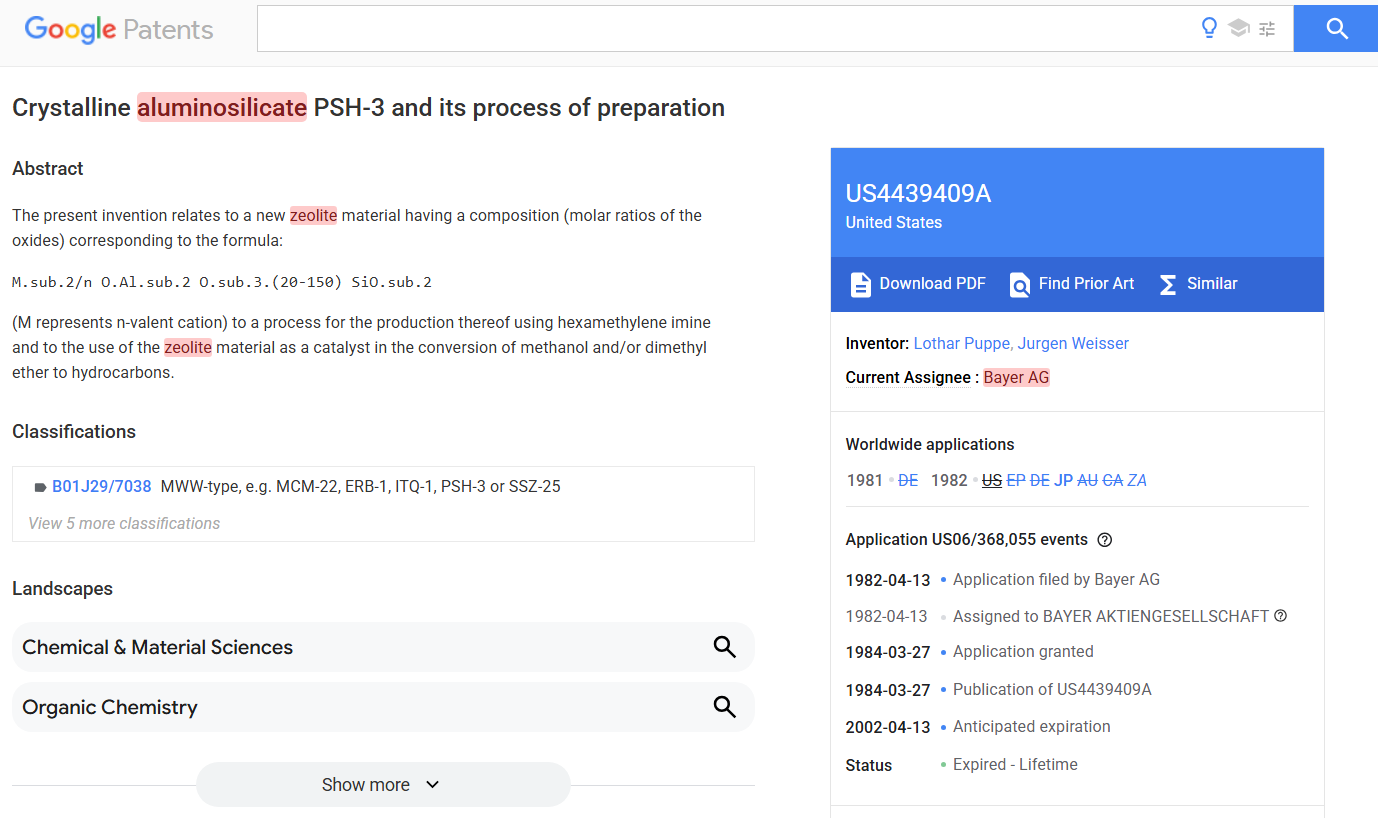
Additional Bayer patent: https://patents.google.com/patent/US4628097A/en
Other notable patents (by no means an exhaustive list)
Exxon Mobil
There’s plenty of more
Dow Chemical
W.R. Grace:
BASF
https://patents.google.com/patent/US10195598B2/en
(joint patent with Dow)
BP Corp
Hoechst
https://patents.google.com/patent/US4664839A/en
(current assignee is Clariant which purchased Sud-Chemie)
VAW Aluminum
There’s more
Chevron
There’s plenty more
PQ Corporation
Sud Chemie
https://patents.google.com/patent/US5407654A/en
(joint patent with VAW Aluminum)
Procter & Gamble
These patents are not direct Zeolite patents yet mention Zeolite a lot
Conclusion
This is only the start of what I am revealing in the Zeolite Investigation. Of all the shocking things I have discovered the information here is perhaps the least important. Initially I had meant to make a short article briefly explaining what the IZC is and showing that Bayer & Monsanto had funded a few years. Upon looking closer at the IZC document it quickly bloomed into something far far deeper.
I think we can agree, this article proves that the monstrous powers of global chemical, petroleum, pharmaceutical, supplement and agricultural industries have had a deep and rich relationship with Zeolites.
The IZC document can be found here:
Scribd: https://www.scribd.com/document/403493718/History-of-IZC-pdf
On Telegram: https://t.me/powerofthepulse/827
This article is accompanied by the following interview: https://dboomasan.substack.com/p/exposing-the-zeolie-and-zeolite-mafia
Want to discover the Rothschild connection to Zeolite? Subscribe to get my posts via email.
I have 70+ posts about Zeolite on Telegram: https://t.me/powerofthepulse
More on Zeolite (these articles will soon be uploaded to SBL as well):
- Zeolite & Using Confusion to Convince: https://shadowbannedlibrary.com/a/blog/repackaging-a-poison
- Basics: https://powerofthepulse.substack.com/p/died-suddenly-news-just-sold-out
- Who funded Zeolite? https://powerofthepulse.substack.com/p/who-funded-zeolite
- Debunking Zeolite myths: https://powerofthepulse.substack.com/p/zeolite-zealot-mad-at-me
- More on the psychology of supplement psyops: https://powerofthepulse.substack.com/p/on-authority


![Your Teeth Are Sweating: An Essay on Dentinal Fluid [by Unbekoming]](https://dropinblog.net/cdn-cgi/image/fit=scale-down,format=auto,width=700/34264201/files/featured/sdgesg.png)
![a Hacker, the FBI & a Shooting - in that Order [Pizzagate Part 9 by Agent131711]](https://dropinblog.net/cdn-cgi/image/fit=scale-down,format=auto,width=700/34264201/files/featured/298284e1-857b-49d1-be4f-b2c79f0729bb-1400x788.webp)
![Unveiling Who is at the Top of the Pizzagate Trafficking Network Conspiracy [Part 10 by Agent131711]](https://dropinblog.net/cdn-cgi/image/fit=scale-down,format=auto,width=700/34264201/files/featured/pizza-at-the-top.png)
![Pegasus, the House, Beauty Queens & Shell Companies [Pizzagate Part 8]](https://dropinblog.net/cdn-cgi/image/fit=scale-down,format=auto,width=700/34264201/files/featured/9d3a5b2d-cf9d-46f2-8d8d-4570c98d0e05-1400x788.webp)

![The Mafia, Israel and President Kennedy vs Fidel Castro [Pizzagate Part 11 by Agent131711]](https://dropinblog.net/cdn-cgi/image/fit=scale-down,format=auto,width=700/34264201/files/featured/pizza-at-the-top-copy.png)
![A Second Look at Wayfair [Pizzagate Part 7 by Agent131711]](https://dropinblog.net/cdn-cgi/image/fit=scale-down,format=auto,width=700/34264201/files/featured/04392d5b-b667-4dc8-835a-452bfd4867ec-1400x788.webp)