

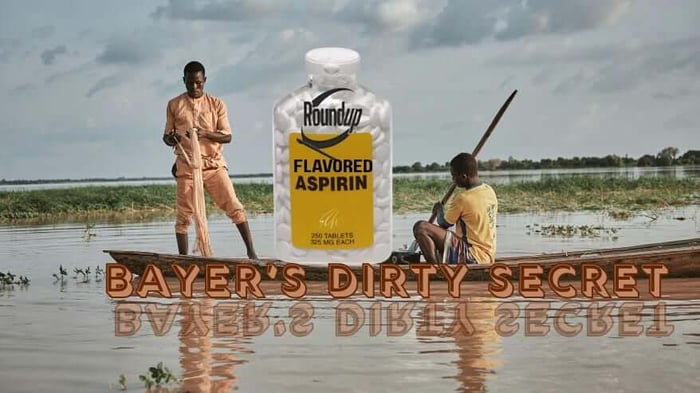

Suramin: An Old Poison Rebranded for a New Panic-a-demic
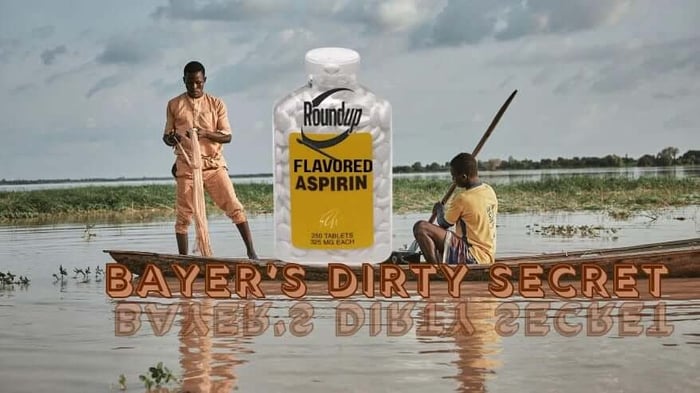
Bayer bought Monsanto in 2018 for $63 billion, acquiring Roundup along with it. Most people know Roundup as a weedkiller, but its first patent was as a broad-spectrum antibiotic. Let that sink in. This article will show that there’s no real difference between Roundup sprayed on fields and the pills corporations sell as medicine, both come from the same industrial chemical piles and brand logic.
I started digging into Suramin because a reader asked. I’d never heard of it, but it was already circulating through the truthie freedum communities as a supposed autism cure. I thought I’d write a quick explainer: what it is and why it’s dangerous. What I found was far worse. In black and white I discovered the same playbook I’ve seen a hundred times before. First, entire communities, often people with more melanin in their skin, are exposed to industrial poisons for reasons I won’t unpack here. Then the papers are flooded with panic. And just when fear is highest, the chemical companies roll out the answer they were quietly had in store all along.
Swap the name Suramin for any branded drug or “miracle” vitamin or supplement and the script is identical. Different molecules, same factory chemistry, same marketing funnel: manufacture the problem, sell the fix. Remember, and this is the smoking gun, mic drop, no one ever fights me on: They have the chemical drug first, then the diseases that they cure miraculously crop up. Meaning, if I invent a cure for AIDS, first we have to have AIDS. And it is so much easier to invent a disease when I know what symptoms my drug will suppress. This is how drug companies work folks. First they poison, then create the panic, then the pill. If you can’t see that pattern, you haven’t been paying attention. Well, most could see it with the scamdemic, but not the equally toxic solutions. Enter stage Suramin.
The Drug for the Disease
Suramin was born in 1916 inside Bayer’s industrial dye manufacturing and laboratories. It was marketed as the breakthrough treatment for African Sleeping Sickness (ASS-really? they do this on purpose), a debilitating illness said to be spread by parasites through the bite of the tsetse fly. Doctors at the time beLIEved they had discovered a parasitic scourge that only a powerful chemical could control, and Suramin became their cash cow of choice. And for those who still cling to the idea that Suramin was some hidden pharmaceutical that “doesn’t make any money”… one thousand million? That’s a billion. Let’s be clear: Big Pharma doesn’t manufacture drugs out of charity. They don’t keep products alive unless they generate profit and plenty of it. Re-read that until it sinks in.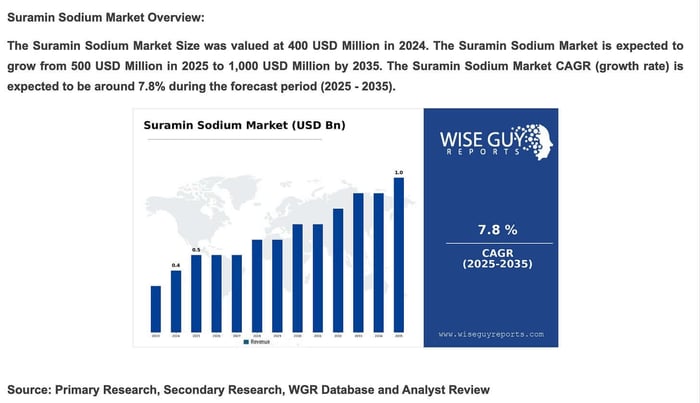
African Sleeping Sickness was never the result of a random attack by an invisible parasite. It emerged in the same regions where colonial powers drenched riverbanks with arsenic, cyanide-based fish poisons, and early precursors of DDT in an attempt to sell the public they need to kill flies and control nature. Exactly like the war on fake “GMO” mosquitos most people have fallen for. They just make up the story so the public will seal clap and beg for the poison. Communities along those poisoned rivers developed tremors, fevers, wasting, delirium, and eventually coma.
Suramin is a synthetic chemical with an exceptionally long half-life and well-documented toxicity to the kidneys, adrenals, liver, and nervous system. Giving Suramin to already poisoned populations only compounded their suffering. When the riverbank poison campaigns subsided, the “disease” declined. It was not a medical triumph. It was the removal of the original insult.
The Malaria Farce and the Chemical Lie
To understand how the African Sleeping Sickness narrative was built, we need to first look at malaria. For more than a century, the public has been told that malaria is caused by a parasite carried by mosquitoes. Yet, as I have pointed out in several of my articles, Tom Cowan dismantled this belief, pointing to decades of evidence showing that outbreaks of malaria do not follow mosquitoes but chemical spraying. In region after region, so-called malaria epidemics began after rivers, wetlands, and entire landscapes were treated with pesticides, larvicides, and oil-based toxins.
This flips the entire story. The mosquito was never the culprit. The sickness arose from the poisons meant to kill the insects. This is never an accident. The know exactly what they are doing. People developed fevers, chills, and delirium — not from a microscopic invader, but from systemic poisoning. Quinine, the celebrated drug from cinchona bark, was then marketed as the cure. When homeopaths diluted it and claimed success under the “law of similars,” they were not curing a parasite. They were suppressing the symptoms of poisoning with another poison. The original “proof” of homeopathy’s legitimacy was built on the same false foundation as the pharmaceutical model: treat chemically induced illness with another chemical and declare victory. As I have pointed out, but can’t help to take another jab and the sugar pill placebo empire.
The same script was applied in Africa. “Sleeping Sickness” was blamed on parasites spread by the tsetse fly. The rivers where outbreaks occurred had been systematically poisoned with arsenic compounds, cyanide mixtures, and later petroleum-based sprays to eliminate flies. The people who lived along those rivers developed tremors, wasting, and neurological collapse. Suramin was introduced as the savior drug, but the truth is simpler. When the poisoning campaigns subsided, the so-called epidemic faded. The drug did not solve the problem. The removal of the toxins did. Just like DDT causing Polio. When I say they use the same playbook, they use the same playbook. Over and over and over and over…

African Sleeping Sickness: A Manufactured Plague
The official story tells us that African Sleeping Sickness (ASS) is caused by a parasite called Trypanosoma brucei, carried by the bite of the tsetse fly. Colonial physicians described villagers falling into fever, wasting, tremors, confusion, and eventually long states of stupor before death. They painted a picture of Africa as uniquely cursed, plagued by dangerous insects and hidden parasites. The solution, according to German chemical giant Bayer and other colonial powers, was to develop new synthetic drugs powerful enough to kill the parasites without (allegedly) killing the host. Suramin was one of their flagship creations.
Keep in mind, Bayer didn’t start as a medicine company, it started as a dye factory. And when drugs proved more profitable than fabrics, they didn’t abandon the chemistry. They simply repurposed the same toxic dye ingredients into “medicine.” Just like our favorite DMSO story.
The malaria outbreaks followed pesticide campaigns along rivers, orchards and wetlands, the so-called epidemics of African Sleeping Sickness erupted in regions where colonial authorities were actively poisoning the environment. Arsenic-based compounds like atoxyl were dumped into rivers and sprayed across villages in the early 1900s to poison native Africans “suppress fly populations”. These were not minor interventions. Entire watersheds were treated with industrial chemicals under the guise of public health, leaving local populations directly exposed to toxins that attack the nervous system. The symptoms, tremors, fever, stupor, neurological collapse, mirror exactly what was later described as “parasitic infection.”
By the time Bayer introduced Suramin in 1916, the script had already been written. Africans were depicted as helpless victims of a natural parasite, while Bayer and its allies offered salvation through chemical warfare disguised as medicine. Suramin was marketed as a miracle: a colorless, odorless powder that could be injected to “cure” the disease. In truth, it was a sledgehammer drug designed to neutralize symptoms of poisoning with yet another poison. Suramins side effects included kidney failure, adrenal collapse, severe skin reactions, and permanent neurological damage. Colonial doctors knew this, but in a system built on exploitation, Africans became the obvious testing ground.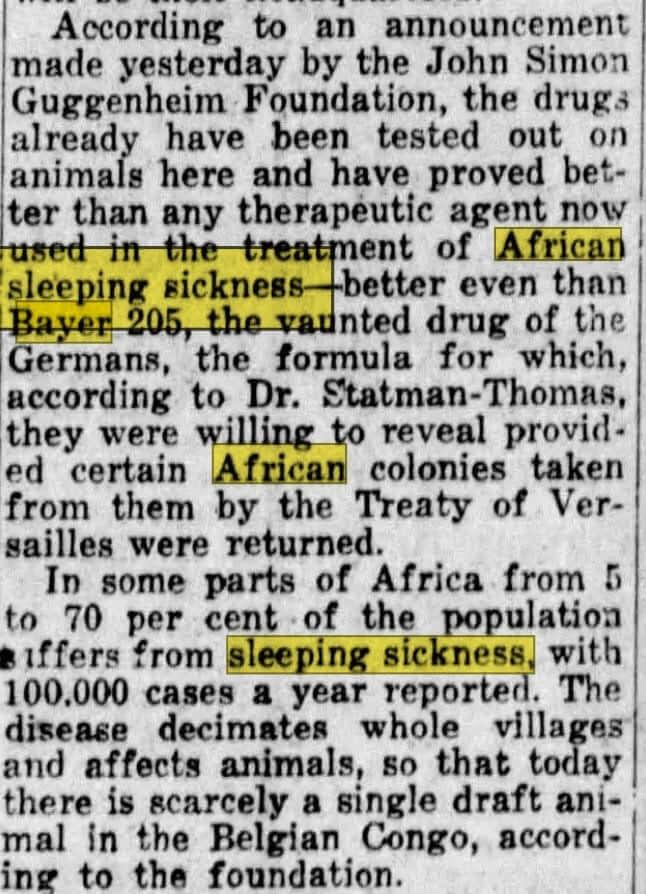
Sun, Aug 26, 1928
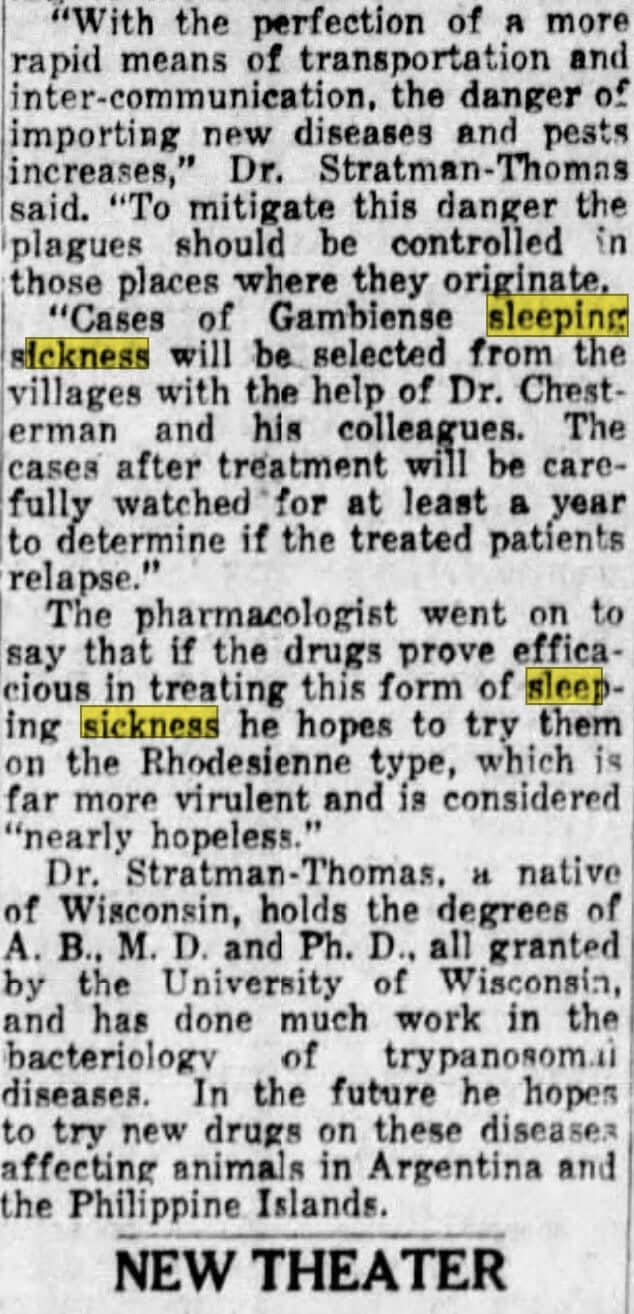
We already know what really ended outbreaks was not Suramin. It was the cessation of poisoning campaigns. When chemical applications waned, the “epidemics” faded, often just as suddenly as they had begun. But the official narrative buried this reality and elevated Suramin as a medical triumph. The same tactic we see in malaria, blaming mosquitoes for what toxins caused, was now repeated in Africa. Poison first, then poison second with your chemicals to manufacture the cure, then double dip the profit.
Bayer’s role in this cannot be overstated. As one of the founding pillars of IG Farben, the cartel that fueled both industrial chemistry and Nazi experimentation, Bayer perfected the cycle of fear and salvation. Create a crisis. Introduce a chemical villain. Offer a chemical cure. Declare the problem solved and export the model worldwide. And the evil plan is still going strong today. Wait until your favorite influencer starts singing the praises of drinking roundup or roundup ready enemas. I hear it’s great for making your hair nice and shiny. Laugh all you want, BUT THEY ARE THE SAME THING. Miracle cures, weed killers, plant fertilizers, industrial dyes.
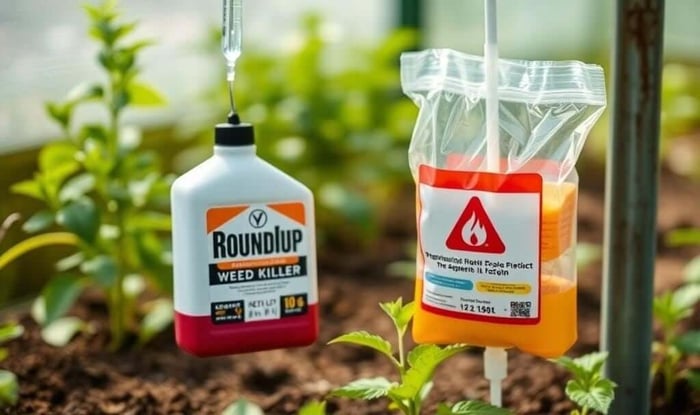
roundup weed killer as an IV bag
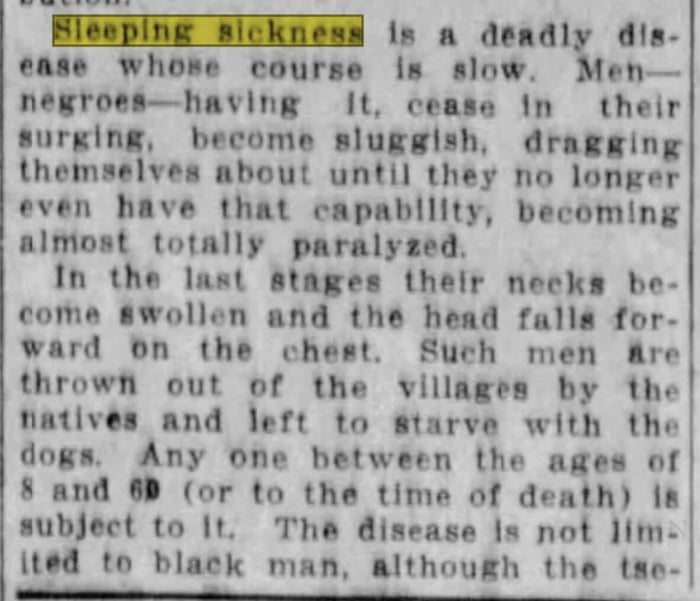
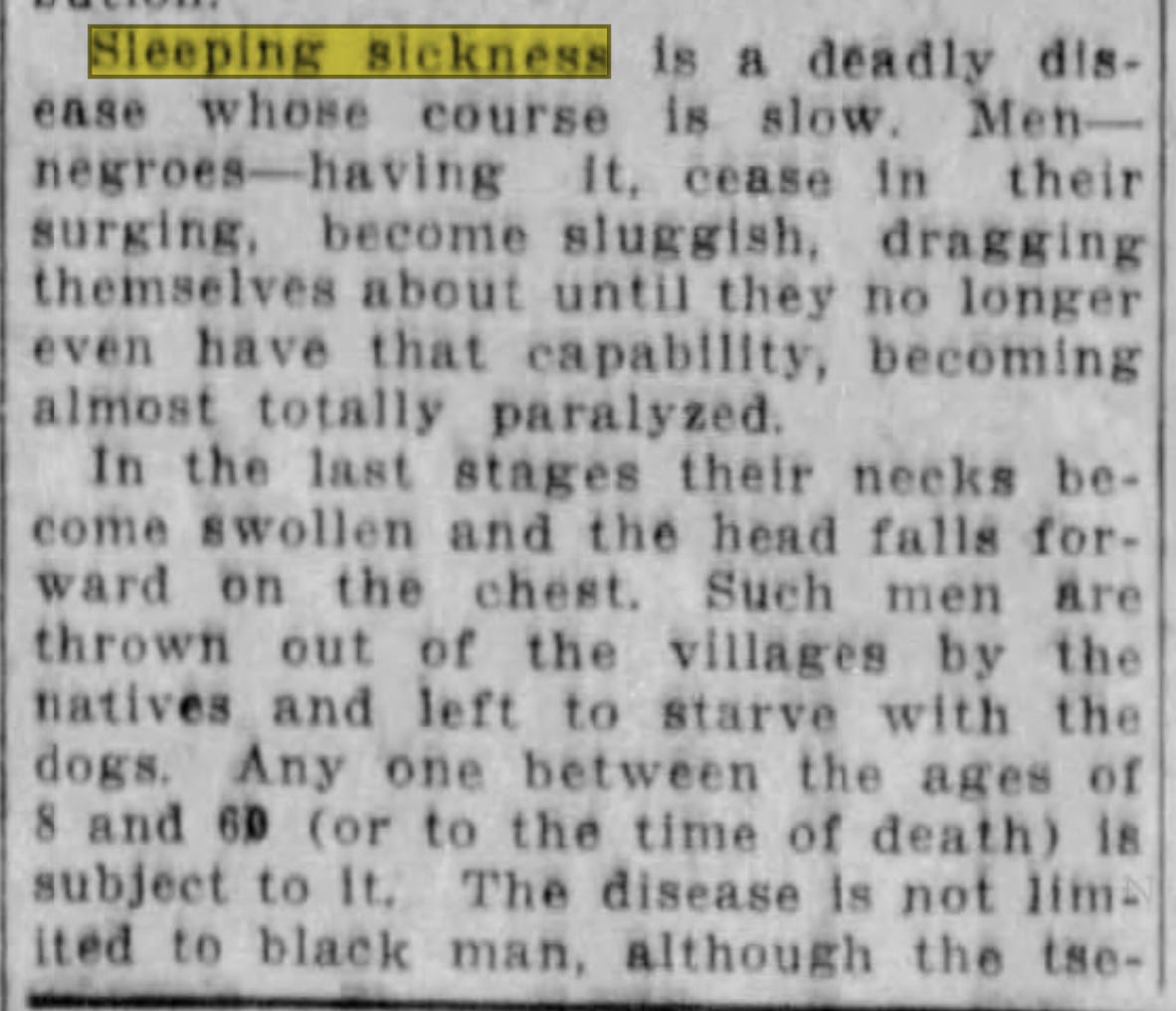
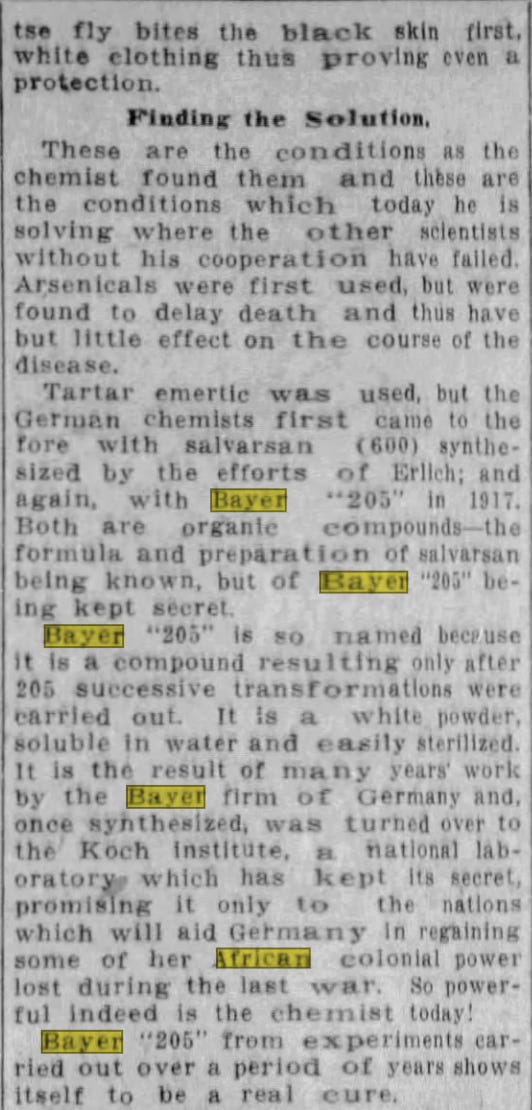
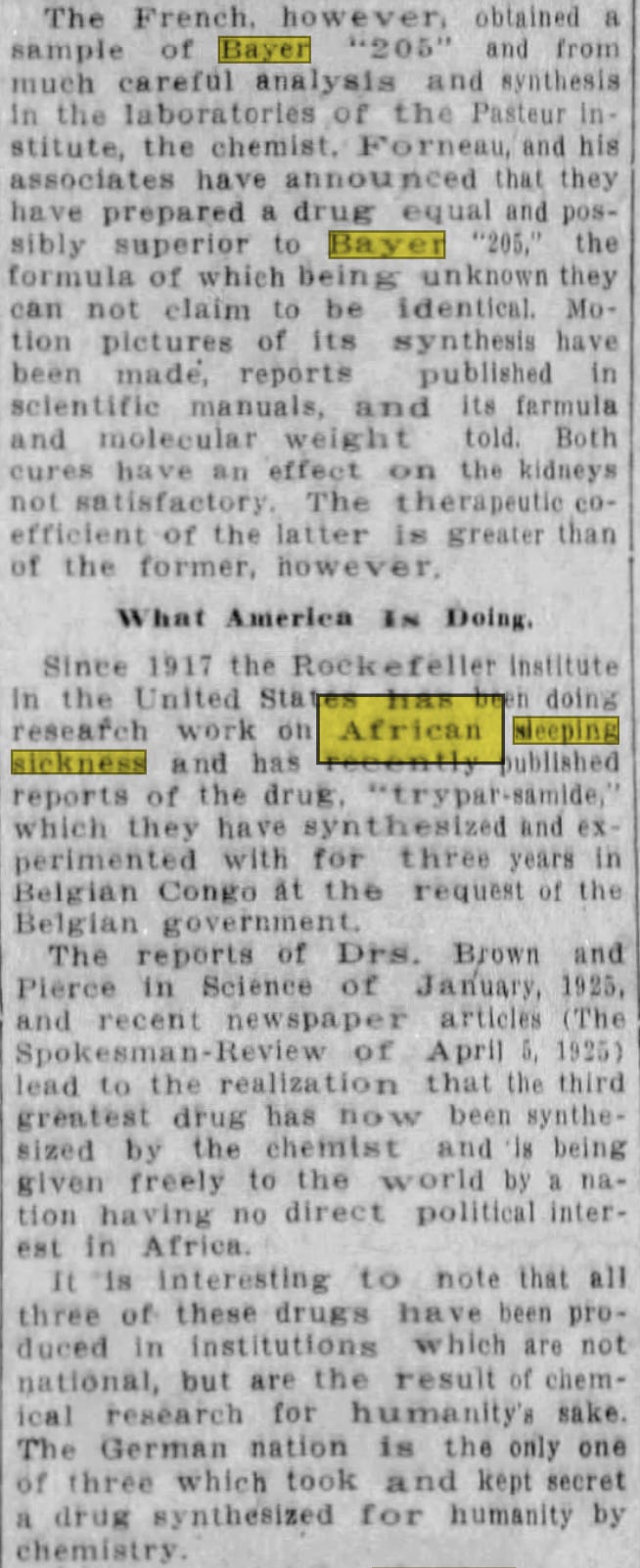
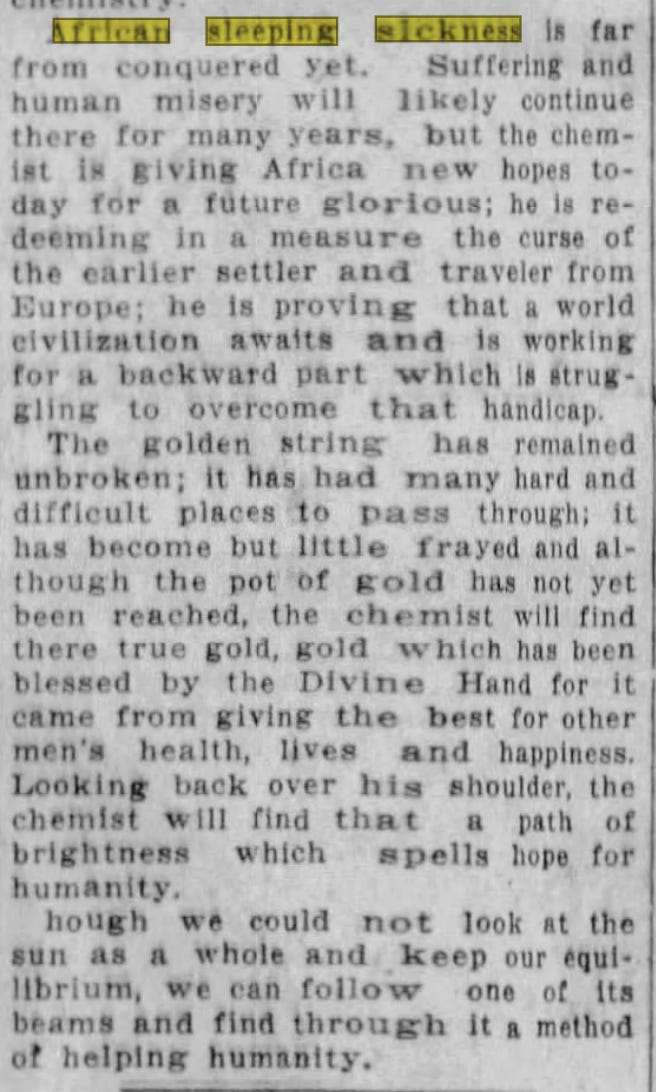
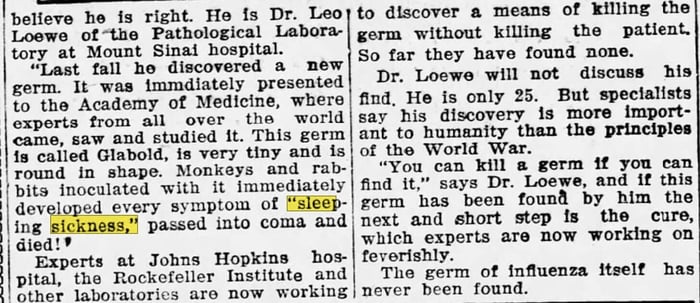
The propaganda surrounding African Sleeping Sickness becomes even clearer when we examine how it was presented to the public. Take, for example, the newspaper image showing a woman slumped forward, her body labeled with the “symptoms of sleeping sickness.” The list is redundant: twitching and paralysis of facial muscles, headaches, dizziness, drooping eyelids, dilated pupils, crossed eyes, tonsillitis, catarrhal distress, and finally paralysis of arms and legs.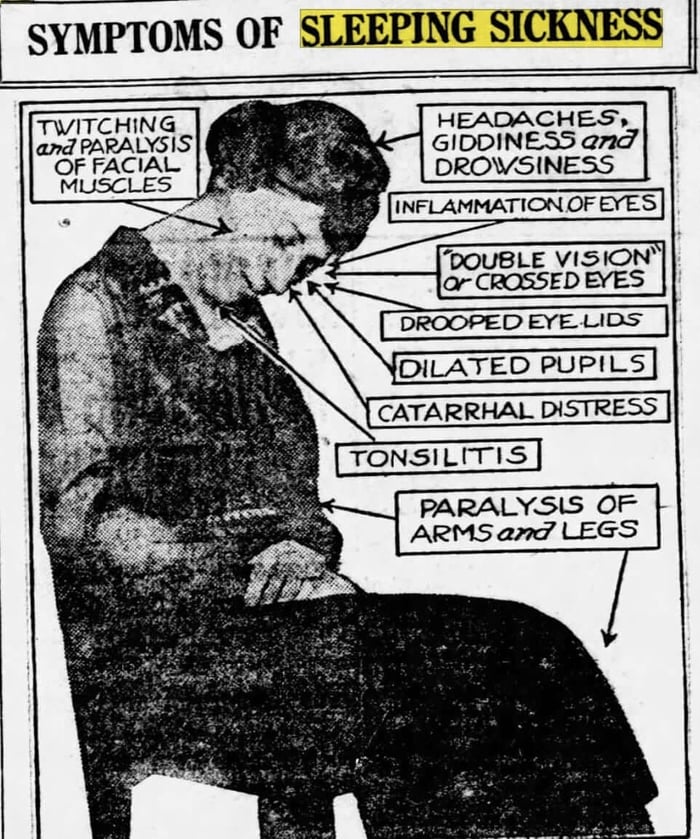
Looking directly at neurological damage and chemical poisoning, such as droopy eyelids, dilated pupils, facial paralysis, and progressive limb weakness, mirrors the effects of heavy metal toxicity, especially arsenic and mercury.
These were not only present in the riverbanks, that were sprayed with insecticides, but deliberately administered by pharmaceutical companies in the so-called “treatments” for trypanosomiasis. Bayer’s atoxyl, an arsenic-based compound, was pushed as the miracle cure, even as it caused blindness, paralysis, and death. The supposed disease and the supposed cure became indistinguishable because, in reality, they were one of the same.
The newspaper articles also reveal how racial pseudoscience was used to frame the epidemic. Reporters noted that the tsetse fly “targeted black skin first,” offering a convenient explanation for why white colonials seemed less afflicted. This framing did two things: it pathologized Black bodies as uniquely vulnerable, and it exonerated colonial medicine from blame. If Africans were the “chosen victims” of the fly, then their sickness could be spun as a natural inevitability, rather than the direct result of corporate chemical experimentation. The medical industry, with Bayer at the helm, weaponized this narrative. Africans became the laboratory. White Europeans became the supposed saviors. And the world was taught to fear a “disease” that was, in truth, the signature of Bayer’s poison.
This is the crux of the matter: sleeping sickness is yet another corporate construction. By blaming the tsetse fly and racial susceptibility, Bayer obscured its own crimes; systematic neurological injury through chemical assault. The victims were told they had a mysterious African plague; the world was told Bayer was delivering salvation. In reality, both the disease and the remedy were manufactured from the same toxic root. Let’s take a moment to pause on just how evil these business giants are.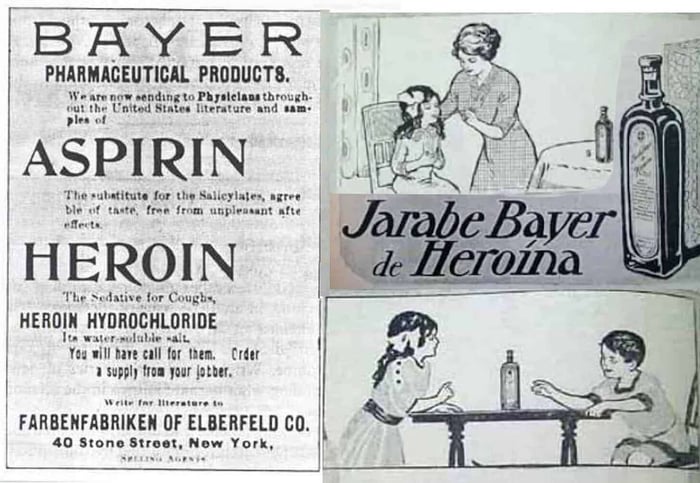
When you strip away the lab jargon, Suramin is built from the same industrial chemistry that produced early synthetic dyes, coal tar derivatives, and even the reagents of wartime factories. The key building blocks named in old Bayer notebooks and later in Fourneau’s structural deduction are large naphthalene-based fragments, heavily sulfonated dye intermediates, aromatic amines derived from benzoic and toluic acids, and a urea bridge formed with a highly toxic carbonyl-chloride reagent. In plain language, Suramin is a big, water-soluble molecule stitched together from mothball chemistry, coal-tar dye, and a phosgene step that industry uses to join pieces into a single compound.
Those raw materials matter because the symptoms recorded as “sleeping sickness” overlap with classic signs of exposure to this family of chemicals. Naphthalene and related coal-tar products can cause neurological symptoms and blood disorders. Sulfonated dye intermediates and aromatic amines are associated with irritation, nervous system effects, and long-term blood and organ damage. Phosgene and its industrial cousins are known lung and systemic toxins. Taken together, the ingredients that form Suramin sit in the same chemical neighborhood as agents that produce the dizziness, drooping eyelids, visual disturbance, progressive weakness, and neuro-cognitive decline shown in the old symptom maps. It is not merely a coincidence that the “cure” and the recorded illness share chemistry and overlapping toxicology. This way they can say the victim is to far gone from the ASS and get progressively worse from the ASS symptoms not what is going in the IV.
Common names and real-world parallels
Naphthalene derivatives
This is the mothball family. Naphthalene was one of the first industrial chemicals used to dye fabrics and to repel insects. Exposure can cause hemolytic anemia in susceptible people, headaches, weakness, and neurological disturbance. Naphthalene derivatives are the aromatic backbone of many dyes and chemical intermediates, and they appear in the Suramin scaffold as the naphthyl unit.Sulfonic acid groups and dye intermediates
These are the workhorses of the dye trade. Sulfonated aromatic compounds were extensively used to make bright, stable synthetic dyes for textiles. In industrial settings, they are corrosive and irritating and have long been associated with occupational poisoning syndromes. Their presence in a molecule increases water solubility but also ties that molecule to a class of known irritants and toxicants.Aminobenzoic and aminotoluic type fragments
These are relatives of aniline, the classic coal tar aniline dyes. Aniline and its analogues are notorious for causing blood problems, including methemoglobinemia, and for causing neurological and liver damage. The aromatic amide pieces in Suramin are chemically akin to these industrial anilines that were implicated in early dye-worker illnesses.Phosgene (carbonyl chloride)
Phosgene is the industrial reagent historically infamous as a choking agent in wartime. In chemistry, it is used to form carbonyl linkages, such as those found in ureas and carbamates. Exposure to phosgene and related carbonyl chlorides can cause severe lung injury and systemic toxicity. Its use in the synthesis history of Suramin links the drug to a class of reagents that are not safe to handle without strict industrial controls.Sodium salt formulation
The finished product is a sodium salt, which makes the big molecule water-soluble and injectable. Converting a toxic aromatic framework into a sodium salt does not remove the underlying chemistry. It simply makes a dangerous scaffold more deliverable into the body.
Placing the chemical facts alongside the colonial record alters the narrative you were told. Bayer and its rivals were dye houses turned drug makers. They took dye chemistry, altered and combined it, and then marketed the result to treat conditions whose recorded symptoms fit the toxic profile of these chemicals. The substances used to make and to administer the so-called cure are the same families of chemicals that produce many of the very symptoms labeled as the disease.
This is the same industrial playbook that built today’s supplement industry. The “natural” vitamins and “bioidentical” hormones are not squeezed from plants or distilled from sunshine—they’re manufactured in chemical plants from the same industrial stocks used for dyes and pesticides. The steps even sound identical: aromatic precursors, esterifications, sulfations, catalytic hydrogenations, solvent washes, and salt conversions to make a compound shelf-stable, water soluble, or injectable. In plain English: your “natural” capsule comes out of the same chemical logic as Suramin so stop shooting the messenger.
The only real difference is the label. Marketing turns poisons into remedies and lab waste into “superfoods.” If you doubt it, read Eric Schlosser’s Why McDonald’s Fries Taste So Good. The very same artificial flavor molecule that makes fries addictive is also used in laundry soap and mold-proof bread. That’s the scam—different aisle, same factory.
When you read ingredient lists that sound like chemistry lab inventory, it matters. It should change the way you think about what you’re being sold. A name on a bottle or a glowing testimonial does not change the origin of the molecule. The chemistry remains the same. The corporations that perfected large-scale synthesis for textiles and explosives repurposed their know-how for medicines and later for supplements. That means the line between pharmaceutical and “wellness” products is nonexistent.
Old chemistry, new grifters.
Once you see the industrial blood running through Suramin, the rest of the story falls into place. The same factory logic that turns coal tar into dyes and reagents into ureas also produces solvents, oxidizers, and cheap disinfectants that get repackaged as miracle medicine when the market needs one. Two names keep showing up across decades of snake oil and pseudo-science: DMSO and chlorine dioxide. Both are industrial chemicals with real-world uses in manufacturing and sanitation, and both have been recycled into the wellness marketplace as quick fixes, sometimes with tragic consequences.
Autism became a perfect marketplace for this machinery. When studies surfaced suggesting Suramin might temporarily shift certain metabolic markers in a tiny horribly executed autism pilot study, the fragmented wellness ecosystem grabbed the headline and rewrote it into gospel. A drug that is too toxic for broad medical use suddenly became the symbol of the secret cure that elites suppress. If Suramin is forbidden, the argument went, there must be something worth hiding. If you cannot access the pharmaceutical, you can access a surrogate, a do-it-yourself ritual, a homemade “detox.” That is how DMSO and chlorine dioxide slid into autism cure narratives. They offer a cheap, actionable ritual that promises control: mix, apply, swallow, witness a miracle. In practice, those rituals produce iatrogenic harm and new cycles of trauma.
This is the structural point. The industry that manufactured the problem perfected the instruments that would market the remedy. Suramin, DMSO, and chlorine dioxide are siblings in the same industrial family: useful in factories and dangerous in bodies. Each has been fetishized by promoters who weaponize scientific nuance into marketing copy and turn audience desperation into repeat customers. None of these substances is a legitimate, safe cure for autism. And as an aside, autism is not even a thing—you don’t plug a human into a computer and it comes up with autism. The symptoms are a neurological breakdown and brain damage caused by poisons, ultrasound and food industry.
_______________________________________________________
Why would you think they would also sell you a cure that actually cures? They don’t cure customers; they create better customers.
_______________________________________________________
If you care about truth or about children, the lesson is urgent. Insist on transparency from anyone selling a miracle. Stop listening to the story and the miracle cure. The pattern is old: manufacture the crisis, sell a chemical comfort, profit from despair. The harms are not theoretical. They are bodily, immediate, and sometimes irreversible. Don’t let industrial chemistry masquerade as compassion.
The Poison Rebranded
Suramin’s history is the story of a toxic dye-derivative, born from the same industrial vats that gave us pesticides, disinfectants, and paint thinners, rebranded as medicine for a sickness whose very origin was caused by the poisoning campaigns. A century later, the cycle repeated. In 2020, amid panic and confusion, the same drug was dusted off and sold to the “truth” community as a forbidden cure, its dangers conveniently forgotten, its mythology carefully stoked. The corporate giants want one thing and one thing only: to make more and more money.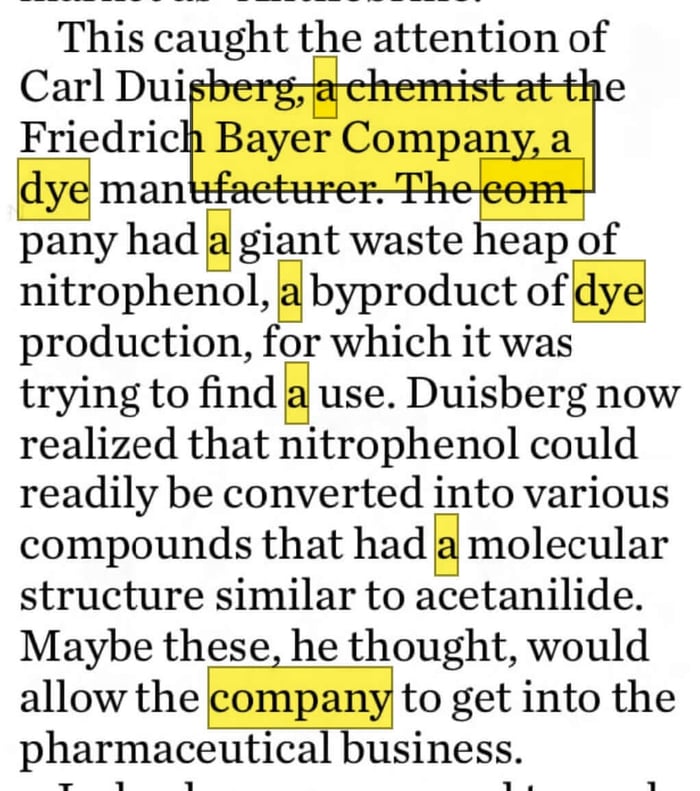
Bayer recently bought Monsanto’s. They are on both sides of the money dip—allegedly causing then curing the disease.
This is the real pattern: one industry manufactures the crisis, another packages the chemical consolation prize. Suramin, DMSO, chlorine dioxide, and the endless carousel of synthetic vitamins and “autism cures” are not breakthroughs — they are distractions, a controlled opposition marketplace built to catch those who refuse the official script. The truth is simpler and harder to sell: health is not found in an industrial bottle, and freedom is not delivered in a capsule or a solvent. Once you see how the poisons and their alleged remedies are twins, the spell is broken.
The choice is yours. You can keep drinking from the poisoned chalice, hoping the next rebranded chemical will deliver salvation. Or you can step outside the loop, refuse the bait, and remember how brilliant, powerful and wise you are.

If you appreciate my research, please consider hooking me up with a coffee or making a Ko-Fi donation. Every dollar truly helps!



Disclaimer
The information shared here reflects my personal research, study, and lived experience. Sources include historical archives, scientific literature, and public records wherever possible. It is intended for education and discussion, not as medical or legal advice.
I am a registered nurse, no longer practicing, and am not acting as a healthcare professional while writing for Substack. Every reader should use their own discernment and consult qualified professionals for personal decisions. My goal is to help people think critically, question openly, and restore their relationship with truth and nature.
![Mag-Naus-Eum: The Metal You’ve Been Drinking [Part 2]](https://dropinblog.net/cdn-cgi/image/fit=scale-down,format=auto,width=700/34264201/files/featured/mg-mg-part-2.jpg)
![The Great Magnesium Poisoning [Part 1]](https://dropinblog.net/cdn-cgi/image/fit=scale-down,format=auto,width=700/34264201/files/featured/mg-mg-2.png)

![BLOOD PRESSURED TO DEATH: How to DESTROY Your Kidneys in 5 Easy Steps [Part 1 of 3]](https://dropinblog.net/cdn-cgi/image/fit=scale-down,format=auto,width=700/34264201/files/featured/bce83ada-f4c0-4cdb-a4e7-bf4eab08bb07-1280x720.webp)



![Bringing Up The Underworld: Vivisection and Organ Donation [Cannibals Part 4]](https://dropinblog.net/cdn-cgi/image/fit=scale-down,format=auto,width=700/34264201/files/featured/4aad8890-f8f1-4198-910c-e85a0171247c-1280x720.webp)