

![Mag-Naus-Eum: The Metal You’ve Been Drinking [Part 2]](https://dropinblog.net/cdn-cgi/image/fit=scale-down,format=auto,width=700/34264201/files/featured/mg-mg-part-2.jpg)

This is the second half of a two-part series. Be sure to read Part 1 first.
The Big Questions
This brings us to the only questions that matter. Why do you experience nausea and diarrhea?
What actually happens inside the body when you swallow magnesium?
Why do people feel temporary relief?
Why do the symptoms return?
And why did the entire deficiency narrative depend on the public never understanding those reactions?
When chemists first created magnesium compounds in a lab, they assigned each one a chemical signature. Not a nutrient profile, a reaction profile. Once you manufacture a slurry from metal and acids, you can track its behavior by how it reacts under heat, solvents, or spectroscopy. Later, when researchers run the same analytical tests on vegetables, seeds, or beans, they find matching reaction patterns. That match was treated as proof that plants “contain magnesium.” But it only means the lab detected a similar chemical signature. It does not mean the plant absorbed metallic magnesium from the soil, nor does it mean the substance inside the plant is magnesium, or even close.
It is obviously not the same industrial compound produced in factories. It simply means two materials can produce overlapping reactions on equipment designed to detect patterns, not biological identity.
Let’s go back to the arm example, because it exposes the entire scam. If I cut off my arm, burn it to ash, react it with chemicals, and then run that slurry through a machine, I can generate a particular reaction pattern. If that same machine later detects a similar pattern in hemp seeds or rainbow trout, the interpreter jumps in and declares they all share the same “building blocks.” Suddenly, my burned arm, hemp seeds, and rainbow trout are treated as nutritionally equivalent to a made-up word describing the reaction and calling it essential. It could just as easily be Medicium. It is found in these sources, it’s essential and has been known to cure obesity, autism, and hemorrhoids alike.
You and I know that is absurd.
But that is exactly how the nutrient-isolation story works. It isn’t about identifying real substances as they exist in living systems. It’s about matching laboratory reaction signatures and then using that INTERPRETATION of the match to justify selling a product. Once they can claim that a metal-derived chemical slurry behaves similarly under their instruments, they can sell you the idea that swallowing the slurry is the same as eating food.
It is not.
What this system really does is give industries permission to replace nature with their own manufactured versions, and train the public to stop questioning the switch.
From that point forward, the story became: if kale and black beans show a similar signature, magnesium must be a nutrient, and if it’s in plants, it must be essential. That is how a metal-derived chemical slurry got rebranded as a dietary requirement, placed on a “Daily Value” chart, and marketed as something you can swallow out of a tub to fix your cramps.
We live in a world where the public can no longer observe reality directly; instead, everything has to be translated by someone in a white coat. Universities create the translation, scientists repeat it, and the rest of us are expected to treat it as gospel. They tell you what a “lab value” means, what a “building block of life” means, and what “magnesium” in a machine reading supposedly means. None of it comes from your own observation. And if you ever break the spell and look for yourself, you immediately see how shaky the entire framework is; every conclusion conveniently serves an industry, never human health. That is undeniable.
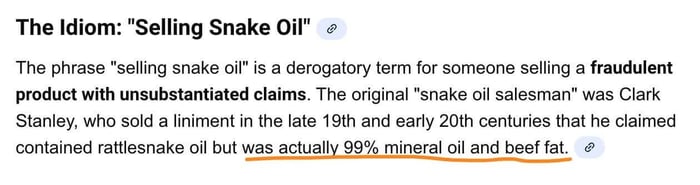
Without a translator standing over you, the truth is obvious. If you ate something that made you nauseous and gave you diarrhea, you’d call it food poisoning. But the interpreter shows up, waves a credential, and insists it’s a “positive response” that proves the chemical is working. This is the oldest con in the book: sell the snake oil, redefine the reaction, then blame the customer for noticing. Just like DDT instead of Polio, just like raw sewage and the black plague, just like pesticides and small pox…And speaking of snake oil, a reader just pointed out that one popular, known influencer is literally selling it. Will we ever learn?
The Building Blocks Illusion
One of the biggest misunderstandings the scientific world still clings to is the idea that if you can match the “building blocks” of a living thing, you have recreated the thing itself. Chemistry loves this assumption. If you line up amino acids in a sequence, you claim to have rebuilt a protein. If you match a chemical signature in kale to a signature from a lab-made slurry, you claim they are the same substance. But this is not how life works. You can dissect a kelp leaf, a spirochete, or an eyeball into parts, but you cannot reassemble those parts into life. Something unknown and essential is missing, something no lab can ever even attempt to engineer. Scientists can grow muscle fibers in vats of sugar and microbes and print them into a “steak,” but the body recognizes it as a foreign material. It is not life. It is not food. It is a chemical construction. The Dr Seuss story of The Lorax warns us.
And once these compounds are forced into altered forms — citrate, oxide, glycinate, malate — the question becomes unavoidable. What else is carried into the body with them?
Residual metals.
Chemical byproducts. Ion-reactive materials that change how the body responds to EMFs, ultrasounds, MRIs, and radiologic exposure. These compounds did not exist before industry made them. The body never evolved to handle them. Calling them “nutrients” does not make them safe.
What Magnesium Does Inside Your Body
When you ingest magnesium supplements sold in health food stores, you are ingesting a product that began as a metal or a mined industrial mineral and was chemically processed into a powder. You are ingesting the byproduct of a metal that has been reacted with acids, solvents, or other industrial chemicals to force it into a different form.
If you want to understand how unnatural magnesium supplements really are, picture a cube of pure magnesium metal. If you drop that cube into water, it reacts instantly, corrodes, releases hydrogen gas and turns into a caustic sludge that the earth cannot use. If you melted that cube and poured it into water for a plant, the plant would die. Plants cannot use metal. They can only use minerals that have been transformed through soil, microbes, and biology. Supplements are made from this same reactive metal, chemically forced into powders and sold as nutrients. If a plant cannot use it, your body cannot either.
People hear “magnesium glycinate” or “magnesium citrate” and think they are eating a nutrient. They are not. They are eating a chemically altered metal compound created in a factory.
That does not mean the supplement contains chunks of raw metal the way a magnesium cube does. It means the supplement is derived from a metal and still carries the same inorganic, reactive nature that the body was never meant to process directly.
So the honest answer is:
You are not swallowing a metal cube, but you are swallowing a laboratory product that began as metal and retains the properties of an inorganic compound that the body cannot use the way it uses plants.
The Myth of Deficiency
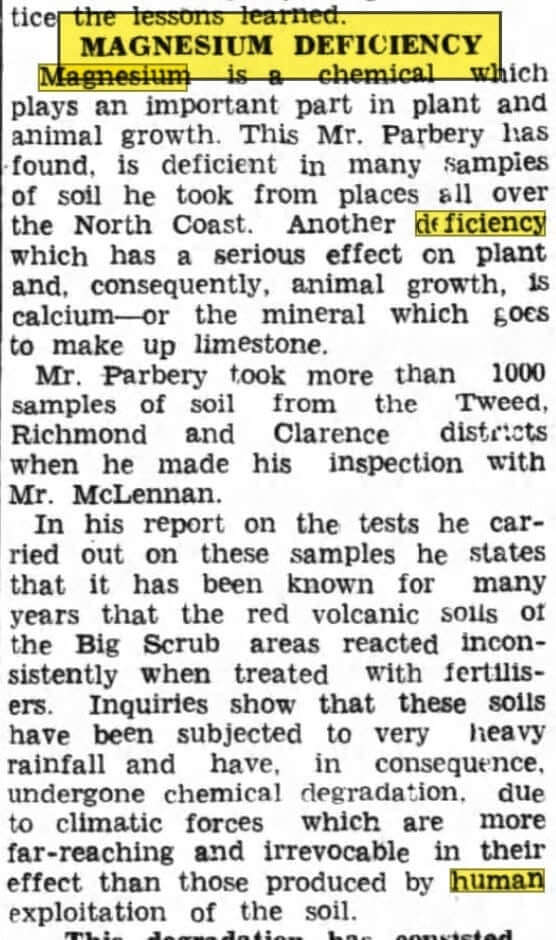
The entire magnesium market depends on one idea. The body is not getting enough. This claim is repeated everywhere. Low magnesium causes cramps. Low magnesium causes stress. Low magnesium causes poor sleep. The list expands every year. The pattern is predictable. A symptom appears. The supplement is presented as the answer. Once the symptom eases, the product looks necessary.
A deficiency narrative is the easiest way to create a permanent customer. If the body is framed as lacking something, the person believes they must replace it. The moment they stop taking the product and the symptoms return, it appears to confirm the deficiency. The cycle reinforces itself. Just like pain medication temporarily relieves pain. Yes, it “works” but only in the chronic space, never in the frame of true medicine.
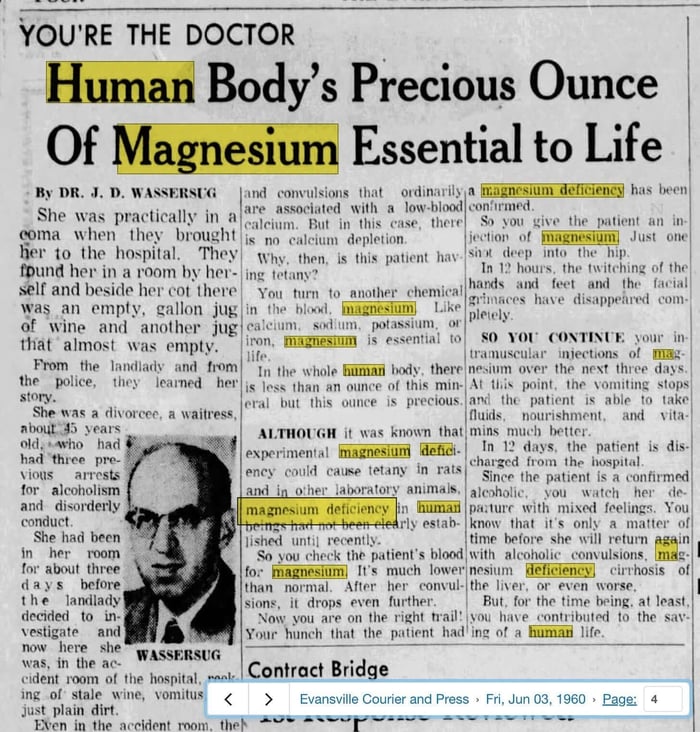
But the body is not missing manufactured magnesium salts. These compounds do not exist in the natural world. They do not exist in food. They do not appear in soil the way people imagine. They only exist after industrial processing. The body is not designed to depend on something that never existed before factories created it.
What people call a deficiency is usually the rebound of suppressed symptoms. Magnesium softens electrical instability. It does not correct it. When the effect wears off, the cramp returns. This is presented as proof that the body needs more. It is actually proof that the cause was never addressed, only masked. I can put black duct tape over my warning lights and solve the issue, but eventually my car will break down.
A true deficiency manifests differently across populations. They struggle to develop. They have impaired growth and height. They have widespread functional collapse from starvation to near death. This is not what modern people experience. What they experience are cycles of tension, stress, cramping, twitching, and disrupted sleep. These are not signs of a missing element. They are signs of a nervous system trying to communicate a root cause.
The supplement industry reframed these signals as shortages. Instead of asking why nerves misfire or why muscles lock, they offer a product that masks the warning light symptoms and makes the signals fade. The person feels short-term relief. The deeper problem continues. The highly profitable, big-pharma-approved suppression becomes normal.
This creates generational dependence. Parents give magnesium to children. Adults take it nightly. Elderly people take multiple forms. Everyone believes they are correcting a biochemical issue, not realizing they are repeating the same cycle of relief and rebound that every pharmaceutical product is built on.
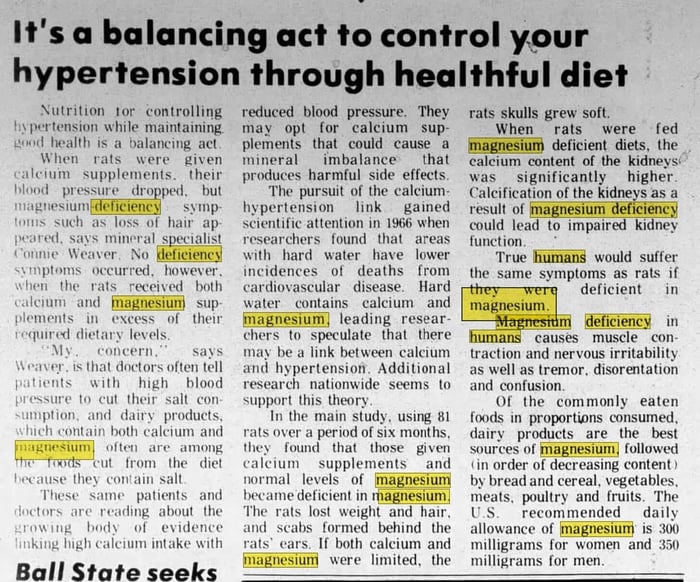
The idea of deficiency keeps the industry running. The body is presented as incomplete in the modern world. The environment is presented as inadequate. The only solution offered is the use of manufactured compounds. The narrative benefits the sellers, not the users.
Why People Cramp
The supplement industry built its entire magnesium empire on a single assumption: if a muscle cramps, you must be deficient. The moment someone feels a twitch or a spasm, the solution is presented as magnesium or potassium. The cycle is predictable. The symptom appears, the supplement dulls it, the symptom returns, and the person repeats the dose. This looks like confirmation, but it only shows that something deeper is being ignored.
Muscle cramping is not evidence of a missing mineral. It is a sign of electrical instability — usually the early stages of myelin breakdown. A muscle cannot contract without a clean signal from a nerve. That nerve is wrapped in a fatty insulation layer called myelin. When that insulation thins, the signal leaks. A leak becomes a twitch, a jolt, a spasm, or a full cramp. That is not a deficiency; it is distress.
Modern life destroys myelin faster than most people realize. Caffeine pulls fat from tissues. Sugar inflames nerves. Alcohol erodes protective layers. Solvents — DMSO, turpentine, topical “detox” agents — dissolve oils on contact and influence internal tissues the same way. Enemas, nicotine, and constant stimulant use compound the damage. All of these exposures thin the insulation your nerves rely on. Once the insulation weakens, the nerve cannot send a stable message. Medicine gives these failures different names — Parkinson’s, MS, myasthenia gravis, Guillain-Barré, dementia, but they are all variations of disrupted nerve transmission showing up in different ways.
Magnesium does not fix this. It cannot rebuild myelin. It cannot correct nerve conduction. What it does is soften the muscle’s response so the misfire feels less aggressive. The problem remains; it’s just quieter. This is why people feel dependent. The moment the chemical effect wears off, the original instability returns. Nothing was corrected; it was temporarily interrupted. And now, of course, it is worse.
Myelin is rebuilt with saturated fats, adequate rest, stable blood sugar, and by removing the irritants that destroyed it in the first place. None of that comes from a metal salt manufactured in a factory.
The reason magnesium became the “answer” is simple: it gives fast relief. Fast relief sells. Fast relief keeps people dosing. Fast relief builds markets. But the body isn’t asking for more metals. It’s signaling a breakdown.
What You Swallow Always Leaves a Trace
Once people began taking supplements daily, the reactions that followed were mislabeled as deficiency, improvement, and correction. None of those interpretations fit the reality of what happens when a chemically altered metal moves through the body.
When people swallow these compounds, the body responds exactly as it does to other substances it cannot integrate: rapid transit, cramping, diarrhea, flushing, and electrical dampening, all signs that the body is trying to eliminate something foreign. The temporary relaxation that follows is a form of suppression.
This raises a question almost no one asks.
If a metal-derived compound is taken daily, what accumulates?
People assume these forms dissolve and disappear, but metals and their reaction products do not behave like nutrients. They bind. They lodge. They alter electrical signaling. A body that becomes chronically exposed to metal salts can become more reactive — to sound like ringing in the ears, to EMFs, to microwave heat, to MRI and imaging equipment, to ultrasounds, to medical procedures that rely on magnetic fields. The industry will insist these compounds behave nothing like metals. The chemistry says otherwise. If the starting material is metal, the downstream effects must be considered.
None of this means a person becomes “metallic” in the science-fiction sense. It means a person can become electrically unstable from repeated exposure to inorganic compounds that interfere with signaling, hydration, and nerve conduction. MRIs are designed around magnetic fields interacting with “hydrogen,” but tissues that accumulate metal salts behave differently under stress, heat, and electrical load. Whether subtle or overt, it is a variable no one in the supplement world ever accounts for.
When you see how the body’s electrical system really works, the magnesium story collapses completely.

If you appreciate my research, please consider hooking me up with a coffee or making a Ko-Fi donation. Every dollar truly helps!



Disclaimer
The information shared here reflects my personal research, study, and lived experience. Sources include historical archives, scientific literature, and public records wherever possible. It is intended for education and discussion, not as medical or legal advice.
I am a Registered Nurse, no longer practicing, and am not acting as a healthcare professional while writing for Substack. Every reader should use their own discernment and consult qualified professionals for personal decisions. My goal is to help people think critically, question openly, and restore their relationship with truth and nature.
References
Brady, J. E., & Humiston, G. E. (1996). General chemistry: Principles and structure (7th ed.). Prentice Hall.
(Details magnesium’s reactivity with water, acids, and oxygen.)
Callister, W. D., & Rethwisch, D. G. (2014). Materials science and engineering: An introduction (9th ed.). Wiley.
(Provides properties of alkaline earth metals and why elemental magnesium does not occur freely in nature.)
Food and Drug Administration. (2022). Daily values on nutrition and supplement facts labels. U.S. Department of Health & Human Services.
Greenwood, N. N., & Earnshaw, A. (1997). Chemistry of the elements (2nd ed.). Butterworth-Heinemann.
(Authoritative text on elemental magnesium, extraction methods, and reactivity.)
Gupta, C. K. (1990). Extractive metallurgy of magnesium. CRC Press.
(Covers industrial production, thermal reduction, and chemical processing of magnesium compounds.)
Harrison, R. M., & Hester, R. E. (Eds.). (1994). Nuclear magnetic resonance spectroscopy. Royal Society of Chemistry.
(Reference for chemical signature analysis and how spectroscopy detects reaction profiles.)
International Magnesium Association. (2018). Magnesium production and applications: Technical overview.
(Describes commercial production of magnesium oxide, chloride, and other industrial salts.)
Marschner, H. (2012). Marschner’s mineral nutrition of higher plants (3rd ed.). Academic Press.
(Clarifies that plants absorb magnesium only in ionic form, not as metal, and only after biological transformation.)
National Research Council. (1968). Recommended dietary allowances (1st unified edition). National Academies Press.
(Original creation of nutrient “requirements” and the institutional origin of Daily Value-style charts.)
U.S. Geological Survey. (2023). Mineral commodity summaries: Magnesium compounds.
(Provides data on magnesium carbonate, oxide, brines, and how magnesium-bearing rock is chemically processed.)
Wedepohl, K. H. (1995). The composition of the continental crust. Geochimica et Cosmochimica Acta, 59(7), 1217–1232.
(Establishes that magnesium in crustal materials exists only in silicate or carbonate matrices, never as free metal.)



![Magnesium Vs. Zinc The Battle Royale That Ends the Debate [By Medicine Girl]](https://dropinblog.net/cdn-cgi/image/fit=scale-down,format=auto,width=700/34264201/files/featured/94577ece-6b84-4d7c-b622-6e764231d715.png)

![The Great Magnesium Poisoning [Part 1]](https://dropinblog.net/cdn-cgi/image/fit=scale-down,format=auto,width=700/34264201/files/featured/mg-mg-2.png)

![BLOOD PRESSURED TO DEATH: How to DESTROY Your Kidneys in 5 Easy Steps [Part 1 of 3]](https://dropinblog.net/cdn-cgi/image/fit=scale-down,format=auto,width=700/34264201/files/featured/bce83ada-f4c0-4cdb-a4e7-bf4eab08bb07-1280x720.webp)

![Bringing Up The Underworld: Vivisection and Organ Donation [Cannibals Part 4]](https://dropinblog.net/cdn-cgi/image/fit=scale-down,format=auto,width=700/34264201/files/featured/4aad8890-f8f1-4198-910c-e85a0171247c-1280x720.webp)