
![Magnesium Vs. Zinc The Battle Royale That Ends the Debate [By Medicine Girl]](https://dropinblog.net/img/h6yzo8eq/700/94577ece-6b84-4d7c-b622-6e764231d715)

I found yet another somking gun against magnesium, and I will explain first how I got here and second, address those who litter the message feeds proselytizing the wondrous benefits of everyone’s favorite synthetic drug. Keep in mind that those going out of their way to attack my articles are magnesium proponents who are actually selling this lab-made chemical monstrosity. Want to read about magnesium and the trail of profit loss it left in the for profit supplement world.

The Great Magnesium Poisoning
I trigger those who previously had no conscience, selling something that suppresses symptoms by damaging the body. They went unchecked and unchallenged for far too long. I hate to keep repeating myself, but some things deserve repeating, as we are dealing with a zeitgeist in our thinking. I am asking you to step outside what you have been taught to believe and to start living in the world of evidence-based reality. Magnesium doesn’t exist in nature.
The issue is not whether magnesium exists in some form in the environment. The issue is the way it is consumed. The magnesium sold in supplements is not encountered in nature as a purified, isolated powder. It is an industrial product, created through chemical processing and consumed in a way that does not occur in natural biological systems.
There is No Argument- Magnesium is Manufactured
Consuming something altered and made into a Frankenstein copy does not belong in the body. Sure, you get the benefits of your body’s pesky messages going away—also known as suppressing symptoms—, but you then have to deal with the underlying problem of, say, muscle spasms getting worse, and the ongoing problem of taking a synthetic drug. Yes, magnesium is made the same way they make vitamin supplements and prescription drugs. Actually, magnesium is even more processed than something like digoxin, which is actually made from dried and crushed foxglove plants.
Yes, I know it is hard to take it all in. We have been tricked and lied to at every corner by those trying to use their silver tongues to siphon our energy—in the form of our money and health—for their benefit. If you don’t believe me, check out my podcast with Robyn Openshaw, who not only knows many of these higher-level influencers but also took the truth about the toxic nature of vitamins and supplements to them. They turned a blind eye, saying, “We can’t survive unless we sell our private-label supplements,” meaning they don’t care that they are poisoning you.
The problem with my articles is this: I don’t rely on corporate-funded studies to prove that what you are selling is safe. This means you have a conflict of interest. You represent substances produced in the same way as pharmaceuticals. My point is that magnesium, like other pharmaceuticals and chemicals such as vaccines, amlodipine, or ivermectin, is not found in nature in its supplement form. It is manufactured by processing chalk—heating it to 1,000 degrees Celsius and adding acids—resulting in a synthetic product. It is inexpensive to produce, has few supply chain issues, and has minimal direct effects.
Pete and Peter of Water Is Not H₂O agree with me about the “Periodic Fable of Elements,” which they call the periodic SALES of elements. I didn’t know this until I interviewed them, and I was astonished that we arrived at the same conclusions. It is not difficult once you start teasing apart the lies and deception built around the chemical market.
You are Consuming pHARMaceuticals
It also deserves repeating: you can’t lash out against pharmaceutical corporations for making toxic vaccines, prescriptions, and inhalers while simultaneously using products made in identical ways and calling them a gift from God—the secret to your health. You are right, Mother Nature is cruel and manipulative. She made sure that the secrets to maintaining health required a chemical industry to make them, since you or I couldn’t even come close to making magnesium in our basement labs. We don’t have stoves that heat to 1,000 degrees Celsius, and the acids used to react with the newly formed metal depend on whether electroplating is used, of course. Either way, it is not something found in nature. Period, the end.
Animals in the wild do not ingest the white mineral powders found in supplement bottles. Those powders result from industrial processing. They are not substances naturally found in the form in which people consume them.
Seawater is not the same thing as the powder sold in supplements. The magnesium compounds sold commercially are manufactured from raw minerals such as dolomite or other magnesium-bearing rock. These materials are subjected to extreme industrial processes, including heating to temperatures approaching 1,000 degrees Celsius and reacting with acids such as sulfuric acid to produce the final compounds that are sold to the public.
No animal in nature has access to kilns capable of heating rock to those temperatures or to industrial chemistry. Animals do not encounter purified magnesium powders in their environment.
This leads to another important issue: the myth of isolated minerals. In nature, nutrients do not exist as purified isolates. They exist within the complex food matrix of plants, animals, and natural ecosystems. Living organisms obtain nutrients through this matrix, where vitamins, minerals, enzymes, fats, and other compounds interact and function together.
When minerals are isolated and purified, they are removed from the biological context in which they normally exist. Consuming isolated substances in this way introduces something the body does not encounter in nature.
The consequences of this isolation often appear as what the medical industry calls “side effects.” In reality, these are direct effects of introducing an unnatural, isolated compound into the body.
This issue is even clearer when such substances are used to suppress symptoms rather than address root causes. Magnesium supplements are regularly recommended for problems such as leg cramps. While cramp intensity may temporarily decrease, the underlying cause remains. The persistence or return of symptoms after discontinuation shows the real problem has not been resolved.
In nature, nutrients are obtained from whole foods and biological systems, not from isolated mineral powders produced by industrial chemical processes.
Industrial Process → Natural vs Industrial
Once you understand that form matters, the next question is obvious: how is the magnesium in these supplements actually made?
It does not come from food. It does not come from a biological system. It begins as raw mineral material—rock. Materials such as dolomite or other magnesium-bearing sources are extracted from the ground and processed industrially. This is not a passive extraction. It is an active transformation.
These materials are exposed to extreme conditions that do not occur in biological systems. High temperatures, often exceeding 1,000 degrees Celsius, are used to alter the material’s structure. Chemical reactions involving acids are then used to further break down the compound and reconstruct it into a form that can be standardized, packaged, and sold.
What comes out the other end is not the original material. It is a manufactured compound—refined, isolated, and stripped from any natural biological context. It is designed for consistency, shelf stability, and mass production, not for alignment with how nutrients are encountered in living systems.
This is where the distinction becomes unavoidable. In nature, nutrients move through biological pathways. Soil feeds plants. Plants incorporate minerals into their structure. Animals consume those plants, and the nutrients are transferred through a living system.
That pathway matters.
A mineral in soil is not the same as a mineral inside a plant. A mineral inside a plant is not the same as a purified compound in a capsule. Each step changes the context in which that substance exists and how it interacts with a biological system.
Industrial supplements bypass that entire pathway. They do not move through soil, plants, or organisms. They move from rock to reactor to capsule.
This isn’t just a minor difference. The fundamental difference is that industrially produced supplements like magnesium do not follow natural biological pathways. This core distinction is at the heart of my argument.
Zinc, Biological Transformation, and the Food Matrix
Zinc provides a clear example of how minerals are meant to move through a natural system. Zinc can be measured in soil. You and I can skip through the woods and find real, live deposits of Zinc. Its presence varies depending on the land’s composition and condition. When that soil supports plant growth, the plant does not simply carry zinc in the same form in which it exists in the ground. It takes it in, modifies it, and incorporates it into its own biological structure.
That transformation is the critical step.
Once zinc becomes part of a plant, it is no longer just a raw mineral. It is now embedded within a living system—bound within tissues, interacting with organic compounds, and functioning as part of a larger biological network. When that plant is consumed, the nutrient is encountered in a form that has already been processed through life.
This is what determines how the body interacts with it.
The difference is not just chemical—it is contextual. A mineral that has passed through a biological system exists within a matrix of other compounds that influence its behavior. Enzymes, cofactors, and structural components all play roles in how that nutrient is handled once it is consumed.
This is not a single-variable input. It is a coordinated system.
The idea that a mineral can be isolated from that system, purified, and still function in the same way ignores the role of that biological context entirely. Removing a substance from the environment in which it normally exists changes how it interacts with the body.
Zinc in soil, zinc in a plant, and zinc in a manufactured supplement are not interchangeable simply because they share a name. Each exists in a different state, shaped by a different process, and encountered by the body under entirely different conditions.
This is where the concept of bioavailability is often misunderstood. It is not just about whether a substance can be absorbed. It is about the form in which it is presented, the environment in which it is delivered, and the system it enters.
Natural systems do not deliver isolated inputs. They deliver integrated ones. This same distinction applies beyond zinc.
The question is not whether a substance carries the name of a mineral, but how it arrived in the form being consumed. A substance that has moved through a biological system carries a different context than one produced through industrial processing.
For a more detailed breakdown of how this applies specifically to magnesium, I have covered that separately. The focus here is not to repeat that discussion, but to establish the framework for evaluating it.
Once that framework is understood, the pattern becomes easier to recognize.
The Isolation Myth
Zinc makes the problem with “isolation” easy to see.
In soil, zinc exists in a raw environmental state. It can be measured directly, and its presence can be verified without any need for industrial processing. When that soil supports plant growth, the plant takes in zinc and incorporates it into its own structure. It becomes part of a living system—bound within tissues, integrated with enzymes, and functioning within a network of interacting compounds.
That step changes what it is. Zinc inside a plant is not zinc in soil. It has undergone a biological process and now exists within a system that defines how it behaves and is used. If that same plant is then dried, burned to ash, and subjected to chemical reactions to recover what is labeled as zinc, the original structure is gone. The system that gave it context no longer exists. What remains is the result of processing, not preservation.
This is the point that is consistently overlooked. The term “isolated mineral” suggests that something has been separated while remaining fundamentally the same. But once heat, chemical reactions, and reassembly are involved, the outcome is no longer the same thing that existed in nature. Zinc makes this visible because it can be followed through each stage—soil, plant, and then processed material. Each stage represents a different state created by a different process.
Magnesium, as it is commonly encountered, does not present itself through that same observable pathway. It appears as a processed product, already separated from any biological system. It is introduced at the end of a chemical sequence rather than as part of a natural progression through living systems.
And this is where the consequences begin to show. Magnesium lowers blood pressure. That effect is then interpreted as beneficial, in the same way cardiac drugs lower blood pressure readings. But lowering a number is not the same as resolving the reason that number exists. The kidneys regulate pressure for a reason. They require a certain level of pressure to properly filter the blood. When pressure is artificially lowered, the kidneys must compensate to maintain function. Over time, that compensation places stress on the system.
The same logic applies. Changing a reading does not mean the underlying cause has been addressed. It means the system has been forced into a different output. This is the practical outcome of the isolation myth. A processed substance produces a measurable effect, and that effect is taken as proof of benefit. But the system upon which it acts has not been restored. It has been overridden.
The isolation myth depends on treating that override as a solution. Once the process is examined—from origin, to transformation, to effect—that assumption no longer holds.
Zinc and the Difference Between a Living System and a Material
Zinc provides a clear, observable model of how a mineral moves through a natural system.
Zinc exists in soil and can be measured directly. Its presence varies depending on the condition of the land, and that variation shows up in the plants grown in that soil. When zinc levels are higher, plants reflect that. When zinc is lacking, plant structure and growth change accordingly. This is not theoretical. It is measurable and repeatable.
But what matters is not just that zinc is present. It is what happens next.
The plant does not simply carry zinc forward unchanged. It takes it in and incorporates it into its own structure. Zinc becomes part of the plant itself—bound within tissues, integrated into enzymes, and functioning inside a living system. By the time it reaches the organism consuming that plant, it is no longer just an environmental input. It has become biologically integrated.
That is what makes it bioavailable.
This is where the comparison breaks down with materials like chalk or dolomite.
Chalk and dolomite are not functioning in the same way as zinc in this system. They are raw mineral materials that must be broken down through environmental conditions before any portion of them becomes available for uptake. They do not move through the system as a clear, traceable pathway, as zinc does in your working example.
Zinc can be traced from soil to plant to organism, with observable changes at each stage.
Chalk does not demonstrate the same pathway as a clean biological model. It exists as material that must be altered, broken down, and converted before it participates in any biological process.
That distinction matters.
Zinc shows what a natural pathway looks like—measurable in soil, incorporated into plant structure, and delivered through a living system.
This is not the same as taking a material, breaking it down, processing it, and introducing it as a finished product.
And it is not the same as introducing a substance that produces an immediate physiological effect and calling that effect a solution.
Zinc demonstrates integration. Everything else in this discussion hinges on understanding what happens when that natural biological integration is removed.
Magnesium and the Bypassed Pathway
Once the natural pathway is understood, the contrast becomes direct. Magnesium, as commonly encountered, does not follow the same sequence. It is not part of a living system that has incorporated and structured it. It is introduced as a finished substance, as a standardized chemical soup, dried and processed into a white powder, and already removed from anything naturally biological.
There is no observable transition from soil to plant to organism in the form in which it is consumed. It reaches the endpoint without passing through the system that confers biological relevance to substances. A substance that enters through a living pathway carries with it the result of that process. A substance that bypasses that pathway enters without it.
The body reacts to what has been introduced. That reaction can produce a measurable effect, which can be interpreted as beneficial. But a response is not the same as a resolved condition. This is where the distinction becomes a checkmate.
Magnesium lowers blood pressure. That effect is taken as evidence that something has been corrected. But lowering a reading is not the same as resolving the reason that reading exists. Most folks can see that with the wolf in wolf’s clothing. But repackage that as a supplement that DOES THE EXACT SAME THING AND IS JUST AS TOXIC, and they develop amnesia, and logic is replaced with devotion to the all-magical “influencer” promoting their own brand of snake oil and profiting from it handsomely. I haven’t read their articles, because I don’t need to know what those profiting from your ignorance have to say. I am simply pointing out what magnesium is, and now, as compared to zinc, we have an airtight checkmate.
I am not sure of the name, as I don’t want to waste my time getting lost in their chaos and confusion, but an author, I think, by the name Clive Does Oral is a great example of this—he or she profits from a smoke-and-mirror story to get you to buy his for-profit magnesium and various chemically manufactured potions and powders. I can’t recommend something I profit from without there being a massive conflict of interest. I know of something that works better than opioid pain medication, and I tell people how to make it themselves with vegetation and oil poured over it. If I started manufacturing and selling it, I would be in conflict with what I read and study about the product. Meaning, I may consciously or subconsciously ignore a massive amount of logic and truth because I don’t want to give up my 4K a month from selling chemicals to the unsuspecting public. Well, I wouldn’t sell you pharmaceuticals or toxic garbage. I like a very select few substances, and I tell you how to make them yourself or recommend a good source.
Back to my point. The kidneys regulate pressure for a reason. They require a certain level of pressure to filter the blood effectively. When pressure is lowered artificially, the system must compensate to maintain function. That compensation is not a resolution. It is an adaptation under altered conditions.
The same applies to muscle activity. Reducing the signal does not address why it was produced. If the underlying cause persists, the system continues to operate under that condition, whether or not the signal is dampened, and once that distinction is clear, the pattern becomes easier to recognize.
What Is a Vice President at Dow Chemicals Doing With Your Beloved Magnesium?
Let’s stop pretending this came from a garden.
The so-called “father of magnesium” was not a farmer, not a nutritionist, not someone studying food systems. He was a Vice President at Dow Chemical Company. That is not a small detail. That is the entire story.
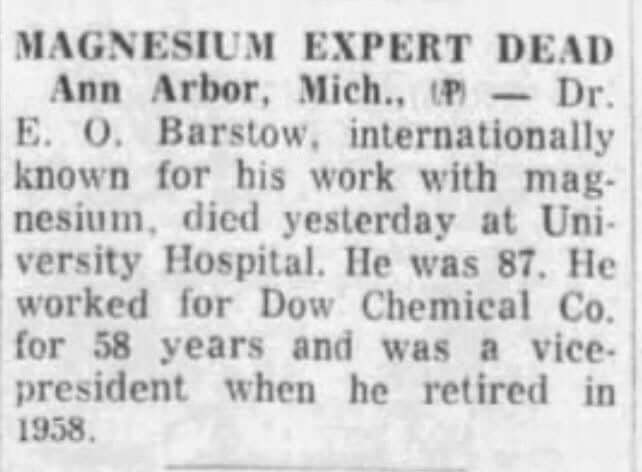
Dow Chemical is not in the business of growing food. It is in the business of industrial processing, chemical manufacturing, and large-scale production of materials that do not exist in the form they are sold in nature. So the question becomes unavoidable. They have a team of psychopaths figuring out ways to increase profit and sales. Easy money.
What is a Vice President at Dow Chemicals doing shaping the narrative around something now marketed as a “natural” health solution?
Magnesium, as you encounter it today, did not emerge from agriculture. It did not emerge from observing how nutrients move through soil, into plants, and into living systems. It emerged from industrial chemistry. From kilns, from reactors, from processes designed to take raw material and turn it into something standardized, shelf-stable, and profitable.
That is not speculation. That is documented history.
So when you are told that this substance is a simple, natural necessity, you are not being told where it actually comes from. You are being handed the final product and asked to ignore the process that created it.
And that process matters.
Because once you understand that magnesium, in the form being sold, is the result of industrial manufacturing, the rest of the narrative begins to fall apart. The language of “isolation” no longer holds. The claim of equivalence to what exists in a living system no longer holds. The idea that this is simply something your body was meant to consume in that form no longer holds.
You are not looking at something discovered in nature.
You are looking at something produced.
The Difference That Ends the Argument
At every step, the distinction has been the same. Zinc can be traced through a natural pathway. It exists in soil, is taken up by plants, and becomes part of a living system before it is ever consumed. It changes as it moves through that system. That process defines its role and its function. That is what bioavailability actually looks like. We don’t want to eat the minerals out of the soil; we want to eat the plants that made the minerals available for us to digest and absorb as needed. This is why startight zinc powder makes you nauseous.
Chalk and dolomite do not demonstrate the same pathway. They must be broken down, altered, and converted before they can participate in any biological process. They do not move smoothly through a living chain, as your proof model does.
Magnesium, as it is commonly sold, does not follow that pathway at all. It is introduced as a finished product, already processed, already separated, and already removed from any biological system.
From there, it produces an effect.
Magnesium lowers blood pressure. It relaxes muscles. It changes what you feel and what can be measured. And that effect is taken as proof that something has been corrected.
But a changed output is not a resolved cause.
The kidneys require pressure to function. Lowering that pressure artificially does not fix the reason it existed. It forces the system to compensate. The same applies to muscle signals. Suppressing the signal does not address why the signal was there in the first place. And once that distinction is understood, the rest becomes obvious. Stop telling me it works because it took away your leg cramps, like statin drugs lower the lab numbers of cholesterol. You can’t talk out of both sides of your mouth.
A substance that moves through a living system is not the same as one that is introduced after that system has been bypassed. A material that is integrated into a structure is not the same as one that produces an effect from the outside.
Sharing a name does not make them equivalent.
The difference is not in what it is called, but in how it is made, how it moves, and what it does once it arrives.
The Pattern Was Never Hidden
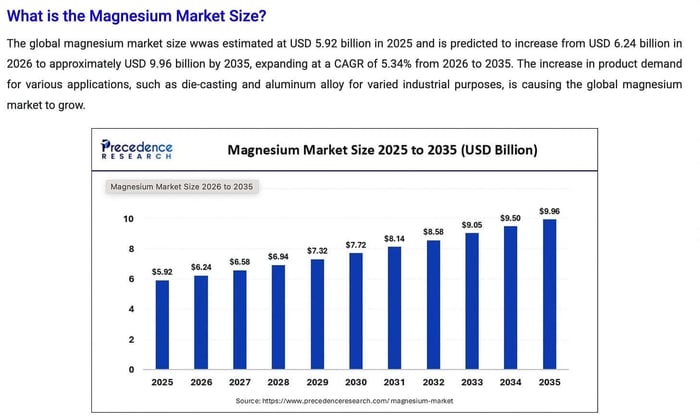
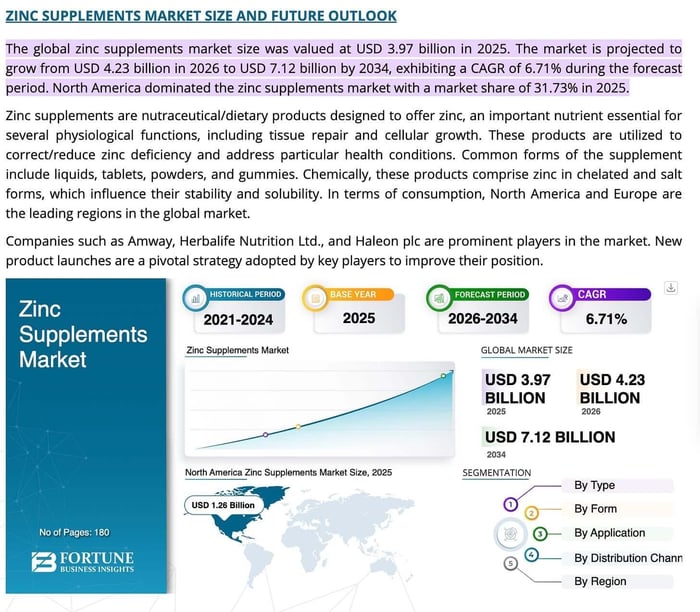
At some point, someone decided to tell the entire country that soil was “deficient” in magnesium. Think about that for a second. You are being told that a natural system, soil, is lacking something that has to be produced through industrial processing. That alone should stop the conversation. A system cannot be deficient in something that has to be manufactured. Not to belabor the point, but zinc is not better. Instead of eating plants that have taken zinc and made it available, they want you to eat yet another for-profit white powder.
If it has to be heated, reacted, processed, and rebuilt before it exists in the form sold, then it was never part of that system to begin with. Calling that a deficiency is not science. It is an industry and empire, and once that premise is accepted, everything else follows.
Dow Chemical was not studying soil as a living system. They were building industrial processes. They had the ability to produce magnesium at scale, and with that comes the next step—create demand. That is where policy and promotion come in. Large industries do not stop at production. They align with institutions, influence guidelines, and move through channels that shape how problems are defined and how solutions are presented.
So now the soil is “deficient”. No, you mean it is chemically profitable. All you need is a shady MD (they all are), a shady scientist (they all are), and a lobbyist in Hollywood, I mean, Washington, DC. Add the input, and the output changes; that change is treated as proof that the deficiency was real.
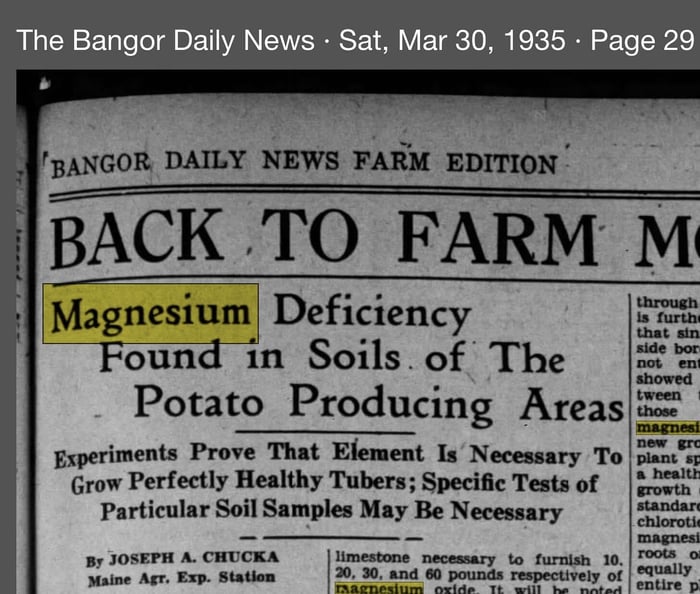
I already addressed this directly in my article on soil deficiency. The soil is not deficient. The system has been reframed to justify the input.

Warning: The Soils are Depleted
And now the same language is being recycled. Influencers who built their platforms on selling these products are suddenly repeating the argument. Fine by me. The story needs to be told, regardless of who says it. Once that model works in agriculture, it is applied to the body. Now the individual is deficient. The same substance, produced the same way, is repackaged and sold as a solution. The logic is identical. A number shifts, a symptom quiets, and that effect is presented as a correction.
Define the deficiency, tell the input and constantly point to the symptom suppression/result.
A system cannot be deficient in something that is was never naturally part of that system. Everything built on top of that claim collapses with it.
Checkmate.
![The Great Magnesium Poisoning [Part 1]](https://dropinblog.net/img/xptysacc/700/mg-mg-2)
![Mag-Naus-Eum: The Metal You’ve Been Drinking [Part 2]](https://dropinblog.net/img/thhmoh8u/700/mg-mg-part-2)




![The Great Vitamin Liars Vitamins [Part 1 By Medicine Girl]](https://dropinblog.net/cdn-cgi/image/fit=scale-down,format=auto,width=700/34264201/files/featured/0c2c0703-aac4-4a09-8bbb-aa55f98bf33e.png)