

Introduction
The first time I heard of Zack Bush, he was speaking in a monotone, well-rehearsed story about vitamin A. You can tell he tells the story often.
And it goes a little something like this. As a young physician and researcher working in cancer metabolism and endocrinology, Zach Bush became convinced he had found something profound. The answer, as he describes it, was not in destroying cancer cells, but in transforming them, by using a derivative of vitamin A, a retinoic acid compound, to drive malignant cells back into a differentiated, healthy state. In his telling, this represented a departure from what he viewed as the fundamentally flawed, poison-based paradigm of chemotherapy. Similar to Stephen Hawking’s claim that time would reverse in a black hole. That sounds more like something Epstein would arrange than evidence-based reality. Anyway, back to the story.
If he told his long, drawn-out story on the Medicine Girl Podcast, I would have had to stop him and interrupt him in my signature style. I would have challenged his ridiculous claim that cancer is runaway, crazy cells that are like sorority sisters on their first night in Daytona on spring break. It is easy to be seduced by the Dark Side if you don’t first question the assumption of what cancer is in the first place.
If you are to believe the for-profit story, cancer is a random act of violence, that your mild-mannered, happy-go-lucky cells all of a sudden turn into zombie mutants and start, out of nowhere, growing out of control into a random tumor. Which is why you can get the asinine assumption that parasites somehow cause cancer, because they are there cleaning up the site of the tumor, like assuming that the ambulance and fire trucks at the scene of every accident caused it. No, in both examples, they are there to help. Parasites remove the toxic sludge intact without harming your healthy tissue. They are the bioremediators. If you have trouble understanding that, you can read more about it in Attack of the Parasites here:

Attack of the Parasites


Cancer is a collection of potentially deadly toxins encapsulated in a fibrin sheath meant to keep you alive and the toxins sequestered away. That is why piercing it with a biopsy or removing it often leads to metastasis. I am not a doctor, but that seems to be the most basic, obvious, no-shit Sherlock, forehead-slap imaginable. But again, that would disrupt the trillion-dollar industry. No exaggeration. Look at just a brushing of the data: $345 billion a year for diagnostics alone, $33 billion for chemo and radiation, and $440 billion for treatment therapies, expected to double in the next ten years. Don’t you love how they can predict a massive revenue increase? The industry knows cancer is caused by poisoning yourself. They also know that the tighter the screws get on our food supply and the lack of resources like sunlight and water to grow our own will push massive amounts of people into corporate-owned Frankenfood stores to purchase their cancer. Welcome to the tail end of capitalism. I am sure that is just the tip of the iceberg for the amount of revenue coming in for cancer, not to mention that doctors can accept cash commissions from the cancer industry. Hard to swallow. Want more? Read all about it in my three-part cancer series.

Manufacturing Cancer-Part 1 of 3
Back to vitamin A. Zack brought this idea to the medical establishment, believing it could change oncology. The response, however, was not validation but delay. He has repeatedly described being told that pursuing such a therapy through conventional channels would take fifteen to twenty years—regulatory review, clinical trials, and institutional inertia. For him, that timeline was unacceptable. Faced with what he perceived as a system too slow to act on a breakthrough, he chose to leave it. This is why he has hero status among the truthers and “freedumb” masses. Unfortunately, he is just another cog in their wheel, already fully indoctrinated. He left one form of poison, only to push and promote others. Win-win for the cancer cogs turning the medical machine.
Within the structure of academic medicine and regulated research, he moved to an independent model—one that would allow him to act without the constraints of institutional timelines or oversight. He relocated, established an alternative clinical approach, and began building a framework centered on the idea that disease is not a collection of isolated conditions, but the result of a single underlying failure: a breakdown in communication between cells and their environment. He didn’t ask why this occurs or if it is just another story to sell drugs. This is why the industry doesn’t want so-called cures. It would showcase the original sleight of hand—that they lied about what cancer actually is.
Within that framework, vitamin A did not disappear; it became part of an origin story. A moment where, in his programmed belief, conventional medicine failed to recognize a transformative idea. Yet, the direction of his work shifted. The focus moved toward environmental drivers of disease, particularly the role of modern chemicals—most notably glyphosate—in disrupting the microbiome, damaging intestinal integrity, and triggering systemic illness. To me, this proves he knows the true root cause of cancer, yet here we are.
The Shills Gotta Sell
Out of that shift came a new class of products. Not vitamin A–based, but derived from lignite—ancient, decomposed plant matter processed into liquid formulations marketed under names such as ION* Gut Support. These products are described as containing “carbon-based redox molecules,” compounds said to originate from a prehistoric soil microbiome and to function as signaling agents that restore cellular communication, particularly at the level of intestinal tight junctions. In this model, the problem is not a deficiency but a disconnection, and the solution is to restore the signals that modern environments have erased. Back to the bullshit—he took environmental toxins and morphed them conveniently into selling expensive dirt water as the cure. So is glyphosate the problem or not, Zack? What about removing the poison and witnessing the body heal itself? I’m sorry, but I don’t care how much of his plastic dirt water I drink—it will not magically erase the amount of glyphosate I consume. Ever. But I am guessing he probably knows that and operates in the identical way as Big Pharma and the rest of the corporate psychopaths: give them 80% truth and help, then profit from poisoning them with the 20% lies, deceit, and sleight of hand.
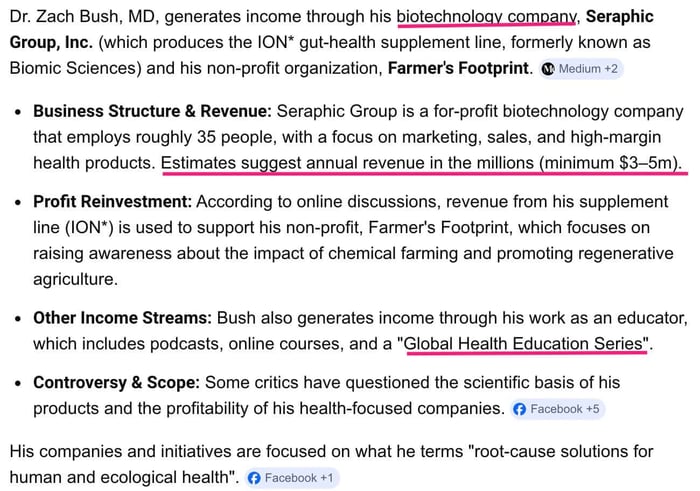
The scientific narrative surrounding these products is expansive. It includes claims about ancient microbial ecosystems, structural transformations of molecules into electrically active forms, and the ability to counteract damage attributed to glyphosate exposure. Supporting evidence is often drawn from in vitro models, where measures such as transepithelial electrical resistance are used to demonstrate effects on cellular barriers. But the translation of these findings into human physiology remains wildly vague and unverifiable, particularly given the unknown complexity of digestion, metabolism, and how the body actually works.
At the same time, the manufacturing and regulatory records introduce additional concerns. A 2024 warning letter from the U.S. Food and Drug Administration documented significant violations at the company responsible for producing these products, including failures in quality control, incomplete batch records, and insufficient characterization of components. A nasal spray produced by the same company was found to be grossly contaminated with microorganisms—levels reaching into the hundreds of thousands to over a million colony-forming units per milliliter—raising particular concern given the route of administration, which is directly adjacent to the frontal lobe. I even tell folks to never use a microbe soup neti pot or put anything but sterile saline in their nose to rinse it. Again, no-shit Sherlock. I have seen hundreds get chronic “sinus infections,” many “requiring” surgery from following such ridiculous advice.
This is not about one individual, but about how certain ideas, once repeated often enough, supported by scientific jargon, and reinforced through commercial and clinical channels, become insulated from scrutiny within the “freedumb” community. They buy these stories hook, line, and sinker—and the industry knows it. That’s why platforms like Telegram and Signal exist: to monitor and learn from the truthers. Vitamin A, long positioned as essential and inherently safe within accepted frameworks, occupies that kind of space.
Now, the question is not whether vitamin A plays a role in human biology. The question is whether its modern use, particularly in synthetic, preformed forms, has been examined with the level of rigor we assume it has. Spoiler alert: it hasn’t. Or you wouldn’t be caught dead taking it, so to speak.
The History of Vitamin A

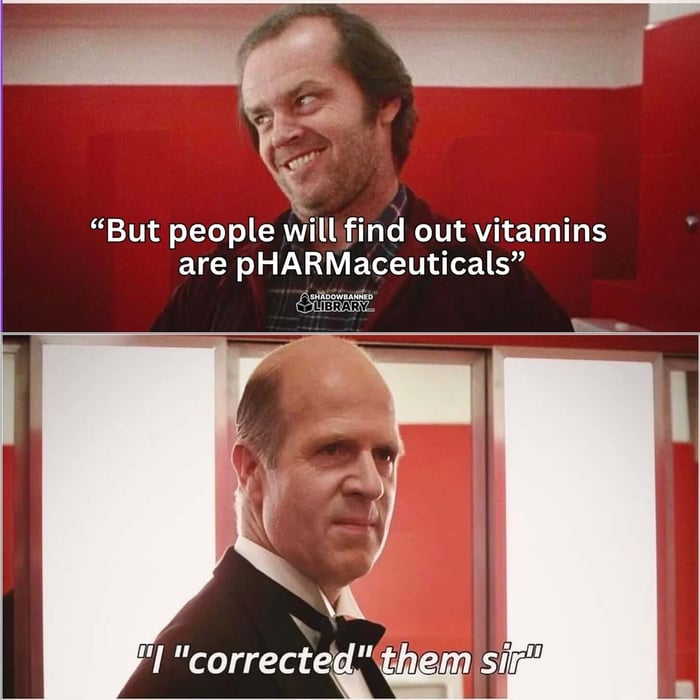
If you still think the myth of Rockefeller taking over the medical system and removing the “good natural side” is real, I have a bridge to sell you. No—the evil genius played both sides. Vitamins are pHARMaceuticals. Obviously. But Robin, they give you the food sources. Sure, they do, and you walked right into their trap. Now you believe in vitamins and believe they are lurking somewhere inside food, and that is what you are after when you are eating an oyster, orange, or turnip. The next step is to give you a fear-based narrative that you are deficient, and wham bam—you are taking a pharmaceutical drug called a vitamin, thinking you are getting the magic ingredients of the oyster, orange, or turnip. You have manifested their delusion into profit. Way to go, team.
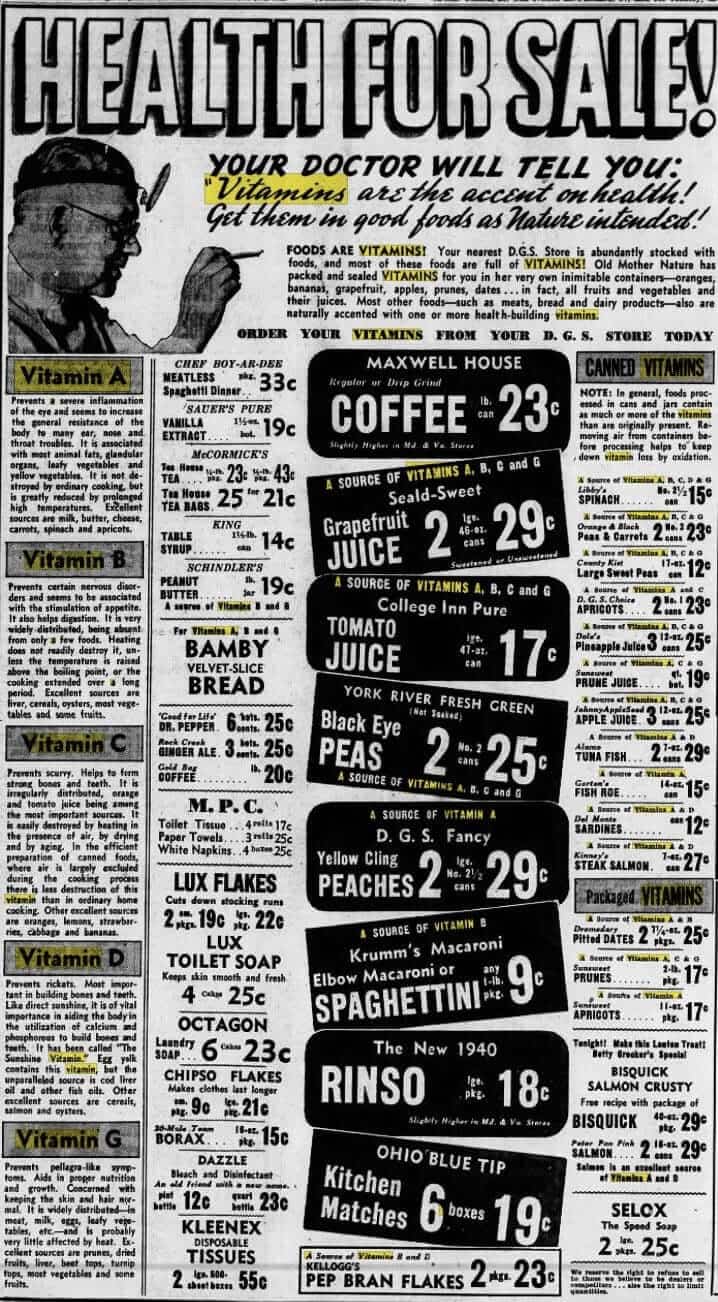
The history is pretty much identical to that of all vitamins, with a few minor exceptions, and this scientific observation did not remain confined to the laboratory for long. By the 1930s and 1940s, vitamin A and vitamins more broadly had already been absorbed into the public consciousness through aggressive promotion, marketing, and early food fortification efforts by Merck pHARMaceuticals. Newspapers, advertisements, and grocery store campaigns framed vitamins not as occasional nutritional support, but as essential, daily requirements tied directly to health, vitality, and even moral responsibility. Phrases like “Vitamins are the accent on health” were not subtle—they were directives. Entire product lines began labeling themselves as “sources” of vitamins A, B, C, and even now-forgotten categories like vitamin G, embedding these compounds into everyday consumer behavior. This was the beginning of a shift: from nutrients found in whole foods to nutrients branded, packaged, and distributed through an emerging industrial food system. Vitamin A was no longer just discovered—it was being sold.

Vitamin A was “invented” the same way a drug is rolled out—with a patent and a press release. It was identified in 1913 as a fat-soluble factor essential to life by researchers such as Elmer McCollum and Marguerite Davis, alongside Lafayette Mendel and Thomas Osborne. Those labs weren’t floating in space; they were operating inside a rapidly industrializing system where money, agriculture, and medicine were already being stitched together. Foundations like Rockefeller were actively shaping what research got funded, what directions were pursued, and ultimately what would become the future of the drugs you are now taking and giving to your kids.
Once scientists made up what vitamin A actually was, retinol, retinoic acid, it was something you could isolate, replicate, and mass-produce. And the second you can manufacture something, you can own it. You can stabilize it, put it in a bottle, inject it into the food supply, regulate it, and most importantly, sell your cheap chemicals for massive profit.
By the mid-20th century, vitamin A had fully made that jump; it was being added back into processed foods, “fortified” into products that had already been stripped of their original nutritional value. Super effective strategy if you think about it. Made a lot of young psychopaths rich old psychopaths. Think about that sleight of hand: remove what nature put there, process the hell out of it, then add back a lab-made version and call it health. And once that system was in place, it didn’t just change how people ate. It changed how they thought. Vitamins became something you could be lacking, something you needed to supplement, something you could buy. And just like that, a delusion of biology became a product category.
WWII-Never Let a Crisis go to Waste
By the time World War II rolled around, the groundwork had already been laid, but the war gave the system its excuse to lock everything into place. Nutrition was reframed as a matter of national security. Governments were not just concerned about feeding people; they were concerned about maintaining a workforce and a military that could function. That is when fortification stopped being optional and started becoming policy. Vitamin A, along with other vitamins, was added to staple foods like flour, milk, and processed goods because centralized control of the food supply had become the new model of profiteering. It was cheap, efficient, scalable, and most importantly, 100% controllable.
And once you control the supply, you control the narrative. Now, deficiency is not just a possibility; it is a daily threat. A population can be told it is lacking something, and the solution is no longer food itself, but engineered, corrected, and approved food. The same system that strips nutrients out through processing now positions itself as the one that puts them back in. That is the loop. You do not just create a product; you create the need for the product. Vitamin A did not just enter the food supply during this period; it became embedded in a system in which industry, government policy, and public perception began reinforcing one another. And once that machine is running, it does not stop; it scales.
What Vitamin A Actually Is
Vitamin A today is not what people think it is. It is not hiding inside a carrot, butter, or liver. It is a manufactured compound. What most people consume is not vitamin A from food, because they can’t consume a made-up story, but synthetic preformed vitamin A, typically in the form of retinyl palmitate or retinyl acetate. These are chemically processed, stabilized versions designed for shelf life, transport, and mass distribution. They are added to foods, placed into supplements, and standardized into precise doses.
The distinction matters because the body does not handle all forms the same way.
Industrial vitamin A is produced in a lab through a long chain of chemical reactions, starting with petroleum-derived compounds and progressing through a series of aggressive steps involving strong acids, solvents, and reactive chemicals. In other words, this is not a simple extraction process but a full industrial synthesis. We are talking about substances like sulfuric acid, acetone, toluene, and Grignard reagents, all used to construct and stabilize the final molecule. The goal is not purity in a natural sense, but durability and scalability. The end product, usually retinyl acetate or retinyl palmitate, is designed to survive processing, storage, and mass distribution.
What makes this even more important is that vitamin A is fat-soluble. That means it does not just pass through the body as water-soluble compounds do. It dissolves into fats, travels through the body in lipid particles, and is stored primarily in the liver. Once it is in, it stays. The body does not easily eliminate it. So when you combine a chemically manufactured, highly stable compound with a system designed to store it rather than excrete it, you create the potential for accumulation over time.
Not a one-time exposure, but a slow build. And that is where the real concern begins. When you eat whole foods, you are getting the synergy of the whole food, which is easily absorbed and assimilated by the body. That conversion process is naturally regulated. It slows down, adapts, and protects against excess. But vitamin A capsules bypass that system and enter the body already active, already digestible, and without the same built-in brakes. That is the fundamental shift. One is regulated by the body. The other is delivered as an assault and toxin to the body because the body cannot process what is manufactured in a lab. Period.
To understand what vitamin A has become, you have to look at how it is made. This is not something gently extracted from a carrot in a sunlit field. Industrial vitamin A is produced through a multi-step chemical synthesis, starting with petroleum-derived intermediates that are converted into retinol, which is then esterified into forms such as retinyl palmitate for stability. This reinforces the earlier point: the molecule is engineered, not harvested. Why stability? Because natural compounds degrade. They break down in the presence of light, oxygen, and time. That does not work for a global supply chain. So the molecule is modified, preserved, and standardized so it can sit on a shelf, survive hot and cold transport, and be added to everything from infant formula to breakfast cereal. What you end up with is not a fragile, food-based nutrient, but a durable, scalable chemical designed to move through an industrial system.
And scale is the entire point. Once vitamin A could be manufactured consistently, it could be force-injected into the food supply at will. Fortified milk, enriched flour, processed foods, multivitamins, energy products. It is everywhere because the industry created a system that allows it to control the dose, distribution, and dependency
Where We Go Next
Once you understand what vitamin A actually is, the next question becomes unavoidable. What happens when a fat-soluble (meaning you absorb and store this chemical into your fat storage), bioactive compound, one that bypasses natural regulatory mechanisms, is consumed chronically, cumulatively, and often unknowingly through multiple sources at once?
What happens when something designed for storage is in excess?
That is where we are going next.
In the following section, we will break down what the excess vitamin A actually does inside the body, where it accumulates, how toxicity presents, and why many of the effects are either misdiagnosed or completely overlooked. We will also get into some of the more uncomfortable findings that do not make it into logical conversations, the ones that raise serious questions about long-term exposure and systemic impact. Turns out the patient, Zack, was being bullied into taking this drug called Vitamin A, which was right. Her wisdom and intuition were intact, and he was wrong. Dead wrong.
Stay with me.

![Magnesium Vs. Zinc The Battle Royale That Ends the Debate [By Medicine Girl]](https://dropinblog.net/img/h6yzo8eq/700/94577ece-6b84-4d7c-b622-6e764231d715)

![The Great Vitamin Liars Vitamins [Part 1 By Medicine Girl]](https://dropinblog.net/cdn-cgi/image/fit=scale-down,format=auto,width=700/34264201/files/featured/0c2c0703-aac4-4a09-8bbb-aa55f98bf33e.png)