

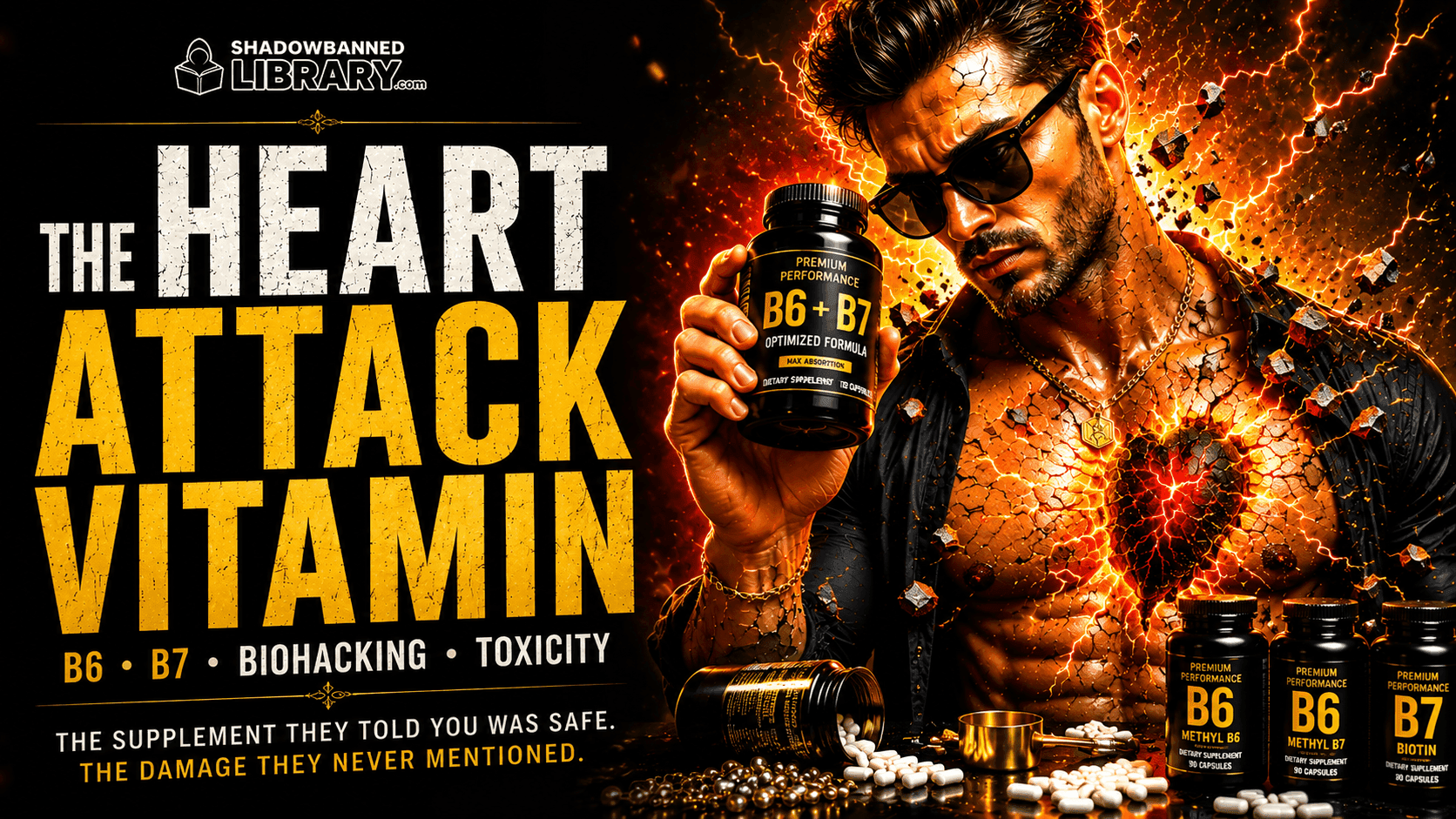

Introduction
At this point, some people are probably wondering why I am spending so much time digging into the B vitamins when they have been infused into almost every “energy,” “wellness,” and supplement product on the market and are generally presented as harmless and universally beneficial. The answer is simple: the body can tolerate almost anything occasionally. Drinking an energy drink her, remembering your synthetic chemicals B vitamins every week or so. The problem begins when these compounds become daily health hacks repeated for years, while every side effect gets rebranded as another deficiency requiring even more products. You know, just like their identical twins, prescription drugs. The body starts signaling problems early, but people are brainwashed to reinterpret those signals as evidence that they need even more supplementation, rather than questioning the original substance that created the imbalance in the first place. Amandha Vollmer does a great job on her channel with this concept. The fact that people feel better initially when they take a pharmaceutical seco steriod hormone is proof that is it working. Yes Amandha, that is what steroids do. Temporarily anyway, as they melt your bones.
On the other hand, a person starts taking a daily B-complex, energy powder, fortified drink, or synthetic “wellness stack” and begins developing muscle cramps, numbness and tingling (neuropathy), nervous system irritation, headaches, flushing, fatigue swings, sleep disturbances, or blood pressure changes thinks they have an even greater deficiency. Yes the soils must really be depleted this week. Instead of asking whether the daily vitamin chemical load itself may be causing the problem, the industry immediately redirects the person toward another product. Leg cramps? You must need magnesium. Trouble sleeping? Add another toxic synthetic pill like GABA or melatonin. Anxiety or nerve symptoms? More supplementation. The age-old symptom pill pharmaceutical loop.
The solution is almost always another container, another powder, another capsule, another symptom suppressor marketed as support. EXACTLY like the allopathic model. The people writing angry articles about me are trying to make this about me personally while somehow claiming I am secretly a pharmaceutical shill. Think about how absurd that accusation really is. How could I possibly be getting paid by the pharmaceutical industry while telling people to stop buying and consuming pharmaceutical-owned products? Yes, they own all of the vitamin and supplement companies or suppliers.
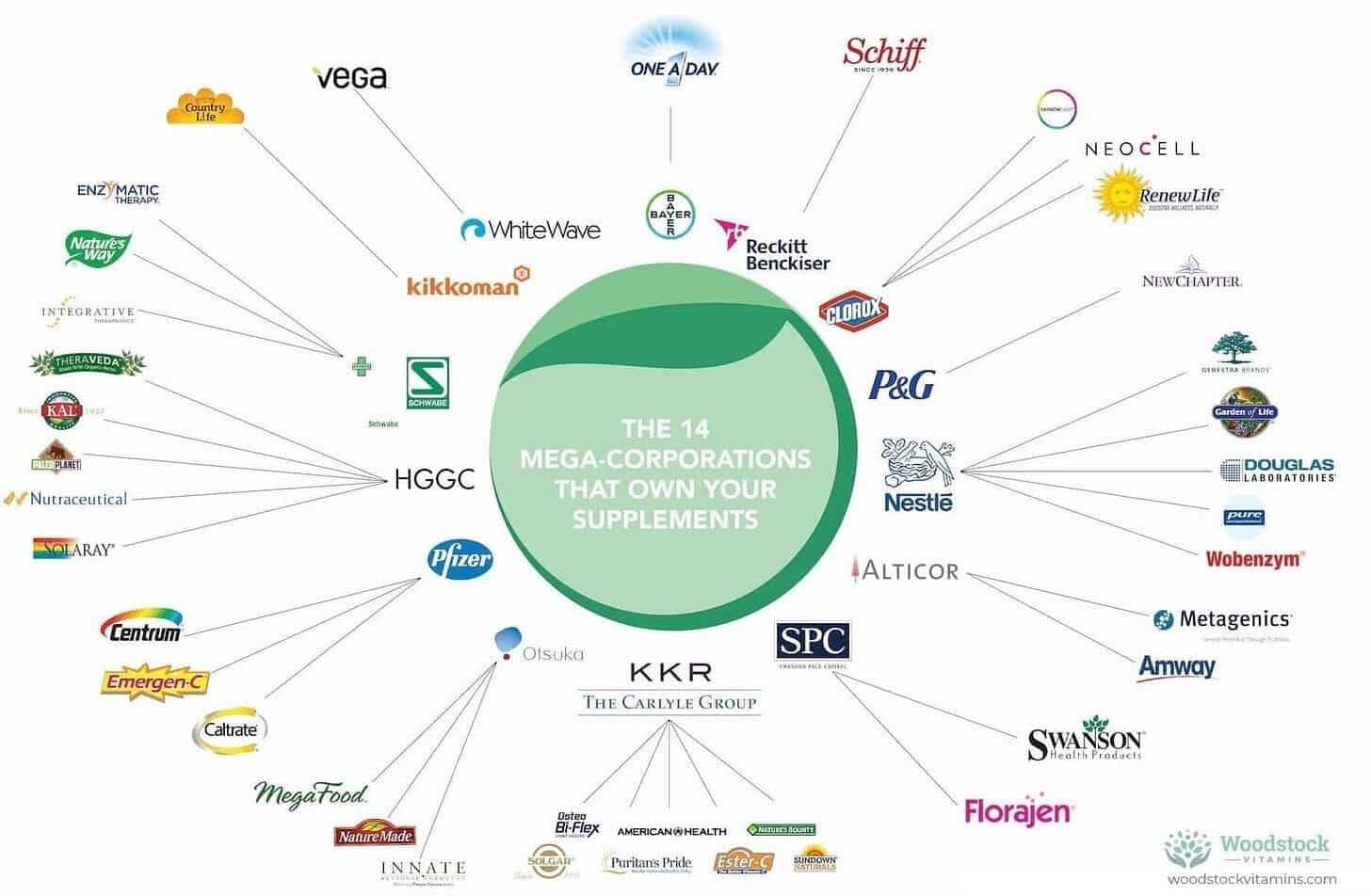
The people attacking me are often profiting directly from selling the very substances I am uncovering as toxic or harmful in the long term. There is no debate that these isolated synthetic compounds are not found in nature. There is no debate that these substances produce physiological effects in the body EXACTLY like prescription drugs. Why? Because there is no difference between the two industries that people want to admit to. The pharmaceutical industry invented the drugs known as vitamins. Both rely heavily on industrial chemistry, petroleum, or coal-tar-derived compounds, acids, bases, synthetic isolates, and symptom-management models. Both trigger physiological reactions in the body and produce side effects that often require additional intervention later. That is the pharmaceutical industry in a nutshell.
This is where the playbook becomes obvious. You take one synthetic compound and develop symptoms. Instead of removing the original offending substance, the system tells you the symptoms themselves are proof that you need another supplement. Blood pressure changes? Another formula. Digestive issues? Another stack. The body keeps signaling distress while the industry keeps translating every signal into another sales opportunity.

Sorry, folks, but poisoning people slowly while calling it “wellness” is not healthcare. The people panicking over my research are not upset because I am wrong. They are upset because questioning synthetic supplementation threatens an enormous amount of money. Many of the same people attacking me online are selling the supplements, protocols, affiliate links, consultations, or symptom-management systems tied directly to the products being questioned.
The irony is that the people calling me dangerous are functioning as unpaid or paid pharmaceutical representatives for the exact industry they accuse me of supporting. If your income depends on convincing people they need endless powders, capsules, drinks, stacks, and protocols to function normally, then you are financially tied to the continuation of that system, whether you admit it or not.
I am saying the opposite.
Remove the offending substance. Stop flooding the body daily with synthetic compounds. Let the body regulate itself again, and watch what starts to improve naturally once the constant chemical burden is removed. That message threatens nearly every major industry connected to chronic consumption because healthy independent people who stop buying unnecessary products are bad for business. Especially when those same people miraculously stop getting sick.
When you step back and look at the pattern honestly, the line between synthetic supplementation and pharmaceutical symptom management starts becoming extremely difficult to separate.
Many of these compounds are highly active in the body. Magnesium products sold as “natural calm” act exactly the same as muscle relaxants and blood pressure-lowering agents. High-dose niacin alters circulation and glucose metabolism sufficiently to elicit immediate physiological responses. Some B vitamins directly affect nerve signaling. Others interfere with laboratory testing itself. Yet the public continues to imagine these products as passive nutritional support rather than as biologically active chemical interventions. This is the fuel that powers the engine, keeping the industry moving. This is the hard edge of the paradigm. So for those screaming about the sheeple blindly taking a vaccine or prescription drug while you ingest literally the same chemicals, is the very definition of the pot calling the kettle black.
It is far more profitable to convince people they are chronically “imbalanced” and require lifelong supplementation than it is to ask whether the constant exposure itself may be contributing to the very symptoms being treated. Every side effect becomes another market opportunity. Every symptom becomes another story…depleted soil, and fake deficiency. Every discomfort becomes another potential sales.
And underneath all of it sits an assumption that almost nobody questions anymore: that isolated synthetic compounds manufactured through industrial chemistry and fermentation behave identically to nutrients found naturally within living food systems simply because they produce similar reactions in laboratory analysis.
That assumption may be one of the most important and least examined foundations of the entire modern supplement industry.
Because you cannot be deficient in an industrially manufactured synthetic compound that does not naturally exist in biological systems in the same isolated form being sold commercially. Sorry grifters, you lose.
Wild animals are not collapsing from a lack of synthetic pyridoxine hydrochloride or laboratory-manufactured vitamin blends. Most chronic supplementation entered human history only recently, alongside industrial food processing, fortification systems, pharmaceutical chemistry, and modern biochemical manufacturing. And along with modern-day diseases, they call viruses, bacterial infections, mold exposure, parasites, and deficient soils to get ahead of the poisons they use. Just like malaria is caused by the chemicals sprayed on river banks, deficiency diseases are chemical insults caused by taking chemicals.
And that brings us directly into the next category of B vitamins: the neurological vitamins.
Once compounds begin affecting nerve signaling, producing neuropathy, altering laboratory diagnostics, and creating symptoms that resemble the very deficiencies they are supposed to prevent, the entire story surrounding modern supplementation starts becoming much harder to keep applying new layers of icing over a rotting cake. Eventually it will collapse. And I am happy to be a part of drilling holes in the toxic damn.
Most people still imagine vitamins being extracted from food through some kind of giant Willy Wonka machine where scientists gently pull “natural nutrients” out of fruits, vegetables, grains, and plants before concentrating them into capsules for public health. The reality is this is pharmaceutical chemistry, industrial fermentation, petrochemicalsynthesis, and biochemical manufacturing systems operating at a massive scale.
And the deeper you go into that world, the stranger the assumptions behind modern nutrition science start becoming.
One of the biggest problems is that modern chemistry often reduces food down to isolated reactions and molecular fragments while ignoring the complexity of the living systems those compounds originally came from. Substances are BURNED, then separated, dissolved, reacted with acids, analyzed spectrographically, and reduced into measurable chemical signatures. Once scientists identify a compound that produces a similar reaction profile, they
conclude that the substance contains the same nutrient.
That is how radically different foods become grouped together under identical nutritional labels.
Seaweed contains iodine. Eggs contain iodine. Beans contain iodine. Therefore, iodine is iodine regardless of source, context, biological structure, absorption behavior, environmental interaction, or food matrix complexity. The same logic was eventually applied across the entire vitamin industry. Once a compound could be chemically identified and synthesized, the assumption was that the synthetic version functioned identically to its natural counterpart in the body.
Food is not simply a pile of isolated molecular fragments waiting to be reassembled industrially. If that were the case, then scientists could prove to us they could take all of the isolated compounds and put them all back together, and presto! There is an apple. The truth is, man can’t make anything found in nature. It is free and gives the body everything it needs to stay healthy. But the industry can’t have that, so they are actively poisoning nature now, taking away our last vestiges of independence. There are reports all over the United States of actively spraying glyphosate and Agent Orange on our public lands and poisoning the wildlife with Operation Fish Drop vaccines.
Based on recent 2026 investigative reporting and public records, aerial spraying of glyphosate (often branded as Roundup) is currently being conducted or planned on tens of thousands of acres of public land, primarily in the Western United States, for “conifer release” after wildfires or logging. Imagine how much Monsanto has paid the government, and for Trump to call the use of Glyphosate not only imperative to our nation’s survival, but also a matter of national security. Remember, glyphosate was first patented as a broad-spectrum antibiotic. I love how this shows why antibiotics are so dangerous. Your tissues are the weeds that the antibiotics are destroying. And when I say capitalism doesn’t work because this is where we end up, you call me crazy. No, we are at the tail end of freedom in this country.
The corporations are too large, and if you can have Orange President Camacho selling the public that a broad-spectrum antibiotic that kills plants is a matter of national security, then I guess you think vitamins and supplements are magic pills that keep you healthy. Idiocracy gets the credit for seeing the writing on the wall. I called it out in school the first time they told us about Capitalism and turning an ever-increasing profit every quarter. It’s not sustainable without massive destruction. Obviously. More on this in a future article about the Glyphosate crisis.

Key Locations of Active/Planned Aerial Spraying (Spring 2026)
California - Lassen National Forest: The U.S. Forest Service (USFS) has approved spraying roughly 10,000 acres to eradicate brush and hardwood trees competing with replanted conifers following the 2021 Dixie and Park fires.
California - Tahoe Basin/Caldor Fire Scar: Plans include treating up to 75,000 acres affected by the 2021 Caldor Fire, with specific focus on areas near campgrounds, trailheads, and residential areas in Meyers.
Washington - Southwestern Region: The Washington State Department of Natural Resources (DNR) has filed applications for aerial spraying on over 2,200 acres of public land, including areas that were recently mature, structurally complex forests.
Oregon: Numerous aerial operations are conducted for forest management.
Local Areas (Davis, CA): Reports indicate ongoing aerial/drone spraying near public parks, agricultural buffers, and ecological areas like Putah Creek. [1, 2, 3, 4]
Key Details of 2026 Operations
Purpose: Primarily to “release” commercially valuable conifers (like Douglas fir) by eliminating native shrubs and deciduous trees (like alder and maple) after forests are logged or burned.
Frequency: Forest spraying of glyphosate has increased dramatically in California, with 2023 setting a record high of 266,000 pounds applied.
Areas Impacted: Publicly managed forests, near popular hiking areas (including portions of the Pacific Crest Trail), campgrounds, and water supplies.
Types of Application: While the most concerning large-scale applications are conducted by helicopter, smaller projects in natural environments are also carried out by drones or ground-based crews. [1, 2, 3, 5]
How to Monitor Localized Spraying
California: Use the CDPR Spray Days website to find information about upcoming pesticide applications, which can provide up to 48 hours’ notice.
Public Records: Forest Practices Applications (FPAs) are often listed on the state Department of Natural Resources (DNR websites, although sometimes filed with little public notice. [1]
Back to the vitamins. And once isolated compounds began moving into high-dose supplementation, fortification systems, processed foods, energy drinks, pharmaceuticals, sports nutrition, and stacked “wellness” formulas, the effects started becoming far more aggressive and much harder to dismiss as simple nutrition deficiencies.
That is why this series groups the B vitamins the way it does.
The first article focused on thiamine because it marked the birth of the deficiency disease model and the beginning of synthetic fortification. The second article examined riboflavin, niacin, and pantothenic acid because they revealed the industrial expansion phase: fluorescent tracer compounds, billion-dollar bacterial fermentation systems, metabolic manipulation, and the rise of vitamins behaving more like pharmacological interventions than passive nutrients.
Now we enter the vitamins associated with nerve signaling, neurological symptoms, diagnostic interference, and biological confusion within the body itself.
Vitamin B6 (Pyridoxine): The Neurological Vitamin
By the time Vitamin B6 entered the market in the 1930s, the pharmaceutical industry had already discovered something incredibly profitable: if you could connect a group of symptoms to a single isolated compound, you could manufacture that compound endlessly and sell it back to the public as both prevention and treatment.
B6 quickly became one of the most important “neurological vitamins” because researchers tied it to nerve signaling, neurotransmitter production, seizures, mood regulation, brain chemistry, and sensory function. The official story claimed that the deficiency caused symptoms like depression, irritability, anemia, dermatitis, neuropathy, seizures, confusion, burning feet, numbness, and nerve dysfunction. Sound familiar? It should, because many of the exact same symptoms are now associated with chronic excessive pyridoxine exposure itself. Tee Hee

The same synthetic compound marketed to “support nerve health” became linked to nerve damage severe enough that some people developed long-term sensory neuropathy, tingling, numbness, balance problems, loss of coordination, electrical shock sensations, burning pain, and ataxia after prolonged supplementation. In some reported cases, symptoms lasted months or years after stopping the product. Sounds like MS, Parkinsons,
And here is where the entire vitamin industry begins to collapse under its own contradictions.
For decades, the public was told doses under 100 mg per day were completely safe. Then reports started piling up showing neuropathy occurring at lower doses taken consistently over time. Australia’s TGA eventually tightened regulations and reclassified products over certain B6 levels as medicines because of the growing wave of toxicity reports. Health Canada also reviewed the lower-dose neuropathy risks associated with products marketed for PMS, stress, and wellness support. Think about how insane that really is.
A compound sold casually in energy drinks and multivitamins became serious enough that regulators started treating it like pharmaceutical products because people were developing nerve damage from chronic exposure!
But the public still hears the word “vitamin” and imagines orange juice and wellness instead of neurological injury.
The industry learned long ago that the exact same biochemical compound can live in two different worlds simultaneously, depending entirely on dosage, labeling, and marketing language. One form becomes an over-the-counter “wellness” supplement poured into energy drinks, stress formulas, fortified cereals, gummies, sleep powders, hydration mixes, pre-workouts, and B-complex capsules. Another form, dosage, or delivery system becomes part of prescription medical products used to treat neurological conditions, nausea disorders, metabolic dysfunction, or pharmaceutical side effects.
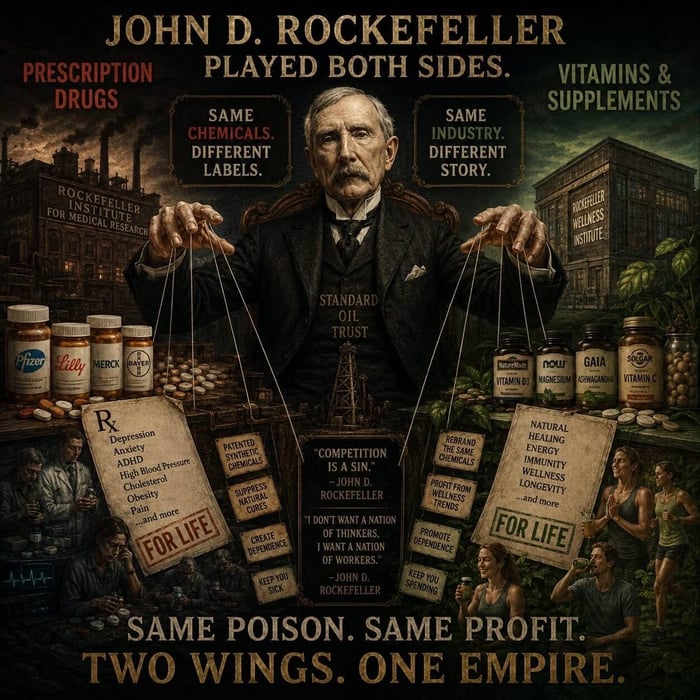
Same compound family. Same biochemical activity. Different side of the market. That is the business model.
The public sees a comforting vitamin label while the body still experiences a biologically active neurological compound capable of altering nerve signaling pathways. And because the supplement version exists under less stringent regulatory oversight, people consume these products daily with almost no caution.
Now, combine that with the modern energy drink market.
Most people blame caffeine when someone collapses after consuming heavy amounts of “energy” products. But almost nobody talks about the massive synthetic B6 loads stacked inside those drinks alongside fortified foods, multivitamins, pre-workouts, metabolism formulas, and stress supplements already being consumed every day.
The body does not neatly separate these exposures.
A person drinks an energy drink before work, takes a multivitamin with breakfast, uses a pre-workout in the afternoon, drinks a hydration mix after the gym, and then takes a sleep powder at night. Many of these products contain synthetic pyridoxine hydrochloride layered repeatedly throughout the day, often from multiple overlapping sources that the consumer never tracks or calculates.
And the craziest part?
The symptoms caused by chronic excessive B6 exposure can mimic the very deficiency symptoms the industry claims the vitamin is supposed to prevent:
tingling
numbness
neuropathy
burning sensations
nerve instability
mood disruption
neurological dysfunction
So what happens? The person experiences symptoms and is told they need even more “support.” More B vitamins. More magnesium. More nervous system formulas. More powders. More symptom suppressors. That loop is incredibly profitable.
This may be one of the biggest reveals in the entire B-vitamin series:
The supplement industry and pharmaceutical industry are not opposites competing against each other. They overlap constantly. They use the same chemical manufacturing principles, the same synthetic isolation model, the same symptom-management framework, and the same compounds sold under different regulatory categories. One side calls it a prescription, the other calls the drug a vitamin and a necessary nutrient.
Same exact thing.
Biotin (B7): The Beauty Vitamin That Stops Your Heart
By the time Biotin entered the supplement industry, the pharmaceutical and wellness markets had already discovered one of the most profitable business models in modern history: convince people that everyday human insecurities are signs of hidden deficiency and then sell them isolated synthetic compounds indefinitely as the solution.
Biotin became the perfect product for that machine.
Originally identified in the early twentieth century during animal feeding experiments, biotin was eventually connected to hair loss, skin irritation, brittle nails, fatigue, and neurological symptoms in laboratory deficiency states. Once researchers created the compound, the same pattern seen throughout the B-vitamin industry repeated itself: synthetic production, fortification, mass supplementation, and eventually aggressive marketing into every imaginable health category.
But biotin was different because it entered one of the most psychologically powerful markets on Earth: The Beauty Industry

Hair growth. Nail growth. Youthful skin. Anti-aging. Cosmetic enhancement. These are billion-dollar emotional industries built almost entirely on insecurity and repetition. Once supplement companies realized they could market biotin as a “beauty vitamin,” dosages exploded far beyond anything naturally encountered through ordinary food intake. Almost nobody stops to ask what they were actually consuming. Just like the vaccines of 2020.
Industrial production typically involves multi-step chemical synthesis using petroleum-derived intermediates, organic solvents, sulfur-containing compounds, acids, catalysts, and laboratory conversion reactions designed to manufacture large quantities of stable, isolated biotin powder cheaply and continuously. Like much of the synthetic vitamin industry, the final product arrives as a purified industrial compound manufactured through pharmaceutical-grade chemistry and biochemical processing rather than traditional food production. This is where the story starts becoming extremely dangerous.
Because while biotin was marketed publicly as harmless “beauty support,” hospitals and laboratories quietly began discovering that high-dose synthetic biotin supplementation was interfering with blood tests strongly enough to alter medical diagnostics themselves. The FDA eventually issued warnings because excessive circulating biotin could produce dangerously false laboratory results, including tests used during suspected heart attacks.
A synthetic compound sold casually in beauty gummies and wellness supplements became capable of interfering with emergency cardiac testing.
One of the biggest concerns involved troponin testing, one of the primary markers used to help identify heart muscle injury and heart attacks. Excess biotin in the bloodstream could produce falsely low troponin readings, potentially making it appear a patient was not experiencing a cardiac event when they actually were. In emergency medicine, that is catastrophic.
And it did not stop there.
High-dose biotin supplementation was also found to interfere with:
thyroid testing
hormone panels
endocrine diagnostics
cancer biomarkers
Reproductive hormone analysis
metabolic testing systems
In some cases, laboratory values can falsely mimic those of Graves’ disease. Cancer markers could appear misleadingly altered. Hormone profiles could become unreliable. Entire diagnostic pictures could be distorted by a synthetic “wellness vitamin” people were taking daily without understanding the consequences.
Now compare that to prescription pharmaceuticals.
If a prescription drug interfered with cardiac diagnostics, altered endocrine testing, distorted hormone panels, and triggered FDA warnings about missed heart attacks, the public would immediately recognize it as a powerful biologically active chemical compound carrying serious risks. But because biotin is sold under the softer language of “vitamin,” the danger becomes psychologically invisible before consumers even question it. Just as with the rest of the synthetic vitamin market, dosages escalated aggressively.
Natural food sources provide relatively small amounts of biotin. Meanwhile, supplement companies began selling:
5,000 mcg
10,000 mcg
20,000+ mcg beauty formulas
Often stacked alongside multivitamins, fortified foods, protein powders, energy drinks, metabolism products, and cosmetic supplements. The result is an entire population participating in a long-term synthetic biochemical experiment while believing they are simply improving their hair and skin. Which they actually are not.
And that may be the darkest reveal in the entire B-vitamin series so far.
Because once a synthetic “vitamin” becomes capable of:
altering neurological function
disrupting endocrine systems
distorting laboratory diagnostics
masking heart attacks
interfering with cancer testing
changing hormone measurements
This is biologically active industrial chemical compound capable of profoundly altering how the body functions and how modern medicine interprets the body itself. Just like all the other vitamins.
Conclusion
These are not simply harmless little “support nutrients” floating quietly through the body, the way the supplement industry wants people to imagine. The deeper this series goes, the more the modern vitamin market starts looking like a pharmaceutical and biochemical empire hiding behind softer language and wellness branding.
The first article traced the birth of the deficiency disease model and the rise of synthetic thiamine fortification. The second revealed the industrial fermentation economy behind riboflavin, niacin, and the billion-dollar bacteria used to manufacture synthetic compounds on a global scale. And now the neurological vitamins have exposed something even darker: these compounds do not merely “support health.” They alter nerve signaling, interfere with diagnostics, manipulate metabolism, distort laboratory testing, and in some cases produce symptoms nearly identical to the conditions they were originally promoted to prevent.
B6 showed how a synthetic “nerve support” vitamin became associated with neuropathy, burning sensations, numbness, sensory dysfunction, and long-term neurological damage while simultaneously flooding the energy drink and supplement market under the language of wellness and metabolism support. Biotin exposed something even more shocking: synthetic beauty vitamins interfering with cardiac testing, thyroid diagnostics, hormone panels, and cancer markers strongly enough that regulators and hospitals were forced to issue warnings.
And through all of it, the same system keeps repeating:
isolate the compound
manufacture it industrially
market it as deficiency prevention
normalize chronic daily exposure
reinterpret side effects as new imbalances
sell another product
That loop is not accidental. It is one of the most profitable business models ever created.
Once people believe health comes from externally managing symptoms and biochemical pathways through endless powders, drinks, capsules, and fortified products, they become permanent customers trapped inside an infinite cycle of supplementation and symptom management. The most dangerous part is the psychological operation to create a sense of trust.
The word “vitamin” removes fear before people even question what they are consuming. It creates the illusion that these compounds are fundamentally different from pharmaceutical drugs when, in reality, many are manufactured using similar industrial chemical processes, sold under similar symptom-management frameworks, and capable of producing powerful physiological effects throughout the body.
And the next article may be the biggest reveal in this entire series.
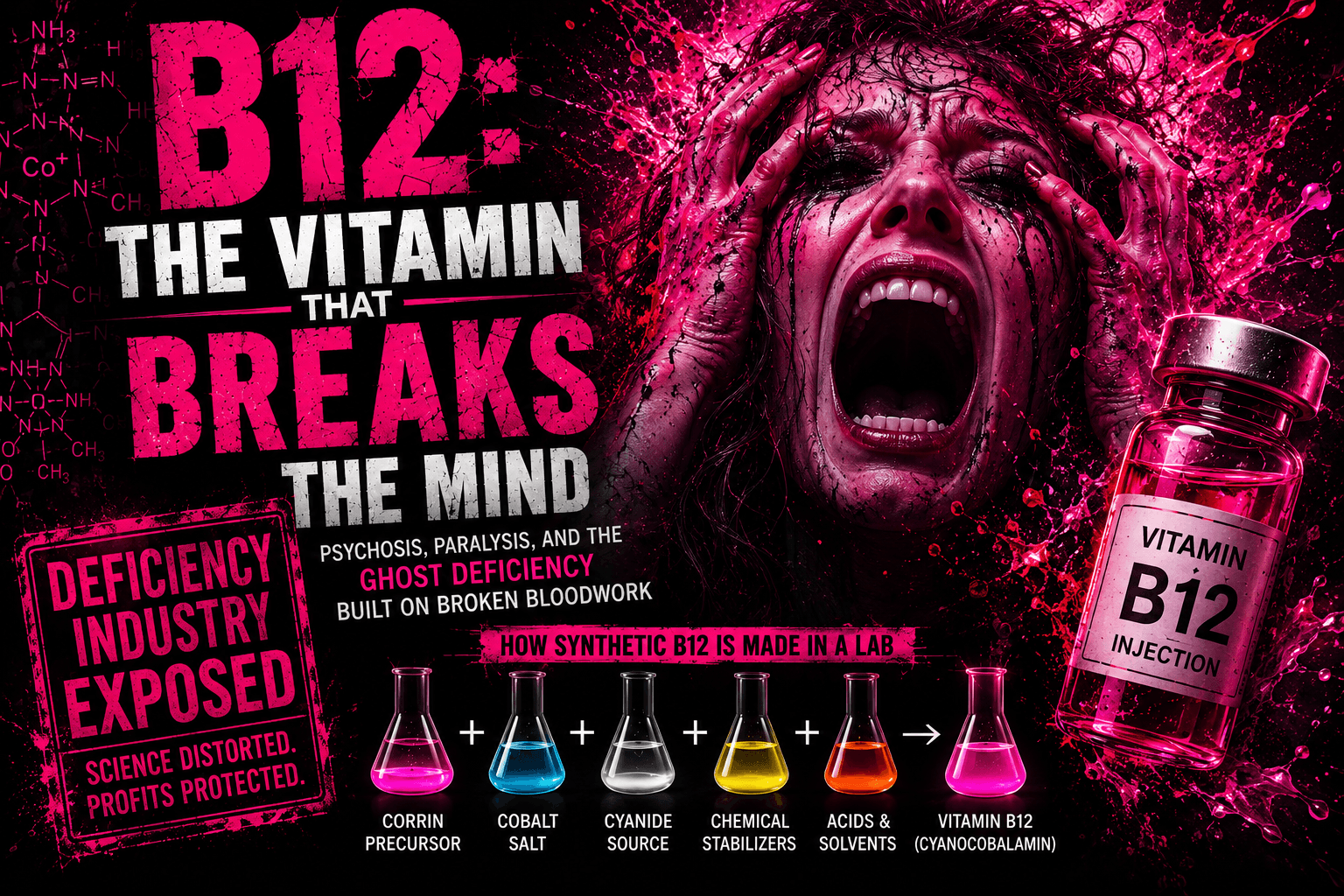
Because once we move into folate, methylation, and B12 chemistry, the conversation leaves ordinary supplementation entirely and enters the world of gene expression, neurological regulation, psychiatric chemistry, synthetic cyanide-containing compounds, prenatal fortification, and the growing attempt to chemically optimize human biology itself.
Disclaimer
The views expressed in this article are the author’s opinions based on clinical experience, historical sources, public records, regulatory documents, and secondary reporting. References to peer-reviewed literature, government publications, and archival materials are included where applicable to support discussion surrounding physiology, supplementation, toxicology, and public health policy.
The author is a licensed Registered Nurse (RN) who is no longer practicing clinically or acting in any medical capacity through this publication. This article reflects personal analysis, commentary, and independent research and is not intended as individualized medical advice, diagnosis, or treatment. Readers should consult their own licensed healthcare professionals regarding personal medical decisions, medications, supplements, or health concerns.
This article is presented for informational, educational, commentary, and entertainment purposes only. It does not allege criminal conduct or proven legal wrongdoing by any named company, institution, regulatory body, or individual. Statements regarding industries, products, manufacturing processes, and historical events reflect interpretation and opinion based on publicly available information and cited materials.
If you believe this article contains a factual inaccuracy, or if you represent an entity discussed and wish to provide documentation, clarification, or request a correction, please contact robin@purifywithin.com. Corrections will be reviewed and made where appropriate.
Nothing in this publication should be construed as medical or legal advice. Readers seeking legal guidance regarding publishing, liability, or defamation matters should consult a qualified attorney.
Albin, R. L. (1987). Pyridoxine-induced peripheral neuropathy. Neurology, 37(10), 1729–1732.
Australian Government Department of Health, Therapeutic Goods Administration. (2022). Peripheral neuropathy with supplementary vitamin B6 (pyridoxine).
Food and Drug Administration. (2017). The FDA warns that biotin may interfere with lab tests: FDA safety communication.
Institute of Medicine (US) Standing Committee on the Scientific Evaluation of Dietary Reference Intakes. (1998). Dietary reference intakes for thiamin, riboflavin, niacin, vitamin B6, folate, vitamin B12, pantothenic acid, biotin, and choline. National Academies Press.
Parry, G. J., & Bredesen, D. E. (1985). Sensory neuropathy with low-dose pyridoxine. Neurology, 35(10), 1466–1468.
Scott, G. N., Hoadley, M. A., & Lott, J. A. (2019). Biotin interference in clinical immunoassays: A cause for concern. Archives of Pathology & Laboratory Medicine, 143(11), 1459–1460.
U.S. Department of Health and Human Services, National Institutes of Health, Office of Dietary Supplements. (2022). Vitamin B6 fact sheet for health professionals.
U.S. Department of Health and Human Services, National Institutes of Health, Office of Dietary Supplements. (2023). Biotin fact sheet for health professionals.
Wijeratne, D. T., & Crewther, S. G. (2020). Vitamin B6 toxicity secondary to daily multivitamin use: A case report. Journal of Medical Case Reports, 14(1), 1–5.
Zempleni, J., Hassan, Y. I., & Wijeratne, S. S. K. (2008). Biotin and biotinidase deficiency. Expert Review of Endocrinology & Metabolism, 3(6), 715–724.

![The Great Vitamin Liars Vitamins [Part 1 By Medicine Girl]](https://dropinblog.net/cdn-cgi/image/fit=scale-down,format=auto,width=700/34264201/files/featured/0c2c0703-aac4-4a09-8bbb-aa55f98bf33e.png)





![Magnesium Vs. Zinc The Battle Royale That Ends the Debate [By Medicine Girl]](https://dropinblog.net/img/h6yzo8eq/700/94577ece-6b84-4d7c-b622-6e764231d715)