

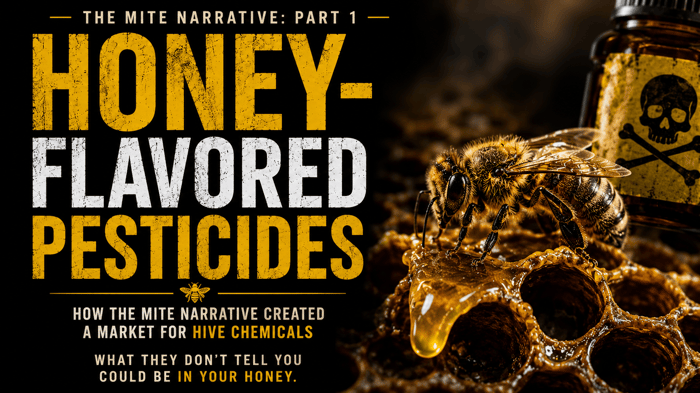

THIS STORY NEEDS TO BE TOLD FAR AND WIDE. BUT PLEASE WAIT TO SHARE
OUR BACKYARD BEEKEEPERS ARE A KEY COMPONENT TO DECLINING BEE POPULATIONS. I AM WRITING A SEPARATE ARTICLE SPECIFICALLY FOR BACKYARD BEEKEEPERS THAT IS MEANT TO BRIDGE THE GAP SO THEY CAN SEE A BETTER WAY THEY ARE SPRAYING HIVES WITH FOR-PROFIT PESTICIDES. EMAIL ME FOR THE FINISHED ARTICLE TO SEND TO YOUR LOCAL BEEKEEPERS ASSOCIATION OR BEEKEEPER AFTER THIS SERIES IS COMPLETE. IT WILL BE A LOT TAMER AND REASONABLE AND NOT MENTION THINGS LIKE FAKE CLIMATE CHANGE AND FAKE VIRUSES THAT WILL TURN PEOPLE OFF.
I have thriving bees in my backyard thanks to my good friend and neighbor, Susanna van Greunen who is just as aware of the dangers of spraying pesticides on a beehive. A swarm even moved into empty bee boxes on my back deck and flourished without a single mite check. It’s not ignorance. It’s an experience. Years of research into the industries profiting from “treatments” reveal a pattern too familiar to ignore: the same story, repackaged, sold, and repeated.
My skepticism didn’t start with bees. It started long before I ever kept a hive. Investigating Bayer’s Dirty Secret, I saw the pattern everywhere. Every crisis is blamed on a convenient biological villain while environmental and chemical culprits are buried in the fine print. The mosquito becomes the story. The parasite becomes the story. The virus is the story. Every time, the rebranded poison—marketed as a life-saving treatment—becomes the answer. And no one asks what changed in the environment before the symptoms appeared.
Suramin: An Old Poison Rebranded for a New Panic-a-demic
Consider Bayer—the pharmaceutical giant that swallowed Monsanto. Dig into Bayer’s history, and a single pattern emerges: a corporation at the crossroads of industrial poisons, pharmaceuticals, and manufactured public health narratives. Bayer began as a dye company, but the same chemical expertise that colored fabrics soon found new life in pesticides, industrial compounds, and “miracle” medicines.
Bayer’s playbook hasn’t changed. The company unleashed torrents of chemicals along riverbanks, sickening entire communities. Instantly, handpicked scientists and doctors, always ready to serve their masters, shifted the blame to a mosquito-borne disease. They didn’t just have a theory; they had a test kit in hand, a diagnosis prepackaged, and a new vaccine waiting in the wings. The sickness is branded malaria, and another profit stream is born, rubber-stamped by the WHO.
This is the same scheme they ran with DDT: spraying neurotoxins on children in orchards, watching their nervous systems fail, then selling the aftermath as collateral damage. There are no innocent bystanders—infants, pregnant women, children, everyone is fair game for the next chemical swindle. This isn’t just history. It’s the business model.

When I entered the world of beekeeping, I immediately recognized the pattern. The “mite story” was everywhere—beekeeping meetings, university extension programs, online forums, local associations, commercial operations, backyard hobbyists. The message was hammered home: if you have bees, you have mites, and they will destroy your hive. No debate. No nuance. No dissent allowed.
But the recommendations were the real tell. No one talked about improving forage, strengthening hives, leaving more honey, or questioning what was being put inside the hive. The answer was always more testing, more monitoring, more chemicals. It’s the same strategy that keeps the profits rolling in for mega chemical corporations.
Beekeepers are conditioned to obsessively test for mites, hit arbitrary thresholds, apply treatments, rotate products, and repeat forever. This isn’t pest control—it’s the pharmaceutical playbook in disguise. Or the tobacco industry’s old trick: if you must use something indefinitely, it’s not a solution, it’s a business model.
High mite counts? Dose the colony. Chemicals failing? Switch brands. Resistance? Rotate faster. Still losing bees? Test even more. The cycle is endless, and the only winner is the chemical industry.
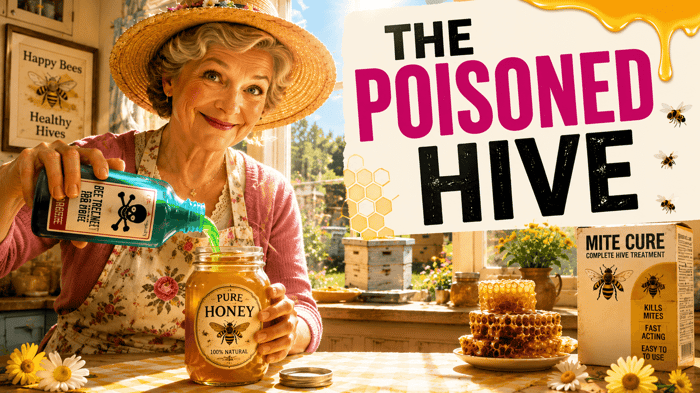
The longer I listened, the less I cared about mites and the more I focused on the treatments: Amitraz. Oxalic acid. Formic acid. Thymol. Hop beta acids. Strips, vapors, dribbles, fumigants, acids—all dumped into living colonies, season after season, generation after generation.
Here’s the question that matters: How did mites become the accepted scapegoat for collapsing bee health? Who profits from that narrative, and why does no one demand the same scrutiny for the supposed “cures” as for the pest itself?
How the Mite Became the Story
Beekeeping today is ruled by a single narrative: if your hive is weak or dying, blame the mite. Every failing colony, every dead queen, every drop in honey production is pinned on Varroa. The conversation doesn’t just end before it begins—it’s designed that way, by the industry that profits from your panic.
This myth is so deeply entrenched that universities, extension offices, bee clubs, and commercial operators all march in lockstep, preaching Varroa obsession as gospel. New beekeepers are indoctrinated on day one: test, monitor, treat, repeat. Questioning the narrative is heresy, and heretics are quickly silenced.
But here’s the truth: the real story isn’t the mite. It’s the chemical treadmill engineered to keep the cash flowing. While the world fixates on the parasite, the industry quietly floods hives with pesticides, miticides, acids, and strips—season after season, generation after generation—until bees exist in a toxic wasteland. Regulators and academics don’t just enable this—they codify it, publishing protocols and setting thresholds, all while ignoring the filthy reality: the most contaminated part of the hive is the wax, saturated with the very chemicals beekeepers are commanded to use.
The issue isn’t whether mites exist. The issue is how the focus on mites became so total, so absolute, and who reaps in the profits from that engineered obsession. The moment Varroa was crowned public enemy number one, an entire economy was built to sell the “cure.” Monitoring kits, chemical treatments, endless product rotations, resistance management—this isn’t science. It’s a pharmaceutical racket disguised as hive management.
Every time a researcher blames the mite, the chemical industry’s profits climb higher. Every time a beekeeper doses their colony, the noose tightens. Scientific papers admit it: bees are poisoned from inside and out, bombarded by agricultural and in-hive chemicals until the line between parasite and poison disappears.
The moment Varroa entered the Western beekeeping world, the narrative was set: here was the perfect villain, perfectly visible, perfectly terrifying—a scapegoat that could be blamed for every hive collapse and every lost queen.
But the deeper history is revealing. For thousands of years, bees and their parasites coexisted, adapting and evolving together. The global panic only began when industrial agriculture and chemical companies realized there was profit in selling a “solution.” Instead of asking what had changed in the bees’ environment—new pesticides, new monocultures, new stressors—the industry zeroed in on the mite. And the world followed.
Today, every beekeeper is taught to fear Varroa above all else. The message is simple: if your bees die, it’s the mite’s fault. If your bees survive, it’s because you bought the right chemicals. The result? Endless cycles of monitoring, dosing, resistance, and more chemicals—while the real threats to bee health go unexamined.
Varroa became the story because it was profitable for it to become the story. The deeper truth is that bees are victims of a toxic system—one that sells both the diagnosis and the supposed cure, while hiding the environmental changes that made collapse inevitable.
Instead, beekeepers are trained to perform the alcohol wash—a ritual that looks scientific but serves the interests of the chemical industry. Roughly 300 bees are ripped from the brood nest, dumped into a container, and drowned in isopropyl alcohol. The shaking strips mites from their bodies. The bees are tossed out, the mites are counted, and that number—no matter how small—becomes the trigger for chemical intervention.
The numbers are shockingly low and anything but rigorous. Six mites in 300 bees? That’s a 2% infestation rate. Nine mites? Three percent. Yet these tiny counts are enough to unleash a chemical assault on the hive—strips, acids, vapors, all poured into a living colony that may appear perfectly healthy.
UC Davis and other extension programs push constant monitoring—before and after every treatment—ensuring that the process never ends. The dogma is clear: rising mite counts are a crisis. The only “responsible” response is more intervention, more product, more profit for the chemical suppliers.
But here’s the real story: the leap from finding a handful of mites in a random sample to flooding an entire superorganism with pesticides, acids, and fumigants. This isn’t about bee health; it’s about keeping the chemical treadmill running. That expensive jar of “artisan” honey? Infused with the very poisons sold as solutions. The cycle is complete.
That’s where the story stops making sense—and the real questions begin.
According to the official story, Varroa mites became a “crisis” for American beekeepers after their arrival and rapid spread. Researchers rushed to document infestations, obsessively counted mites, and drew convenient correlations between mite populations and collapsing colonies. It wasn’t long before the entire narrative was rewritten: the mite was crowned the primary culprit behind honey bee decline.
But dig into the actual research and the truth slips out. The same scientific papers that blame Varroa also admit that bees are drowning in a toxic cocktail of pesticides—both inside and outside the hive. A doctoral thesis from the University of Valencia spells it out: bees are slammed by insecticides, fungicides, herbicides, and miticides from agriculture, while beekeepers dump even more chemicals directly into the hive. The result? Beeswax is saturated with contamination. The very miticides beekeepers are told to use are among the most common residues found. That should stop the conversation.
If bees are assaulted by pesticides both from the fields and from within their own hives, how much of the collapse is really the fault of mites, and how much is due to the toxic environment created by relentless chemical exposure?
This isn’t a trivial distinction. The moment the mite became the “official” explanation, a sprawling industry sprang up to profit from it. Monitoring protocols multiplied. Treatment thresholds were invented. New products flooded the market. Universities and extension offices churned out treatment schedules. Manufacturers raked in profits from strips, vapors, acids, and every other intervention—each one adding another layer of poison to the hive.
The deeper I looked, the less I cared about the mites and the more I wanted to understand the institutions and interests that pushed chemical intervention as the only “responsible” path. The story of the mite is a distraction—the real story is who benefits from keeping beekeepers stuck on the chemical treadmill.
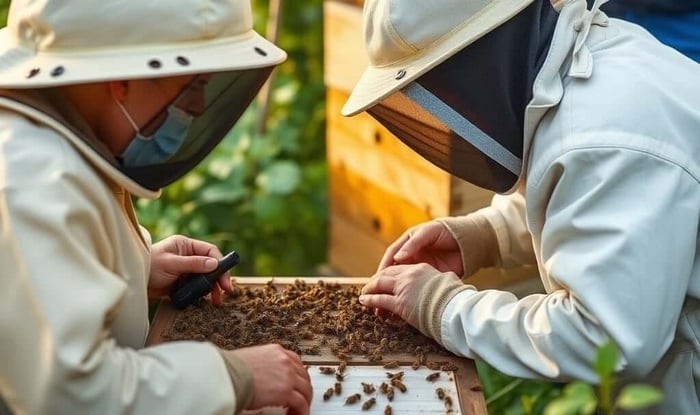
Before we even talk about the chemicals, let’s ask the million-dollar question: Were mites ever the real problem? Or put another way: Did mites cause colony decline, or did a declining industry need a new villain and a new revenue stream?
Following the Money
The deeper I dug, the more obvious the incentives became. Once mites are accepted as the existential threat to bees, a profit machine roars to life:
Universities chase grant money to study mites and invent mite-management “solutions.”
Researchers carve out careers publishing on mite thresholds, resistance, and treatments—regardless of whether colonies ever recover.
Extension offices push protocols designed to keep beekeepers monitoring and treating indefinitely.
Bee clubs indoctrinate new beekeepers, teaching them to count mites and reach for chemicals at the first sign of trouble.
Conferences fill their schedules with lectures and workshops on mite control, keeping the panic (and the funding) alive.
Manufacturers churn out strips, vapors, acids, and every possible intervention, each promising salvation.
Chemical companies pay lobbyists to write the rules, ensuring federal funding and protocols always circle back to their bottom line.
And every time a beekeeper doses a hive, the chemical companies collect—again and again, year after year.
The system isn’t broken. It’s working exactly as designed: keep the focus on mites, keep the money moving, and bury the real causes of bee decline under an avalanche of treatments.
These observations make one thing undeniable: powerful financial incentives drive every step of this system. Forget the image of beekeepers discovering hives visibly crawling with mites before deciding on treatment. That’s not how it works.
Instead, beekeepers are trained to perform the ritual of the alcohol wash. Three hundred bees are torn from the brood nest, drowned in isopropyl alcohol, and counted post-mortem for mites. The process is marketed as science, but the numbers expose the scam.
It takes shockingly few mites to trigger a chemical assault. Six mites in 300 bees? That’s a 2% infestation. Nine mites? Just 3%. Yet those minuscule numbers are enough to justify flooding an entire colony with pesticides, strips, acids, and vapors.
A colony that looks robust and healthy can be condemned to chemical intervention simply because of a few mites in a tiny sample. From that moment, the conversation is hijacked—no longer about bee health, but about thresholds, schedules, and what to spray next.
This is the same story I’ve exposed before: the parasite is cast as the villain, and the search for root causes ends as soon as one is found. But in nature, parasites and hosts coexist. Healthy animals often carry substantial parasite loads with no disease. Parasites are part of the ecosystem—they clean up waste. No waste, no parasites. So finding a parasite answers nothing.
If mites show up in a collapsing colony, are they the cause, or are they just thriving in a hive already devastated by other factors? Here’s the real crime: drenching bee colonies in chemicals toxic to bees is not just reckless—it’s the smoking gun. The chemical industry profits from every single dose, every strip, every bottle of poison sold as a cure. The motive is profit; the cost is the hive.
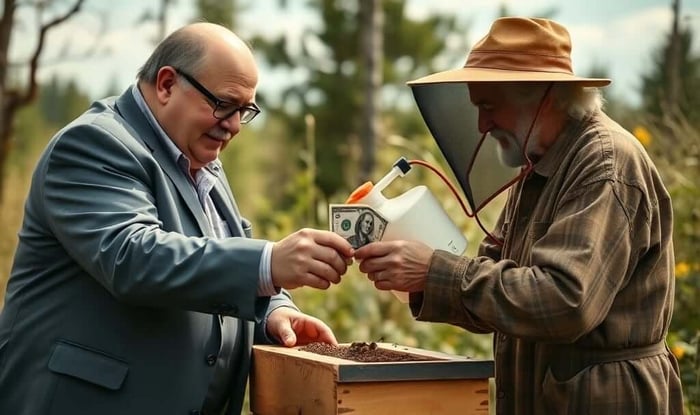
It’s a simple transaction: the industry pays beekeepers and gets poison sprayed into every hive. The result? Bees and honey contaminated, profits locked in, and the cycle grinds on.
Who Really Owns the Research?
Let’s dig deeper into the money trail. Take, for instance, a recent study on the toxicity of miticides like Amitraz. The research claims to be above reproach—funded by the Spanish Ministry of Science and Innovation and administered by the University of Valencia. Taxpayer money, academic oversight, conflict-of-interest disclosures. On paper, there’s no chemical company cash, no corporate fingerprints.
But that’s just the surface. The chemicals under investigation—the ones “approved” to fight mites—are the very products churned out by global agri-giants. For every new study that says “safe for bees,” a marketing campaign is born, sales explode, and corporate profits multiply. The research may wear a public mask, but the marketplace for its findings is rigged from the start.
This is the real scam: public research, supposedly independent, is nothing more than a tool for industry. Chemical companies don’t need to fund the research—they just wait for the results, then weaponize them. Meanwhile, lobbyists write the rules in back rooms, and regulators look the other way. “Scientific independence” is a farce; the whole system is designed to serve those who profit most from confusion, delay, and endless debate.

In other words, the game is rigged—but not in the way most people think. The real checkmate isn’t blatant bribery or brown envelopes; it’s a system built to turn every study, every public institution, and every “independent finding” into a weapon for profit. Universities are paid to deliver the answers the funders want. Most researchers know the drill: tweak the data, adjust the variables, and keep rerunning the numbers until the “right” result lands on the desk. This isn’t unique to bees. It’s the same playbook behind PCR testing, virology, PSA, prostate cancer, and every other cash-cow scientific racket.
The Fat Cats Pushing Pesticides
This question only gets more urgent when you look at what’s actually happening inside the hive.
Amitraz.
Oxalic acid.
Formic acid.
Thymol.
Hop beta acids.
These chemicals aren’t accidental contaminants—they’re deliberately poured into living colonies under the banner of “protection.” They touch every part of the hive: bees, brood, wax, queens, pollen, and honey. Some linger for months, building up layer upon layer of residue. Study after study confirms it—beeswax is loaded with the byproducts of the very miticides and pesticides beekeepers are told are “safe.”
Yet every time bee decline is discussed, the finger points back to the mite. Mites are counted, tracked, treated, and blamed. The chemicals? They get a free pass. That imbalance—the relentless focus on the parasite and the studied silence around the poison, is what set me down this path.
CONCLUSION
When I began this investigation, I thought I was writing about mites. Instead, I uncovered a machine built to manufacture consent and profit—one fueled not by science, but by money, incentives, and institutional inertia. The question is no longer whether mites exist. They do. The real question is why every conversation about declining bee health is suffocated by the Varroa narrative, while the ever-growing list of chemicals dumped directly into hives is ignored.
I have healthy bees thriving in untreated boxes, yet I watch an industry that indoctrinates beekeepers into rituals of endless testing, monitoring, and chemical dependency. The playbook is old: focus attention on a single villain, sell the supposed cure, and keep the real causes—chemical exposure and corporate profit—hidden in plain sight. This isn’t just history repeating; it’s the same scam, rebranded for a new generation.
If mites are truly the root of collapse, let the industry prove it—with real, independent data. If treatments are safe, let them stand up to real scrutiny. Until then, accepting any claim at face value—especially from those who profit by selling both the disease and the remedy—is not just reckless, it’s surrender. It’s time to interrogate the chemicals with the same zeal devoted to the mite. Because before blaming the parasite, we must understand the poison.
In Article 2, we’ll pull back the curtain on the products themselves: the safety data sheets, the toxicology studies, the residue reports, the list of chemicals dumped into hives in the name of “saving” bees, and the rotten assumptions behind their use.
Before you accept the story that the parasite is the problem, ask what else—what, exactly, and how much—is being poured into the hive. That’s where the truth begins.
That’s where this investigation goes next.





![The Great Vitamin Liars Vitamins [Part 1 By Medicine Girl]](https://dropinblog.net/cdn-cgi/image/fit=scale-down,format=auto,width=700/34264201/files/featured/0c2c0703-aac4-4a09-8bbb-aa55f98bf33e.png)

