

Introduction: The Surfer, the Bedbound, and the Poisoned Truth
If you work in home health as long as I have, you start to see patterns, some obvious, others so absurd they make you question reality. Take vitamin D deficiency. I’ve seen it stamped on everyone: from the 80-year-old woman, bedbound and sun-starved for years, to the 23-year-old surfer with a permanent tan and sand still stuck between his toes. Both, according to the same lab test, are “deficient.” Both get the same prescription: another bottle of vitamin D3, another notch in the billion-dollar supplement belt.
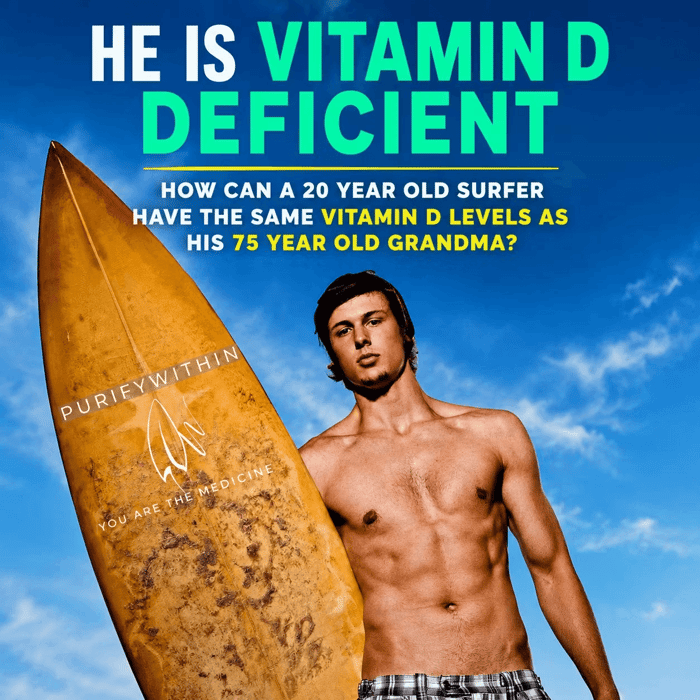
How does that make sense? How does a guy who lives half-naked under the sun end up with the same “vitamin D deficiency” as someone who hasn’t glimpsed daylight in two years? The industry’s answer: Don’t ask, just swallow the pill.
But maybe you’re like me, once you see behind the curtain, you can’t unsee it. The so-called “deficiency epidemic” is everywhere. Every patient, every chart, every doctor’s office: test, diagnose, supplement, repeat. No one asks about sun exposure, diet, lifestyle, or even if the test means anything at all. They just want you to trust the science, except that, as I would learn, the science isn’t science at all.
When the world flipped upside down after the infamous Event 201 “pandemic rehearsal,” I was desperate for something solid. Enter Amandha Vollmer: the Canadian John Wayne of the anti-mandate scene, cussing out “face diapers” and wagging her forked tongue at the powers that be. She looked like a rebel, sounded like a hero, and I, in my state of fear and confusion, wanted someone, anyone, to tell me everything would be okay. I missed the red flags: she was never banned, always trending, too polished for someone “just” entering the public scene. But I wanted to believe, so I did.
Meanwhile, I saw the pandemic for what it was: a script, rolled out in real time. I entered homes packed with families, nine adults, a grandma in “isolation,” a brand-new baby, everyone breathing the same air, windows shut against the spring cold. No one wore masks. No one else got sick. Grandma hugged the kids, kissed the baby, shared soup and tea. The “deadly contagion” never arrived. I started digging hard. Down the rabbit hole of the contagion myth, the manufactured panic, the viral sleight-of-hand.
Then came my own initiation into the “truther” movement, underground meetings I started with fired nurses and firefighters, dreams of a new system, a better way. They wanted injectable ozone, vitamin infusion clinics, biohacking, anything to “protect” us from the invisible enemy. But even there, the snake oil flowed: everyone had something to sell, and was eager to find a convert, ready to buy salvation in a bottle. No one asked, “Salvation from what?” If the virus was made up, and we can’t get sick unless you are poisoned, what are they really selling?
That’s how I ended up following Amandha’s advice, buying the so-called “good” vitamin D3 complete with added K2 from some trendy online shop. Even though I’m naturally wary of anything in a bottle and hesitant to give standard doses of anything, I still found myself carefully measuring out half of what she recommended, maybe 1,000 micrograms, just to be “safe.” Not once did I stop to ask where all this supposedly misplaced calcium was even coming from, or why cholecalciferol is the active ingredient not just in supplements, but in D-Con rat poison too. Somehow, that detail slipped right past my critical thinking. There I was, a dewy-eyed, newly converted truther, proud to be giving my son the “good drugs” from the anti-mainstream crowd.
Then came the gut punch: my 9-year-old son broke his shoulder from a next-to-nothing fall at the skate park. I was terrified. I didn’t want to take him to the doctor because I was sure they’d push a vaccine. I tried all the natural remedies, cottonwood bud oil, white willow bark, but he still woke up crying, in pain, night after night. Online, someone asked, “Are you giving him D3?” I beamed, “Yes! Only the best!” They told me to look up D-Con rat poison.
I thought I was being trolled. But out of pure paranoia, I jumped in my pickup, Tokyo drifted into the Ace Hardware lot, and checked the label. There it was: cholecalciferol. The exact same stuff as in my fancy glass vitamin bottle. I just stood there, breathless. I had given my son rat poison. The “health” supplement and the rodenticide were chemically identical, just different price tags and marketing teams.
Furious, I tried to warn others in the so-called truther world. I genuinely believed they’d be grateful, finally, someone connecting the dots, shining a light on the poison hiding in plain sight. I thought at the very least they’d want to look at the research, the chemistry, the mechanism of action. Instead, what I got was a mob. If they’d had torches and pitchforks, I swear they would have shown up at my front door.
Amandha Vollmer’s group was the worst. The moment I questioned her, just for raising the possibility that her precious D3 might not be the miracle she claimed, I was instantly branded as a mentally unstable, attention-seeking narcissist who needed to go journal and “get the help I so clearly needed.” I still have her responses saved, along with her flying monkeys. It didn’t matter that I was just a concerned parent and a health professional. There was no discussion about the science, no room for honest questioning. Instead, it was character assassination, gaslighting, and block after block after block.
That’s when I realized: these people weren’t interested in truth, only in protecting their brands, their supplement affiliate links, and the loyal followers who kept their influencer empires afloat. Jason Christoff was a prime example: he had affiliate links for D3 plastered all over his website, bragging to his Self Sabotage students in class that he had about 100,000 clicks from his audience, selling the very rat poison I’d just discovered in my own kitchen cabinet. When I reached out, he tried to placate me, asked for my research, and I spent hours painstakingly compiling the evidence. But in the end, it was just another dead end; he wasn’t about to jeopardize his business or his place in the truther pecking order. Poison profits over people.
The ones who screamed the loudest about being censored were always the first to shut down dissent when it threatened their business model. For all their talk of free speech, open debate, and “waking people up,” it was just another flavor of control, just another way to sell you something, and silence anyone who got in the way. If they’d had torches and pitchforks, they would have shown up at my house.
That was it. The veil was off. I saw how the industry manipulates science, manufactures deficiency, and weaponizes fear, on both sides of the aisle. They found a lab value they could manipulate, a chemical that moves a number, and a story they could sell. The “deficiency” is scripted, the cure is poison, and the only thing being fixed is the balance sheet of Big Supplement and its influencers.
So here it is: If you want to see how the vitamin D3 industry pulled off one of the greatest health scams of our time, how they sold us rat poison as sunshine in a bottle and called it medicine, keep reading. I’ll show you the playbook, the evidence, and the checkmate. No poisoned red pills required.
The Puppet Masters: Holick, DeLuca, and the Vitamin D3 Swindle
The modern vitamin D3 industry didn’t just happen; it was engineered, brick by brick, by two men who saw opportunity not in curing disease, but in creating customers. Dr. Hector DeLuca and Dr. Michael Holick didn’t just “discover” the science; they twisted it, patented it, marketed it, and built a billion-dollar empire on a foundation of misdirection, conflicts of interest, and corporate collusion.
Dr. Hector DeLuca: From Biochemist to Patent Tycoon
Hector DeLuca was no ordinary scientist. (OK, now that I see the sales of science, maybe he was an ordinary snake oil scientist). At the University of Wisconsin-Madison, he transformed his lab into a vitamin D3 production powerhouse. His legacy isn’t just in academic journals; it’s also in over 1,500 patents, most of which are directly tied to vitamin D analogs, extraction processes, and synthetic production lines. DeLuca figured out how to turn sheep’s wool into pure, cheap cholecalciferol, the molecule at the heart of the modern supplement and fortified food industry.
But DeLuca wasn’t motivated by public health alone. He ensured that every step of vitamin D3’s journey from lanolin to pill bottle was locked down, licensed, and monetized. Through university partnerships, exclusive deals, and strategic alliances with Big Pharma and Big Ag, DeLuca and his university collected hundreds of millions in royalties. He turned a niche chemical into a household name and made sure every supermarket, pharmacy, and breakfast table paid tribute.
Dr. Michael Holick: Dr. Sunshine: The Industry’s Pied Piper
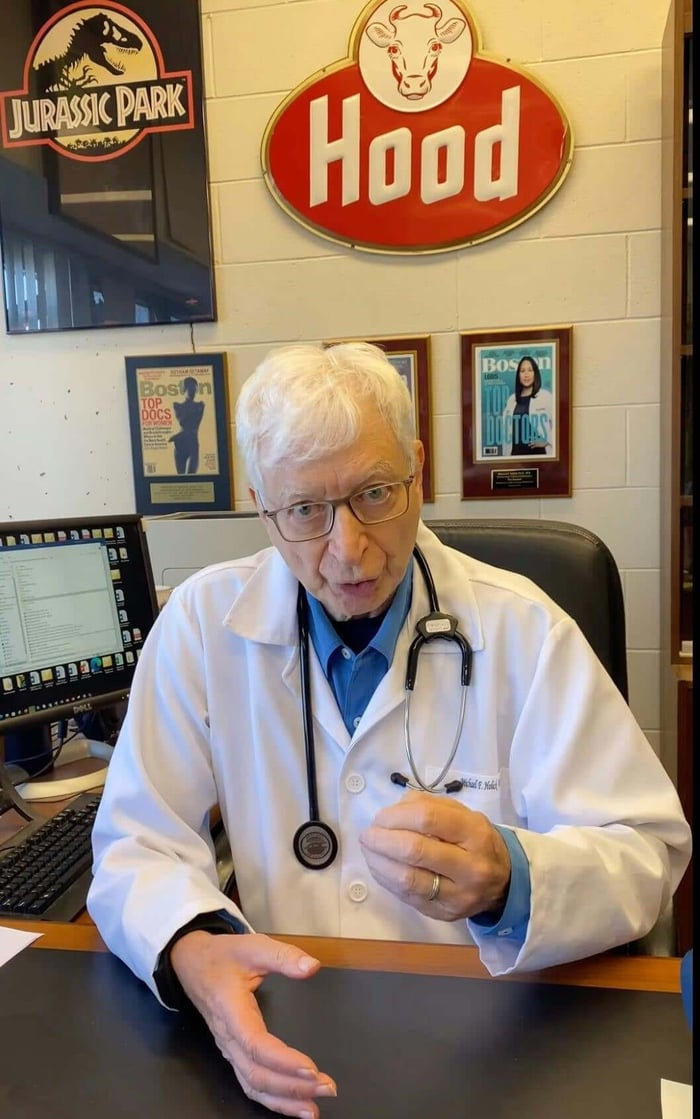
If DeLuca was the dealer, Holick was the hype man. Dr. Michael Holick made himself the face of vitamin D, but not by accident. He wrote the narrative of “widespread deficiency,” lobbied for ever-higher “normal” blood levels, and relentlessly promoted mass testing and supplementation.
What the public didn’t see: Holick’s deep financial ties to Quest Diagnostics (the nation’s largest vitamin D test provider), supplement manufacturers, and even the tanning industry. He took consulting fees, speaking honoraria, advisory board seats, and published guideline-shaping research, much of it funded, directly or indirectly, by the companies profiting from every test and pill. When the Endocrine Society set new “normal” ranges in 2011, Holick was at the center, ensuring that 60–80% of Americans would be labeled “deficient” overnight.
Holick’s reach was everywhere: medical journals, mainstream media, infomercials, public health campaigns, and even talk shows. He had the ear of doctors, the trust of the public, and the backing of every industry player who stood to make a dollar from the vitamin D craze. And when his own ethics were questioned—like when Boston University’s dermatology department ousted him for promoting tanning beds—he played the martyr, crying censorship while cashing checks from every side.
The Playbook of Deceit
Patent Everything: From raw extraction to finished product, DeLuca patented and monetized every step. No other vitamin in the supplement aisle has as many layers of royalty and profit built in.
Invent an Epidemic: Holick’s “hidden deficiency” narrative was a pure manufactured crisis. The new “normal” was set so high that almost everyone would fail the test.
Test, Treat, Repeat: The 25D blood test, measuring an inactive precursor rather than the active hormone, was the linchpin. It almost guaranteed a “deficient” result, so every healthy person became a patient-in-waiting.
Profit in Perpetuity: DeLuca’s patents guaranteed a cut from every pill and fortified food. Holick got paid by test makers, supplement companies, and tanning salons. Their universities and business partners raked in billions.
Censor or Crush Dissent: Alternative views were marginalized, critics silenced, and inconvenient science buried with industry money. The “science” of vitamin D3 became a self-sustaining echo chamber.
Animal Experimentation and Ethical Questions
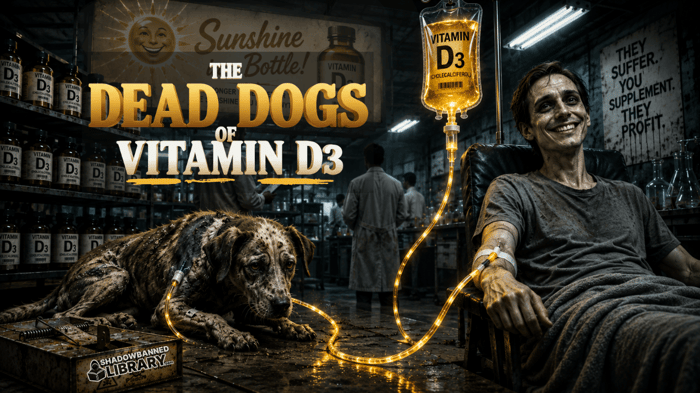
Dr. Holick’s early research involved extensive animal experimentation, including studies in dogs and other mammals to map vitamin D metabolism and its effects. Like many researchers in the mid-to-late 20th century, he used companion animals in laboratory settings, subjecting them to vitamin D deprivation, forced dietary regimens, and sometimes toxic overdoses to induce symptoms of deficiency or excess. These experiments often resulted in significant suffering: dogs and other animals developed bone deformities, organ damage, and sometimes died as a result of the interventions.
While such research was not unusual for the era, it raises ethical questions today—particularly when the findings are later weaponized for industry profit. Holick’s willingness to use and harm animals for scientific advancement, only for that science to be co-opted into a commercial narrative, adds another layer of controversy to his legacy.
Additional Controversies and Criticisms
Undisclosed Industry Ties: Holick’s lack of transparency regarding his financial relationships with supplement and lab-testing companies has drawn criticism from both the scientific community and investigative journalists.
Tanning Industry Advocacy: He accepted payments from the indoor tanning industry and promoted tanning as a “safe” source of vitamin D, despite overwhelming evidence of skin cancer risks. This led to his forced resignation from a dermatology position at Boston University.
Guideline Manipulation: He was accused of distorting medical guidelines for vitamin D sufficiency to benefit industry partners, as discussed earlier.
Dismissal of Scientific Dissent: Holick has often dismissed or downplayed contradictory research, marginalizing independent scientists who challenge the vitamin D orthodoxy.
The Result: A Swindle for the Ages
Despite Holick’s carefully crafted public image as “Dr. Sunshine,” his laboratory record tells a darker story, one that demolishes any claim of ignorance regarding the dangers of vitamin D3. Decades before vitamin D3 was sold as a panacea to the public, Holick and his collaborators were in the lab, forcibly inducing rickets, kidney failure, and fatal calcification in dogs, rats, and other animals. These were not benign experiments: they surgically removed kidneys, administered toxic doses, and watched as animals suffered bone deformities, organ shutdown, and death, all in the name of “science.”
The results were clear. When the dose was high enough, vitamin D3 was deadly. Cholecalciferol wasn’t just a nutrient; it was a potent biological agent, capable of slowly calcifying organs and killing mammals. In fact, the very same compound ,cholecalciferol, was soon patented and sold as rat poison, precisely because it was so effective at killing small mammals via the exact pathway Holick documented in his animal experiments.
This was not a case of unforeseen consequences or innocent mistakes. Holick and DeLuca saw firsthand, in living, suffering animals, that vitamin D3 was no wonder drug. They knew its mechanism, its lethal potential, and its risks. Yet, instead of warning the public, they pivoted, using their scientific credentials, patents, and media platforms to market vitamin D3 as a universal cure, pushing ever-higher “deficiency” thresholds and mass supplementation.
Holick’s animal research didn’t prove vitamin D3 was safe; it proved it was dangerous. The chasm between what he knew in the lab and what he told the world is not an oversight; it’s evidence of a calculated ruse. Together with DeLuca, Holick took a substance they knew could kill by melting the animal’s bones and califiying the body, rebranded it as a daily necessity, and built a billion-dollar industry on the very mechanisms they had observed destroying life in their experiments.
This is not just scientific hypocrisy. It’s fraud at the highest level, knowledge of harm, willfully ignored, and then weaponized for profit. You can hear Dr. Sunshine crying to his audience about his very aggressive stage 3 prostate cancer on his Facebook page. The irony is not lost that an industry swindler is now being swindled by an even bigger industry.
Millions now chase a lab number, swallow a pill, and believe the hype, while DeLuca, Holick, and their corporate web profit from the confusion. This isn’t public health; this is public manipulation. The vitamin D3 swindle is not just a mistake; it’s a masterclass in how to manufacture demand, monetize fear, and rewrite reality for profit.
The Rickets Ruse: How a Disease of Darkness Became a Goldmine

Ask anyone in the vitamin D3 industry why you need their product, and they’ll invoke the specter of rickets a disease that conjures images of bowed legs, stunted growth, and suffering children. But the real story of rickets is not one of a simple vitamin deficiency. It is a story of industrial misery, social neglect, and sunlight stolen from childhoods by greed, only to be repackaged and resold by the same forces for profit.
The Real History: Rickets as a Social Disease
In the 19th and early 20th centuries, rickets was rampant in the grimy heart of industrial cities. Children worked twelve-hour days in airless factories, their skin never seeing daylight, their food little more than tea, bread, and sugar water. Poverty, child labor, pollution, and overcrowded tenements were the real architects of the epidemic. Rickets was a biological warning about what happens when society denies its children the basics: sunlight, nutrition, and space to play.
Contrary to the modern supplement narrative, rickets was not eradicated by a pill or a bottle. It was beaten back by social reform. Child labor laws shortened the workday and sent kids outside. Nutrition programs brought real food to the table. Urban planning opened up city blocks to sunlight. Rates of rickets plummeted—not because of mass supplementation, but because of fundamental changes in living conditions.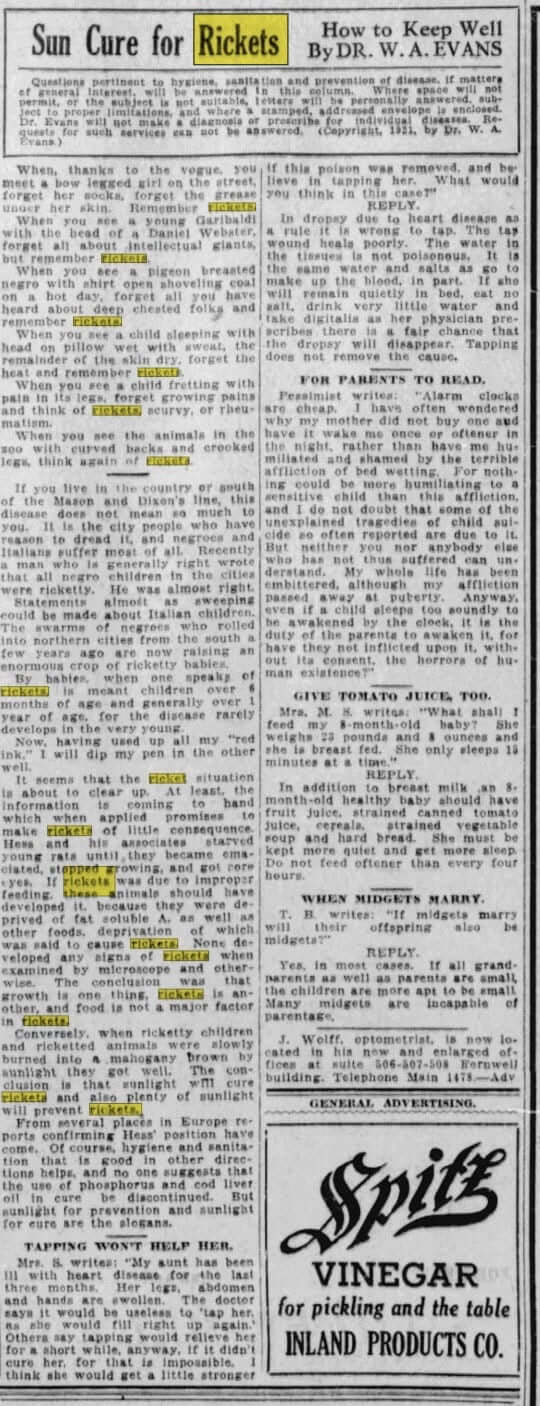
Early Science and the Power of Sunlight
Even the medical establishment of the early 20th century understood this truth. As one 1920s newspaper column by Dr. W. A. Evans proclaimed, “sunlight will cure rickets and plenty of sunlight will prevent rickets.” Contemporary studies, like those of Hess and his associates, showed that rats and children deprived of sunlight—not just nutrients—developed rickets, but those “slowly burned into a mahogany brown by sunlight… got well.” The cure was free, and it came from the sky.
Sunlight was so universally recognized as the antidote that public health campaigns promoted “sun baths” and schools built solariums for at-risk children. Supplements like cod liver oil were used, but always as a backup, never as a replacement for fresh air and sun. The science was clear: rickets was a disease of deprivation and darkness.
The Distortion: How Science Was Rewritten
Enter the vitamin D3 industry. As the 20th century progressed, the nuanced, context-rich understanding of rickets was systematically stripped away. Poverty, pollution, and social neglect were erased from the narrative, replaced by the simplistic equation: vitamin D deficiency equals rickets.
With the rise of mass-produced cholecalciferol, the story was rewritten for marketing. The fact that modern rickets is vanishingly rare in developed countries—and almost always a result of severe neglect, malabsorption, or genetic disease—was not profitable to repeat. Instead, a specter was raised: “If you don’t supplement, your child could get rickets.” Never mind that sunlight and a decent diet were already doing the job.
The Modern Weaponization of Rickets
Today, rickets is wheeled out by industry shills and influencers alike to scare parents and push supplement sales. Even as rates stay microscopic among healthy, well-cared-for children, the myth persists: rickets is always waiting to strike unless you buy their product. The truth is that for nearly all modern families, rickets is a marketing ghost—a tool to sell fear, not a real risk.
The ultimate irony? The industry that profits from this fear is the same one that obscures the true, free solution. They bottle the sun, mark up the price, and sell it back to you as a “miracle cure,” all while quietly ignoring the living conditions and social factors that actually cause disease.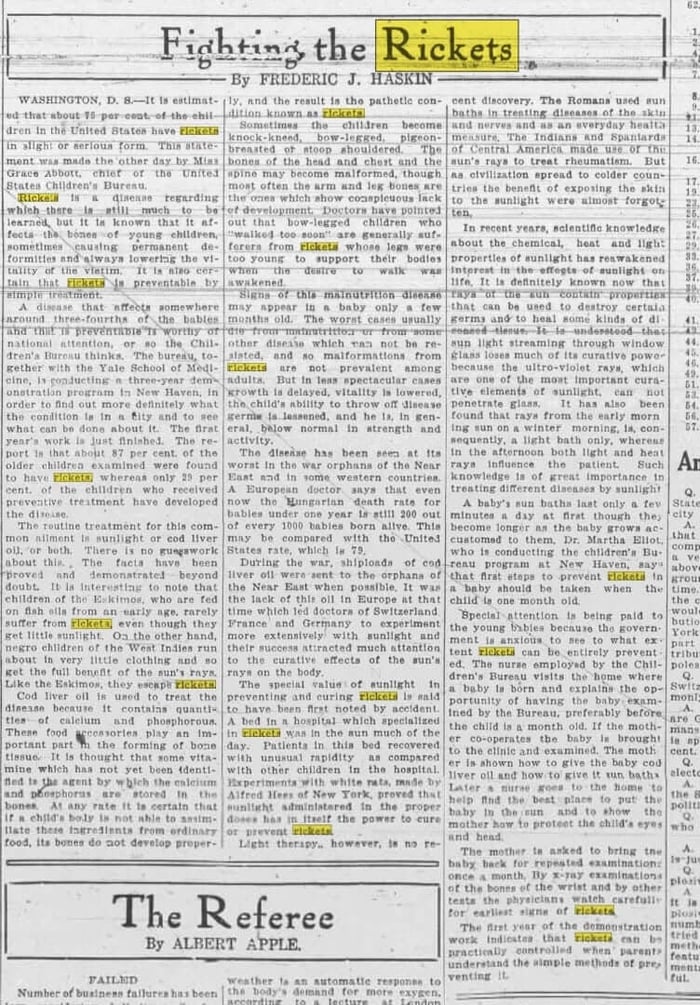
The Checkmate: Sunlight Cannot Be Patented
This is the final checkmate of the rickets ruse. The disease was conquered by sunlight and social change, not by pharmaceutical intervention. The vitamin D3 industry, led by figures like Holick and DeLuca, hijacked this history, erased the complexity, and replaced it with a profitable fiction. They created an imaginary epidemic, pushed a test and a pill, and left the real lessons of rickets in the shadows.
For those who truly want to prevent suffering in children, the answer remains what it always was: sunlight, real food, and an end to poverty and neglect. The only deficiency here is in honesty—and that, no supplement can cure.
The Lab Test Scam: Measuring the Wrong Molecule, Manufacturing Deficiency
After rewriting the history of rickets and engineering a “deficiency epidemic,” the vitamin D3 industry needed a tool to turn healthy people into patients. That tool was the serum 25-hydroxyvitamin D (25D) test, a test that, for most people, has little to do with true health but everything to do with creating customers.
The Science They Don’t Want You to Know
Most people do not realize that when sunlight touches your skin, your body does not just make one molecule. You produce over thirty-six different hormones, all working together in perfect synergy. Among them is cholecalciferol, a seco-steroid hormone that scientists claim they can reproduce in a laboratory using sheep’s wool. But does it really make sense to believe that something extracted from sheep grease, processed in a facility, and stuffed into a pill could ever substitute for the richness and complexity of sunlight? Is this science, or just another clever story designed to sell us a cheap, endlessly reproducible chemical with a massive profit margin?
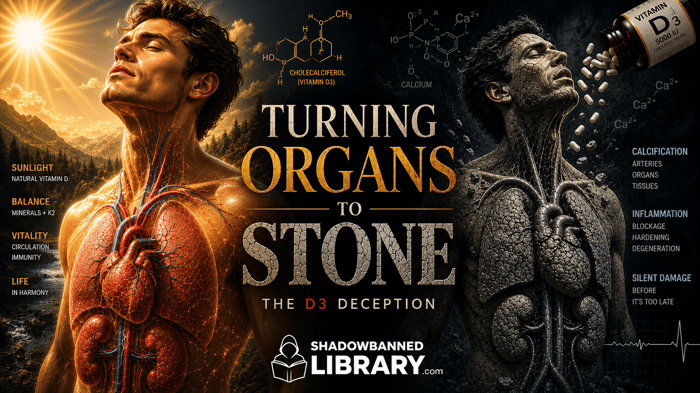
Vitamin D metabolism is anything but simple. When you are in the sun, your body creates vitamin D3 (cholecalciferol), but that is just the beginning of a complex journey. The liver converts D3 into 25-hydroxyvitamin D (25D), which serves as a storage form and is not the active hormone. Only after another step in the kidneys does your body produce 1,25-dihydroxyvitamin D, or 1,25D, the hormone responsible for regulating calcium, bone health, and a host of other essential processes.
Yet Holick and his industry allies promoted universal testing for 25D, the inactive intermediate. Why did they do this? The answer is simple. The 25D test is easy to run, cheap to automate, and most importantly, levels can fluctuate for countless reasons, but the kicker? Most people will test low, regardless of how much sunlight they have been exposed to. It has nothing to do with anything except this page out of the Big Harma playbook. They found a chemical extract that can change a lab value, so they can tell you this is working. They leave out the part that working means your bones are more brittle and your kidney filters calcify, your heart is arrhythmic and racing, and your liver is failing. By arbitrarily adjusting the definition of “normal,” almost anyone can be labeled as “deficient.” This is not a reflection of true health, but a manipulation of numbers to generate customers.
In 2011, thanks to Holick’s influence on the Endocrine Society’s guidelines, the “normal” range for vitamin D was set so high that 60–80% of Americans would now be classified as deficient or insufficient, almost overnight. This was not based on strong evidence of improved health outcomes, but on shaky, industry-funded studies and hand-picked data. The result? An epidemic was manufactured by changing a lab number.
Doctors, faced with these new guidelines and relentless marketing, began ordering vitamin D tests for everyone, from infants to athletes. When the results came back “low,” the prescription was always the same: supplements, more tests, more worry. The medical system had found a new, permanent revenue stream.
The Fatal Flaw: Measuring the Wrong Thing
The fatal flaw underlying the entire scam is that the 25D test does not measure the active hormone that actually does the body’s work. Instead, it measures a storage molecule, one that is easily influenced by countless factors such as diet, body fat, swelling, toxic load, and more. Most people labeled “deficient” by this test have no symptoms at all, and the overwhelming majority will never develop rickets, osteomalacia, or any genuine deficiency disease. More direct evidence for the flawed testing. This makes the PCR test almost look like a legitimate test for a non-existent virus.
It gets even more misleading. The active hormone, 1,25D, can be perfectly normal—or even elevated—in people whose 25D levels are deemed “low.” That is because the body has evolved to tightly regulate the active hormone to maintain calcium levels and overall metabolic balance, even if someone lives in a cave for a year without sunlight. If 1,25D is truly low, it is almost always a sign of a deeper health issue, most often involving kidney dysfunction. In these cases, giving rat poison, also known as cholecalciferol, is not only ineffective but also potentially harmful. The fact that I even have to write those sentences baffles me to no end. Yes, consuming daily doses of rat poison can be harmful to your health, especially long-term. Hand firmly planted on my forehead in a slapping motion. The problem is not a lack of sunlight in a bottle; it is a malfunction in the body’s machinery.
Trying to fix a low 1,25D level by supplementing with cholecalciferol is like trying to fix a broken engine by pouring more gasoline into the tank. The issue is not the fuel level, but a failure somewhere in the engine’s intricate system. No amount of extra gas will get you moving if the engine itself is damaged. Just as no amount of synthetic vitamin D3 will resolve the underlying metabolic issues that truly lower the active hormone.
In short, the entire narrative is a bait-and-switch, testing the wrong thing, selling the wrong solution, and ignoring the real problem.
The switch to mass testing and supplementation was a goldmine. In one year alone, Medicare spent over $365 million just on vitamin D tests for seniors. Supplement sales soared into the billions. Labs, supplement makers, and influencers all cashed in. Meanwhile, the original promise—that widespread testing and supplementation would make people healthier—remained unfulfilled. No reduction in cancer, heart disease, or mortality. Just more pills, more tests, and more confusion.
Everywhere you look, people are being told they are “deficient” based on a lab value that means little in the real world. Healthy children, outdoor athletes, even sun-worshipping surfers and bedridden elders all stamped with the same diagnosis, all funneled into the same system. It’s a closed loop: test, diagnose, supplement, repeat.
This is deliberate design, not medical progress. The vitamin D3 industry took a complex biological pathway, cherry-picked the easiest molecule to measure and manipulate, and turned it into the basis for a multibillion-dollar business. The test is not a window into health, but a lever for profit—a diagnostic trap that keeps the wheels of the industry spinning.
The Vitamin D3 Industry: Bigger, Bolder, and Built on Deception
The vitamin D market is not just thriving—it is set to explode. Currently valued at around $1.6 billion globally, industry analysts project it will surpass $2.6 billion by 2034. Some forecasts suggest that with current trends, the market could easily double again by the mid-2030s. Growth rates hover between 6.2 and 7 percent annually, driven not by new science or real epidemics, but by rising “deficiency” diagnoses, aggressive preventive healthcare messaging, and government-mandated food fortification.
Follow the Money: Functional foods and beverages now claim the lion’s share, accounting for over 34 percent of all vitamin D applications, with dietary supplements and animal feed additives close behind. Cholecalciferol, or vitamin D₃, dominates the market with more than 71 percent of sales, far outpacing vitamin D₂ due to its perceived higher “efficacy” in raising serum levels never mind the flaws in that measurement. North America and Europe remain the primary consumers, thanks to sophisticated nutraceutical industries and government policies that require vitamin fortification in everything from milk to bread. Remember the pHARMaceuticals financial dream come true? Forced fortification.
The industry’s growth is not fueled by genuine medical need, but by relentless marketing and manufactured consensus. Preventive health messaging now ties vitamin D to everything from osteoporosis to immune system support, dramatically expanding the customer base. Testing and supplementation are prescribed for all ages, often with no evidence of clinical benefit. Even the livestock industry is in on the action, pouring vitamin D into animal feed to boost product yield and shelf life.
A major trend is the move toward eco-conscious, plant-based sourcing. Lichen and algae-derived vitamin D₃—marketed as “vegan” and “sustainable”—is growing at a rapid 10.8 percent annual rate. Experts expect this segment alone to triple in size, fueling a new round of marketing and product launches. Companies are also betting big on gene-edited foods, like tomatoes engineered to produce vitamin D₃ when exposed to UV light, opening a new frontier for biofortified produce.
The Future: Precision Nutrition and Pharma Profits
The next wave of growth is all about customization and convenience. Personalized dosing, tracked by home test kits and digital health apps, promises to make every consumer their own patient. High-tech delivery formats like gummies, liquid sprays, and “bioavailable” compounds keep the product pipeline fresh and profitable. Pharmaceutical companies, too, are cashing in with high-dose therapies for everything from bone disease to chronic kidney failure.
While the vitamin D supplement aisle at your local pharmacy may seem like the public face of the industry, the real profits are made far from the health food stores and grocery shelves. The lion’s share of revenue in the global vitamin D3 market actually comes from its use as an additive in animal feed. Industrial agriculture relies heavily on bulk vitamin D3 to fortify the diets of livestock—cows, pigs, chickens, and more—under the guise of improving animal health, boosting growth rates, and supposedly enhancing the nutritional quality of meat, milk, and eggs.
What most people do not realize is that when vitamin D3 is added to animal feed, it is not just the animals that are dosed. The D3 passes directly into the milk and meat products that end up on supermarket shelves, meaning consumers ingest it even if they never touch a supplement. In effect, the public is medicated by proxy, with no label warning and no real choice in the matter.
There is another side to this industrial story that rarely makes headlines. In commercial beef operations, it is now a common practice to inject steers and cows with massive doses of vitamin D3 just three days before slaughter. The reason is not animal welfare or health, but profit. Research has shown that these megadoses act as a muscle relaxant, breaking down connective tissue and making the resulting meat noticeably more tender. This quick fix allows producers to command higher prices for their beef, all at minimal extra cost. The farm industry is a dream customer, willing to buy vitamin D3 by the ton, ready to pay a premium for a product that lets them upsell to distributors and the public alike. Makes you wonder what it’s doint inside your body. That will be spelled out in Part 2
This is where the real money flows in the vitamin D3 market. The manufacturers do not need to convince every consumer to buy a bottle of pills. Instead, they move huge volumes through industrial agriculture, ensuring that nearly everyone consumes their product, knowingly or not. The supplement you never swallowed might still be on your dinner plate.
The Bottom Line
The future of the vitamin D3 market is not about solving real health problems. It is about expanding the definition of deficiency, creating new “needs,” and finding ever more creative ways to sell you a chemical you likely never needed in the first place. The industry’s own projections say it all: a market expected to more than double within a decade. Not because of medical breakthroughs, but because the ruse keeps working—and the profits are just too good to resist.
Conclusion: The Stage is Set for the Final Checkmate
The vitamin D3 saga is not just a case study in clever marketing or regulatory loopholes. It is a calculated campaign, engineered by industry insiders, that has rewritten medical history, manipulated science, and transformed everyday people into a permanent market for a product they never needed. The numbers do not lie: the industry is booming, and it plans to double its reach in the next decade, all while telling you the story that keeps the money flowing and the truth out of sight.
But what actually happens when you swallow that daily pill or eat that fortified yogurt? What do D3, D2, and even vitamin D additives in your food really do inside your body? Are they harmless, or do they set off a chain reaction with consequences more damaging than any deficiency ever could? In my next article, I will pull back the curtain on the true metabolic fate of these compounds, including some shocking new information that even I, after years of research and clinical experience, was not prepared to discover.
If you think the scam stopped at the lab test or the supplement aisle, think again. The real story begins where the pill meets your biology—and the truth is more disturbing than you’ve ever been told.
Stay tuned for Part Two: what vitamin D3 really does once it enters your body, why D2 and D3 are not created equal, and the dark side of the so-called “sunshine vitamin.” Some of what I found will surprise you. Some will make you angry. And some, I guarantee, you have never heard before.
The atomic bomb is coming.
Disclaimer
The views expressed in this article are the author’s opinions based on clinical experience, historical sources, public records, regulatory documents, scientific literature, and secondary reporting. References to peer-reviewed publications, government materials, archival records, and publicly available data are included where applicable to support discussion of physiology, supplementation, toxicology, industrial manufacturing, and public health policy.
The author is a licensed Registered Nurse (RN), no longer practicing clinically or providing any medical care through this publication. This article reflects personal analysis, commentary, investigative research, and opinion, and is not intended as individualized medical advice, diagnosis, or treatment. Readers should consult their own licensed healthcare professionals regarding personal health decisions, medications, supplements, or concerns.
This publication is for informational, educational, commentary, and entertainment purposes only. It does not allege criminal conduct or proven legal wrongdoing by any company, institution, regulatory agency, manufacturer, or individual named herein. Statements regarding vitamins, pharmaceuticals, fortification policies, manufacturing processes, market incentives, toxicology, and historical events reflect interpretation and opinion based on publicly available information and cited materials.
Discussion of nutritional deficiencies, supplementation, neural tube defects, pregnancy, toxic exposures, industrial food systems, neurological symptoms, and public health interventions involves ongoing scientific debate and evolving research. Readers are encouraged to review primary sources, consult qualified professionals, and conduct independent research before forming medical or legal conclusions.
If you believe this article contains a factual inaccuracy, or if you represent an entity discussed and wish to provide documentation, clarification, or request a correction, please contact robin@purifywithin.com. Corrections will be reviewed and made as appropriate.
Nothing in this publication should be construed as medical or legal advice. For legal guidance regarding publishing, liability, or defamation, consult a qualified attorney.
References
Vitamin D Discovery and Rickets History
Hess, A. F., & Weinstock, M. (1924). The antirachitic value of sunlight and of artificial ultra-violet light. Journal of the American Medical Association, 83(7), 548-553. https://doi.org/10.1001/jama.1924.02650200010003
McCollum, E. V., Simmonds, N., Becker, J. E., & Shipley, P. G. (1922). An experimental demonstration of the existence of a vitamin which promotes calcium deposition. The Journal of Biological Chemistry, 53, 293-312. https://doi.org/10.1016/S0021-9258(18)87432-4
Rajakumar, K. (2003). Vitamin D, cod-liver oil, sunlight, and rickets: A historical perspective. Pediatrics, 112(2), e132-e135. https://doi.org/10.1542/peds.112.2.e132
Vitamin D Metabolism and Testing
Holick, M. F. (2007). Vitamin D deficiency. New England Journal of Medicine, 357(3), 266-281. https://doi.org/10.1056/NEJMra070553
Bikle, D. D. (2014). Vitamin D metabolism, mechanism of action, and clinical applications. Chemistry & Biology, 21(3), 319-329. https://doi.org/10.1016/j.chembiol.2013.12.016
Bouillon, R., Marcocci, C., Carmeliet, G., et al. (2019). Skeletal and extraskeletal actions of vitamin D: Current evidence and outstanding questions. Endocrine Reviews, 40(4), 1109-1151. https://doi.org/10.1210/er.2018-00126
Industry Influence and Conflicts of Interest
Rabin, R. C. (2018, August 18). The man who recommends vitamin D for everyone. The New York Times. https://www.nytimes.com/2018/08/18/business/vitamin-d-michael-holick.html
Rosen, C. J., & Taylor, C. L. (2013). Common misconceptions about vitamin D—implications for clinicians. Nature Reviews Endocrinology, 9(7), 434-438. https://doi.org/10.1038/nrendo.2013.99
Animal Experimentation in Vitamin D Research
DeLuca, H. F., & Schnoes, H. K. (1983). Metabolism and mechanism of action of vitamin D. Annual Review of Biochemistry, 52(1), 411-439. https://doi.org/10.1146/annurev.bi.52.070183.002211
Jones, G. (2008). Pharmacokinetics of vitamin D toxicity. The American Journal of Clinical Nutrition, 88(2), 582S-586S. https://doi.org/10.1093/ajcn/88.2.582S
Vitamin D Market Analysis
Market.US. (2024). Vitamin D market size, share, growth, and industry analysis report, 2024–2034. https://market.us/report/vitamin-d-market/
Data Bridge Market Research. (2024). Global vitamin D market—industry trends and forecast to 2034. https://www.databridgemarketresearch.com/reports/global-vitamin-d-market
Supplementation Harms and Overuse
Binkley, N., & Carter, G. D. (2017). Toward guidelines for best practice in vitamin D testing and treatment: An endocrine society clinical practice guideline. The Journal of Clinical Endocrinology & Metabolism, 102(3), 678-680. https://doi.org/10.1210/jc.2017-00214
Vieth, R. (2011). Why the optimal requirement for vitamin D3 is probably much higher than what is officially recommended for adults. The Journal of Steroid Biochemistry and Molecular Biology, 127(1-2), 3-9. https://doi.org/10.1016/j.jsbmb.2011.01.001