

The Birth of My Son and the Vitamin K Shot
When my son was born, the experience was nothing like the natural, gentle birth I’d envisioned. Despite my careful planning, I ended up with a C-section after a nurse, upset that I was alone and asked her to stop touching me as it made my pain worse, retaliated, without my consent, and administered a cocktail of drugs that left my legs numb and brought my labor to a halt. The supposed emergency was called not because of a clear and present danger, but because the doctor was ready to end his shift. I’ll never forget hearing him on the phone, telling staff to prep an operating room for a woman “dying on the table.” When I asked who that was, he replied, “It’s you.”
In the chaos, I was powerless. I had left strict instructions with my son’s father: stay with our baby every moment after he is delivered, and don’t let them inject him with anything. I’d spent my pregnancy fending off an endless parade of recommended shots and interventions, refusing flu and pneumonia vaccines, and amniocentesis; it was a never-ending assault. Now, as I lay on the table, I tried to alert the staff to my wishes, but they insisted they couldn’t reach the baby’s father.
After the dust settled, I learned that my son’s father had been in the parking lot the whole time, celebrating with a morning beer and cigar alongside his brother. By the time he finally came to the nursery, our newborn was lying naked under a harsh UV lamp, completely alone. The bandage on his tiny leg said it all: the nurses had already given him the vitamin K injection “to protect him from my negative blood and increasing the risk of not clotting.” I was livid. I had specifically refused all injections. Their excuse? “You have to; he could bleed to death.” That explanation didn’t even make sense, but like most people, they expected me to accept it without question, because it came from some god in a white coat.
Right after that shot, my son went limp and started to develop severe jaundice. He was solid gold after a few hours. He became difficult to wake and struggled to nurse. The hospital insisted he stay alone, under blue lights, his bilirubin levels rising despite the supposed treatment. They said the choice was mine: keep him in the hospital on the “bili bed,” or take him home. I chose home, desperate to escape the constant intrusions and the cold, clinical handling by nurses who wore gloves-sticking them inside his mouth to force him to latch for breastfeeding.
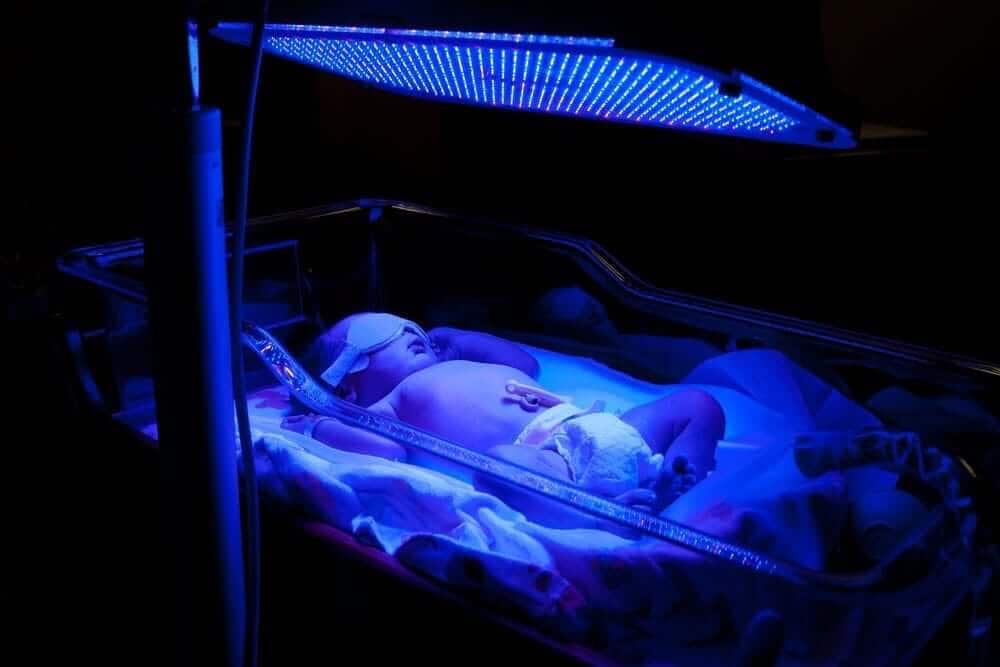
Even after we left the hospital, the interventions continued. We were sent home with a “bili bed,” a blue UV light device meant to lower my son’s bilirubin levels—and told to use it constantly. Every minute he spent off it, he had to use a paddle that accompanied him, which covered his body in blue light. I worried about the device’s EMFs, and despite following every instruction, he only seemed to get worse.
A home health nurse visited to check on him every morning and took a daily blood sample from his tiny foot.I would breastfeed him during this intrusion and he didn't seem to notice. Later on our second day home with my son, the pediatrician’s office called, their voices urgent and panicked: “Bring him back to the hospital immediately.” When we arrived, a doctor looked over his charts and, without compassion, informed us that our newborn “may need a liver transplant.” Yet, despite the gravity of those words, he wasn’t admitted to the NICU or given the intensive care you’d expect for an actual crisis. Then he said we would need more invasive tests.
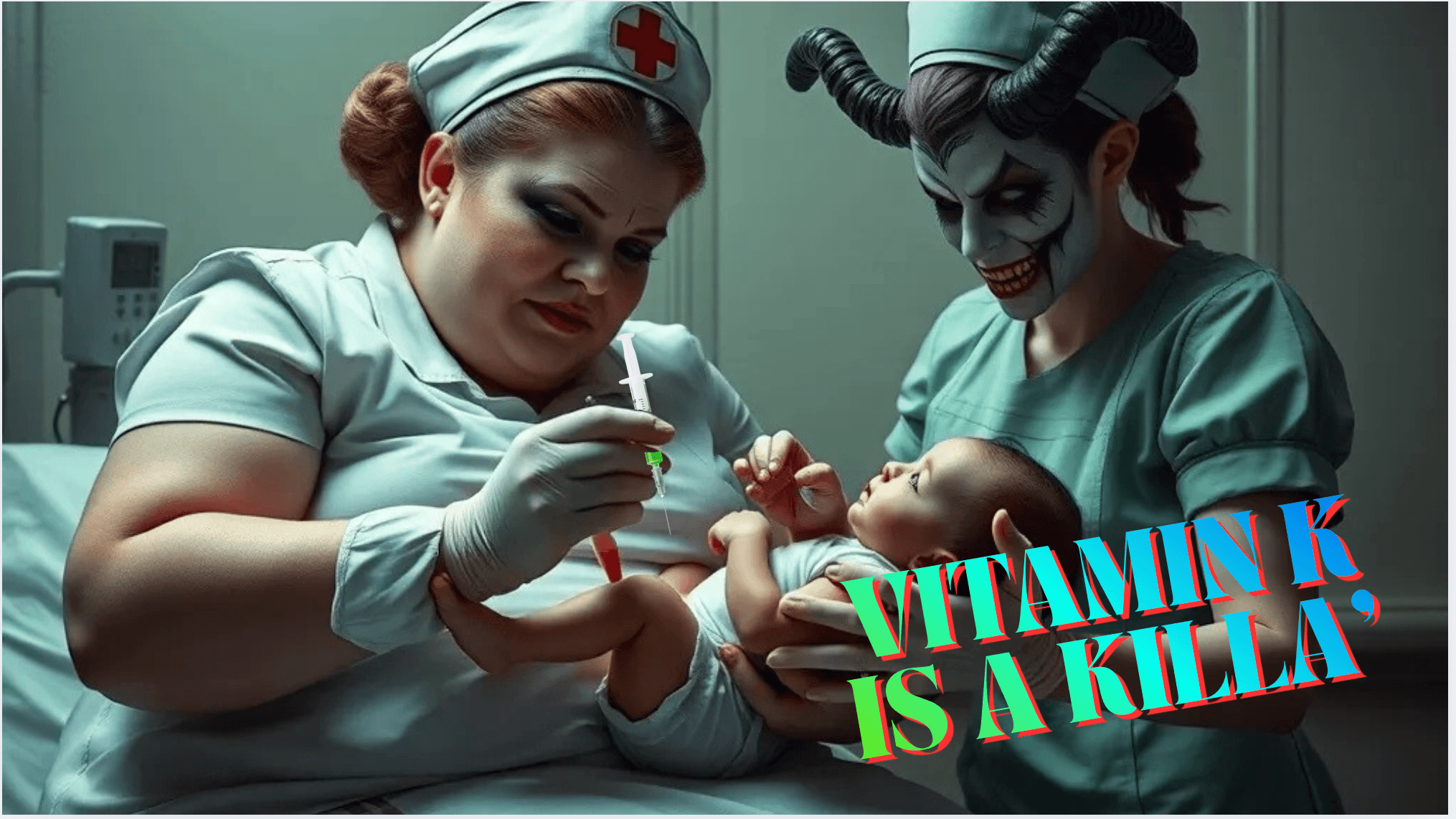
The whole experience was a revolving door of painful interventions. Things only got worse at the hospital. The nurses insisted on taking a blood sample from a vein in his tiny arm. One nurse, a demon in scrubs, held my newborn down while the other rotund clown tried to insert a large needle. I begged them to let me nurse him while they drew blood, knowing it would calm and comfort him, but they refused, saying, “He could choke.” These baboons actually put a catheter in him to get a f-ing urine sample.
I had to watch as my helpless baby, whom I was made to protect, was held down and poked, his cries filling the room. The trauma and stress were too much for his little body; he passed out right in front of me.
Amid the chaos, confusion, and sheer incompetence, something deep inside me finally snapped. Watching my newborn son suffer at the hands of evil scrubbed wearing clowns, cold, clinical, and gleefully indifferent to his pain, was more than I could bear. As another nurse prepared to stick him yet again, I couldn’t take it anymore. I scooped him up, my voice shaking with fury, and yelled at the nurses to keep their incompetent claws off my baby. The shock on their faces as I stormed out told me everything. No one refuses the orders of the demons in scrubs or white coats.
His father was waiting in the car, too “anxious” to come inside, and he got an earful from me as soon as I climbed in. Through tears and anger, I told him, “We are never taking our son back to those monsters.” And the tragic part? I still believed in the medical system at that point. I still trusted that doctors and nurses were there to help and heal. But after what I’d just witnessed, that faith was starting to splinter, not yet shattered. I was starting to wake up.
At home, in our beautiful new custom-built house, I ran straight to my baby’s room, sunlight coming in through the picture windows. I stripped off his tiny clothes, lay him skin-to-skin against my chest, and cradled him. Right then, I made a promise: I would protect him from harm, no matter where it came from. I was done. Done with talk of liver failure, bilirubin counts, tests, and interventions. Done with hospitals. Done with the medical staff. Done with all of it. Running on two hours of sleep a night, still recovering from surgery, from a horrible, traumatic birth, and saddled with a baby daddy who was just another idiot child in the mix, I had nothing left to give anyone but my son.
Something wild woke up, something primal and ferocious. The kind of energy that makes any animal with babies extremely dangerous. I closed my eyes and pictured myself with a glass straw, sucking the poison straight out of my son, over and over. I imagined dragging the dead blood and toxic bile out of his tiny body and spitting it out like venom. There was no hesitation, no second-guessing, no room for fear or doubt. This wasn’t some gentle mother’s intuition; this was a force of nature ripping through me. I wasn’t asking permission. I wasn’t waiting with a beggar’s hope for better lab results. I was taking back what they never should have touched.
By the next day, his bilirubin levels had almost completely normalized. I returned the bili bed and never used it again.
Did my raw innate power, love, and refusal to play their game make the difference? I KNOW it did. This experience changed me, I KNOW how powerful we are because I felt it. It made me question everything, especially the routine vitamin K shot at birth. I still don’t believe the story that my blood attacked my son. More on that psyop some other day. The more I dug into the history of vitamin K, the stranger and more disturbing the story became.
And so, we come to the real question: Why did the chicken cross the road? Maybe it was trying to get away from the researcher feeding it poisoned food to prove the “need” for vitamin K2, a story that’s far stranger than fiction. And way dumber.
The History and Origin of Vitamin K: What the Textbooks Don’t Tell You
1929–1935: The Chickens, the Chemicals, and the “Koagulationsvitamin”
Vitamin K’s official origin story begins in 1929, when Danish biochemist Carl Peter Henrik Dam set out to study cholesterol. He fed baby chicks a diet stripped of all natural fats and sterols. Yep, just an ordinary deprivation experiment where they pull a classic: poison the subject the stop the poison then claim a cure; the chicks’ food was chemically mutilated with industrial solvents like ether and chloroform, both toxic to the liver and poorly removed by the methods of that era. The result? The chicks developed catastrophic bleeding disorders: spontaneous hemorrhages and blood that refused to clot. And like ALL of the other vitamin origin stories, they don’t blame it on what poison they used on the test subjects; they deceptively lie outright and say it was due to a lack of something. Because, you know, that sells garbage way better.
The doctor tried to “fix” the problem by adding back pure cholesterol, but the bleeding continued. He concluded that a previously unknown, fat-soluble nutrient was missing. He named it “Vitamin K,” after the German “Koagulationsvitamin.”
In 1931, Canadian researchers (McFarlane et al.) observed that chicks only developed these bleeding disorders when fed ether-”extracted”, solvent-treated meals, not when fed normal food. OBVIOUSLY! In short, the problem was never a mysterious deficiency, but a toxic, artificial diet. Obviously, the researchers knew that. You don’t take poison, feed it to animals, and think they are missing a vital nutrient. You are experimenting with the chicks to find a way to poison a mass population with a type of chemical and then sell them the solution. Just like all the other vitamins.
What were these chicks really eating?
Casein (milk protein) and fish meal, aggressively solvent-washed (ether, chloroform, and ethanol)
Starch and mineral salts
Marmite or yeast extract, they could now say, was for basic “B vitamins”.
Shredded paper for bulk, yes, literal paper (they feed all commercially fed animals waste from the dumps, bleached, dried, and ground up-cereal boxes, dog poop, plastic wrapping, garden variety household garbage)
This “diet” caused oxidative stress, gut damage, and liver toxicity in these rapidly growing chicks.
1936–1939: The Birth of K1 and K2
While Dam struggled to pretend to "isolate" this new vitamin, American biochemist Edward Doisy at Saint Louis University moved quickly. By 1939, Doisy’s team concluded that “Vitamin K” wasn’t a single molecule but a family:
K1 (phylloquinone) from plants like alfalfa
K2 (menaquinone) from animal sources, specifically, rotting fish meal
They mapped the chemical structures, and in 1943, Dam and Doisy shared the Nobel Prize. K2, with its unique side chain, would eventually become the darling of supplement marketers. The Nobel Prize in chemistry is nothing more than a good ol’ boys chemical giants club of who was the best puppet that lined their pockets. That’s all.
The Weston A. Price Paradox: It’s What They Didn’t Eat
Weston A. Price is often cited by supplement marketers as having “discovered” vitamin K2’s importance while studying traditional diets in the 1930s. But Price’s real findings challenge the modern supplement narrative. Price was a major player with the chemical industry and vitamin/supplement makers as he promoted the very story they were trying to solidify in the masses.
Price observed that the healthiest populations consumed fresh, whole foods, grass-fed butter, organ meats, shellfish, and unprocessed dairy. He detected a mysterious “Activator X” in these diets, later speculated to be vitamin K2. But crucially, Price never isolated this “activator” in a lab. He focused on patterns, especially what people didn’t eat.
His lack of insight led us to conclude that we needed to eat a specific diet. But reading between the lines, we can see:
The healthiest people weren’t eating processed foods, synthetic fats, refined sugars, or anything from a box or bottle. Their foods were untouched by industry. The missing “ingredient” wasn’t a nutrient like raw milk or fresh liver; it was the absence of modern, artificial food toxins. But you can’t sell vitamins and supplements if people knew the truth, so on to the isolated-molecule myth.
Contrast this with Dam’s lab: While Price observed health in settings without poison, Dam’s chicks were poisoned by synthetic, solvent-laced rations, diets that would never occur in nature.
Decades of research have failed to isolate “Activator X” as a single molecule, because real health is about the synergy of whole foods and the absence of toxins, not the absence of something made in a lab. Sorry, W.A.P. cult members, your leader was just another cog in the massive chemical gang.
1970s–Present: Blood to Bones
For decades, doctors treated K1 and K2 as interchangeable, just blood-clotting factors, nothing more. But by the late 1970s, new research began to suggest that K2 activates special proteins that bind calcium in bones and keep it out of arteries. Suddenly, K2 was rebranded as a “miracle vitamin” for bone strength and heart health. Overnight, the supplement industry found its golden ticket: a reason to push widespread, even mandatory, vitamin K use.
But here’s what nobody is asking: where does all that calcium actually come from, and what are the consequences of shuffling it around? The story goes like this: Take vitamin D (D2 or D3) and your body will absorb more calcium, yanking it from your bones and into your bloodstream. Then, add K2, and, so the marketing goes, it’ll put the calcium right back into your bones, solving everything. Sounds like a highly profitable and redundant looping system, right? Biology doesn’t work like that, but admitting as much would topple the carefully constructed house of cards the industry depends on.
The Bone Glue Illusion: Junk Science Behind the Vitamin K2 “Calcium Cement” Myth
The supplement industry loves to claim that Vitamin K2 is the miracle “cement” that locks calcium into your bones, supposedly preventing osteoporosis and fractures with the simplicity of taking a pill. This story is a marketing fantasy, one that has made billions for chemical giants and supplement brands, but collapses under real scientific scrutiny.
How Bones Actually Work
Bones are not dead slabs or hollow tubes waiting for a “traffic cop” to deposit minerals. They are living, dynamic tissue. Osteoblasts build bone by creating a protein matrix (mostly collagen), which is then mineralized with calcium and phosphorus. Osteoclasts constantly break down old bone. Hormones, mechanical stress, diet, and age all affect this balance.
You cannot “glue” calcium into bone by flooding your body with calcium, coral, oyster shells, or a single vitamin. Without the cellular machinery, hormones, and a functioning system, extra calcium either passes through you or winds up in places you don’t want it, like your kidneys or arteries making them hard and brittle.
The industry claims that Vitamin K2 “activates” osteocalcin, allowing the body to bind calcium to bone. This is biochemically true in a narrow sense, K2 is needed for carboxylation of osteocalcin, but the leap from biochemistry to supplement miracle is where the fraud begins.
The Sato & Iwamoto Scandal: Fabricated Science
Much of the supposed “proof” for K2’s bone-saving power, especially the dramatic claims that it reduces fractures by 70% or more, comes from research by Dr. Yoshihiro Sato and Dr. Jun Iwamoto in Japan. Their studies were cited worldwide and used to justify guidelines and global marketing.
But it was all a lie. International investigations revealed Sato fabricated data, invented patients, and forged authorships. Over 90 of his scientific papers, many on K2 and bone health, have been retracted for fraud. When independent researchers removed Sato’s fake data from meta-analyses, the evidence for K2’s “miracle” fracture reduction vanished.
The Real Clinical Picture
Bone Density ≠ Bone Strength: Even in legitimate studies, K2 supplementation at best slightly slows loss of bone mineral density in some groups. But denser bones are not necessarily stronger bones, fracture rates do not significantly decrease in high-quality, independent trials. That is the important marker. If fractures are not decreased then the justification is false.
No Fracture Reduction: The most respected reviews and organizations, including the Cochrane Collaboration, find no compelling evidence to recommend K2 to prevent fractures in the population.
The “Calcium Paradox” Lie: The pitch that K2 supplements “scrape” calcium out of arteries and “shove” it into bones is pure fantasy. Vascular calcification is irreversible with a supplement. Once calcium is deposited in arteries, it cannot be removed by a vitamin K or any other pill for that matter.
Supplement Quality and Industry Manipulation
Supplement Fails: Up to two-thirds of K2 supplements on the market don’t meet label potency or purity claims.
Industry Echo Chamber: Much of the positive press and “studies” is funded or ghostwritten by the very companies that own the K2 patents and supply chains.
Bottom Line
The real machinery of bone health is cellular, hormonal, and mechanical, not a magic vitamin. The myth that K2 “cements” calcium into bone is a sales tactic, not science. Billions have been made on the back of a story that dissolves under even basic biological scrutiny.
You can eat all the oyster shells on the beach, swallow all the K2 pills you want, and your bones won’t magically become stronger.
The K2 Narrative Marches On
Today, almost every newborn in the United States, Canada, and much of the world receives an intramuscular K1, or K2 shot at birth, regardless of diet or so-called “risk” factors. The justification? Preventing catastrophic bleeding, and now, supposedly, promoting lifelong bone and cardiovascular health. But the entire foundation of this practice was built on experiments with chemically damaged chicks-lab-created crises, fraud and definitely not not real human dietary emergencies. The “need” for routine vitamin K injections didn’t arise from a natural deficiency; it was manufactured in the lab, revealing more about the dangers of medical intervention than about any genuine human nutritional requirement.
So, when you’re told to take K2 with D3 for your bones, ask yourself: who really benefits from this story of blood, bones, and borrowed calcium?
The Modern Dilemma: Is the Science Settled?
Despite decades of new research into the different forms of vitamin K, the medical establishment still frames the newborn shot as non-negotiable. But when you look at the history, even their story is far murkier and far more manipulated than we have been told.
The story of vitamin K2 could have stopped at the lab bench, with its questionable origins and unresolved fraudulent controversies. But why stop there when there is money to be made off the backs of making babies sick? So, instead, the narrative was swept into the machinery of medical institutions and public policy, setting the stage for a worldwide mandate that few dare even question the sacred cow of vitamins.
Institutionalizing a Laboratory Accident
Once vitamin K’s role in blood clotting was accepted, its administration to newborns quickly shifted from rare intervention to routine protocol, without critical evaluation of the original science. The tragic bleeding disorders seen in a handful of infants (many premature, sick, or with underlying medical conditions CAUSED by routine ultrasound, prenatal vitamins, prenatal diet, and all-around chemical exposure in the womb) were extrapolated to all newborns.
The rare cases of “Vitamin K Deficiency Bleeding” (VKDB) were used to justify blanket newborn injections, even though most babies, especially those breastfed and born to healthy mothers, are at extremely low risk.
The medical establishment began treating all infants as if they were Dam’s chemically-starved chicks, ignoring the fact that the baseline for “normal” was set by a toxic lab diet, not by nature.
Vitamin K Deficiency Bleeding: Does the Science Hold Up?
On the surface, Vitamin K Deficiency Bleeding (VKDB) looks like a serious threat, enough to justify routine injections for every newborn, or so we’re told. But look past the fear-mongering, and the story falls apart. The entire narrative is built on marketing, not actual medicine. There is no such thing as “vitamin K2” (or any “K’s”) as a deficiency you can measure in a living baby. Why? Because there is not such thing as Vitamin K anything. What actually matters are clotting factors, which can be tested directly with a simple PT/INR tool that every hospital already has for monitoring blood clotting. If doctors truly believed newborns were at risk, wouldn’t they test before injecting a dangerous, fat-soluble chemical? If they actually cared about evidence, every at-risk baby would get a clotting test before being jabbed in the leg. But unlike the Vitamin D3 “deficiency” scam—where they invented a blood marker just so they could test and diagnose everyone as deficient—this vitamin K narrative is built on never testing, only treating. Take the D3 for your manufactured deficiency, but don’t even bother checking your newborn’s clotting factor before injecting another drug, conveniently paired with the rat poison? It only makes sense if the real goal is selling stories, not saving lives.
As we’ve seen with every other lab-made chemical they call a vitamin or supplement, the endgame is always the same: national policy and standard operating procedure, so their brand of poison becomes universal. Imagine the jackpot—mandating every newborn gets your drug, and making sure nearly every birth happens in a hospital “for safety,” just to capture the market. Home birth? Suddenly painted as reckless and dangerous, so more babies are funneled into the medical system, and more shots are guaranteed.
This is how the drug narrative is born. Wrap it all in the language of “lifesaving vitamins,” and you silence dissent before it starts. No one questions the shot; everyone questions the parent who does. Why? Because the test would expose the truth: the vast majority of healthy, full-term babies are not in danger. No one needs to be “saved” with a painful, unnecessary shot as their first welcome to the world. The whole system is built to manufacture deficiency, not diagnose it.
So what’s really causing the so-called rash of infant bleeding disorders? It’s not random misfortune or nature’s mistake. The real culprits are environmental exposures, medical interventions, and modern diets—factors no one wants to talk about. And when things do go wrong, vitamin K isn’t even the only—or the best—option for emergency clotting. There are other proven, immediate-acting drugs for true emergencies, but those don’t come with the same marketing push.
And don’t get me started on the narrative that vitamin K2, especially when paired with “rat poison” D3, is some kind of miracle combo. It’s not reversing the effects of an initial toxin. It’s not magically cementing calcium into your bones. In reality, it does nothing beneficial, and in many cases, it does real harm. My own son’s experience proves it: a shoulder fracture from a minor fall, just weeks after being dosed with D3/K2. A Russian Roulette cocktail of hormones and fat-soluble blood-clotting factors in one convenient-to-swallow pharmaceutical.
Stay tuned for Part 2, where we blow up the ongoing science and justification for giving newborns this dangerous fat-soluble drug that builds up in the system and creates more cascade effects in a newborn baby. And you thought it was just the vaccines making our babies sick and the reason we have SIDS as a diagnosis.