

Why?
Let me begin with a personal story that deeply shaped my perspective on the dangers of synthetic vitamin C, especially when administered intravenously (IV). This experience revealed how easily well-intentioned health advice, trust in gurus, and a lack of critical scrutiny can combine to produce life-threatening consequences.
A very good friend of mine was visiting from out of town. During her stay, her daughter, who was living in a basement apartment while attending college, called to complain about feeling unwell. She described headaches, extreme fatigue, and an inability to get out of bed. We offered her natural remedies, but my friend insisted on a vitamin C infusion. Despite my reservations—reservations my friend rarely heeds, preferring advice from popular health personalities, she arranged for her daughter to receive the IV treatment.
After the first infusion, her daughter reported feeling slightly better and more energized, but her symptoms persisted: dizziness, inability to eat, and vomiting. Rather than considering alternative causes or remedies, my friend concluded that more vitamin C was needed. Over the next two days, her daughter received two additional infusions.
On the third day, her ex-husband called with devastating news: their daughter was nearly unresponsive, had been rushed to the emergency room, and was now in the ICU, comatose, diagnosed with a massive brain infection. The medical team performed emergency brain surgery that night to try and remove the infection, and, for days, her prognosis was grim. Surgeons warned the family that, even if she survived, she might suffer permanent neurological deficits. When my friend’s neurosurgeon called her at 03:30 am, I expected the worst.
Thankfully, my friend’s daughter made a remarkable recovery, though she bears a visible incision on her frontal lobe. I cannot claim with certainty that the vitamin C infusions alone caused the infection; she had been feeling ill beforehand, lived in a damp basement, attended college parties, drank alcohol, occasionally ate foods she was allergic to, had asthma, for which she took medications and inhalers. As is often the case, there was no single cause. Instead, it was an accumulation of stressors and toxins, and the vitamin C infusion may very well have been the proverbial straw that broke the camel’s back.
The point is not to pin every consequence on a single chemical but to highlight how injecting a pharmaceutical directly into the bloodstream bypasses the body’s natural defenses and forces it to deal with a massive, unnatural onslaught. We have granted a free pass to pharmaceuticals simply because they wear the label of “vitamin” or “supplement.” The public repeats the mantra that vitamin C is a cure-all, citing scurvy as proof, without questioning the quality of evidence or the origins of these claims.
This exposé aims to challenge these assumptions, examine the true risks behind synthetic vitamin C, especially ascorbic acid infusions, and expose the broader dangers of uncritical faith in chemical interventions masquerading as health solutions.
Vitamin C’s reputation as an essential nutrient is rooted in one of the most famous stories in medical history: the battle against scurvy among sailors during the Age of Exploration. Everyone who is anyone points out how important vitamin C is, “Because you don’t want to get ‘scurvy’ now, do you?” The textbook narrative tells us that scurvy, marked by bleeding gums, weakness, and ultimately death, ravaged sailors on long voyages until doctors discovered that citrus fruits could prevent and cure the disease. This led to the widespread belief that “vitamin C cures scurvy,” and, by extension, that more vitamin C must always be better.
But a closer look at the history and the original studies reveals a far more nuanced and problematic story.
Debunking the Scurvy and Vitamin C Myth
The story we’ve all been told is simple: sailors got scurvy, doctors discovered vitamin C in citrus, and the world was saved by science. But the historical reality is much messier, and far less convenient for the supplement industry.
First, it wasn’t just citrus that helped sailors recover. Accounts from naval expeditions show that when sailors were taken off ships and given real food, rice, bananas, fresh vegetables, and even clean water and sunlight (imagine that!), their health improved just as dramatically as when given lemons or limes. You didn’t need a “miracle” compound; you needed to remove the toxic, moldy rations and unsanitary conditions that made them sick in the first place. To say “vitamin C” alone was the cure is not only reductionist, it’s scientifically dishonest.
Who benefited from saying otherwise? The answer is clear: pharmaceutical companies. Early “scurvy studies,” funded and promoted by those with a stake in chemical manufacturing, ran with the idea that a single isolated molecule could be extracted, bottled, and sold as a cure. Major corporations like Roche and, later, GlaxoSmithKline (GSK) saw the commercial potential and began mass-producing synthetic ascorbic acid, marketing it as “vitamin C” and using the same industrial processes and profit models as any other pharmaceutical product.
But the isolation itself is a myth. You can’t take a lemon, break it down in a lab, and say you’ve “discovered” the compound that makes the fruit healthy. Nature doesn’t work that way. There are hundreds of thousands of compounds, enzymes, and co-factors in a single fruit, synergistically working together in ways for profit co-opted corrupt science will never understand. Saying a lime has “more vitamin C” than a lemon is as absurd as saying a pill is the equivalent of an orange. You can’t isolate something in nature and call it a cure or anything else for that matter except for a bowl of chemical soup. Just the same as I can’t trim your fingernails, burn them, react the ashes with acids and tell you anything whatsoever about a human being.
The real solution for those sailors was simple: remove them from the toxic shipboard environment and feed them real, fresh food. Health returned not because of a synthetic vitamin, but because the body was finally given what it needed to heal and repair. The “vitamin C theory” is a convenient story used to sell isolated chemicals as lifesaving essentials, when, in truth, healthy conditions and real food are what cure disease.
The supplement industry’s willingness to bend the truth is not just historical. Take the 2007 Ribena scandal: two New Zealand schoolgirls tested the vitamin C content in popular fruit drinks. Despite GlaxoSmithKline’s bold marketing claims that their Ribena syrup had “four times the vitamin C of oranges,” the students found almost no vitamin C at all. When confronted, the corporation tried to dismiss them. Only after a government investigation did GSK plead guilty to false advertising, get fined, and reformulate their product.
On the surface, it’s easy to see this as just another case of corporate science and marketing prioritizing profit over truth. But look closer, the real takeaway wasn’t about consumer protection or scientific integrity. Instead, the public walked away with the reinforced belief that “vitamin C” is real, essential, and good for you, exactly the narrative the industry wanted to cement. The scandal didn’t debunk the myth; it helped entrench it even deeper.
In the end, the pharmaceutical model for vitamins is no different than that for drugs: create a market by isolating a chemical, build a story around it, and sell it as essential for survival. Even better if you can find a lab marker to “prove positive” your chemcial soup works. But real health can’t be bottled, branded, or synthesized in a lab. You don’t need a miracle pill, you need clean air, real food, and freedom from the toxic conditions that make you sick in the first place. But there is no profit in subtraction, only addition.
Today, ascorbic acid is manufactured on an industrial scale, often from genetically modified corn syrup and hydrochloric acid, and promoted as a miracle vitamin. This ignores the lessons of history and the reality that synthetic, isolated chemicals do not behave in the body as whole-food nutrients do. The myth of vitamin C and scurvy is not just an outdated story—it’s a foundational error that continues to shape dangerous health practices.
The Ascorbic Acid Empire
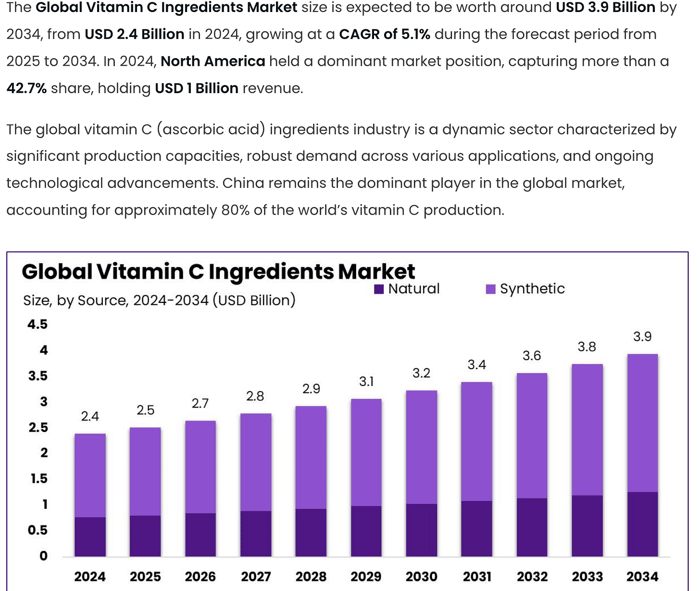
The story of ascorbic acid is not just about health claims; it’s also about money, power, and influence. Today, the global ascorbic acid (vitamin C) market is valued at over $2.2 billion and is projected to exceed $3 billion by 2034. Behind the scenes, this industry is tightly woven into the fabric of the pharmaceutical, food, and wellness sectors, with major corporations and powerful lobbyists shaping how ascorbic acid is marketed, legislated, and perceived by the public.
Industry Growth and Market Dynamics
The market is experiencing a steady CAGR of 4.3% to 5.2%, fueled by trends in preventive healthcare, immunity-boosting, and demand in cosmetics and food preservation.
The Asia-Pacific region, particularly China, is the undisputed production hub, accounting for about 85% of all global ascorbic acid manufacturing. This near-monopoly gives China outsized control over pricing, supply, and global distribution, and creates volatility when regional events disrupt production.
Powder and granule forms dominate the market (over 73% share), thanks to their low cost and ease of use across multiple industries.
Major Industry Segments and Players
The food and beverage industry is the largest consumer of ascorbic acid, using it in roughly 66% of products for its preservative and mythical antioxidant properties.
The pharmaceutical and nutraceutical markets are the fastest-growing, with companies innovating in “clean-label” products, liposomal formulations, and buffered ascorbates to target ignorant “health-conscious” consumers.
Key producers include major chemical and pharmaceutical conglomerates (same-same) such as DSM (Royal DSM N.V.), BASF, CSPC Pharmaceutical Group, Northeast Pharmaceutical Group, Shandong Luwei Pharmaceutical, and North China Pharmaceutical Co. These corporations have the resources to dominate supply chains and influence downstream product development.
I hate to be a broken record, but how is anyone still confused about the pharmaceuticals involvement and creation with these vitamins.
Financial Incentives and Market Manipulation
Ascorbic acid’s extremely low production cost and high markup make it a lucrative commodity. Large manufacturers benefit from scale, while smaller players are squeezed by margin pressures and price volatility. The market’s dependence on corn-derived glucose also ties it to global agricultural cycles and biofuel policies, further affecting pricing and supply.
Trade tensions, especially between North America and Asia, have prompted companies to diversify their sourcing, blend onshore and offshore operations, and lobby for favorable import/export policies.
Corporate Influence and Policy Lobbying
The ascorbic acid industry invests heavily in lobbying efforts to ensure regulatory environments remain favorable. Industry-funded groups often promote the narrative that high-dose vitamin C is essential for immunity and general health, influencing not only consumer behavior but also public policy and official dietary recommendations. They even got into the Convid-19 game and made significant profits during the plannedemic.
Pharmaceutical giants often work through front organizations and trade associations to shape supplement regulations, food fortification guidelines, and even reimbursement policies for intravenous vitamin C treatments.
Public policy is further influenced by corporate-sponsored research, marketing campaigns, and the revolving door between industry and regulatory agencies.
From Industrial Chemistry to Your Veins
While the public imagines vitamin C as the essence of oranges and lemons, the truth about synthetic ascorbic acid is far removed from anything found in nature. The journey from raw industrial materials to the “vitamin” in your supplement bottle, or IV bag, reveals a process that is not only highly chemical but also dependent on large-scale industrial agriculture and intensive processing. Meaning, you or I can never “make” vitamin C. They push the small players out with industry practices that make it impossible to compete. Not that we would want to. Unless of course you are a grifter and love to sell this story for yourself.
Industrial Origins: Corn Syrup and Chemical Synthesis
The vast majority of synthetic ascorbic acid is produced using corn-derived glucose, sourced predominantly from the cheapest, most abundant supply: industrial corn grown in the United States and China. This corn is not only genetically engineered for high yield and pest resistance, but is also specifically bred to survive repeated applications of glyphosate, the infamous herbicide best known by its commercial name, Roundup.
Glyphosate: From Field to Supplement Bottle
While you cannot truly “genetically modify” corn in the sense of rewriting its entire genome, modern industrial corn is the product of both selective breeding and direct manipulation. These methods create varieties that can withstand the application of massive amounts of glyphosate and other agricultural chemicals. In fact, farmers routinely spray cornfields with glyphosate just weeks before harvest to desiccate (dry out) the crop, making it easier to process, ship, and store. This practice leaves significant residues on the harvested corn.
Glyphosate itself was originally patented not just as a weed killer but also as a broad-spectrum antibiotic and an industrial descaler. When glyphosate-laced corn is processed into glucose, and then further synthesized into ascorbic acid, trace amounts of this chemical can, and do end up in the final product. Some laboratory analyses have detected measurable glyphosate residues in finished vitamin C supplements.
Antibiotic Effects in Your Gut
This is more than just a theoretical concern. Glyphosate, as an antibiotic, disrupts the delicate balance of microbial life in the human gut. By consuming vitamin C (ascorbic acid) made from glyphosate-contaminated corn, consumers may unknowingly introduce a stealth antibiotic into their system, one that can damage their microbiome, suppress beneficial bacteria, and contribute to gut dysbiosis. This phenomenon is rarely acknowledged by supplement manufacturers, but it is a real and growing concern among independent researchers.
Concentration Through Processing
Industrial processing does not necessarily eliminate glyphosate; in fact, it can concentrate residues. Since ascorbic acid is isolated and purified from an enormous volume of corn input, any persistent chemicals can become even more concentrated in the final powder or granule. This means that each dose of synthetic ascorbic acid may deliver glyphosate along with the vitamin, compounding the risk for individuals who take these supplements regularly or at high doses.
The process begins with the fermentation of glucose by specific bacteria to produce sorbitol, which is then chemically converted using a series of oxidation and reduction steps. Key reagents and catalysts include hydrogen, nickel, acetone, and most importantly, hydrochloric acid. Ahhh, just like biting into a juicy ripe orange.
The resulting ascorbic acid is then crystallized, filtered, and dried into a powder or granule.
Quality Control and Byproducts
Each step in the industrial production of ascorbic acid is an opportunity for contamination, from obsessively dreaded heavy metals like nickel and lead to residual solvents and other toxic chemical byproducts. While manufacturers are quick to assure consumers that their vitamin C meets rigorous safety standards, the uncomfortable truth is that the vast majority of quality control is self-policed by the very companies profiting from mass production. In practice, this means that companies set their own testing protocols, report their own results, and face minimal oversight from independent or governmental bodies, especially when sourcing from China, which dominates over 85% of global ascorbic acid manufacturing.
China’s regulatory environment for supplements and pharmaceutical ingredient manufacturing is notoriously opaque and far less stringent than Western standards. Environmental and food safety regulations are often poorly enforced, and factories routinely operate with little fear of inspection or meaningful penalty. There have been repeated scandals, ranging from melamine-tainted infant formula to toxic pharmaceutical ingredients, demonstrating the very real dangers of lax oversight. As a result, batches of ascorbic acid have been found to be contaminated with dangerous impurities or even mislabeled, with recalls occurring only after the fact, if at all.
Marketing vs. Manufacturing
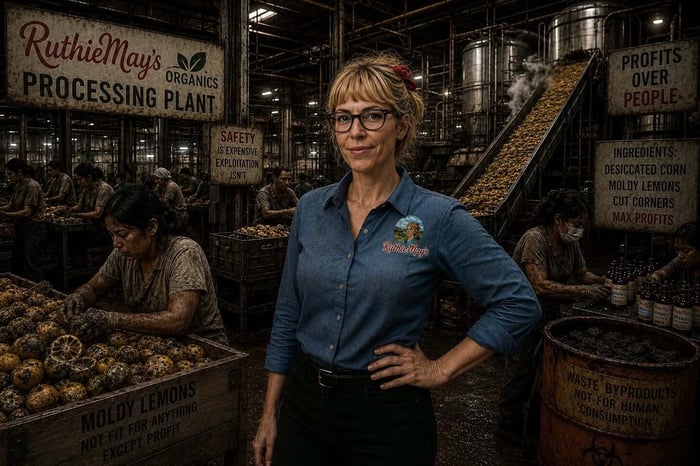
Supplement companies market ascorbic acid with images of citrus fruit and language evoking nature and health. The reality: what ends up in a “vitamin C” supplement is a highly processed, isolated molecule, stripped of the food matrix and the true essence of sunlight, moonlight, birds, butterflies, bees, insects, wind and rain making up the fruit. Does anyone still think they can make that in a lab with chemicals known to cause cancer?
When this chemical is injected directly into the bloodstream, as in IV infusions, the body receives an unnatural, concentrated dose it must process and detoxify, bypassing the digestive and metabolic checks that oral intake naturally provides.
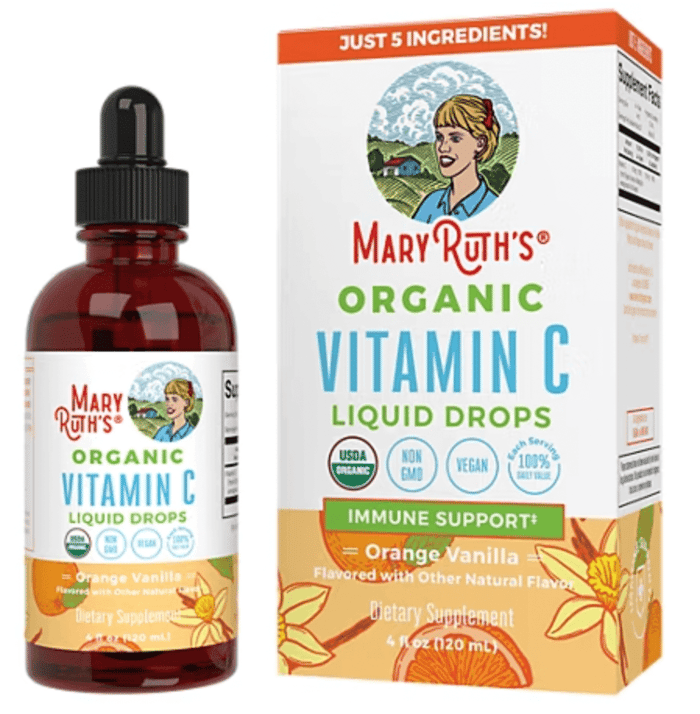
A perfect example of how the realities of supplement manufacturing clash with consumer perceptions is MaryRuth’s Organics, a brand many, including myself, once trusted implicitly. It’s easy to picture a kindly senior citizen handcrafting small batches of vitamin-rich elixirs, extracting magical essences from oranges and lemons in her own kitchen. In reality, MaryRuth’s has become embroiled in controversies that reveal just how far the truth can be from the image. The company has faced a voluntary recall of its infant probiotic due to dangerous contamination. Meanwhile, their products, including vitamin C, are produced at scale using the same globalized supply chains as bargain brands like Sundown at Walmart, often relying on industrial ascorbic acid no different from the competition’s.
Despite its “clean” and “organic” marketing, MaryRuth’s, like most supplement companies, does not have its products pre-approved or regularly tested by the FDA. The brand touts third-party certifications such as the Clean Label Project to reassure consumers who are starting to ask questions. Yet even these measures cannot cover up the truth: California’s Prop 65 warnings for cancer-causing substances appear right on the bottles, there are ongoing investigations into questionable subscription billing, and so-called “independent testing” is limited in scope and easily manipulated. This is not an isolated story. MaryRuth’s is simply a high-profile example of how even the most trusted “natural” labels may be selling the same mass-produced, potentially contaminated ascorbic acid you’ll find in any generic store brand.
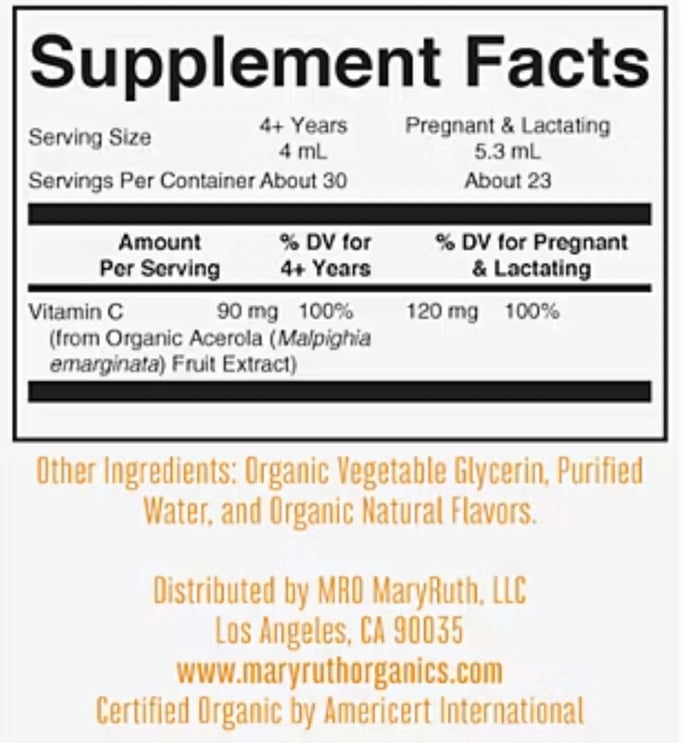
And do not be fooled by the fruit extract bait-and-switch. The idea that a touch of “organic acerola fruit extract” or “natural vitamin C” is somehow different or safer is pure illusion. Here’s the checkmate: extracting vitamin C from acerola or any fruit is still a chemical process. It reduces a living food to a single, isolated molecule. On paper, it sounds wholesome, but in reality, you are left with the same lifeless, industrial product, stripped of the complexity and vitality that real food delivers. When you add chemical flavors and sweeteners to make it appealing to children, you end up with a supplement as far removed from nature as anything else in the supplement aisle. The comforting imagery and carefully crafted founder’s story are nothing more than marketing. Behind the scenes, it is industrial shortcuts, regulatory loopholes, and profit-driven self-policing that define the journey from cornfield or factory to your supplement shelf.
Black Mold, Genetic Patents, and the Profit Motive
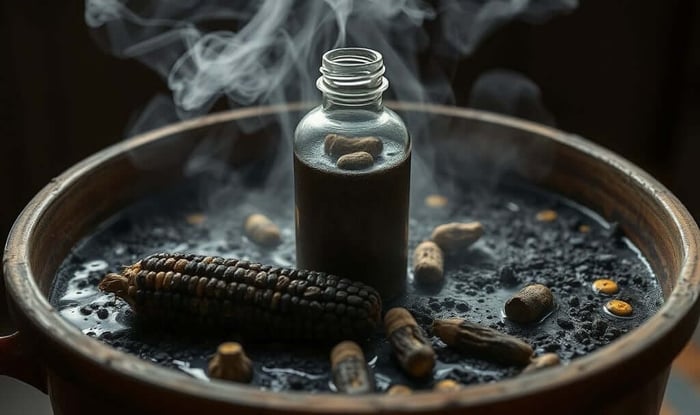
The industrial process of manufacturing ascorbic acid (vitamin C) is not a marvel of chemistry; it is a story of biological exploitation, genetic patenting, and ruthless market control. Most people are shocked to learn that the true powerhouse behind global ascorbic acid production is not a citrus fruit, but a fungus: Aspergillus niger, commonly known as black mold.
The process begins not with oranges, but with vats of genetically manipulated Aspergillus niger. This mold is prized for its ability to efficiently convert corn-derived glucose into intermediate compounds such as sorbitol and, through fermentation and subsequent chemical steps, into ascorbic acid. The use of black mold is not only incredibly efficient, but also staggeringly profitable. Once established, these cultures can churn out massive quantities of product with minimal ongoing input. The organisms are optimized in industrial fermenters under tightly controlled conditions, ensuring high yields and consistent output.
Here’s where the story turns from science to corporate strategy. Major producers claim to develop new strains of Aspergillus niger using cutting-edge gene-editing technologies like CRISPR, boasting supposedly revolutionary advances in productivity or resistance to contamination. In reality, CRISPR technology is far from the flawless tool it’s often portrayed to be, and its use in industrial fermentation is really about marketing and legal leverage. For many corporations, the real game is not in creating fundamentally new strains, something as implausible as inventing a new species, but in tweaking existing wild molds through selective breeding and environmental manipulation.
The Corporate Chemical Playbook
The ultimate goal is to patent these “new” strains, even if they are identical to the wild types. The cost and complexity of filing and defending these patents are themselves barriers to competition, allowing big companies to aggressively litigate against anyone else using similar molds, even if the molds originate in nature itself. The result is a system in which the illusion of high-tech genetic engineering is used to squeeze out competitors and secure monopoly profits, rather than deliver real advances in science or safety. This is literally the definition of the fox guarding the hen house.
This legal leverage effectively allows a handful of companies to dominate the global market, shut out smaller challengers, and control the flow of ascorbic acid worldwide. The irony is that while the companies claim their strains are proprietary breakthroughs, they are fundamentally just variations of a wild mold, tweaked in the lab for profit. Meanwhile, anyone who tries to use an unlicensed strain found in the wild can be accused of infringing on these patents. Tricky little psychopaths aren’t they?
Killing the Competition—Literally. This aggressive approach not only stifles innovation and diversity in production but also creates a monopoly. By continually patenting new strains and pursuing legal action against would-be competitors, the industry ensures that the profits from industrial vitamin C remain in the hands of a select few. The same tactics used by pharmaceutical giants to control drug formulas are the exact same deployed in the vitamin and supplement industry. Of course why would the pHARMaceutical industry change horses midstream? They wouldn’t and they use the same marketing and tactics for THEIR vitamins as they do with their drugs.
Once synthetic ascorbic acid enters the body, especially through intravenous (IV) infusions, it behaves very differently from an orange digested and absorbed naturally. The biochemical impact of flooding the bloodstream with high doses of an isolated chemical is often misunderstood or oversimplified, and this misunderstanding has fueled the widespread popularity of vitamin C infusions as a “miracle” treatment.
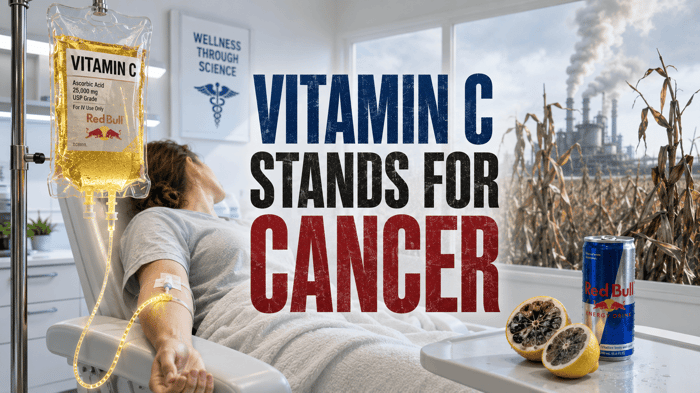
High-dose ascorbic acid, when injected directly into the bloodstream, can act as a short-term stimulant. Many patients report feeling temporarily energized, less fatigued, and even euphoric following an infusion. This initial improvement is not evidence of true healing but rather a biochemical reaction: ascorbic acid, in pharmacological doses, is simply an easily absorbed, readily available sugar mixed with chemical toxins, and a dash of antibiotic. This reaction mobilizes the body’s fight-or-flight resources, much like a shot of adrenaline, which masks underlying issues rather than resolve them. Meaning, if I inject you with Redbull, aka sugar and poison, you feel the hit of glucose, adrenaline and cortisol, not health, rainbows and butterflies.
The Isolation Illusion
There is no such thing as a standalone “vitamin C”; it is a made-up isolation, a lab-created chemical called ascorbic acid, pulled from a lottery of a least half a million other compounds that make up a real fruit. If we can even say that. I mean, if i can’t take all those compounds in a bowl, zap it with electricity and presto chango create an apple, then what are we actually talking about here? Besides smoke and mirrors. Scientists cannot manufacture a lemon or lime in a lab, nor can they identify a single magic ingredient and claim it represents the entirety of the fruit’s health benefits.
Nor does pulverizing dried orange or lemon peels into a powder come close to replicating the benefit of eating real, fresh fruit. Even if a supplement claims to be a “whole food” powder, you’re still left with a lifeless, processed product that lacks the living, synergistic qualities of the original fruit. Nature’s design is complex, alive, and interactive, something no amount of drying, grinding, or bottling will ever approximate or imitate. If you want the real benefits, eat the orange or lemon itself, not a scoop of dried residue sold as health in a pill. And if these corporations police themselves, then who is to say what that powder is anyway.
Taking synthetic ascorbic acid, especially as an infusion, means bypassing all of your body’s natural digestive and metabolic defenses. Instead of absorbing a balanced nutrient from real food, you’re forcing an isolated chemical in massive, unnatural doses directly into your bloodstream. The body is compelled to rapidly process and eliminate the excess, straining the liver, kidneys, and detox systems. Far from supporting health, this chemical shortcut contributes to toxic overload, especially in people with underlying vulnerabilities. The industry has a word for that. They call it cancer.
Repeated, high-dose infusions of synthetic ascorbic acid have been linked to a variety of adverse effects: kidney stones, gastrointestinal distress, and, severe metabolic disturbances. For individuals with certain genetic predispositions or undiagnosed health conditions the risks can be even more pronounced, potentially triggering destruction of red blood cells or other life-threatening complications. Furthermore, ascorbic acid’s action at high concentrations can “paradoxically” increase internal swelling, damage tissues, and overwhelm reserves.
Manufactured Myth to Natural Wisdom
The story of vitamin C is, at its core, a cautionary tale about the dangers and downright delusions of reductionism, corporate profit motives, and misplaced trust in modern health marketing. What’s sold as a miracle compound is, in reality, a lab-manufactured slurry of chemical soup, far removed from the vibrant, complex, and living matrix of nutrients found in real food. We’ve been conditioned to believe that swallowing a pill or receiving an infusion can confer the same benefits as eating an orange, but this is a myth perpetuated by an industry driven by patents, profits, and powerful lobbying, not genuine research or public health.
From the industrial cornfields doused in glyphosate to the fermentation vats fueled by genetically tweaked black mold to the aggressive patenting and legal maneuvering that stifle competition, the journey of mythical Vitamin C or ascorbic acid is a far cry from the natural origins invoked on supplement labels. Each step in this process introduces new risks, chemical residues, heavy metal contamination, microbiome disruption, and the bypassing of the body’s natural defenses, while offering none of the true synergy found in whole foods.
The lesson is clear: our bodies are not designed to process isolated chemicals in massive, unnatural doses. Health is not found in a bottle, but in the rich, interconnected web of nutrients nature provides. The more we outsource our well-being to isolation lies as solutions and profit-driven industries, the further we stray from true vitality. It’s time to question the narratives we’ve been sold and return to the wisdom of real food, real complexity, and real health.
Next time you reach for a vitamin C supplement, remember: the real miracle isn’t in the pill, it’s in the orange. But we can grow oranges in our yards, they can’t.
Why I Speak Out
People sometimes ask why I keep writing about these topics, especially given the backlash, the hateful emails, and the personal attacks that flood my inbox. The truth is, I don’t get lost in the weeds of endless debates over studies funded by those who profit from their outcomes. Science, as most people know it, was co-opted by industry long long ago, and it’s naïve to expect it to redeem itself. We have to look at the world with intelligent, fresh eyes, and see the evidence and truth right in front of us.
Injecting foreign toxins into the bloodstream will cause harm. Interfering with nature’s order will cause harm. Taking a pill for health will cause harm. Trusting the pharmaceutical industry to police itself and control your supply of chemicals will cause harm. The harm accumulates until one day you get a diagnosis, and then, out of desperation or anger, you lash out at me for challenging the status quo. You may feel you have to take the pill to stay healthy, and when you stop, you feel sick, not realizing your body is finally attempting to detox from years of chemical exposure. The process is uncomfortable, sometimes even painful, but it’s not my fault, it’s the cost of reclaiming health from a system designed to keep you sick, weak and forever dependent.
So, don’t shoot the messenger, write articles about me or send me nasty emails. That only perpetuates your own suffering, I don’t read them; I just delete. The real harm is not in my words, but in ignoring the message and clinging to toxic habits. And for those selling these chemicals and harming men women and children for profit? May God have mercy on your soul. I speak out because I care, because I want to help, and because the truth matters, even when it hurts and threatens your binky.
Thanks for reading Medicine Girl’s Substack! This post is public so feel free to share it.
Share
References
BASF. (n.d.). Vitamin C (Ascorbic Acid): Manufacturing and Applications.
Bailey, R. L., Gahche, J. J., Miller, P. E., Thomas, P. R., & Dwyer, J. T. (2013). Why US adults use dietary supplements. JAMA Internal Medicine, 173(5), 355–361.
Cao, S. Y., & Darras, V. M. (2018). Ascorbic acid biosynthesis and degradation in plants: A review. Planta, 248(6), 1233–1246.
Cressey, D. (2013). Supplement recalls prompt safety fears. Nature, 496(7446), 416–417.
European Food Safety Authority. (2015). Scientific opinion on the re-evaluation of ascorbic acid (E 300), sodium ascorbate (E 301), and calcium ascorbate (E 302) as food additives. EFSA Journal, 13(5), 4087.
Harris, W. S., & Shearer, G. C. (2018). Omega-3 fatty acids and cardiovascular disease: New developments and applications. Cardiology Clinics, 36(2), 203–214.
Micha, R., Peñalvo, J. L., Cudhea, F., Imamura, F., Rehm, C. D., & Mozaffarian, D. (2017). Association between dietary factors and mortality from heart disease, stroke, and type 2 diabetes in the United States. JAMA, 317(9), 912–924.
Moss, M. O. (2002). Risk assessment for aflatoxins in foodstuffs. International Biodeterioration & Biodegradation, 50(3-4), 137–142.
Myers, J. P., Antoniou, M. N., Blumberg, B., Carroll, L., Colborn, T., Everett, L. G., ... & Benbrook, C. M. (2016). Concerns over use of glyphosate-based herbicides and risks associated with exposures: a consensus statement. Environmental Health, 15(1), 19.
Office of Dietary Supplements, National Institutes of Health. (2022). Vitamin C Fact Sheet for Health Professionals.
Paranjpe, A., & Prakash, V. (2013). Food fortification and supplement safety: Regulatory perspectives. Food Control, 31(2), 409–414.
Sarma, N., & Khare, S. K. (2014). Microbial production of vitamin C. In V. K. Gupta & I. Treichel (Eds.), Biotechnology of Microbial Enzymes (pp. 211–225). Academic Press.
U.S. Food & Drug Administration. (2020). Dietary Supplement Current Good Manufacturing Practices (CGMPs) and Interim Final Rule (IFR) Facts.
DSM. (n.d.). Vitamin C: Health Benefits and Production.
Fortune Business Insights. (2023). Ascorbic Acid Market Size, Share & Industry Analysis, By Type, Application, Regional Forecast.
Gershwin, M. E., & Belmaker, R. H. (Eds.). (2001). Nutrition and Immunology: Principles and Practice. Totowa, NJ: Humana Press.
Lind, J. (1753). A Treatise of the Scurvy. London: A. Millar.
MaryRuth Organics. (2021). Voluntary Recall of Liquid Probiotic for Infants. U.S. Food & Drug Administration.
Prop 65 Warnings. (n.d.). Chemicals in Dietary Supplements. California Office of Environmental Health Hazard Assessment.
Zhang, Y., & Yang, Q. (2019). Industrial Production of Vitamin C (Ascorbic Acid). In Z. Fang (Ed.), Fermentation Technology in the Food Industry (pp. 123-138). CRC Press.
The Shadow Banned Library
I have a favor to ask.
Over the past months, entire posts and pages have vanished without warning. Content disappears from search results in real time; articles are buried, and accounts erased as if they never existed. The system no longer bothers to argue or explain—it simply removes, redirects, and moves on. Even my own older articles now contain missing links or sections quietly stripped from the originals.
That’s why we are building The Shadow Banned Library—a permanent archive for censored material. This is a home for written work, audio, and research that deserve to survive. No algorithms, no gatekeepers, just a record preserved in human hands.
Agent131711 and I dedicate hours every day to research, cross-checking, and documenting what others would rather see erased. There are no sponsors, no ads, and no corporate backing—just the cost of time, accuracy, and a commitment to preserve what remains.
The Library officially launched on January 1, 2026.
This is not a blog or a social platform competing for attention. It is a vault—a place where you can download, and soon print, materials before they disappear for good. By saving and sharing them, you become part of the preservation process.
You can visit the temporary site at shadowbannedlibrary.com. Every share, download, and contribution helps ensure this work remains accessible for the future.
Thank you for standing with us and helping protect what still matters most:
Truth.
Disclaimer
The views expressed in this article are the author’s opinions based on clinical experience, historical sources, public records, regulatory documents, scientific literature, and secondary reporting. References to peer-reviewed publications, government materials, archival records, and publicly available data are included where applicable to support discussion of physiology, supplementation, toxicology, industrial manufacturing, and public health policy.
The author is a licensed Registered Nurse (RN), no longer practicing clinically or providing any medical care through this publication. This article reflects personal analysis, commentary, investigative research, and opinion, and is not intended as individualized medical advice, diagnosis, or treatment. Readers should consult their own licensed healthcare professionals regarding personal health decisions, medications, supplements, or concerns.
This publication is for informational, educational, commentary, and entertainment purposes only. It does not allege criminal conduct or proven legal wrongdoing by any company, institution, regulatory agency, manufacturer, or individual named herein. Statements regarding vitamins, pharmaceuticals, fortification policies, manufacturing processes, market incentives, toxicology, and historical events reflect interpretation and opinion based on publicly available information and cited materials.
Discussion of nutritional deficiencies, supplementation, neural tube defects, pregnancy, toxic exposures, industrial food systems, neurological symptoms, and public health interventions involves ongoing scientific debate and evolving research. Readers are encouraged to review primary sources, consult qualified professionals, and conduct independent research before forming medical or legal conclusions.
If you believe this article contains a factual inaccuracy, or if you represent an entity discussed and wish to provide documentation, clarification, or request a correction, please contact robin@purifywithin.com. Corrections will be reviewed and made as appropriate.
Nothing in this publication should be construed as medical or legal advice. For legal guidance regarding publishing, liability, or defamation, consult a qualified attorney.
References
BASF. (n.d.). Vitamin C (Ascorbic Acid): Manufacturing and Applications.
Bailey, R. L., Gahche, J. J., Miller, P. E., Thomas, P. R., & Dwyer, J. T. (2013). Why US adults use dietary supplements. JAMA Internal Medicine, 173(5), 355–361.
Cao, S. Y., & Darras, V. M. (2018). Ascorbic acid biosynthesis and degradation in plants: A review. Planta, 248(6), 1233–1246.
Cressey, D. (2013). Supplement recalls prompt safety fears. Nature, 496(7446), 416–417.
European Food Safety Authority. (2015). Scientific opinion on the re-evaluation of ascorbic acid (E 300), sodium ascorbate (E 301), and calcium ascorbate (E 302) as food additives. EFSA Journal, 13(5), 4087.
Harris, W. S., & Shearer, G. C. (2018). Omega-3 fatty acids and cardiovascular disease: New developments and applications. Cardiology Clinics, 36(2), 203–214.
Micha, R., Peñalvo, J. L., Cudhea, F., Imamura, F., Rehm, C. D., & Mozaffarian, D. (2017). Association between dietary factors and mortality from heart disease, stroke, and type 2 diabetes in the United States. JAMA, 317(9), 912–924.
Moss, M. O. (2002). Risk assessment for aflatoxins in foodstuffs. International Biodeterioration & Biodegradation, 50(3-4), 137–142.
Myers, J. P., Antoniou, M. N., Blumberg, B., Carroll, L., Colborn, T., Everett, L. G., ... & Benbrook, C. M. (2016). Concerns over use of glyphosate-based herbicides and risks associated with exposures: a consensus statement. Environmental Health, 15(1), 19.
Office of Dietary Supplements, National Institutes of Health. (2022). Vitamin C Fact Sheet for Health Professionals.
Paranjpe, A., & Prakash, V. (2013). Food fortification and supplement safety: Regulatory perspectives. Food Control, 31(2), 409–414.
Sarma, N., & Khare, S. K. (2014). Microbial production of vitamin C. In V. K. Gupta & I. Treichel (Eds.), Biotechnology of Microbial Enzymes (pp. 211–225). Academic Press.
U.S. Food & Drug Administration. (2020). Dietary Supplement Current Good Manufacturing Practices (CGMPs) and Interim Final Rule (IFR) Facts.
DSM. (n.d.). Vitamin C: Health Benefits and Production.
Fortune Business Insights. (2023). Ascorbic Acid Market Size, Share & Industry Analysis, By Type, Application, Regional Forecast.
Gershwin, M. E., & Belmaker, R. H. (Eds.). (2001). Nutrition and Immunology: Principles and Practice. Totowa, NJ: Humana Press.
Lind, J. (1753). A Treatise of the Scurvy. London: A. Millar.
MaryRuth Organics. (2021). Voluntary Recall of Liquid Probiotic for Infants. U.S. Food & Drug Administration.
Prop 65 Warnings. (n.d.). Chemicals in Dietary Supplements. California Office of Environmental Health Hazard Assessment.
Zhang, Y., & Yang, Q. (2019). Industrial Production of Vitamin C (Ascorbic Acid). In Z. Fang (Ed.), Fermentation Technology in the Food Industry (pp. 123-138). CRC Press.