
WARNING
Before you read any further, I need to warn you: what follows is not easy to revisit, not easy to write, and certainly not easy to read, especially if you have ever loved and lost an animal. But I owe it to her, and to you, to be honest about what I witnessed.
I grew up on a ranch. For someone with a sensitive heart, loving animals came with an impossible price. I learned early that attachment was dangerous, having witnessed firsthand the atrocities committed by my own father and our local veterinarian. But this story, however emotional and devastating, must be told. I am done dancing around the subject, done pretending there is anything left to debate about so called vitamins and supplements. Her story deserves to be brought to light.
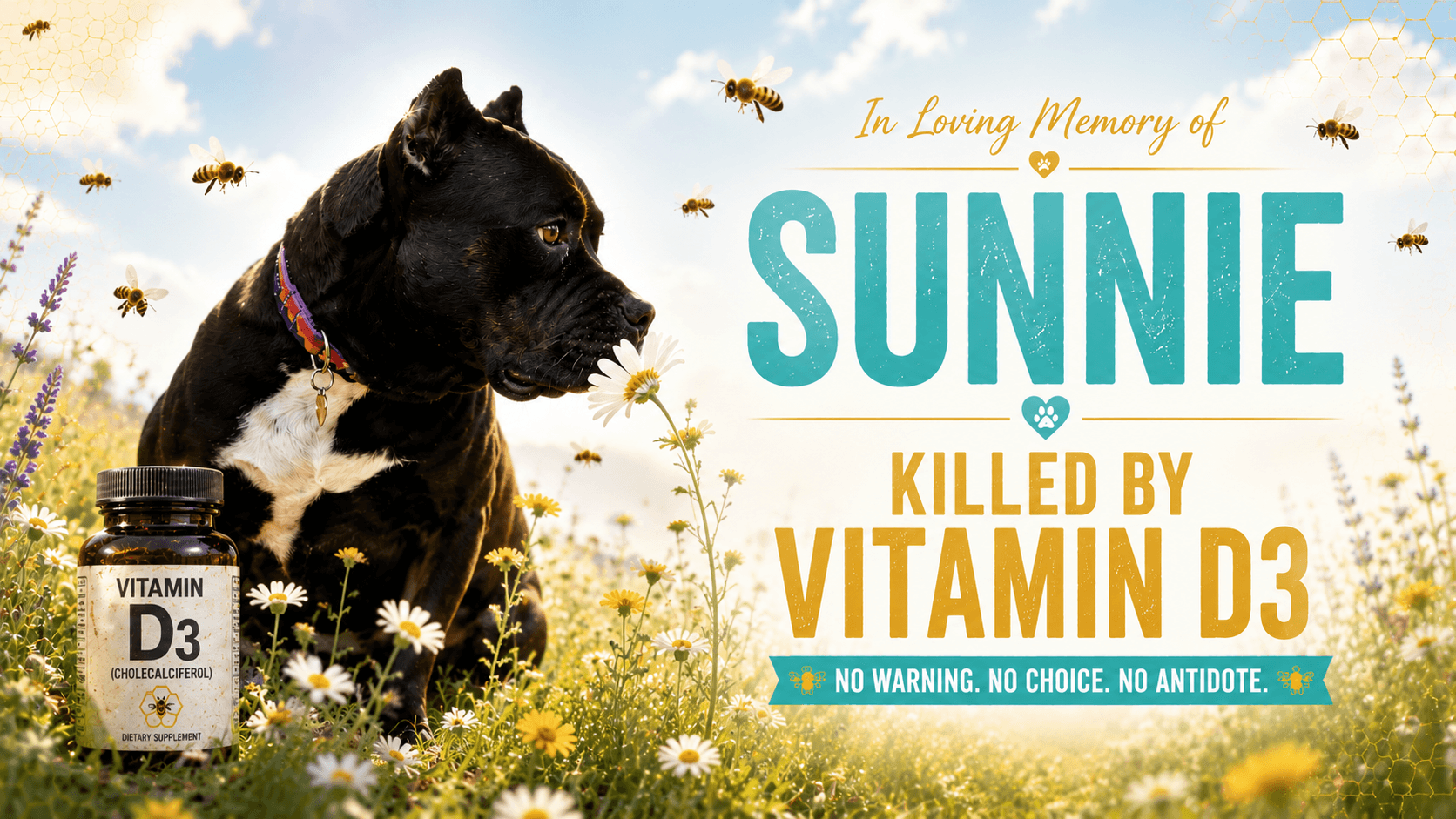
She wasn’t just any dog. Sunnie, my rescued American Bully from a so-called friend, was the kindest, most loving, and forgiving soul I have ever known. With her thick, muscular build, docked ears, and broad head, she looked intimidating to strangers. But underneath that tough exterior was pure gold. She’d survived hell: forced litters back to back while she was still a puppy, long twelve-hour days locked in a cage, garbage kibble for food, pain ignored, her spirit battered but never broken. When I took her, she could barely walk half a block, licking her hindquarters and whimpering with every step. But she greeted everyone with a wag and a hopeful look, rolling over for tummy rubs from any stranger willing to give her a moment. I loved her from the first instant.
Determined to give Sunnie the life she’d never known, I started making her real food: sweet potatoes, venison or goat, eggs, brown rice, gentle vegetables, and clean tallow. The transformation was nothing short of miraculous. She lost nearly twenty pounds, grew strong and lean, her limp disappeared, and her eyes shone with new life. She could walk a mile, pain-free, tail high, stopping for pats and belly rubs from everyone on the trail. For the first time, she was truly happy.
That night at an Airbnb in Lake Tahoe, Sunnie slipped away for about five minutes. I found her in the cold garage, sniffing around, and thought nothing of it. Later, as she lay on the sofa, she seemed tired, but I chalked it up to the excitement and snow. When she soiled herself, a thing she’d never done before, I thought maybe she’d just overdone it. I tried to coax her up with a treat, but she didn’t move. I lifted her to the bed, massaged her legs and stomach, whispering comfort, trying to figure out what was wrong.
Suddenly, she vomited. Her body seized. Her eyes rolled back. In less than a minute, she died in my arms, her beautiful life gone as quickly as it had been remade. I tried CPR and gave her charcoal from the fireplace, but it was too late.
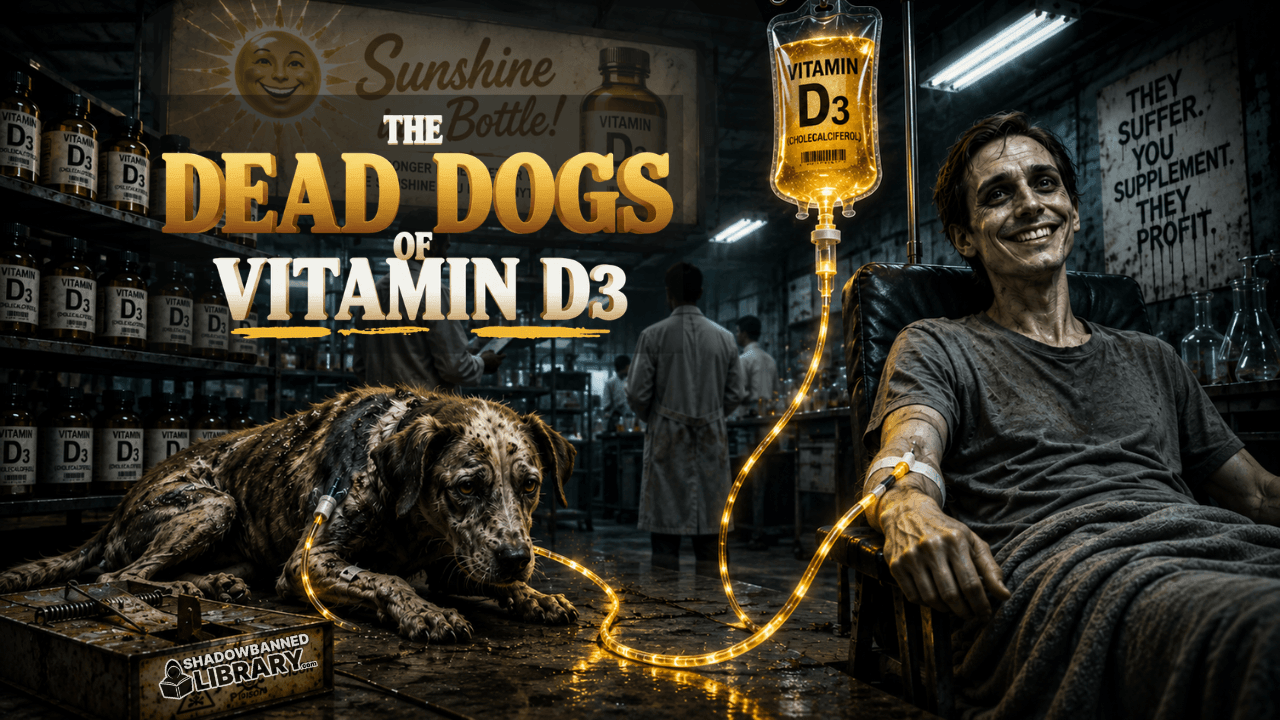
I was numb, gutted, and absolutely helpless. Only later, in that empty, echoing garage, did I find the cause. There, hidden under a shelf, was an open pack of ratbark poison, cholecalciferol, in small print. The very same Vitamin D3 the nation is merrily swallowing every day. The very chemical sold as a “health essential” for people, the same ingredient in those fancy supplement bottles and touted by influencers and doctors alike, had killed Sunnie in a matter of hours.
Irony doesn’t get much sharper than this: a dog named Sunnie, meant to remind us of warmth, light, and life, was killed by the very thing marketed as “sunshine in a bottle.” The supplement that promises to stand in for the real sun ended up taking away the very life her name celebrated. That’s irony in its most bitter form.
If you think this could never happen to you or someone you love, if you believe the story that what’s in your bottle is harmless and “natural,” keep reading. What happened to Sunnie is not an exception. It’s the rule and I offer a warning. This article is dedicated to Sunnie and all the other innocent, trusting beings who deserve better.
Author’s Correction: The “Vitamin D3 from Sunlight” Myth: The Industry’s Greatest Sleight of Hand
First things first: in my previous article, I made a serious mistake that needs to be addressed head-on. I stated that your body produces “vitamin D3” or “cholecalciferol” when sunlight hits your skin. That is wrong. I want to thank Anthea B. Hayes, author of The Enigma of Vitamin B12, Nature’s One Mistake?, for holding me to account and pointing out this critical error. I also appreciate every reader who holds my work to the highest standard.
Let me be clear: we do not make “vitamin D3” in our bodies. That is the industry’s language, a pharmaceutical sleight of hand to sell you a story that you can bottle sunlight and swallow health. In reality, what happens when the sun touches your skin is a symphony of energetic reactions, a cascade of biological signals that medical science doesn’t have a clue. The idea that you can isolate a compound, slap a chemical label on it, and claim it is the same as what the sun does for your health is not just misleading and an outright lie; it is the foundation of the supplement industry’s greatest trick.
Here’s what actually happens, and why the industry’s narrative is false: “Vitamin D” does not exist. The metabolism of sunlight hitting our bodies is anything but simple. When you are in the sun, your body does not simply produce a single substance; it creates at least 36 different hormones and compounds that scientists have identified so far, all working together in remarkable synergy. And those are just the ones we know about. Imagine what has yet to be discovered, or what is too nuanced and dynamic to ever be quantified by our limited tools. In truth, medical science does not have a clue what the full picture looks like.
This is the real trick behind the industry’s story. The so-called “vitamin D” blood test measures just one storage hormone out of the dozens the body produces in response to countless variables. They claim this level is a reflection of your sunlight exposure, but here’s the catch: people living almost entirely under artificial light, never seeing the sun, still have measurable amounts of this hormone. The body produces it regardless, adapting to whatever environment it is given. So what exactly are we even measuring? And why are we pretending this number tells us anything meaningful about sunlight, health, or deficiency?
This is where the scam comes into full view. The industry has created a blood test that detects a single, easily manipulated molecule. Then, using a drug synthesized from surplus sheep grease, they can artificially raise this number and tell you that you are now “healthy,” as if you have bottled the sun. All the while, they conveniently gloss over the fact that the very same substance, cholecalciferol, is the active ingredient in D-Con rat poison, known to kill rats, cats, mice, dogs, and yes, even humans, if the dose is high enough.
I rushed my last article and brushed over a crucial nuance: when I said “we make vitamin D3,” I was referring to the orchestra of at least 36 chemically created compounds that the body produces in response to sunlight, not a single pharmaceutical-grade molecule. That is my mistake and the very trap the industry sets, and where we can pull out another checkmate against the rat poison myth. They sell you the “isolation myth”: the idea that one chemical, pulled from sheep’s wool or synthesized in a plant, can mimic the miracle of sunlight. Or, more to the point, that you can isolate anything and achieve health. You simply can’t isolate without destroying the original essence of nature’s miracle. It is impossible. But you can’t have a trillion dollar chemical empire with that level of understanding.
As I pointed out in my iodine article, you cannot burn kelp, add sulfuric acid, extract a reactive gas, and call that “nature’s iodine.” It is ludicrous to claim that a plant growing underwater and the embryo of a bird “contain the same chemical compound,” just as it is ludicrous to equate sunlight with a drug extracted from surplus sheep grease. Chemistry textbooks may claim that the molecules are identical, but the processes and contexts could not be further apart. This is the definition of indoctrination and why the industry wants only the cult leaders called scientists to read the data. They don’t want you or me looking over the absolute garbage studies and asking logical questions.
Think of it this way: if you burn a plastic doll to ash, you’ll find elements from the periodic table labeled “essential.” But would you put that in a pill and swallow it every day? Yet, that is exactly what happens with your daily vitamins and supplements. The only difference is the industrial starting material and whether it is burned, reacted, or what they call “extracted”, or synthesized from surplus waste. Either way, you do not have the magic active ingredient that something found in nature. You have simply made a chemical soup that is toxic to the body. That is the final blow to the field of chemistry and the periodic fable of elements.
The chemical industry, which is the pharmaceutical industry, loves nothing more than to turn nature into profit. They do not want to kill their customers outright; they want a slow, steady dependency on pills that promise health but deliver only a shadow of what nature intended. Which came first, the chicken or the kelp? Nature came first, and the chemical giants found a way to monetize it.
So, back to my error: we do not make “vitamin D” in our bodies. What we receive from sunlight is a symphony of energetic, biological reactions that science cannot fully explain. The industry is not after understanding the miracle of the sun or its healing benefits. They cannot monetize that. Instead, they sell you a story that sunlight can be converted into a pill. That alone should be your first clue that the narrative is delusional. One last aside. I am almost certain the lady breasted Bill Gates sat in his meeting room with a bunch of other psychopaths and tried to figure out how they could monetize the sunlight. First cover it, then sell it. We have to get rid of these monsters, sure. But they are not the problem. It is the low level village idiots who profit from telling you that taking a little bit of synthetic lab made chemicals is giving you sunlight in a pill.
And that pill? It just so happens to be the same active ingredient in D-Con rat poison, killing small mammals through the exact same mechanism it uses in your body, if the dose is high enough.
This article will pull back the curtain on what vitamin D3 is really said to be replacing, how they perpetuate the slight of hand and a bulletproof checkmate against the idea that taking a bit of poison daily is somehow beneficial. Buckle up. If you have been on the fence about taking unregulated, over-the-counter hormones, this article will blast any doubts out of the cold dark cave and into the fresh, unfiltered sunlight where the truth can finally shine.
Sunlight’s Symphony and the Math of Complexity
When sunlight touches your skin, it does not set off a single process, it unleashes a living, dynamic orchestra. Scientists, using only the most primitive tools relative to the complexity of nature, have identified at least 36 distinct hormones and signaling compounds produced in response to sun exposure. But let’s be honest: these are merely the ones our limited technology can detect. The real number is be far greater, including countless interactions we cannot yet imagine, let alone measure.
Now, let’s do the math. With 36 known hormones, each capable of interacting with every other, the number of possible reactions is not just 36 plus 36, it’s 36 to the 36th power. That’s a number so massive it has 56 digits. To put this in perspective, imagine a massive library with 36 different books. Now imagine you could pick up those books and read them in any order, combining chapters, paragraphs, or even sentences from each, in every possible way. The total number of unique stories you could create wouldn’t just fill the world’s libraries, it would bury them. No author, editor, or reader could ever hope to read or even hope to understand every permutation. This is what your body does, effortlessly, every time you step into the sun: it creates a living novel with more plot twists and connections than we could ever imagine, much less map out. The possible hormonal reactions from sunlight, even with just 36 compounds, dwarf that by orders of magnitude. And this doesn’t even account for the unknowns, the reactions we will never observe.
Now ask yourself: can a single, chemically synthetic pill from a factory even begin to simulate this living symphony? The industry’s narrative would have you believe that one molecule, manufactured from surplus sheep grease and packaged in a bottle, is a valid substitute for the miracle of sunlight. It’s like claiming you can recreate the experience of a live symphony orchestra by pressing a single piano key over and over. It isn’t just reductionist, it’s ludicrous.
Now ask yourself: could a single pill, manufactured from surplus sheep grease in a factory, ever capture a fraction of that richness and complexity? The supplement industry would have you believe that one chemical, made in a lab and packaged, is a valid substitute for the ever-changing, multi-layered masterpiece your body writes when exposed to real sunlight. It’s like claiming you can capture the experience of a million different novels by photocopying a single page.
But sunlight’s effects go far beyond the creation of hormones. What happens on your skin and within your cells is much closer to animal photosynthesis, a process that the cult of science will never understand. Plants use sunlight to create energy through photosynthesis, but animals, too, are capable of capturing direct energy from the sun. There is emerging evidence that sunlight exposure can reduce metabolic demands; for example, studies have shown that animals exposed to sunlight need up to 58% less food. In other words, it’s not just about hormones. Animals are literally gaining energy from the sun, supplementing what they would otherwise need from food. As we know, calories are a lie. We eat food to gain life-force energy. The sun is also pure life-force energy, directly absorbed through our bodies.
This is why you see cats stretched out for hours in a sunbeam, prairie dogs baking on rocks, coyotes lying outside the den, and wild animals deliberately choosing to bask in full daylight. They are not doing it just for warmth or comfort; many of these animals could easily seek shade all day if they wanted. Instead, they seek out the sun for essential reasons, remaining there until their bodies naturally tell them enough is enough. Sunbathing is not just a behavior; it is a biological imperative that supports life in ways we are only beginning to appreciate.
When we step into the sun, we participate in our own form of photosynthesis. The sun’s energy is woven into our physiology, our mood, our sense of well-being, and even our metabolism. Its benefits cannot be measured by a single blood test or replaced by a poison pill, no matter how cleverly marketed. To believe otherwise is to misunderstand the very nature of life on Earth. The miracle of sunlight is not about reactions we can measure; it is about energy, vitality, and the deep, intrinsic connection all beings share with the sun.
This is why no blood test, no rat poison supplement, and no pharmaceutical intervention can ever capture or replace what happens when you spend real time in the sun. Trying to “replace” sunlight with a pill is not only impossible; it is a fundamental misunderstanding of biology and the awe-inspiring complexity of nature.
Breaking the Sunglasses Addiction
I used to be a sunglasses addict. I believed the story that people with light-colored eyes, like mine, absolutely had to protect their vision because our ancestors came from the far north, where sunlight was scarce. (Yes, I, too, was a member of the cult of arrogant scientists.) My Ray-Ban aviators became a second set of eyelids. If I forgot them, I would stop at a drugstore and buy a new pair, convinced I could not survive the glare. I even got headaches and eye pain if I went outside without them, so I was sure I was doing the right thing for my health.
Yet, I started to notice something strange. My skin would burn in odd places, under my eyes where the sunglasses stopped, or on my shoulders, even after hours outside hiking. My tan was patchy, my eyes were getting more sensitive, not less, and I never felt connected to the land like I did growing up in the wildlands of Nevada. I couldn’t “hear” the music of the ground I was walking on, the stories from the mountains and the rocks, the messages from the shrubs, plants and trees.
I decided to quit sunglasses cold turkey, except for situations of extreme long-term glare, like when I was skiing, paddleboarding, or kitesurfing. What happened next was nothing short of shocking. My skin stopped burning, the splotchy patches disappeared, and my tan became healthy and even. Even more incredible, my eyesight improved dramatically. Now, if my vision is slightly blurry in the morning, I look toward the sun and “clear the clouds”; my eyes adjust, focus, and I feel more awake, energized, and alive. And my vision is 20/20, and improving.
But what I discovered goes far beyond eyes and skin. When sunlight hits your body, it does not just touch the surface; it penetrates and interacts with your entire being. The forehead, and especially the frontal and temporal lobes, is particularly sensitive; the thin skin, more porous bone, and proximity to the brain mean that light can reach and influence neurochemistry and the brain’s electrical rhythms, especially the pineal gland. Covering your head with hats, scarves, or even cut bangs will block this vital pathway, disrupting sunlight’s natural communication with your brain and nervous system.
Your hair, when left coated with its natural oils, such as sebum (aka myelin), acts as a living conductor of light energy. Sebum is not just for moisture; it is crucial for absorbing and channeling sunlight. When we strip these oils away with ANY soap or shampoo, even homemade or “natural” ones, we destroy a key part of our body’s system for absorbing and processing solar energy. This disrupts the one-way valves of protection, communication, and absorption in the skin and hair, and breaks the full circuit of the body’s electromagnetic field, a real and measurable phenomenon that sunlight helps power and balance.
Most astonishing is the way our eyes and skin communicate in response to sunlight. When unfiltered sunlight passes through the lens of the eye, it signals the hypothalamus and the pineal gland, which in turn help regulate melanin production, hormone release, and even the opening and closing of pores throughout the body. This is an ancient, elegant feedback loop. If you block sunlight with sunglasses, especially across the full spectrum, you break this loop. Your skin does not receive the proper signals about how much melanin to produce or how to allocate resources for protection. No wonder people who always wear sunglasses get uneven tans, skin cancer, or sunburns in strange patterns.
When you block sunlight with sunscreen, hats, or sunglasses, you are not protecting yourself; you are cutting off ancient, essential channels of communication between your brain, your skin, your hair, and the sun. Your body loses its ability to regulate melanin production, pore opening, the electromagnetic field, and the countless other unknown processes that depend on real, unfiltered light.
We do not know everything that happens when we let sunlight in, but we do know this: every animal on earth, given the chance, will seek out sunbaths and then move to shade when their body says it’s had enough. Nature never intended us to live in artificial darkness and light, hidden behind plastic lenses, chemical filters, and layers of SPF clothing. The miracle of a healthy tan, vibrant skin, good eyesight, and a clear mind starts with trusting the sun and letting your body do what it was designed to do: bask, absorb, and thrive.
Cholecalciferol’s Deadly Mechanism—For All Mammals
Cholecalciferol, also known as vitamin D3, is now the active ingredient in some of the most potent and widely used mouse and rat poisons on the market today. This isn’t a coincidence, nor is it just a quirk of rodent biology. When mammals, be they rats, mice, cats, dogs, or even humans, ingest more than a threshold dose of cholecalciferol, a very specific and predictable sequence of biochemical events unfolds. It begins with gastrointestinal distress: nausea, loss of appetite, and diarrhea. These early symptoms are often dismissed, but they are the first alarms that something catastrophic is happening inside the body.
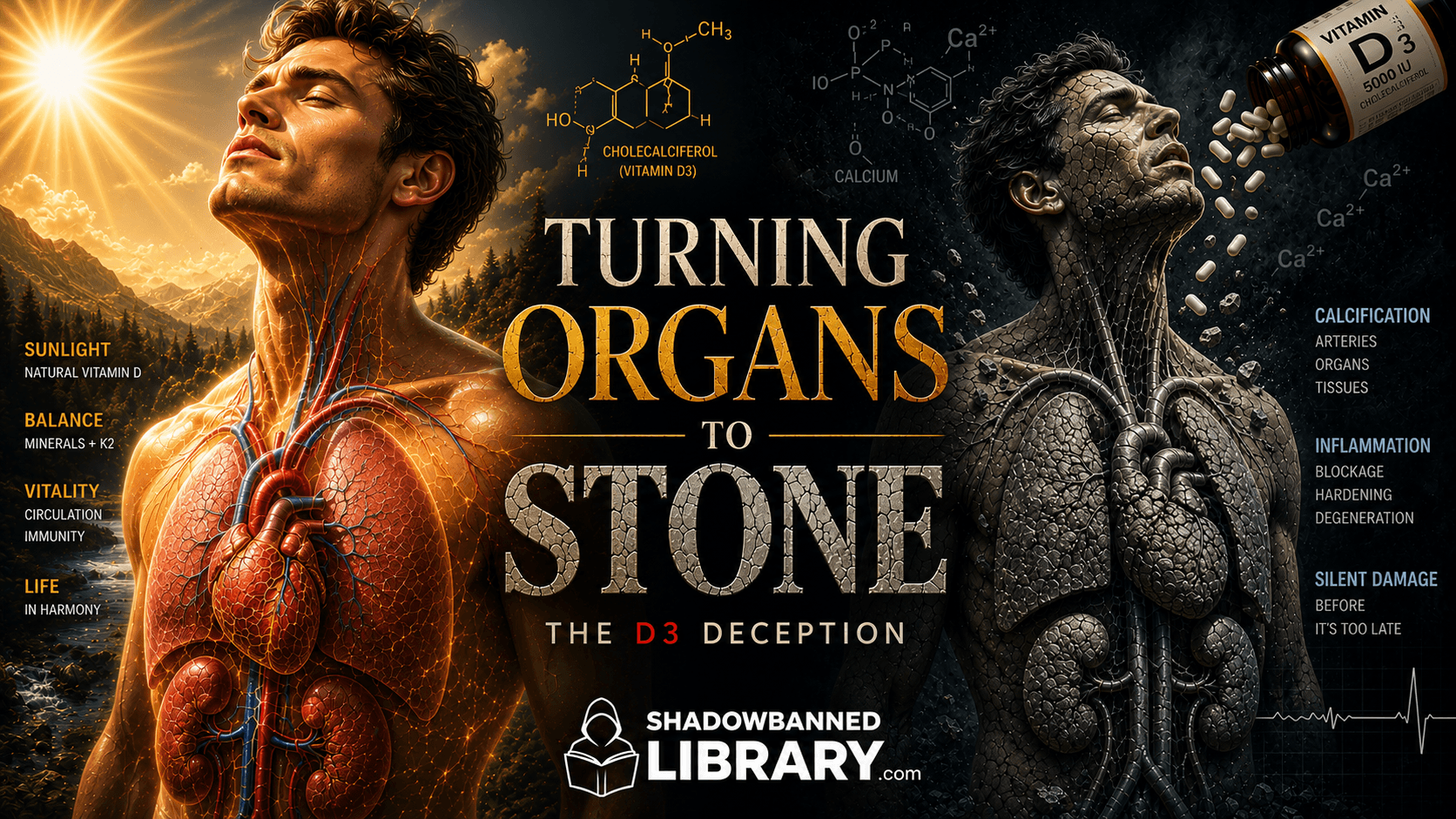
As the hours and days progress, the poison floods the bloodstream with dangerously high levels of calcium and phosphorus. The body’s natural regulatory systems, evolved over millions of years to keep these minerals in careful balance, are overwhelmed. The excess calcium is deposited everywhere it shouldn’t be: in the kidneys, heart, blood vessels, lungs, stomach, and even the skin. The most immediate, devastating, and often irreversible consequence is acute kidney injury. Without aggressive, immediate treatment, hospitalization, IV fluids, drugs to flush out calcium, and weeks of blood monitoring, the overdosed animal dies of kidney failure.
Pet Poison Helpline, Purdue University, and every major veterinary school warn that cholecalciferol rodenticide is one of the most challenging and deadly poisonings to treat. There is no antidote. The margin of safety is razor-thin; even a small ingestion can result in fatal toxicity. Clinical signs may not appear for 1–2 days, by which point the damage is already underway, if not permanent. Increased thirst, excessive urination, lethargy, weakness, “uremic” breath, and ultimately, the complete shutdown of the kidneys are the grim hallmarks of this poison’s progress. This can also occur when animals eat poisoned mice or rats. Birds, especially, are killed by eating cholecalciferol-poisoned mice.
Here’s the checkmate: Humans are not exempt from this mechanism. We do not possess a magical, unique metabolism that protects us from the effects of cholecalciferol toxicity. Our kidneys, bones, arteries, and tissues are built from the same blueprint as those of other mammals. This is precisely why universities and pharmaceutical companies conduct drug and toxin studies in rats, mice, cats, and dogs, because their metabolic and toxicological reactions are nearly identical to our own. When cholecalciferol is used to kill rodents, and when it devastates the organs of pets, it is a direct warning about what can happen in the human body.
Forcing Rat Poison in Dog Food
It is hard to overstate the irony here. Cholecalciferol, vitamin D3, is a required additive in nearly every bag of commercial dog and cat food in order to be legally labeled as “complete and balanced.” This isn’t a fringe decision by one company; it’s baked into the very standards set by the Association of American Feed Control Officials (AAFCO) and enforced by the FDA. Pet food must contain a minimum amount of vitamin D, and the industry overwhelmingly chooses D3, not because it is natural, but because it is highly bioavailable, cheap, and shelf-stable. The logic? They lie and tell us dogs and cats can’t make so called vitamin D3 from sunlight, so it must be added to prevent deficiency diseases like rickets. Vitamin D3 isn’t just a rodenticide—it’s a humanicide, felinicide, and caninicide as well. The line between a slow poison and a lethal dose is uncomfortably thin, no matter the species.
The history of this requirement comes from decades-old veterinary science and regulatory bodies like the National Research Council and AAFCO, which formalized these nutritional minimums and maximums based on highly questionable animal studies. When you pour kibble into your dog’s bowl, you are feeding an additive that, in slightly higher doses, would be catastrophic. And as I learned firsthand with Sundance, even so-called “natural” or “premium” foods now all contain a cocktail of D3, vitamin A, zinc, and other additives that can tip a sensitive animal into crisis overnight. The truth is, we have no idea what the total toxic load of an animal or person really is, or what combination will finally trigger disaster.
The supplement industry and its medical allies would have you believe that their “vitamin D3” is a gentle, essential nutrient—something you can’t get enough of, something your body supposedly needs in ever-increasing doses. But the very same substance, in only slightly higher amounts, is a registered and highly effective rodenticide. The difference between a “supplement” and a poison is measured in milligrams, not in kind. And if we needed another smoking gun, here it is.
Even in humans, chronic use or accidental overdose leads to the same fate: hypercalcemia, kidney stones, vascular and tissue calcification, cardiac arrhythmias, acute renal failure, and, in severe cases, death.
This is not a theory; it is a documented fact. Case studies abound of children, adults, and the elderly suffering severe toxicity from “over-the-counter” vitamin D3, with symptoms eerily reminiscent of the animal poisonings that veterinarians see every day. The only real difference is that in humans, the damage can be slow, insidious, and hidden behind the marketing of “wellness” and “prevention.” But the mechanism of harm is exactly the same.
So, next time someone tells you that the pill in their hand is “just the sunshine vitamin,” ask why the safety data sheet lists kidney failure, heart damage, and death as the primary risks. Ask why the exact same chemical is used to kill rats, cats, dogs, and mice, creatures whose physiology mirrors our own. And ask yourself: if this really were the miracle of the sun in a bottle, why does it have the power to destroy life so efficiently, so predictably, and so universally across the animal kingdom?
It’s not just rodenticides that should worry us. Every brand of commercial kibble, including fresh and raw food marketed for pets in the United States, is fortified with vitamin D3, by regulation, not by choice. After losing Sunnie, I vowed never to feed my next dog, Sundance, anything but the purest, most natural food. She’s never had commercial kibble, never received a poisoned shot or a chemical injection, and has been raised on her mother’s milk and homemade meals. But I’ll admit: I got lazy and wanted something I could give her that was safe and high quality for those late nights when I didn’t have the energy to make a fresh meal.
I found a brand that looked amazing, was ridiculously expensive and I gave her some raw, freeze-dried “organic” dog food mixed with spring water, directions followed to a T, marketed as just like the real thing. I didn’t think to check the tiny print in a different section of the label until it was too late. There it was: vitamin D3, vitamin A, zinc, magnesium, all jammed into a single “premium” meal. The very next day, Sundance’s right eye vessel blew out. She developed a permanent cherry eye, a condition she’ll carry for life or undergo costly, dangerous surgery. These drugs are no joke. You never know what the total toxic load of an animal, or a person, really is, or what combination of additives will finally tip the balance and trigger disease, injury, or sudden collapse. My regret is a lesson: the danger is real and hiding in plain sight in every bowl and every bottle.
Coming Next: The Actual Verified Effects of Vitamin D3 and K2
But we’re just getting started. In the next article, we’ll go even deeper. What actually happens when you swallow a pill of vitamin D3, AND/OR eat food fortified with it, and the cumulative effects? And what about when you add vitamin K2, a combo now aggressively marketed as “safer” or “more effective”? What really takes place as these substances move from your gut, into your blood, and deep into your cells and organs? Is there any truly safe dose, or are we only compounding the risks?
You’ll get a play-by-play of the biochemical chain reaction, from absorption to storage, and from the first subtle changes in your blood to the long-term consequences for your kidneys, bones, heart, and brain. Some of what you’ll learn about the D3 + K2 combination will be even more shocking, especially for those who thought they were taking the “better” or “balanced” approach.
If you thought the story ended with a bottle and a blood test, think again. The real danger begins when the drug and its helpers enter your body. Stay tuned for Article 3: The Play-by-Play of Vitamin D3 (and K2) Inside the Human Body. And if you care, please forward this to every influencer monster still grifting this deadly drug off the backs of sick people and beloved pets.
Dedication to Sunnie
My beloved American Bully, whose kindness and forgiveness knew no limits, even after a life marked by cruelty, indifference, and neglect. Your strength, your gentle heart, and your unwavering trust in the goodness of people changed everyone who met you, especially me. You taught me about resilience, about seeing the soul beneath appearances, and about loving without fear, even when the world has given you every reason not to.
My writing and work are for you, and for every animal and person harmed by those evil, profit-hungry influencers who push this deadly drug, those who market it as “safe” and “essential” to women, children, pregnant mothers, and the unsuspecting. May the truth about what took you from this world be your legacy, and may it protect others from the same fate.
May God have mercy on the souls of all who choose profit and power over kindness, honesty, and life itself.

References
Association of American Feed Control Officials. (2024). Official publication: 2024 dog and cat food nutrient profiles. Champaign, IL: Association of American Feed Control Officials.
Bikle, D. D. (2014). Vitamin D metabolism, mechanism of action, and clinical applications. Chemistry & Biology, 21(3), 319–329.
Bouillon, R., Marcocci, C., Carmeliet, G., et al. (2019). Skeletal and extraskeletal actions of vitamin D: Current evidence and outstanding questions. Endocrine Reviews, 40(4), 1109–1151.
Data Bridge Market Research. (2024). Global vitamin D market: Industry trends and forecast to 2034. Pune, India: Data Bridge Market Research.
Holick, M. F. (2007). Vitamin D deficiency. New England Journal of Medicine, 357(3), 266–281.
Jones, G. (2008). Pharmacokinetics of vitamin D toxicity. The American Journal of Clinical Nutrition, 88(2), 582S–586S.
Market.US. (2024). Vitamin D market size, share, growth, and industry analysis report, 2024–2034. New York, NY: Market.US.
National Research Council. (2006). Nutrient requirements of dogs and cats. Washington, DC: National Academies Press.
Pet Poison Helpline. (n.d.). Cholecalciferol (vitamin D3) poisoning in pets. Minneapolis, MN: Pet Poison Helpline.
Purdue University College of Veterinary Medicine. (2026). Rodenticide revolution: D-CON says, “Good-bye anticoagulants, hello vitamin D.” West Lafayette, IN: Purdue University.
Rajakumar, K. (2003). Vitamin D, cod-liver oil, sunlight, and rickets: A historical perspective. Pediatrics, 112(2), e132–e135.
Rabin, R. C. (2018, August 18). The man who recommends vitamin D for everyone. The New York Times.
U.S. Food and Drug Administration. (2020). Vitamin D in dog food: Dog food recalls and safe use. Silver Spring, MD: U.S. Food and Drug Administration.
Vieth, R. (1999). Vitamin D toxicity, policy, and science. Journal of Bone and Mineral Research, 14(4), 676–687.