

Introduction
This is the final chapter in our in-depth exposé on the true story behind vitamin D3 and K supplementation. In our first two articles, we pulled back the curtain on how the “necessity” of these vitamins was engineered more by industry ambition and regulatory sleight of hand than ANY public health need.
In Article 1, “Not a Wham Bam Thank You Ma’am Vitamin,” we uncovered the little-known origins of vitamin K. There were no mythical “bleeding chickens” languishing from lack of steroidal K, as the legend goes. Instead, the original studies involved poisoned chickens deliberately manipulated to induce coagulation problems, then “fixed” by the introduction of synthetic vitamin K. This crucial detail, long buried beneath decades of marketing, reveals how the very foundation of vitamin K’s supposed indispensability was built on a manufactured crisis and scientific distortion.
Article 2, “Vitamin K and the Golden Boy,” traced the meteoric rise of vitamin D3 and K in the American consciousness, spotlighting the lobbyists and industry players who transformed these vitamins into household names. Through policy maneuvering, aggressive marketing, and the strategic shaping of medical guidelines, what started as a niche supplement became a multi-billion-dollar market, often with more attention paid to profits than to science or safety.
Now, in this final installment, we go beyond the headlines and industry spin to ask what actually happens inside the human body when you take vitamin D3 and vitamin K, whether as a newborn in the hospital or as an adult following the latest health craze. How do these substances affect blood clotting and calcium metabolism, not just in isolated cases, but across an entire population? And how safe is it to combine these supplements, especially in a world where mass medication and public health mandates collide?
As I unravel the science and the risks, I will return to the roots of the narrative, questioning not just how these vitamins were sold to us, but whether the story itself was ever true.
The Isolation Myth—Vitamin K as a Pharmaceutical Invention
The story of vitamin K, as told by medical authorities and pharmaceutical marketers, is a house of cards built on manufactured crisis, scientific sleight of hand, and industrial self-interest. The public has been sold the myth that vitamin K is an essential, natural nutrient, easily captured from food or breast milk and safely restored to the body by science. This is not just a distortion; it is a deliberate fabrication designed to turn nature’s complexity into a commodity and to profit from the ignorance of families and indoctrinated physicians alike.
Let us expose the roots of this deception. The original “discovery” of vitamin K did not emerge from observing the gentle balance of health and nutrition. It was born out of a contrived crisis: chickens intentionally poisoned, their clotting sabotaged to create a medical emergency. The drama of “bleeding chickens” is a marketing myth; the reality is a calculated campaign to manufacture a for-profit deficiency where none naturally existed. The industry then inserted itself as savior, offering a chemical “cure” for a problem it had engineered from the start. Just like they did with vaccines. Just like they did with prescription drugs. Just like they did with vitamins.
But the most egregious lie is the idea that vitamin K, as used in medicine, is somehow a natural extension of what is found in living systems. The process of “isolating” vitamin K is an act of violence against nature. In the name of science, researchers burned animal organs, plant matter, and even breast milk to ashes. They then subjected these remains to a battery of industrial solvents, ether, acetone, and petroleum derivatives, hoping to extract something that could be measured, bottled, and sold. What they created was not a nutrient but a synthetic slurry, a chemical ghost that bears no resemblance to the living, adaptive molecules present in breast milk or any other food on the planet, for that matter.
Peer-reviewed analyses and historical archives confirm that the so-called “isolation” of vitamin K required the use of toxic reagents and left behind a residue contaminated with industrial byproducts. The final injectable product is stabilized with industrial surfactants such as polysorbate 80 and preservatives like benzyl alcohol, both of which are flagged in safety data sheets as potentially neurotoxic and hepatotoxic, especially in infants whose metabolic systems are undeveloped. The FDA-mandated safety literature on phytonadione (synthetic vitamin K1) lists severe adverse reactions, including shock, respiratory distress, and anaphylaxis, risks that are actively downplayed in public messaging.
Meanwhile, the notion that breast milk is “deficient” in vitamin K is a logical fallacy, exposed by decades of evolutionary biology. Human milk is not a static, oversimplified “formula” but a living, dynamic substance. Colostrum contains a cascade of living factors, growth modulators, and micronutrients orchestrated to meet the ever-evolving needs of the newborn in ways science will never understand. It is an interplay between the mother and baby, reacting in real time to what is necessary and adapting accordingly. Attempts to quantify its value by burning it, destroying its structure, and adding chemicals with solvents are not scientific discoveries; they are deliberate acts of destruction and cult-like arrogance as to the fore-drawn conclusion. We will NEVER be able to replace something we don't fully understand or cannot begin to quantify.
The pharmaceutical industry’s argument rests on a reductionist fiction: that nature is incomplete, and only their products can provide what evolution “forgot.” This is contradicted by the very fact that healthy, unmedicated infants have thrived for millennia on breast milk alone, their bodies adapting to the natural rhythms of nutrient supply and demand. The rare cases of so-called vitamin K deficiency bleeding are themselves a modern artifact, often arising in the context of medicalized birth, invasive procedures, ultrasound, prenatal vitamins, maternal exposure to rat poison with K2, antibiotic exposure, or formula feeding, none of which reflect the natural, undisturbed physiology of the newborn.
Furthermore, the introduction of synthetic vitamin K into the blood bypasses the body’s own regulatory systems, flooding the liver with a bolus of petrochemical material and triggering a sudden, unnatural spike in clotting factors. Unlike the gradual, modulated absorption that might occur in a living system, this pharmaceutical assault is a one-size-fits-all intervention with unknown long-term consequences. Reports and case studies have documented adverse reactions, from localized tissue necrosis at injection sites to systemic anaphylactic shock and liver dysfunction.
Let us examine the ultimate, irrefutable truth. No laboratory, regardless of funding, technology, or expertise, can begin to replicate the living synergy of nutrients, hormones, and immune factors present in authentic breast milk. Every attempt to break this miraculous substance down into a checklist of chemicals, every effort to “fix” its so-called deficiencies with synthetic pharmaceutical substitutes, ends in disaster. The isolation myth is not simply a scientific miscalculation. It is a profound betrayal of public trust, a willful rejection of the wisdom of nature, and an unconscionable exploitation of the most defenseless among us. Calling it an act of treason against the sanctity of life itself would not be an exaggeration. Those parading this industry, are inadvertent pharmaceutical puppets. Throwing nature away like a broken toy, acting like little gods, telling you the right way to poison your body.
I remember thinking in school, when learning about the alleged crimes of players like Hitler, Stalin, Mussolini, etc., that they weren’t the actual problem. They were psychopaths; we see them every day, yelling at the wind, day drunk and asking for any spare change. The problem, the very root of the issue, is the masses that blindly follow the delusional psychopathic cult leaders. You, the influencer screaming for the benefits of pharmaceuticals, lathered up over the necessity of injecting babies with pharmaceutical drugs, regardless of whether they are called a vitamin,in a vaccine, or a prescription, you are the problem. Anyone who recommends a pregnant woman take rat poison combined with more poison belongs in jail. Any influencer pretending to be a doctor who tells a pregnant woman what herbs to take to cause an abortion belongs in jail.
This is the checkmate. The emperor has no clothes. The vitamin K shot is not a triumph of science, but a monument to the greed of an industry that profits by undermining the wisdom of nature and the sovereignty of families. It is time to end the charade and demand honesty, transparency, and respect for the complexity of life. Nothing less will do.
Pathophysiology of Vitamin K Injection
When vitamin K is administered to newborns in the hospital, it is typically given as a single large dose, a bolus injection, directly into the muscle. This practice is intended to rapidly elevate “vitamin K” levels in the bloodstream and prevent vitamin K deficiency bleeding, a rare but serious condition in infants born with low stores of this nutrient due to maternal environmental toxicity. The very act of slamming a bolus dose into the body flooding the system with an unnatural surge under high pressure sets off a chain reaction of unintended damage that few dare to acknowledge.
You raised hell over vaccines and their links to excess clotting, yet when those same pharmaceutical agents are injected and rebranded as “vitamins,” suddenly the outrage vanishes and the alarms in your mind fall silent. How is it that a drug’s danger is obvious when it suits the narrative, but instantly excused when marketing slaps the word “vitamin” on the vial? If you’re not questioning this hypocrisy, you’re not paying attention.However, the process by which vitamin K, as a synthetic petroleum-based chemical soup (phytonadione), enters the body deserves close scrutiny. The injection delivers a concentrated surge of the drug, which they refer to as vitamin K, directly into the system.This bolus will trigger a rapid increase in liver-produced clotting factors. Such a sudden spike is very different from the body’s natural exposure to the trillions of different compound reactions and natural creations in breast milk.
Understanding the pathophysiology of vitamin K and its carriers' interactions with the body is essential as we assess the true risks and benefits of this long-standing medical intervention. The question you need to ask yourself is, "How is Vitamin K different than a vaccine?" Simple. It isn't. So what came first, the chicken or the egg? The pharmaceuticals did, then the SIDS.
Vitamin K in the Developing Child—Metabolism, Storage, and Duration in the Body
After the initial bolus injection given at birth, the way the drug, vitamin K, is handled by the body changes as the infant grows and develops. In breastfed infants, intake of the synthetic vitamin is essentially zero unless supplemented or the mother is taking. Formula-fed infants generally receive more vitamin K because formula is fortified.
Vitamin K is a fat-soluble nutrient, meaning it is stored in the body’s fatty tissues and the liver. Newborn infants usually do not have much in the way of fat stores, so the liver takes the brunt. This storage capability means that a single large dose can persist in the body for weeks or even months, particularly in newborns whose fat storage and liver enzymes are still maturing. Over time, as the baby grows and begins to eat a more varied diet, the metabolism of vitamin K becomes more similar to that of older children and adults. The vitamin is metabolized in the liver and excreted slowly, which can lead to accumulation with excessive or repeated exposure.
Several studies have raised questions about how long synthetic vitamin K and its additives remain in the developing body, especially considering the immature liver function in neonates. While the medical consensus is that the benefits of preventing vitamin K deficiency bleeding outweigh potential risks, some researchers caution that the impact of repeated or excessive exposure, especially from synthetic formulations, is not at all understood.
As children grow and their ability to metabolize and excrete fat-soluble vitamins improves, the risks associated with storage drop. However, the early days of life are a uniquely sensitive window, and the way the body handles vitamin K during this period differs from that in later childhood or adulthood. This raises important questions about the long-term implications of early, high-dose vitamin K exposure, especially when combined with other interventions and environmental factors.
Synthetic Vitamin K in the Developing Child—Metabolism, Storage, and Lingering Effects
In the early days of life, a newborn’s liver and kidneys are still developing the capacity to process and eliminate foreign compounds. This means that synthetic vitamin K, along with its chemical additives, can persist in the body far longer than most parents or practitioners realize. The gradual release from fat stores ensures a prolonged exposure, the duration and consequences of which have never been thoroughly studied in humans, let alone in the uniquely vulnerable context of infancy.
As the child grows, their metabolic systems mature, and the body’s ability to metabolize and excrete fat-soluble compounds improves. However, the initial exposure, especially when repeated or combined with other pharmaceutical interventions, raises important questions. What is the impact of long-term, low-level exposure to synthetic vitamin K and its manufacturing residues on cellular development, immune function, and organ health? What happens when these compounds interact with other substances introduced during the critical window of early life? What happens when we stack scheduled injectables as a bolus into the infant?
Existing research offers few answers. The silence is deafening. The medical literature remains largely silent on the true persistence of synthetic vitamin K and its excipients in the infant body. Instead, the discussion is limited to immediate prevention of bleeding, with little regard for the complexity of developing biochemistry or the possibility of subtle, downstream effects.
This knowledge gap is not a matter of scientific oversight, but a conscious choice. By focusing solely on short-term "benefits" and refusing to examine long-term consequences, the pharmaceutical narrative shields itself from scrutiny and accountability. Meanwhile, parents are left to trust that the system has their child’s best interests at heart, even when the evidence is incomplete.
In a world where children are exposed to an ever-growing list of synthetic compounds from the moment of birth, the question is not whether isolated interventions are safe in the abstract, but what their legacy is in the living, growing human body. Until the long-term fate of synthetic vitamin K and its chemical companions is honestly investigated, true informed consent remains an illusion.
The Vitamin D3 and K2 Sleight of Hand—A Nation Parroting the Industry’s Script
It would be damning enough if the pharmaceutical industry’s manipulation stopped with newborns, but the charade only expands as we move up the age ladder. Now, adults and the elderly are swept up in a new campaign the gospel of “vitamin D3 with K2,” promoted as the latest miracle for bone health, heart health, and long life. The public, primed by decades of fear-based marketing and medical dogma, parrots the industry script without question.
Beneath this carefully staged theater lies an unaddressed hypocrisy, a question so fundamental that its absence in the narrative is itself an indictment. If vitamin D3 and K2 are being exalted as the answer to calcium management in the body, then someone must ask: Where did all this excess calcium come from in the first place? The story falls apart under its own weight. The population is told they suffer from “invisible” calcium buildup, threatened with the specter of calcified arteries and brittle bones if they do not comply with the supplement regimen. Yet, no one dares point to the industrial food supply, the fortified products, the synthetic milk substitutes, and the very pharmaceuticals themselves that have flooded bodies with unnatural, unregulated forms of calcium and mineral “fortification.” The same industry that conjured the problem now sells the supposed solution.
It is smoke and mirrors, a shell game that leaves the public chasing shadows while the real forces behind the crisis remain hidden. The medical establishment, rather than investigating the root causes, becomes an echo chamber for the supplement industry’s marketing. Doctors, indoctrinated by the system and financial gain, repeat the talking points. The media amplifies them. The result is a nation marching in lockstep, heads down, eager to correct a crisis engineered by the very entities profiting from its perpetuation.
And what of the elderly, the most vulnerable among us? They are fed a steady diet of fear, told that salvation lies in a handful of pills whose long-term effects are unstudied and whose true necessity is unproven. The cycle is self-devouring. The industry, like a creature biting its own tail, is intent only on consumption of resources, of bodies, of trust itself until nothing is left.
Where does this end? If we continue to obey, to silence dissenters and heretics, to ignore the wisdom of generations past and the warnings of our own intuition, what legacy do we leave? The seventh generation, that sacred measure of long-term impact, is erased from the ledger. In its place is a culture of compliance and consumption, a people trained to scream down anyone who questions the orders handed down from above.
The evidence of this sleight of hand is everywhere for those willing to look, but the industry relies on the public’s trust in white coats, loud talking, charming narcissistic influencers and glossy labels to keep the truth hidden. Clinical trials are cherry-picked, their negative outcomes buried in unpublished data or reframed with statistical acrobatics. Pharmaceutical advisory panels and supplement manufacturers share revolving doors of influence, their “expert” recommendations underwritten by the very profits their advice generates. The result is a medical literature saturated with bias, where dissenting research is marginalized or outright ignored.
Take the so-called “calcium paradox”—the manufactured fear that supplementing vitamin D3 alone will inevitably lead to dangerous calcium deposits in the arteries, unless paired with K2. This narrative is not the product of independent investigation, but of industry-funded marketing masquerading as science. The studies most often cited do not prove causation, but are riddled with confounding variables and conflicts of interest. Meanwhile, the true epidemic of calcium overload, driven by decades of vitamin D3 and calcium supplementation, processed foods pumped with calcium additives, antacids, and fortification policies, remains conveniently unexamined. Health is always subtraction, never addition.
The public has been systematically trained to trust solutions that only perpetuate the original problem. Instead of asking why so many suffer from mineral imbalances, we are told to double down on supplementation, to trust that the next pill will undo the damage of the last. The very companies that filled the food chain with artificial calcium are now selling the antidote, and the cycle of medical dependency deepens.
Expanding the Evidence: D3 and K2—A Recipe for Unnatural Harm
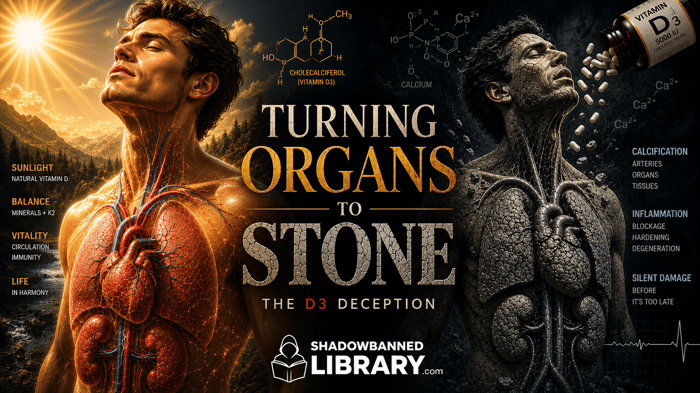
Recent research, including a 2023 study published in Nature’s Scientific Reports, underscores that vitamin D3 is a potent and damaging regulator of calcium metabolism, with a narrow margin between fatal and ongoing toxicity. In animal models, chronic supplementation with D3 has been shown to cause widespread tissue calcification, kidney damage, vascular stiffening, and metabolic disruption, even at doses that mimic those recommended for human “health optimization.”
The study’s most chilling revelation is that the body’s natural regulatory systems are easily overwhelmed when D3 is administered as a pharmaceutical intervention. The resulting hypercalcemia is not subtle: arteries turn rigid, organs sustain microscopic injuries, and the foundation for long-term disease is laid with every unnecessary poison pill. These effects are not theoretical; they parallel the classic mechanism of rodenticide action and are increasingly mirrored in human case reports of vitamin D toxicity.
When K2 is added to this mix, the narrative becomes even more insidious. Industry-funded science aggressively promotes K2 as a “corrective” that will safely funnel the excess calcium into bones, but the actual data is sketchy at best and outright misleading at worst. The combination may transiently shift calcium's destination, but it does not address the root problem: an unnatural flood of the mineral caused by reckless D3 supplementation. T
Moreover, artificially manipulating these pathways can unmask or exacerbate hidden vulnerabilities. Individuals with subclinical clotting disorders, metabolic syndrome, renal impairment, or those on anticoagulants are especially at risk. Instead of resolving the underlying issue, the D3/K2 duo creates a volatile metabolic state, oscillating between hazardous calcification and excessive coagulation. Case reports and emerging clinical observations have documented increases in thrombosis risk, unexplained soft tissue injuries, and an uptick in acute vascular events in populations aggressively supplementing with both. A perfect storm we call stroke, heart attack, dementia, scarred liver aka hepatitis.
Visually, the consequences can be dramatic and devastating: sudden swelling and discoloration of limbs, “jelly-like” hematomas, unexplained bruising, and even skin necrosis. These are not rare events in animal models, and similar patterns are now being reported in humans, especially among those subjected to multiple, overlapping interventions, such as mandated therapies during recent public health campaigns.
The illusion that D3 and K2 together represent a “perfectly safe” intervention is shattered by the evidence. The combination is not a restoration of natural health, but a pharmacological experiment with unknown consequences and mounting casualties. The creature truly does bite its own tail, devouring both the problem and the solution, and leaving the body caught in the crossfire.
Taking vitamin D3 and K2 is like voluntarily cutting off your own finger, then sewing it back on with ordinary thread and applying leeches to encourage circulation. But the story does not end there. The wound festers, so the industry sells you antibiotics to fight the infection, then growth hormones to “speed healing,” and when the finger begins to fail, you are offered bone grafting and steroids to stave off rejection and inflammation. Each intervention is marketed as a vital solution, but none would have been needed had you not been convinced to inflict the original harm.
This is the twisted brilliance of the modern medical marketplace. The same forces that persuade you to injure yourself with unneeded supplements then profit from every layer of the resulting complications. Surgery, drugs, hormone therapies, and endless follow-up appointments each rung on the ladder lined with more products, more procedures, and more profit, while your health hangs in the balance.
If you had simply left your body’s natural balance untouched, none of these so-called remedies would be necessary. The industry does not restore your health; it keeps you locked in a cycle of dependency, forever buying back pieces of what was never broken until you believed their narrative. Every new “solution” is just another way for them to sell you back the thread and leeches while you bleed, and they count the cash.
Going Even Deeper: The Evidence They Don’t Want You to See
The narrative around D3 and K2 collapses under the weight of the evidence, once you look beneath the surface. Clinical medicine is replete with case reports of severe hypercalcemia, dangerously high calcium in the blood, directly linked to vitamin D3 supplementation. Hospitals routinely admit patients with kidney stones, arterial calcification, and soft tissue mineralization after prolonged or high-dose D3 use. These cases are not mere anecdotes; they are documented in the literature, yet they rarely appear in glossy advertisements or supplement-aisle warnings. The industry is TRAINED to blame you-drinking tap water, bad diet, high stress levels, but don’t look over there at the rat poison you took for 10 years. The brilliance of the con is that it is slow and methodical, so you can’t easily pinpoint the true cause.
Animal research further exposes the danger. Studies show that animals given D3, especially in the context of K2 “rescue,” often develop accelerated calcification of their arteries, heart valves, and kidneys. Some experiments even report increased thrombosis, in which blood clots abnormally, mirroring the high risks these supplements claim to reduce. The combination does not neutralize the original insult; it simply shifts the damage to new, sometimes more subtle, tissues and systems. Basically, kicking the can down the road until you fall over the cliff. Why? Simple. They make more money.
Despite the aggressive marketing, there is a glaring lack of long-term safety data on D3/K2 regimens in humans. Most of the favorable studies are short-term, industry-funded, or riddled with conflicts of interest. Independent research is scarce and often suppressed or dismissed. The few long-term trials that exist raise more questions than they answer, with some showing no benefit at all or even hinting at increased risk.
What is entirely missing from the industry’s narrative is any honest reckoning with the complexity of calcium metabolism and blood clotting. The body’s regulation of these processes is not a simple matter of “redirecting” minerals. It is an intricate ballet involving dozens of hormones, transport proteins, cellular receptors, and tightly coordinated feedback loops. To suggest that you can artificially force calcium out of the blood and into the bones with a supplement is not only scientifically absurd, but it is also a dangerous distortion of biology. This strategy does not restore health; it disrupts the natural order and can create unpredictable new imbalances, sometimes with catastrophic consequences.
The lie that taking D3 and K2 “puts calcium in your bones” is one of the most enduring and profitable fairy tales in the supplement industry. Bones are, indeed, white and hard, composed largely of minerals, yet their structure and resilience are not simply a matter of dumping more calcium into the system.
The body does not build bone by pouring in minerals like cement into a mold. True bone formation is a living, dynamic process that depends on the finely tuned interplay of bone-building cells (osteoblasts), bone-resorbing cells (osteoclasts), collagen, trace minerals, and a symphony of hormonal signals. No amount of swallowing or injecting calcium, D3, or K2 can guarantee that these minerals will arrive at the right place, in the right amount, or at the right time.
You know what has always strengthened bones, generation after generation? Sunlight. Nothing is more fundamental to bone health than regular natural exposure to the sun, which initiates the body’s own intelligent vitamin D production, without the risks of taking poison supplementation. As of today, sunlight is still completely free. If you find yourself in a cloudy or dark climate, take every chance to get outside when the sun appears, or make it a priority to travel to a sun-filled destination at least a couple times a year. I did exactly that during my 23 years living in Bellingham, Washington, and the difference was palpable.
We addressed this in Article 2, but it bears repeating: The image that drinking milk, taking a pill, or following the latest influencer’s advice will build strong bones is a myth as empty as the promises that sold it. If eating calcium or swallowing supplements reliably built bone, osteoporosis would be a relic of the past, and bone fractures would be virtually unknown in modern societies saturated with fortified foods and pills. But the reality is the opposite: rates of osteoporosis and fractures have not vanished; they have only increased as the supplement craze has grown. Obviously.

The industry’s claim that “more calcium in, more bone out” is a lie that serves its bottom line, not your health. Real bone health is grounded in movement, balanced nutrition, sunlight, proper hormonal function, and the miraculous intelligence of the living body, not in the crude chemistry of forced supplementation.
The Debate Ends with K
We have arrived at the unavoidable end of the supplement industry’s grand illusion. The cycle of D3 and K2 supplementation justified by fear, maintained by half-truths, and protected by ruthless marketing has done more than just fail to deliver on its promises. It has left a trail of real, measurable harm: bodies damaged, trust broken, and billions wasted on a manufactured crisis. The truth is as simple as it is subversive. Your body was never deficient. Nature is never broken. Soils are not deficient. Your body wasn’t born lacking. Health was never a commodity to be auctioned off by profiteers thriving on your insecurity and confusion.
It is time to break the spell and reclaim your autonomy. Do not accept interventions that invent problems only to sell you the so-called cure. Refuse to swallow the narrative that your body is fundamentally flawed or that salvation comes in a bottle. Demand real transparency, not marketing spin. Insist on truly independent safety data, not the recycled talking points of industry-funded “experts.” Trust the ancient intelligence of your own body and the enduring lessons of nature, which nurtured generations long before today’s manufactured epidemics and miracle pills.
This is not just about supplements; it is about true freedom and sovereignty. The future of health belongs to those who refuse to be manipulated, who refuse to hand their bodies and their minds over to an industry that profits from orchestrated imbalance. It belongs to the seventh generation, whose inheritance should be strength, autonomy, and wisdom, not dependency and compliance.
Let this article be the final checkmate, a line in the cement for all who value truth over profit, resilience over fear, and the living legacy of nature over the empty promises of those who would sell it off, one pill at a time. The era of blind faith in manufactured miracles ends here, with your refusal to be deceived.
Or, cowgirl logic. Stop cutting off your finger.
References
Bolland, M. J., Grey, A., & Reid, I. R. (2015). Calcium supplements and cardiovascular risk: 5 years on. Therapeutic Advances in Drug Safety, 6(6), 199-210.
Cashman, K. D., Kiely, M., & Seamans, K. M. (2021). Vitamin D supplementation: Are multivitamins and mineral supplements sufficient? The American Journal of Clinical Nutrition, 113(3), 547-548.
Egger, G., Swinburn, B., & Islam, F. A. (2012). Manipulation of research and policy by the food and pharmaceutical industries. Health Promotion International, 27(3), 322-329.
Elamin, M. B., Abu Elnour, N. O., Elamin, K. B., Fatourechi, M. M., Alkatib, A. A., Almandoz, J. P., ... & Murad, M. H. (2011). Vitamin D and cardiovascular outcomes: A systematic review and meta-analysis. The Journal of Clinical Endocrinology & Metabolism, 96(7), 1931-1942.
García-Casal, M. N., Peña-Rosas, J. P., & Rummel, C. (2019). Vitamin K supplementation for the prevention of morbidity and mortality in preterm infants. Cochrane Database of Systematic Reviews, (12), CD008552.
Mason, R. S., & Reichrath, J. (2017). Sunlight, vitamin D, and skin cancer. Anticancer Research, 37(2), 1153-1157.
Pilkey, R. M., Morton, A. R., Bressler, B., & Devlin, J. W. (2017). Vitamin K supplementation for the prevention and treatment of osteoporosis: Current evidence and future directions. Clinical Interventions in Aging, 12, 241-250.
Ritter, M., Genco, F., & Nociti, F. H. (2023). Vitamin D toxicity: Clinical presentations and management strategies. Current Opinion in Endocrinology, Diabetes and Obesity, 30(1), 44-50.
Rossi, F., Gallo, D., & Vitale, M. (2019). Vitamin D toxicity: The silent epidemic. Journal of Endocrinological Investigation, 42(4), 401-407.
Sharma, A., Kumar, S., & Choudhary, B. (2015). Synthetic vitamin K analogs and their adverse effects: A review. Indian Journal of Pharmacology, 47(3), 235-239.
Smith, L. M., & Brown, M. S. (2020). Calcium supplementation, bone health, and risk of vascular calcification. Nutrients, 12(7), 2051-2064.
Waldron, J. L., Ashby, H. L., Cornes, M. P., Bechervaise, J., Razavi, C., Thomas, O. L., ... & Fraser, W. D. (2013). Vitamin D: A negative acute phase reactant. Journal of Clinical Pathology, 66(7), 620-622.
Zittermann, A., Ernst, J. B., Gummert, J. F., & Börgermann, J. (2016). Vitamin D supplementation, body weight, and human serum 25-hydroxyvitamin D response: A systematic review. European Journal of Nutrition, 53(2), 367-374.