

Introduction
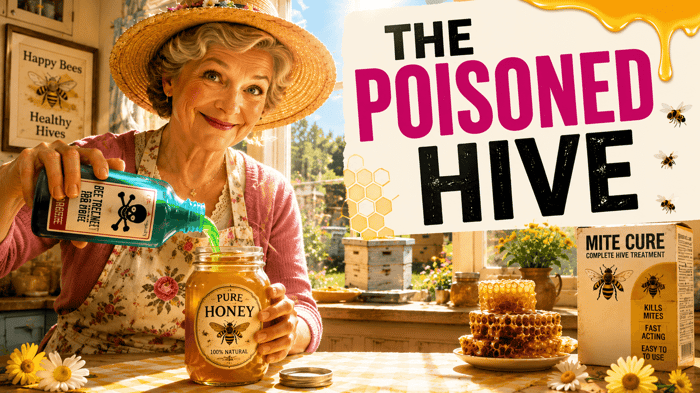
For thousands of years, mites and bees have lived side by side. Ancient beekeepers observed them, documented their presence, and understood that hives could flourish with mites in their midst. Wild colonies across the globe still thrive despite these tiny hitchhikers. The truth is simple: mites are not harbingers of collapse. They are as common among healthy, productive hives as they are in wild, unmanaged populations.
So how did the narrative shift? Decades ago, industry-funded researchers and corporate interests massaged the data, transforming the mere presence of mites into a crisis. Selective reporting, manipulated statistics, and a relentless public relations campaign painted mites as an existential threat. The media amplified every loss. Universities and extension offices, often bankrolled by chemical giants through federal lobbying and targeted grants, became the mouthpieces for a new doctrine: if you have bees, you must fight mites with chemicals or lose your hives FOREVER!
In Article 1, I exposed the money trail. Federal funding, channeled through lobbyists and public-private “partnerships,” pours into research that conveniently recommends more chemical interventions. In Article 2, we showed how this manufactured panic became dogma, turning practical beekeepers into perpetual customers for the agrochemical industry. The result is a system that ignores the actual drivers of hive decline, chemical toxins, poor nutrition, and chronic stress, instead prescribing a chemical “cure” for a problem that was never the true cause.
Now, in this final article, we confront the reality in your own backyard. The honey produced by “well-meaning” beekeepers is no longer a pure, wholesome product, but the end result of a chemical treadmill engineered for profit. Here is the evidence, the science, the safety data, and the hard numbers that expose the real threat to bees, and to every jar of honey on your table. The checkmate is here. The scam is hiding in plain sight. It’s time to see what’s really inside your backyard, honey. I have to put this behind a paywall to protect myself and my family, as I uncovered some major players in this chemical treatment treadmill that would rather this information remain cataloged in their ignorance-is-bliss file folders.
Mite Checks and the Ritual Killing of Bees
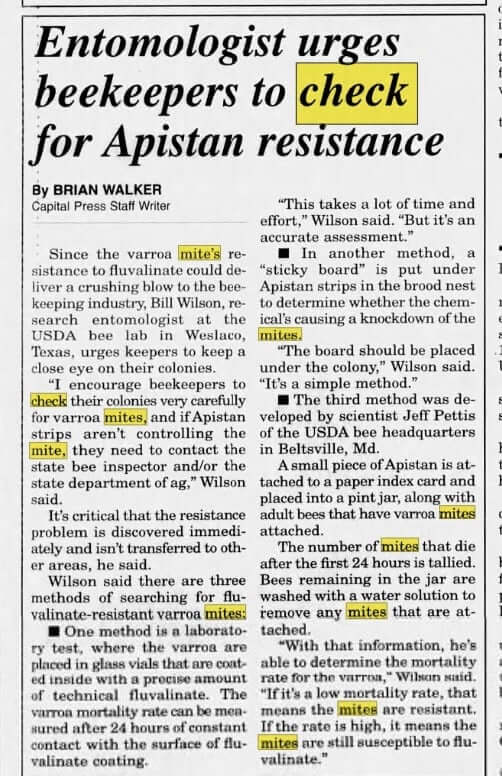
The foundation of modern backyard beekeeping now rests on a ritual that would have baffled generations of beekeepers before us: the monthly mite check. Extension offices, university programs, and glossy manuals instruct beekeepers to scoop hundreds of live bees from the brood nest, drown them in alcohol or detergent, and count the mites that float to the surface. If the number crosses an arbitrary threshold, often as low as 7 or 8 mites, the next step is always chemical intervention. Read that again if you need to, because it still shocks me the level of ignorance and cognitive dissonance a beekeeper has to achieve to poison their own hive for the presence of 8 teenie tiny, tiny, little bitty bugs.
But here’s the inconvenient truth: this entire process is built on a foundation of manipulated data and co-opted and controlled science. Mites and bees have coexisted as ecological partners. Wild bee colonies maintain stable mite populations year after year without collapsing. In fact, bees completely free of mites are unheard of in nature. Some researchers and seasoned beekeepers have observed that mites may even serve functional roles in the hive ecosystem: helping groom debris from bees, possibly stimulating hygienic behaviors that keep colonies healthy, and contributing to the overall microbial balance inside the hive. The presence of mites in thriving hives is not an exception; it’s the rule. Their role, like many so-called parasites in nature, may be more nuanced and almost always beneficial. I wrote a three-part series on the benefits of parasites. I highly recommend reading before continuing with this article.
Yet, the current paradigm treats all mites as an existential threat. The science behind these intervention thresholds is deeply flawed. Studies showing “critical” mite levels cherry-pick data from collapsing hives already compromised by pesticides, poor nutrition, or chronic stress. Researchers with ties to chemical manufacturers designed protocols to ensure a chemical solution was always needed. The alcohol wash, now lauded as the “gold standard,” is nothing more than a ritual sacrifice that removes healthy bees from their tasks, disrupts the queen’s brood, and turns living insects into laboratory data points.
This constant disturbance, stress from repeated opening, checking, and the killing of healthy workers, actually weakens the colony’s natural defenses. Instead of supporting the natural balance between bees and mites, the ritualized obsession with eradication creates a cycle of dependency and decline.
The end result? Beekeepers are conditioned to treat, treat, and treat again, all for a problem that is as old as beekeeping itself. The chemical treadmill spins faster, and the real causes of hive decline, environmental contamination, nutritional stress, and cumulative toxin exposure, are ignored.
When the premise is faulty, every intervention that follows does more harm than good. The next section reveals exactly what those interventions are, what’s in them, and why the “cure” may be far deadlier than the so-called disease.
Safety Data Sheets: The Chemicals You’re Pouring Into Your Hive
Walk into any backyard beekeeping store, and you will find shelves full of chemical treatments, strips, powders, and solutions, each promising to save your bees from the so-called mite threat. The marketing language is carefully chosen. Many of these products claim to be “naturally derived” or “plant-based,” cloaked in green imagery that suggests safety and purity. In reality, the story is very different. To understand what you are adding to your hive, you must consult the Safety Data Sheets (SDSs) that manufacturers are legally required to provide. These documents are written for workplace safety officials, not consumers, and they reveal the true risks behind the labels.
Amitraz remains one of the most widely used miticides in beekeeping, both backyard and commercial. While the product is sold in tidy strips or pre-mixed bottles, its industrial origins are rarely discussed. Amitraz is synthesized from chemicals like formamide and 2,4-xylidine, both of which are hazardous in their own right. Amitraz acts by attacking the nervous system of mites, but bees are no less vulnerable to its effects. The SDS for amitraz lists acute toxicity, reproductive harm, and long-term risks like carcinogenicity. Residues from amitraz and its even more toxic breakdown products persist in wax and honey, accumulating over time. That matters most, as a teaspoon of honey in your rooibos tea every morning starts adding to your toxic load. Burning a beeswax candle treated with amitraz infuses the toxins into your lungs. Building up over time means they stay in the tissue and bioaccumulate. Imagine what this is doing to the bees inside the hive after a few years of “treatments’. This is the problem, folks, not the mites. Obviously.
Oxalic acid is often promoted as a “natural” alternative, a claim that gives many beekeepers a false sense of security. The truth is that oxalic acid used for beekeeping is not squeezed from plants but manufactured on an industrial scale by oxidizing carbohydrates, usually cheap sugars, mass-produced corn starch, or other cheap sugars with nitric acid. Its mode of action is as a corrosive agent that denatures proteins and burns tissues. The SDS warns of danger on contact, risk of inhalation injury, and severe corrosive effects on all biological tissues. Bees treated with oxalic acid can experience tissue damage and immune suppression, and the acid’s residues build up in hive components.
Formic acid is another chemical commonly described as “naturally occurring,” but the formic acid found in hive treatments originates from synthetic processes, often involving the catalytic oxidation of methanol, a petroleum derivative. Formic acid is used as a fumigant that kills mites by suffocation, but it is also caustic and hazardous to bees, queens, and brood. Its SDS highlights risks like burns, respiratory damage, reproductive effects, and environmental toxicity.
Thymol and hop beta acids are the most aggressively marketed as “plant-derived” and “safe.” In truth, these compounds are not simply squeezed from herbs or hops. They are industrially isolated, concentrated, and formulated to levels never found in nature. Their mechanisms include disrupting neural and cellular function in mites, but the same effects are seen in bees at only slightly higher doses. The SDS for these products warns of skin and eye irritation, aquatic toxicity, and the potential for residues to persist in wax and honey. This is for profit chemical industry, packaged for consumer compliance.
Calling these treatments “natural” or “plant-based” is a tactic of health-washing and nature-washing. The industrial processing, concentration, and delivery of these chemicals make them as foreign to the hive as any synthetic pesticide. The “green” label does not make these substances safe. The safety data sheets make it clear: each of these products is a poison, and their risks do not disappear simply because they started life as molecules in plants.
The hard evidence is right there in the official warnings. These are not selective cures, and they are not without consequence for the bees, the hive, and the honey, propolis, royal jelly, and wax people consume.
Collateral Damage: How Chemical Treatments Harm Bees and Hive Health
The promise behind every chemical treatment is selective toxicity: the idea that a substance can destroy mites while leaving bees unscathed. Just like folks slathering apple-flavored horse paste to kill parasites and cure Convid-19. Stated more plainly, the pharmaceutical industry tricked people into consuming an industrial insecticide that they tell you is a known carcinogen to kill a made-up virus and your beneficial parasites. This is the same game. Yes, this same playbook claim is central to the marketing and widespread adoption of miticides and acids in backyard beekeeping. The reality, however, is that the biology of bees and mites is far more similar than the industry wants you to believe. Both are arthropods, sharing key metabolic and neurological pathways. The same chemicals that paralyze or kill mites also affect bees, often with delayed and more subtle consequences. Perfect for observable results if you are selling the chemicals, not so perfect for the rest of the planet. Note the article below: 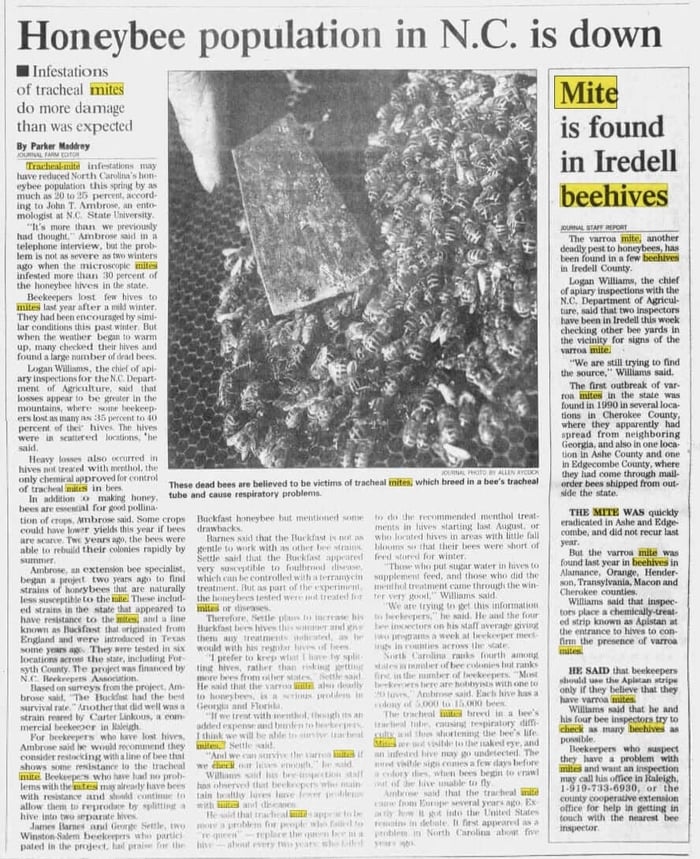
The immediate effects of these treatments are sometimes visible within days. Beekeepers report increased numbers of dead bees at the hive entrance after applying amitraz, oxalic acid, or formic acid. Queen failures and brood loss are disturbingly common during and after treatment cycles. Some chemicals trigger acute stress responses, causing bees to abscond from the hive entirely. Even when colonies appear to survive, the damage is not always obvious on the surface.
The real threat emerges over weeks and months. Chronic chemical exposure weakens bees’ defense systems, making them more susceptible to more poison and eventual hive collapse. Reproductive problems become more frequent: queens lay fewer eggs, worker lifespans are shortened, and brood development is disrupted. Many studies have documented the gradual accumulation of chemical residues in wax and honey, creating a toxic legacy that persists from season to season. Imagine what happens after 5 or 10 years of this debauchery.
These interventions also harm the hive’s delicate microbiome, the community of beneficial bacteria and fungi that support digestion and disease resistance. Disrupting this balance leaves bees vulnerable to pathogens and nutritional deficiencies. The cumulative effect is a slow-motion decline that can take months or even years to become obvious. Perfect cover for the chemical industry run by corporate psychopaths. Perhaps you have heard this story before? It’s the same they use for taking prescription drugs, vitamins, and supplements. They make up a story and cover the “side effects” with an original lie: a virus, climate change, parasites, bad bacteria, mites (now they are saying the mites have a virus caused by climate change that is killing the bees). Yes, they are actually saying this in plain English.
The claim that bees are somehow immune to the poisons used against mites is not supported by biology or by evidence. What harms a mite will harm a bee, sometimes quickly, sometimes gradually, but always with cumulative consequences for hive health and, ultimately, for the purity of the honey that ends up in your pantry.
Toxic Add-Ons: Newspaper, Sugar, and the Hidden Contaminants in Hives
Beyond the official chemical treatments, backyard beekeeping is riddled with routine practices that quietly add more toxins to the hive environment. Two of the most common are the use of newspaper when combining colonies, and the feeding of white sugar, especially during winter or nectar dearths.
When beekeepers unite two colonies, they often separate the hives with a single sheet of newspaper. The idea is to give bees time to slowly integrate the opposing pheromones by chewing through the paper and blending their pheromones. What is rarely discussed is what’s actually in that newspaper. Modern newsprint is loaded with inks, dyes, bleaching agents, and industrial chemicals such as chlorine and dioxins. These substances are not benign. As bees chew through the paper, they ingest residues that can disrupt their nervous systems, contaminate wax, and introduce persistent organic pollutants into the hive ecosystem. No regulatory agency has ever tested the effects of newspaper ink or dioxins in bee colonies, yet this practice is embedded in beekeeping culture.
Feeding bees white sugar is another standard intervention, especially over winter. Most commercial white sugar is highly refined using chemical processes that may leave trace contaminants, including sulfur dioxide and chlorine-based bleaching agents. Unlike honey, which contains a complex blend of nutrients, antioxidants, and antimicrobial compounds, white sugar offers only empty calories. Prolonged feeding of sugar syrup has been shown to weaken bees’ defense systems, disrupt their gut microbiome, and increase their vulnerability to disease and environmental toxins. In some cases, sugar syrups are tainted with residues from processing or from the plastic containers used for storage and delivery.
Smoke has long been used in beekeeping as a traditional tool, promoted as a way to “calm” bees and make hive inspections easier. In reality, the use of smoke triggers a panic response in the colony. When exposed to smoke, bees instinctively gorge themselves on honey in preparation to flee a potential wildfire. This stress response disrupts their normal activities, increases their metabolic load, and can temporarily weaken their immune systems. Frequent smoking not only interferes with the bees’ intricate pheromone communication but also introduces toxic compounds, such as carbon monoxide, tar, and traces of combustion byproducts, into the hive environment. Over time, repeated exposure to smoke can alter the hive’s microbiome, reduce foraging efficiency, and contribute to chronic stress, making colonies more susceptible to disease and other environmental threats. What is billed as a harmless management tool is, in truth, another layer of disruption and toxicity in the modern chemical hive.
These “everyday” practices are rarely questioned, yet they add to the toxic burden faced by modern hives. Combined with the chemical treatments described earlier, this results in a hive environment saturated with substances never encountered in nature and a honey harvest that is anything but pure. In case you missed it, that means the local backyard honey contains more harmful pesticides than the garbage found in the supermarkets.
The Stress Factor: How Constant Intervention Sabotages Hive Health
Modern backyard beekeeping is defined not only by the chemicals and additives poured into hives but also by a culture of constant interference. Well-meaning beekeepers are taught to “manage” every detail of the colony’s life, believing that vigilance equates to good stewardship. In reality, these rituals of control will do more harm than good.
One common practice is the obsessive search for the queen. Beekeepers are advised to open the hive frequently, hunt for the queen, and verify her presence by sight or by marking her with paint. Every time the hive is opened, the bees’ carefully regulated environment is disrupted. Temperature and humidity fluctuate, pheromone signals are disrupted, and the colony’s defensive response is triggered. Repeated disturbance not only stresses the bees but also increases the risk of accidentally injuring or killing the queen, the very individual the beekeeper is trying to protect.
Mite checking is another source of chronic stress. As described earlier, the alcohol wash and sugar shake methods require forcibly removing bees from the brood nest, shaking or killing them, and breaking the normal rhythm of hive activity. When conducted monthly or even more frequently, these interventions prevent the colony from settling into a stable, resilient state. Over time, such stress can lead to swarming, absconding, and weakened immune responses.
Other routine disruptions include constant frame inspections, rearranging brood and honey stores, and manipulating hive components in pursuit of “better management.” Each intervention may seem minor, but its cumulative effect is a hive that is never allowed to find its own balance. Research shows that colonies subjected to frequent intrusion are more prone to disease, less likely to rear healthy queens, and more vulnerable to environmental threats.
There is perhaps no greater betrayal of the hive than the practice of overharvesting, taking every drop of honey and leaving colonies to survive on buckets of white sugar. Honey is not just a sweetener; it is the lifeblood of the colony, a complex food packed with enzymes, minerals, and immune-boosting compounds that bees rely on for health and survival through harsh seasons. Stripping hives bare and replacing their nourishment with empty calories is a recipe for weakness, disease, and eventual collapse. As stewards of bees and as consumers, we must learn to treat honey with reverence, not as a commodity for mindless consumption, but as a sacred gift from nature. A little true honey goes a long way. To reclaim balance—for our hives, our health, and our planet, we must resist the urge to consume to excess. Honey should be savored, not squandered; respected, not devoured in corporate-sized quantities. Only by returning to restraint and gratitude can we break the cycle of depletion and begin to restore both the bees’ vitality and our own.
The irony is unmistakable. Beekeepers are routinely told that any sign of stress, queen loss, swarming, disease, dwindling populations, is blamed on mites or dismissed as bad luck. Rarely is it acknowledged that these problems are the direct result of the very interventions and disruptions promoted by those who profit from their ignorance as “best practices.” The cycle becomes self-perpetuating: more inspections lead to more stress and instability, which lead to more chemical treatments, which in turn fuel further decline. Just like they planned.

This pattern is not unique to beekeeping. It mirrors the tactics of the medical industrial complex, the processed food industry, the tobacco lobby, and Big Sugar. In every case, a for-profit system invents or amplifies a crisis, sells a solution that perpetuates dependency, and sacrifices the health of people or bees—in pursuit of endless growth. Like a hungry ghost, these corporations are never satisfied, devouring resources, power, and money without regard for the destruction left in their wake.
The story has become a modern fable of unchecked consumption and self-destruction. As Dr. Seuss warned in The Lorax, we are witnessing what happens when endless greed tramples over balance, wisdom, and life itself. Today’s beekeeping industry stands as a cautionary tale for us all.
True hive health is built on stability, net zero interference, and trust in the bees’ natural instincts. The culture of constant intervention undermines all of these, leaving hives vulnerable not only to chemicals but to chronic, man-made stress. A true hive collapse.
Contaminated Harvest: What’s Really in Backyard Honey
Most people imagine backyard honey as a pure and wholesome product, free from the taint of industrial agriculture and the chemical residues of large-scale farming. In reality, the honey from backyard hives is contaminated from within, a direct result of the treatments and interventions promoted as “best practices.”
Every time a beekeeper applies amitraz, oxalic acid, formic acid, thymol, or hop beta-acids, residues remain in the hive. These chemicals seep into beeswax, where they accumulate over time and will eventually leach into honey stores. Wax is particularly problematic because it acts as a sponge, absorbing and retaining chemicals for years.
Studies have repeatedly shown that honey from treated hives contains detectable levels of these substances, often at higher concentrations than in honey produced in commercial operations subject to stricter residue testing.
Regulators set “safe” limits for chemical residues in honey, but these numbers are based on short-term studies and assume limited, isolated exposure. They do not account for the cocktail effect of multiple chemicals, or for the fact that honey is often consumed daily by people seeking health benefits. Even so-called “natural” treatments leave their mark: oxalic and formic acids can alter the pH and flavor profile of honey, while thymol and hop acids impart off-flavors and remain in the honeycomb.
Few backyard beekeepers test their honey for contamination, and almost none are aware of how quickly residues build up. The result is a product that may look golden and pure but carries a hidden load of industrial chemicals—each one with its own risks for both the bees and the people who consume the honey.
The chemical treadmill, promoted as a solution to a manufactured crisis, has turned backyard honey from a symbol of purity into a product that demands scrutiny and skepticism.
Profiteering: How Chemical Giants Turned Beekeepers Into a Permanent Market
The story of backyard beekeeping’s chemical revolution is not just about misguided science or misplaced trust. It is also a story of profit, massive, accelerating profit for a handful of global chemical corporations.
Before the 1980s, the beekeeping supply industry was a niche market focused on woodenware, smokers, and a few nutritional supplements. But once the narrative shifted and mites were sold as an existential threat, a new gold rush began. Chemical giants like Bayer (which acquired Monsanto), Elanco, BASF, and Syngenta rushed to patent, manufacture, and market an expanding arsenal of hive treatments: amitraz-based strips, formic and oxalic acid solutions, thymol gels, and more. These products, once reserved for industrial agriculture, became staples in backyard hives across America and Europe.
The numbers are staggering. Since the late 1980s, global sales of in-hive chemical treatments have soared into the hundreds of millions of dollars annually. Companies like Bayer, through its subsidiary Bayer Crop Science, now dominate the market with products such as Apivar (amitraz) and CheckMite+ (coumaphos). Elanco, BASF, and Syngenta have aggressively expanded their own lines of miticides, acids, and “natural” treatments, all while sponsoring research and funding educational materials that reinforce the need for perpetual chemical management.
Market analysis reveals that the real boom came not from commercial operations, but from backyard and hobbyist beekeepers. As extension offices and beekeeping clubs pushed “routine” mite checks and mandatory chemical treatments, sales exploded. Industry reports show a double-digit increase in miticide and hive treatment revenues year over year since the 1990s, even as colony numbers remained relatively stable. In effect, the chemical giants turned every backyard beekeeper into a recurring customer—locked into a cycle of testing, treating, and re-treating, season after season.
These profits do not trickle down to bees or beekeepers. They flow up to corporate boardrooms and shareholders, fueling more lobbying, more “public-private partnerships,” and more research designed to keep the chemical treadmill spinning. The same companies that profit from pollinator panic are the ones writing the rules, setting the standards, and funding the messaging that keeps the cycle alive.
This is not the invisible hand of the free market. It is a tightly orchestrated operation, engineered by a cartel of chemical giants who have turned the age-old partnership between humans and bees into a lucrative, never-ending business.
Conclusion: Reclaiming Hive Health from the Chemical Machine
The story we have been sold, of mites as the existential enemy, of “safe” chemical cures, of necessary interventions and expert protocols, falls apart under scrutiny. The evidence is overwhelming: the very practices promoted to save the bees are undermining their health, contaminating their honey, and turning backyard beekeeping into a lucrative market for global chemical corporations.
The cycle is self-perpetuating. Fear is manufactured, solutions are sold, and the collateral damage is blamed on nature, luck, or the bees themselves. Meanwhile, the profits of Bayer, Elanco, BASF, and Syngenta soar, and the true cost is paid by the hives, the environment, and the people who trust in the purity of their backyard honey.
It does not have to be this way. Bees have thrived for millennia in balance with mites, parasites, and the challenges of the natural world, without the help of industrial poisons, synthetic feeds, or constant interference. The real path forward is not more chemicals, more interventions, or more profit-driven advice. It is a return to humility, respect for natural processes, and a commitment to practices that support bee health rather than sabotage it.
This is the reckoning. Backyard beekeepers—and those who care about the future of our food and our pollinators—must break free from the chemical treadmill. Demand transparency. Question every “safe if used as directed” claim. Share the truth about what is really in the hive, and in the honey. Reclaim beekeeping as an act of stewardship, not obedience to an industry that profits from perpetual crisis.
The bees, and the integrity of our food system, deserve nothing less.
Disclaimer
The views expressed in this article are the author’s opinions based on clinical experience, historical sources, public records, regulatory documents, scientific literature, and secondary reporting. References to peer-reviewed publications, government materials, archival records, and publicly available data are included where applicable to support discussion of physiology, supplementation, toxicology, industrial manufacturing, and public health policy.
The author is a licensed Registered Nurse (RN), no longer practicing clinically or providing any medical care through this publication. This article reflects personal analysis, commentary, investigative research, and opinion, and is not intended as individualized medical advice, diagnosis, or treatment. Readers should consult their own licensed healthcare professionals regarding personal health decisions, medications, supplements, or concerns.
This publication is for informational, educational, commentary, and entertainment purposes only. It does not allege criminal conduct or proven legal wrongdoing by any company, institution, regulatory agency, manufacturer, or individual named herein. Statements regarding vitamins, pharmaceuticals, fortification policies, manufacturing processes, market incentives, toxicology, and historical events reflect interpretation and opinion based on publicly available information and cited materials.
Discussion of nutritional deficiencies, supplementation, neural tube defects, pregnancy, toxic exposures, industrial food systems, neurological symptoms, and public health interventions involves ongoing scientific debate and evolving research. Readers are encouraged to review primary sources, consult qualified professionals, and conduct independent research before forming medical or legal conclusions.
If you believe this article contains a factual inaccuracy, or if you represent an entity discussed and wish to provide documentation, clarification, or request a correction, please contact robin@purifywithin.com. Corrections will be reviewed and made as appropriate.
Nothing in this publication should be construed as medical or legal advice. For legal guidance regarding publishing, liability, or defamation, consult a qualified attorney.
References
Alaux, C., Brunet, J. L., Dussaubat, C., Mondet, F., Tchamitchan, S., Cousin, M., ... & Belzunces, L. P. (2010). Interactions between Nosema microspores and a neonicotinoid weaken honeybees (Apis mellifera). Environmental Microbiology, 12(3), 774-782.
Brodschneider, R., & Crailsheim, K. (2010). Nutrition and health in honey bees. Apidologie, 41(3), 278-294.
Chauzat, M. P., Carpentier, P., Martel, A. C., Bougeard, S., Cougoule, N., Porta, P., ... & Faucon, J. P. (2009). Influence of pesticide residues on honey bee (Hymenoptera: Apidae) colony health in France. Environmental Entomology, 38(3), 514-523.
Cox-Foster, D. L., & vanEngelsdorp, D. (2009). Saving the honeybee. Scientific American, 300(3), 40-47.
Donkersley, P., Rhodes, G., Pickup, R. W., Jones, K. C., Power, E. F., & Wright, G. A. (2018). The influence of chronic exposure to chemical cocktails and poor nutrition on honey bee colony health. Current Opinion in Insect Science, 26, 125-131.
Johnson, R. M., Ellis, M. D., Mullin, C. A., & Frazier, M. (2010). Pesticides and honey bee toxicity–USA. Apidologie, 41(3), 312-331.
Kubik, M., Nowacki, J., Pidek, A., Warakomska, Z., Michalczuk, L., & Goszczynski, W. (1999). Pesticide residues in bee products collected from cherry trees protected during blooming period. Apidologie, 30(6), 521-532.
Martel, A. C., Zeggane, S., Aurieres, C., Drajnudel, P., Faucon, J. P., & Aubert, M. (2007). Acaricide residues in honey and wax after treatment of honey bee colonies with Apivar® or Asuntol® 50. Apidologie, 38(6), 534-544.
Mullin, C. A., Frazier, M., Frazier, J. L., Ashcraft, S., Simonds, R., vanEngelsdorp, D., & Pettis, J. S. (2010). High levels of miticides and agrochemicals in North American apiaries: implications for honey bee health. PLoS ONE, 5(3), e9754.
Tihelka, E. (2018). Effects of synthetic and organic acaricides on honey bee health: A review. Slovenian Veterinary Research, 55, 119-140.
van der Steen, J. J. M., Dinter, A., & van Dooremalen, C. (2019). Residues of amitraz and coumaphos in honey and wax after Varroa treatment. Journal of Apicultural Research, 58(3), 404-413.