


The PecuLIAR History of America’s Lost Adults
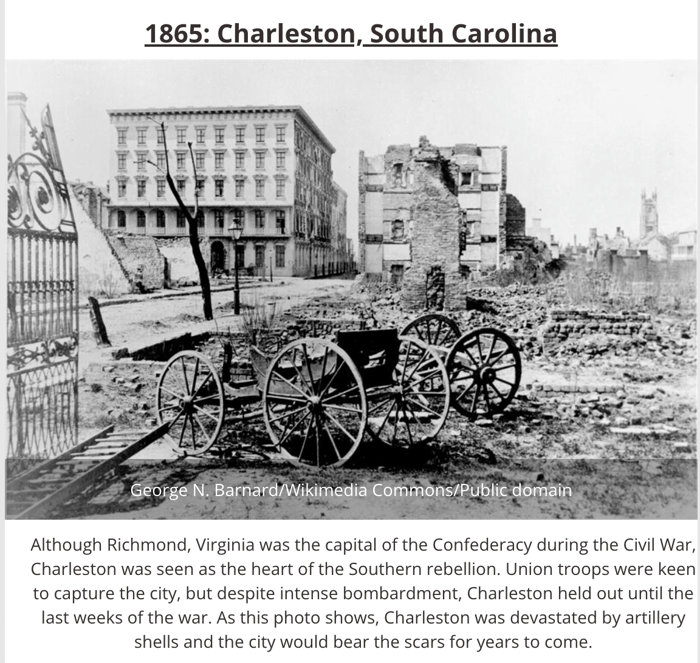
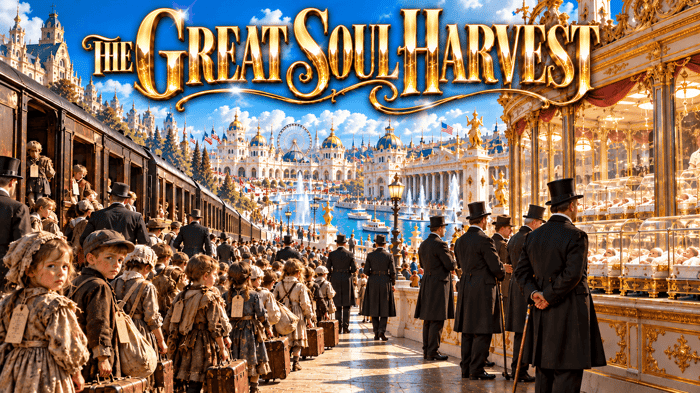
Following the countless erasures of earlier populations and cultures, American cities all looked the same, with a strikingly similar pattern: the so-called “sudden” appearance of monumental public buildings, post offices, courthouses, and exhibition halls, we are told, were constructed using very basic tools, no electricity, and limited technology, yet we can see the ornate structure and advanced architecture of highly skilled craftsmen. Photographs show these structures standing in largely empty streets, with little evidence of the populations or workforce that could have built them. Many of these impressive buildings were demolished or dismantled within a few years, their materials often unaccounted for in public records.
This period was also marked by unprecedented wealth transfers, as entire populations were uprooted, families were separated, and the state cataloged and redistributed personal property. In the United States, government records document the seizure and auction of properties during large-scale displacements, such as the internment camps of Japanese Americans during World War II, where over 120,000 individuals were forcibly removed from their homes and lost land, businesses, and personal assets under state management. Earlier, during the rapid urban transformations of the late 19th and early 20th centuries, city governments exercised eminent domain to demolish entire neighborhoods for public works or urban renewal, displacing working-class and immigrant communities and redistributing land to private interests or public institutions. Property ledgers, municipal records, and contemporaneous news accounts show the scope and frequency of these transfers. Again, business as usual. They burn down cities they want to take control over, even sending as many people into Lahaina and keeping children home from school to ensure large-scale loss of native land and collective memories. Same with Paradise, CA. Same with Los Angeles. Same with North Carolina.
The destruction of buildings and communities in WWII Germany is also a parallel, highlighting how the loss and redistribution of property happens in every corner of the planet and is one of the main reasons for a world war. In all cases, the process involves not only the demolition or “accidental” bombing of structures but also the government's management of the land and physical assets left behind, reinforcing the link between population displacement, architectural transformation (aka historical demolition), and wealth capture.
The events of WWII Germany show that millions were moved onto trains, families were dispossessed, and their material belongings inventoried and seized. The infamous 1998 interview with George Soros on CBS’s 60 Minutes provides a personal glimpse into this process. Soros, reflecting on his experience as a 14-year-old Jewish boy in Nazi-occupied Hungary, described being sheltered under a false identity by a Hungarian official who was assigned to take inventory of confiscated Jewish property and look for jews hiding in their homes. Soros claimed he felt no guilt and recounted going from home to home, cataloging wealth and displacing anyone left behind.
This kind of systematic cataloging and appropriation of property, alongside the empty urban landscapes and the rapid proliferation of asylums and orphanages, gives us a broader perspective on world history and, more importantly, why. We were hit over the head with information about why learning history was so important so that we don’t repeat the atrocities of the past. Of course, when you rewrite the past to suit your agenda, you do the exact opposite. This ensures that present and future generations will repeat the past as the victors have engineered. Now we need to look at the empty cities of the United States and determine who was here before us and where they disappeared to.
The Empty Cities
We can now clearly see that America was ancient architecture comparable to that of old-world Europe. The cities and structures that once stood across this continent reflect a level of grandeur and civilization equal to anything found overseas. Yet, the popular narrative of a “newly discovered” and uncivilized America, embodied in the myth of the psychopathic mercinary Chris Columbus, propagandizes over reality. American cities stood as showcases of artistic ambition and civic grandeur. The remnants of this era, including the awe-inspiring structures of events like the Chicago World’s Fair, show a population with the resources, time, and vision to create beauty on a monumental scale. Photographs and architectural records reveal city centers adorned with elaborate stonework, grand arches, golden statues, gorgeous canals and waterways, and intricate ornamentation, all impossibly advanced beyond our technology and buildings of today.
Let’s first talk about what is called Tartarian civilization. The concept of Tartaria, aka the Tartarian Empire, comes from alternative histories and online research communities piecing together evidence from old maps, architectural remnants, and overlooked historical records. So far, they have pieced together that Tartaria was a vast, technologically advanced civilization that spanned continents and produced monumental architecture recognizable as distinctly Tartarian.

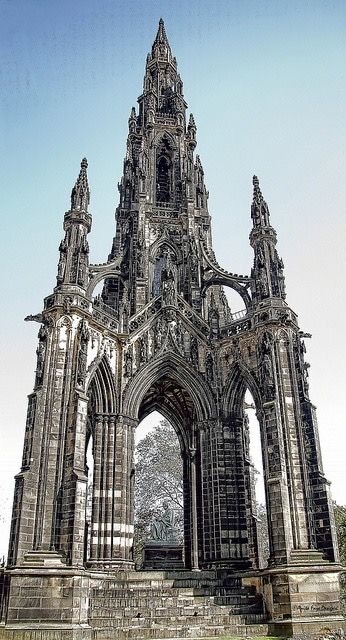
Tartarian-style buildings feature elements: enormous domes, intricate stonework, soaring arches, and the recurring motif of the star fort, geometric, star-shaped fortifications that appear in cities across North America, Europe, and Asia. Many of these structures also incorporate extensive canal systems and sophisticated waterworks, suggesting an urban planning approach that prioritized environmental harmony, free energy, and the spiritual and emotional well-being of thriving communities.

These buildings show a level of precision and engineering that is directly out of place for the era, especially given the obvious limitations of tools and technology we are told they possessed at the time. The discovery of these old photographs, blueprints, and city plans proves that much of what we call “classical” or “Beaux-Arts” architecture in America is actually the last remnants of a purposefully destroyed Tartarian world.

Yet as the century turned, these centers of culture and innovation began to empty. Entire neighborhoods were razed under the banners of “progress” and “urban renewal.” The propaganda machine we call the press, of course, celebrated the demolition of these grand structures as a sign of modernization. No one in their right mind would celebrate the destruction of beauty and parade the mediocre unless they were told to. And if you spoke out or dissented from the ranks? Your fate was worse than death, as we will soon discover.
We can see that what emerged from this mass population reset was a new machinery of control: vast asylums, sprawling orphanages, and newly anointed, all-powerful bureaucracies tasked with cataloging and redistributing the remnants of vanished households. The record shows a society in transition, undergoing a profound transformation in which those attuned to the old order were eradicated like modern vaccination campaigns or forced food chemical fortification empires.
This is the context in which the orphan trains emerged: a nation with surprisingly fast infrastructure for mass relocation, the governments built to manage dislocated populations, and a collective amnesia about the world that came before. The ornate buildings and waterways of the past became backdrops to the new story of America’s lost adults and displaced children-the cabbage patch kids.
The Cabbage Patch Kids- Antiquated Child Trafficking
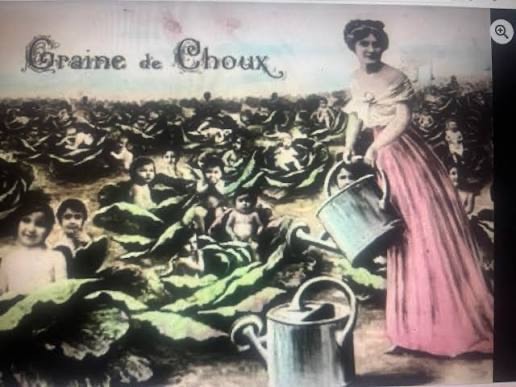
The phenomenon we now know as the “Cabbage Patch Kids” still raises more questions than answers. The name itself, in which babies were found in cabbage fields, became a darkly fitting metaphor for the staggering number of displaced children in the late 19th and early 20th centuries. During this era, hundreds of thousands of children, estimates range from 200,000 to over a quarter million, were uprooted from cities, orphanages, and institutions and redistributed across the country. Adoption was not always a private or compassionate affair: in many cases, children were displayed at public events, including the World’s Fairs, where premature babies were kept in incubators as attractions and children were offered for adoption to the highest bidder. What would now be recognized as child trafficking was, at the time, considered routine practice, and nothing new under the sun. We have reports of over 8 million missing children every year, globally. And these are the ones that are reported. Imagine the numbers of those born into trafficking.

Postcards from the era openly advertised “children for adoption,” reflecting a society in which child placement was not just social welfare, but a spectacle and, for some, a business. The scale and casual nature of these transactions reveal a machinery of mass child trafficking, operating domestically and echoed by similar programs abroad. The very term “Cabbage Patch Kids” stands as an uneasy reminder of a generation whose roots and identities were severed, their fates determined by forces far beyond family or community.
International Child Redistribution Programs (Late 19th – 20th Century)
- Britain’s Child Migration Schemes (from 1869):
- Over 100,000 poor or “undesirable” children sent from the UK to Canada, Australia, New Zealand, and South Africa.
- Programs run by organizations like Barnardo’s and the Child Migrants Trust.
- Framed as providing opportunity and easing overcrowding, but led to widespread loss of identity, exploitation, and abuse.
- Continued into the 1970s; now recognized as a deeply troubling chapter in history.
- Australia: Child Migrants and the Stolen Generations:
- Hundreds of thousands of British and Maltese children, as well as Indigenous Australian children, relocated between the late 1800s and the 1970s.
- Government policies forcibly removed Indigenous children (“Stolen Generations”) from families for alleged “protection” and assimilation.
- Resulted in cultural destruction, forced labor, and generational trauma.
- Canada: British Home Children (1869–1948):
- More than 100,000 children from Britain were resettled as farm laborers and domestic servants.
- Public narratives emphasized rescue, but many children faced exploitation, separation from siblings, and permanent loss of family ties.
- Ireland: Institutionalization and Forced Labor:
- A large system of industrial schools, orphanages, and Magdalene laundries developed in the 19th and 20th centuries.
- Children and young women were institutionalized for poverty, illegitimacy, or minor infractions.
- Officially for welfare, but often involved forced labor, abuse, and the erasure of records and identities.
- Continental Europe: Orphanages and Foundling Hospitals:
- Abandoned or parentless children typically raised in state- or church-run institutions.
- Systems like the “foundling wheel” in France, Italy, and Germany allowed for anonymous abandonment.
- Less focus on overseas relocation; children usually remained within national borders.
- Russia: Orphan Crisis of the Early 20th Century:
- Millions of children left orphaned or abandoned after revolution, famine, and civil war (1917–1925).
- The state established vast orphanages; “besprizorniki” (street children) numbered over seven million.
- Causes included war, forced collectivization, political purges, and family destruction.
- The state became the de facto parent, shaping new notions of authority and belonging.
The scale and globally orchestrated choreography of child displacement suggest more than the money made from trafficking. As they forged a new society that benefited from erasing the past and seamlessly adopting a new world order, children became the most malleable raw material. Unlike adults, who carried memories of older ways of life, social freedom, and the joyful abundance of the past Tartarian civilization, children could be shaped from the ground up. The mass removal, renaming, and redistribution of babies and young children wasn’t just about finding them homes; it was about populating a new world with citizens completely loyal to new authorities, detached from ancestral memory, and conditioned to accept government, “experts,” and institutional narratives as the only truth.
In this one of countless Great Resets, children were given new identities, new “birth certificates,” and a fabricated history. They were instructed to revere the state, the church, or the white coat as supreme authority, never questioning the origins of their own existence or the stories handed down to them. Stripped of culture, kin, and context, they became a generation defined by institutional belonging and engineered belief. Who then married and procreated the next generation.
The fate of the adults, those who might have remembered, resisted, or revealed the truth, was the status quo. As the machinery gained momentum, adults who clung to old knowledge, traditions, or ways of living became inconvenient. They were rendered invisible through the expanding network of asylums and the burgeoning psychiatric institutions, where dissent, difference, or simply an inability to conform would result in indefinite confinement. In this system, disappearance was not just a physical reality but a cultural necessity; a fate, for many, worse than death.
As the next article will show, the empty streets and orphan trains of the Great Reset were only one side of the coin. The other was the silent corridors of the asylums, where the last witnesses to the old world were systematically erased from history.
References
- Childress, D. H. (1997). Lost cities of North & Central America. Adventures Unlimited Press.
- Harris, N. (1975). The artist in American society: The formative years, 1790–1860. University of Chicago Press.
- Rydell, R. W. (1984). All the world’s a fair: Visions of empire at American international expositions, 1876–1916. University of Chicago Press.
- Short, J. R. (2018). Urban theory: A critical assessment. Palgrave Macmillan.
- Scull, A. (2015). Madness in civilization: A cultural history of insanity, from the Bible to Freud, from the madhouse to modern medicine. Princeton University Press.
- Holt, M. (1992). The orphan trains: Placing out in America. University of Nebraska Press.
- O’Connor, S. (2001). Orphan trains: The story of Charles Loring Brace and the children he saved and failed. Houghton Mifflin.
- Parr, J. (1994). Labour market, orphan trains and child migration in North America, 1853–1929. Social History, 19(2), 125–143.
- Swain, S., & Hillel, M. (2010). Child, nation, race, and empire: Child rescue discourse, England, Canada, and Australia, 1850–1915. Manchester University Press.
- Haebich, A. (2000). Broken circles: Fragmenting Indigenous families 1800–2000. Fremantle Arts Centre Press.
- Constantine, S. (1991). Children as migrants: Orphans, child migration and deportation in the British world, c. 1860–1960. Journal of Imperial and Commonwealth History, 19(1), 110–130.
- Foucault, M. (1995). Discipline and punish: The birth of the prison (A. Sheridan, Trans.). Vintage Books.
- Scheper-Hughes, N., & Sargent, C. (Eds.). (1998). Small wars: The cultural politics of childhood. University of California Press.