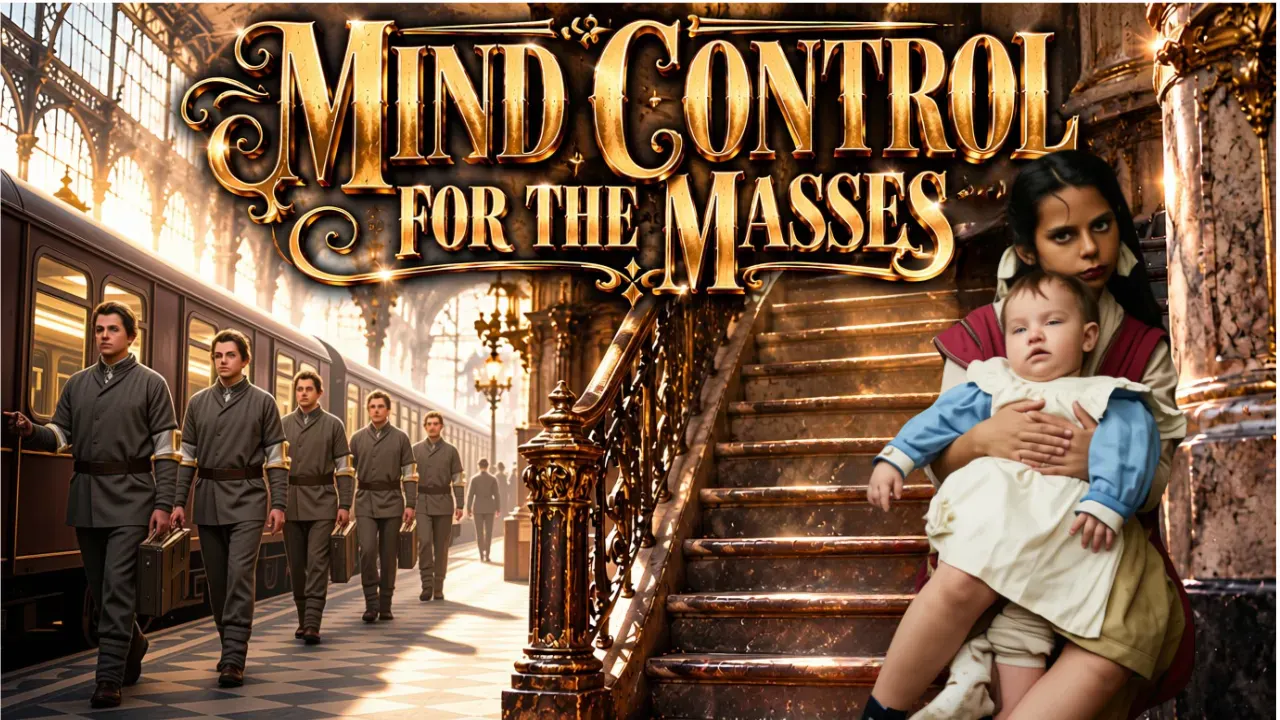



The Unanswered Cries, Vanished Adults, and the Machinery Behind Social Control
The previous article established that the removal and redistribution of children through orphan trains, adoption fairs, and institutional placements in the United States were not isolated acts of charity or the result of random historical forces. These practices were part of a deliberate system designed to erase existing identities and disconnect generations from their cultural and familial foundations.
Let’s begin my third article with some logical questions. First, who was actually responsible for keeping these infants alive during transport? What systems fed, cleaned, and cared for babies who required constant attention? During those long journeys, who stayed awake at night, who held them, and who ensured their survival? These are fundamental questions rarely addressed in the official narrative and almost never examined in detail to provide clear answers.
Medicine Girl’s Substack is reader-supported—thank you for considering becoming a paid subscriber. Your support helps bring the truth into the light, and I appreciate you and your ongoing generosity. I’m not here to appease anyone demanding credentials. My qualifications? I have a brain that works, I think for myself, and I answer to no one. I don’t shill for any industry, I don’t hawk supplements, and I’ve never sold out for an affiliate link or a synthetic pill payout. I am not cry-talking like a toddler about my failing business, then taking my family of five on international flights to Australia. Those that attack me sing the opposite. Follow the money.
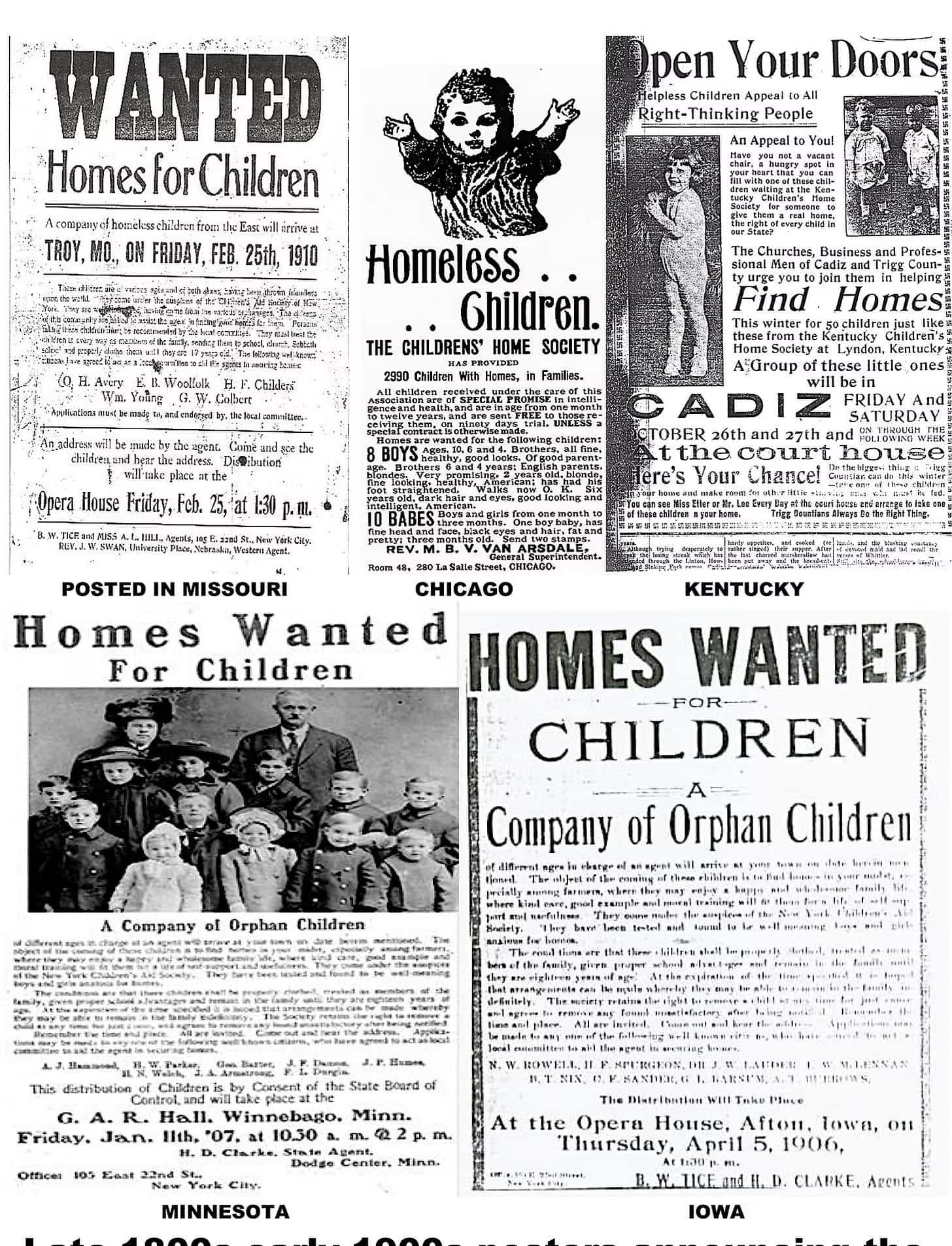
By examining adoption advertisements, the logistics of mass child placement, the psychology of detachment disorder, and the evolution of institutional mind control programs, this article maps the machinery of social control that defined the era. The aim is not just to document historical trauma, but to explain how the systems and strategies developed during this period continue to shape society’s structure and behavior today.
Who Was Caring for America’s Lost Children?
The logistics of mass child trafficking relocation in the United States during the orphan train era remain one of the least scrutinized aspects of this historical period. Through archival photographs and records I found, I see dozens, sometimes hundreds, of infants and young children being transported across state lines, yet little documents the daily realities of their care.
Let’s bring a little logic into the mix. If you have ever had or cared for a newborn, you know infants require constant feeding, cleaning, and human contact. Newborns must be fed every two to three hours, changed frequently, and soothed through touch and affection. The surviving records I came across rarely specify who provided this care during days-long journeys on crowded trains or in makeshift holding areas before placement. Where detailed accounts exist, they tend to focus on placement logistics or the benevolent intentions of charitable organizations, rather than the practical realities the children faced.
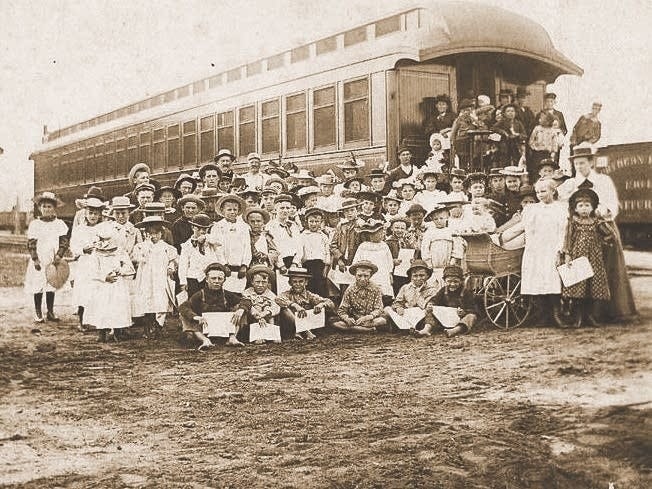
In many cases, orphan train companies and adoption agencies operated with minimal staff, often relying on a handful of adults or older children to oversee entire carloads of infants and toddlers. As one rider recalled, “Sometimes there would be just two or three adults for a whole train of children. We mostly had to look after each other.” (O’Connor, Orphan Trains, 2001). Other testimonies describe “long periods without attention, children left to cry, and never any comfort or nurturing.” In her memoir, Mary Ellen Johnson writes, “We cried until our voices gave out. No one came.” The caregiver-to-child ratio was often so low that, as the historian Marilyn Holt notes, “the adults simply could not meet the needs of so many young charges, and the youngest were at greatest risk.”
When a baby’s cries go unanswered, you don’t just get silence; you get a full surrender. The child learns permanently: no one cares if you suffer, no one is coming, nothing you do will change a thing. Hunger, fear, confusion, pain; none of it matters. Babies stop reaching out. The so-called “experts,” clutching their DSM—the Dumb Shit Manual for Psychobabbalists—label it “reactive attachment disorder.” But let’s be honest: this is a spirit murder. This is how you raise a generation that feels nothing, trusts no one, and will crawl through life broken, ready to follow any order because they know from the start that hope is a lie. When a toddler, once held and loved, is left hungry, terrified, and cold, the lesson is brutal and permanent. Trust is obliterated. The mind fractures. A child who reaches out and finds nothing but emptiness learns that their suffering means nothing. They go silent and shut down. The world shrinks to numbness and raw pain that gets buried deeper. The so-called “experts” clutching the DSM—the Dumb Shit Manual for Psychobabbalists—call it “reactive attachment disorder.” But the reality is much simpler and far more barbaric: this is how you hollow out a generation, strip them of feeling, and turn them into adults who accept anything because they’ve learned to ask for nothing and their only hope is for slightly less pain.
The Business of Adoption: Numbers, Profiteers, and Power
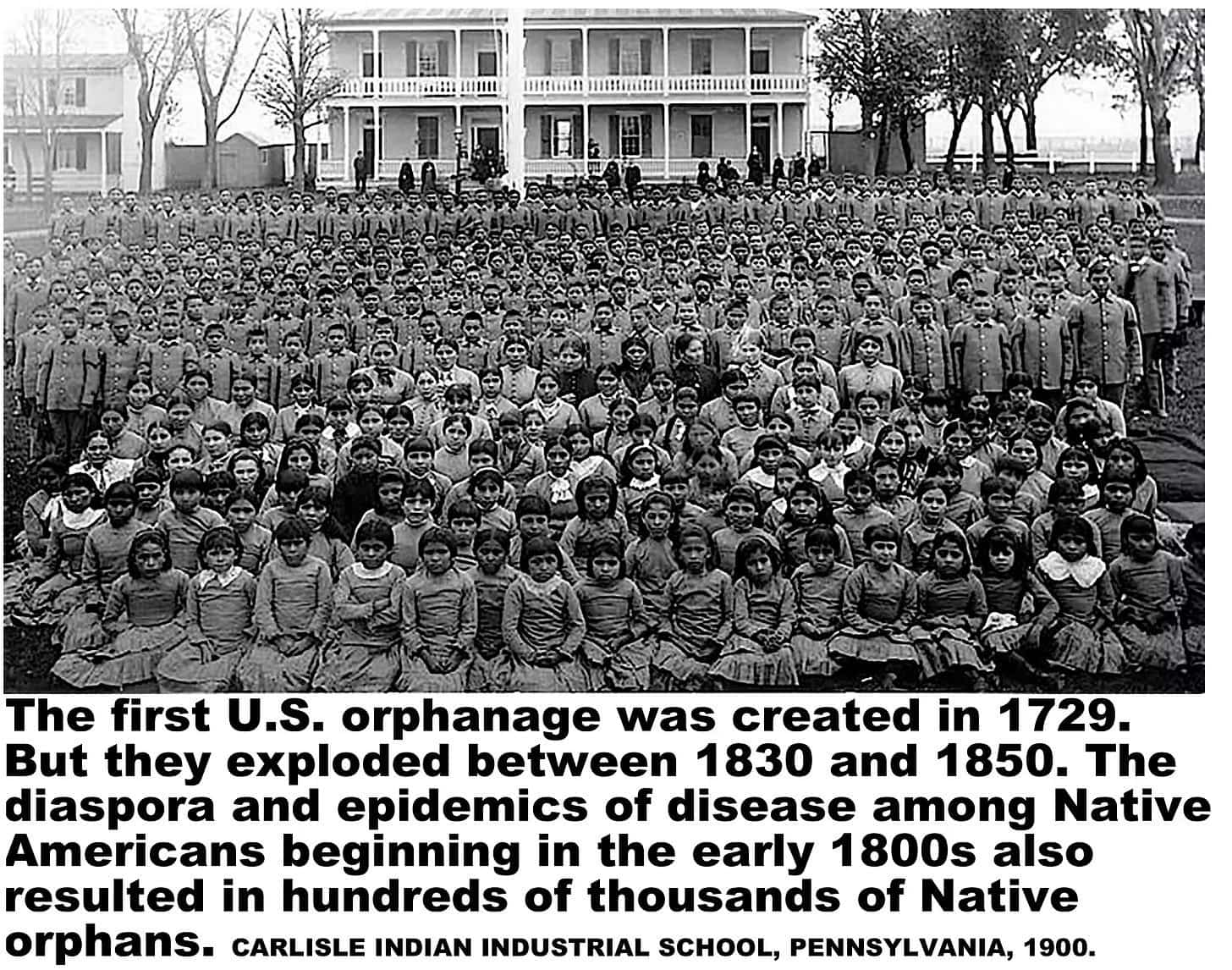
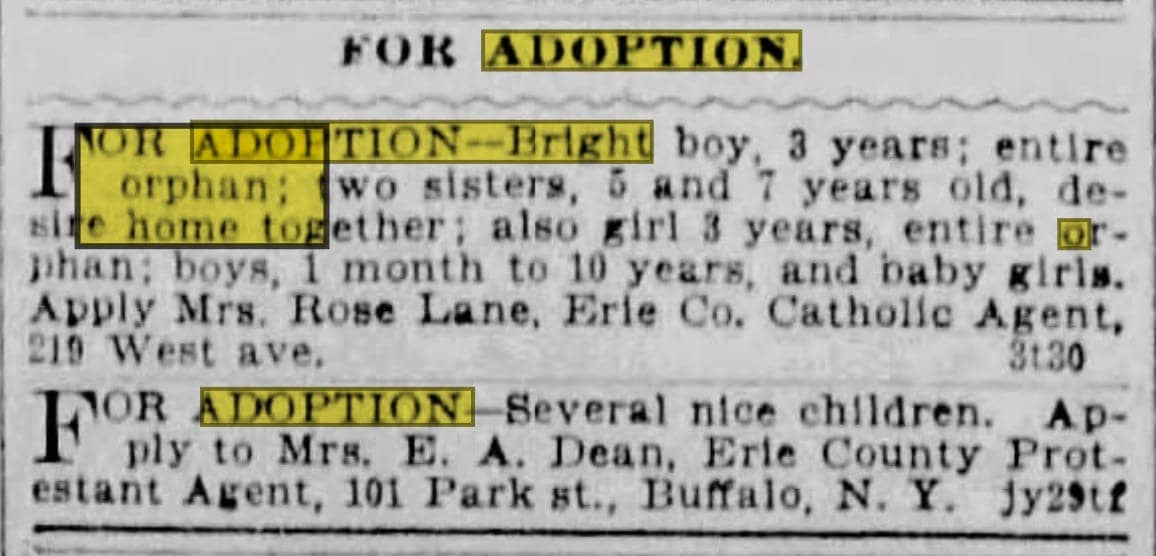
Between 1854 and 1929, an estimated 250,000 children were shipped across the United States. We could easily double that, thanks to poor records and attempts to erase the magnitude of the reset. Adoption agencies, private charities, and religious organizations competed for government contracts and donor money, often paid per child placed. The Children’s Aid Society, founded by Charles Loring Brace and supported by J.P. Morgan and the Astor family, quickly became a financial powerhouse. Its annual reports from the 1880s and 1890s reveal income in the hundreds of thousands, equivalent to millions today, flowing in from donors, state subsidies, and placement fees. That was just one company, so if we follow the profits, the number of orphans placed must have been upwards of a million.
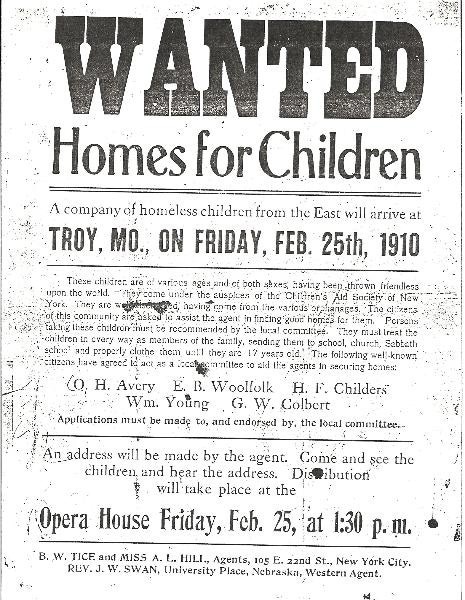
The New York Foundling Hospital, operated by the Sisters of Charity with backers from the Morgan, Harriman, and Rockefeller crime circles, moved tens of thousands of children and received per-head compensation from city and state governments. In 1910 alone, records show more than $250,000 in annual receipts from a mix of private and public sources, over $7 million in today’s money.
It should come as no surprise that the board memberships and so-called charitable organizations of the era read like a roll call of the most predatory crime families: Rockefeller, Carnegie, Astor, Harriman, Morgan, Sage, Russell, the same dynasties that ran the railroads, federal banks, and industry. The Russell Sage Foundation, built on railroad and finance money, didn’t just “help” children; it wrote the playbook for mass adoption, aka child trafficking, sugarcoated as philanthropy. These families didn’t just bankroll the machinery; they owned it, operated it, and made sure it delivered exactly what their booming industries needed: a fresh supply of broken, compliant labor.
And let’s not pretend this is all ancient history. The descendants of these same families still sit on the boards of modern “child welfare” foundations, still direct policy, and still profit handsomely from a system that’s never been about saving children. When your business model depends on a steady stream of the lost and vulnerable, there’s no incentive to solve anything, only to keep the pipeline full and the money flowing.
Hollywood throws you movies like The Sound of Freedom to make you feel like something’s being done, when it’s just another distraction performance to keep the public pacified. The same goes for those dollar donations at the grocery checkout to the latest cancer or child welfare “awareness” campaign. That dollar you virtue-signaled for? It goes right back into perpetuating the problem, greasing the wheels of a system designed to keep itself alive, no matter the cost to the children it claims to save.

The Rockefeller Foundation continues to wield immense influence in global health, education, and social policy, with billions in assets. The Carnegie Corporation remains one of the world’s largest private philanthropies. The Astor family, through trusts and real estate, owns major swaths of New York City. Nothing new under the sun. And let’s not forget, a leopard doesn’t change its spots to stripes. Once an evil villain…
What Happened at the Hotels? Feeding, Sleeping, and the Shadows No One Tracked
The money did not stop at the agencies. Railroad companies, notably those controlled by the Vanderbilts and Harrimans, profited directly from the transport contracts, as every orphan train ticket was paid for by the sending agency or state. Hotels and boarding houses along the routes, many owned by local political machines linked to the same industrial families, collected fees for housing children in transit.
Orphan train journeys often stretched for days, with stops in towns and cities where children and their chaperones stayed overnight. The logistics were nightmarish. Historical accounts and surviving ledgers show that hotels and boarding houses along the route were frequently overwhelmed. Even the largest establishments rarely had enough beds for a fraction of the children arriving on a single train, sometimes over a hundred at a time.
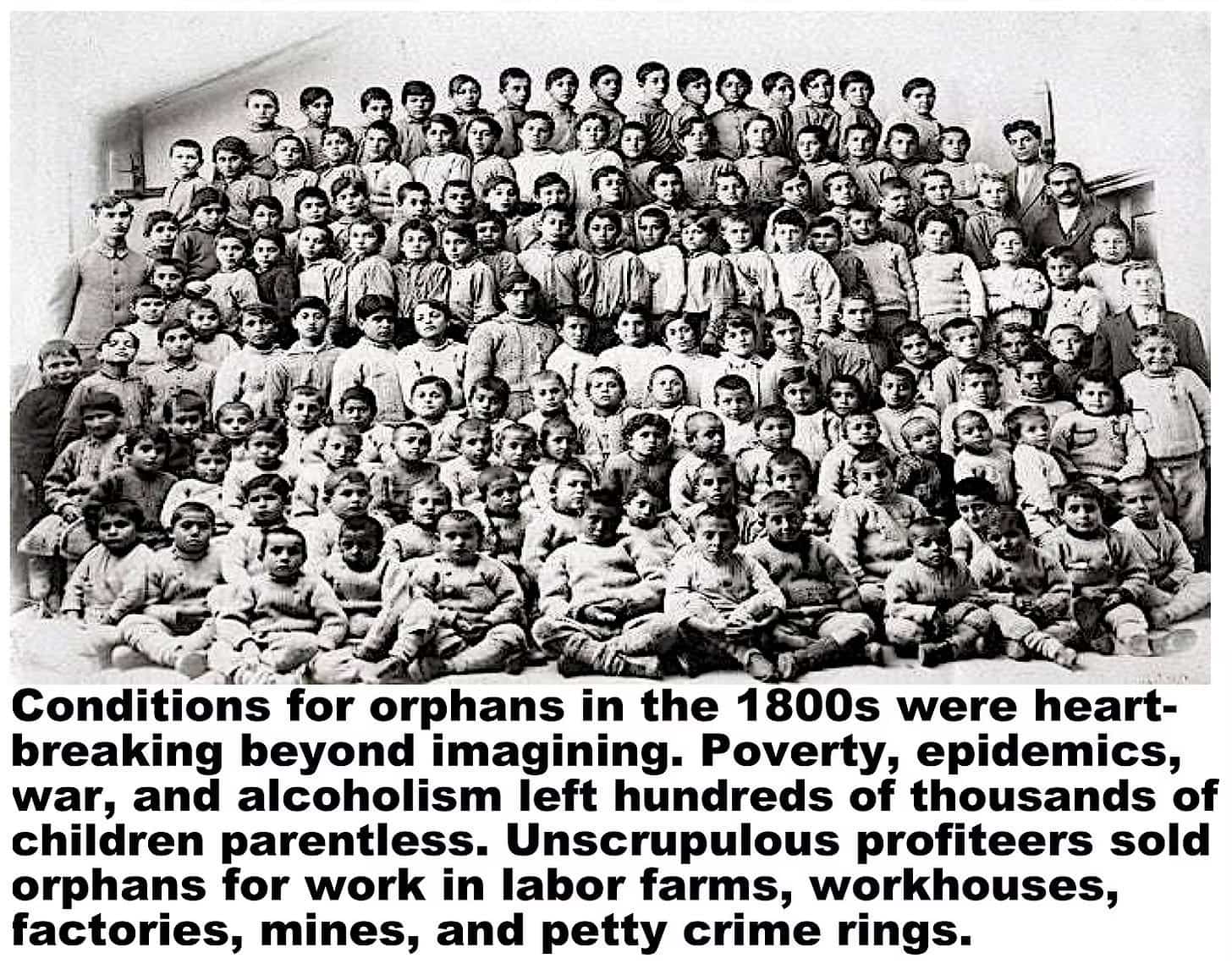
Reports describe children packed into parlors, lobbies, and hallways, sleeping on floors or benches. According to a 1902 letter from a Children’s Aid Society agent, “We put down blankets and coats wherever there was space. Most of the little ones did not sleep at all.” Feeding the children was equally haphazard. Hotel kitchens were pressed into service, but the volume was so great that cold bread, watered-down soup, and whatever could be quickly prepared became the standard fare. Accounts describe older children foraging for garbage and discarded scraps.
Records of what actually happened in these hotels are difficult to find, and likely for good reason. The chaos created by design opportunities for predators. That is where the real money resides. While most official documentation is silent on abuse, survivor accounts tell a different story. In Orphan Train Rider: One Boy’s True Story (Johnson, 1992), one former rider recalled, “The adults were busy, and we were left alone with strangers more than once. Some kids disappeared at night and were never seen again.” Several investigations, including those referenced in Marilyn Holt’s The Orphan Trains, mention rumors and later testimony of children being “taken” from stops along the route, especially the youngest and most vulnerable.
In a 1978 interview with the Kansas Historical Society, former rider Louise Endres Moore described her first night off the train as “a blur of crying children, strangers coming and going, and a sense that we were on display for anyone who came through the door.” She recalled older men mingling with the group and the staff not asking questions when children disappeared before morning.
In 1907, a local newspaper reported, “Children spilled out into the street, unsupervised, while the agents disappeared inside the depot.” The same report noted that “two boys and a girl vanished before dawn.” No follow-up story appeared, and the incident faded from official records.
In St. Louis, Missouri, Children’s Aid Society agents repeatedly cited a hotel near the main rail terminal for “unmanageable crowds and unknown adults mingling with the children.” An 1899 internal memo warned, “We cannot guarantee the safety of the children at this establishment.” Despite the warning, the hotel continued to be used for years because of its low rates and sex trafficking profitability or, as they said, proximity to the station.
One girl, placed out in Oklahoma in 1913, told her granddaughter, “The man at the hotel said he could help with the little ones. They let him take me upstairs. He said it was a game and not to tell. After that, I never spoke about what happened. I just wanted to forget.” Her placement record notes only that she was “quiet and reserved.”
Court documents from a 1908 New York investigation into missing children along the orphan train corridors are instructive. The court heard testimony from a telegraph operator in Illinois who reported seeing “men waiting at train stops, offering money for the youngest or prettiest children.” While the inquiry was quickly shut down, the transcript remains in state archives, with handwritten notes stating, “unsubstantiated—no further action taken.” Sond familiar?
In a 1911 report buried in the New York Tribune, a local sheriff in Iowa warned, “It is not safe to send young children unguarded through these stops. We have seen evidence of foul play, but no one wants to make it public.”
In New York City, a 1913 investigation by the Municipal Child Welfare Bureau uncovered evidence that several children arriving from the West had gone missing at a hotel in Hell’s Kitchen. The final report, which included eyewitness testimony of children being led away by “well-dressed strangers,” was never published. Internal correspondence from the bureau simply notes, “Sensitive matter, recommend no public disclosure.”
In a rare court case from Iowa, 1915, the parents of an adopted girl sued the state after learning their daughter had been trafficked to a brothel in Omaha. The case was quickly settled out of court. The judge’s written opinion, now in the state archives, states, “The matter is best left undisclosed for the good of all parties and the reputation of the child-saving enterprise.”
One of the most chilling accounts comes from a 1922 deposition by former matron Clara Bell, who worked on trains headed for Oklahoma and Texas. She described an overnight stop in Wichita where “a group of men offered the chaperones money and whiskey in exchange for being allowed to ‘choose’ among the girls.” Bell’s report was forwarded to her supervisor but marked “resolved—circumstantial” and archived without further action.
In the 1930s, a Minnesota police report described finding three children from an orphan train hiding in a barn, refusing to speak to adults. “They were terrified of everyone and wouldn’t say who they were or where they’d come from.”
Despite the scale of the operation, there was little to no follow-up after placement or even after overnight stops. The focus was always on moving the children out as quickly as possible. Most who vanished along the way were simply erased from the ledgers, another unresolved statistic in America’s great social experiment.
The pattern is clear: whenever credible evidence or testimony surfaced implicating hotels, depots, or individuals in trafficking or abuse, the investigations were quietly closed, the records sealed, and the stories buried. The machinery of mass child relocation depended on public trust and smooth operations. Anything that threatened the image of benevolence or efficiency was erased from the official narrative.
The Legacy of Broken Children: What Becomes of a Trafficked Generation?
What would you expect from a child raised without comfort, safety, or love—passed from hand to hand, used, neglected, forgotten? The answer is as ugly as it is predictable. Children stripped of trust and affection grow into adults who struggle to form attachments, who numb themselves to pain—both their own and others’. They learn to survive at any cost, to bury emotion, to obey without question, to turn away when another suffers. Their default mode is detachment, compliance, suspicion of kindness, and a bone-deep certainty that no help will ever come.
These adults, broken-in young, pass on what they know. They raise their own children with the same numbness, the same inability to show affection or believe in safety. Generational trauma is not a slogan—it’s a fact. What begins as a business model for labor and profit becomes a blueprint for a society of workers who can endure anything, question nothing, and keep the machinery running no matter what it destroys in the process.
Meanwhile, the traffickers have simply changed costumes. Today, they operate behind the façade of refugee resettlement, foster care, or border “processing.” Children are flown in by the thousands, put up in hotels, and separated from their parents—often with little to no public oversight and no accountability for the outcomes. The playbook is the same: move bodies, erase origins, profit at every step, and keep the public distracted with talk of “humanitarian crises” and “opportunity.” The American dream is still dangled as bait, but the result is the same: a new supply of the lost and vulnerable, primed for exploitation.
Where Are They Now?
The same families and corporations still dominate the landscape. The Rockefeller Foundation steers global health policy. The Carnegie Corporation shapes education reform. Private equity groups now own major foster care and detention networks. The same names appear on the boards of “child welfare” nonprofits, international NGOs, and think tanks. They still write the rules, manage the pipelines, and collect the profits—just as they always have.
Suppressed Stories
- In 2021, whistleblowers from a major border detention facility in Texas described “hundreds of children missing, unaccounted for, or released to unknown parties.”
- A 2019 report from the Office of Refugee Resettlement admitted to “losing track” of nearly 1,500 migrant children in a single year.
- Several major hotel chains, named in federal lawsuits, have quietly settled cases involving trafficked children held on their properties during “processing.”
Conclusion
The black market for child sex trafficking is not a low-budget outlier operation; it is a multi-billion-dollar global industry, quietly feeding money up the chain to those with the power to protect it. Children plucked from the system are worth far more than a train ticket or an adoption fee; they become commodities, traded, sold, and exploited with little risk to the buyers or the brokers. The profits are staggering, and the demand never wanes. When investigations do surface, they meet bureaucracy, sealed documents, and “lost” evidence. Politicians grandstand, but real accountability never comes. The government, time and again, turns a blind eye. But that is not actually how it works. Our very own government built our red, white, and blue from the profits of child sex trafficking. It has nothing to do with a raging alcoholic mercenary eating turkey with some kindly natives. That is 100% false fiction. Just like the NFL, Starbucks synthetic, chemically produced “pumpkin” spiced pesticides, and any body part of a Kardashian. I write this because the truth shall set you free, but first it will piss you off.
This is the legacy no one wants to claim: a nation built on the backs of children who learned to feel nothing, and adults who passed on their wounds and trauma as business as usual. The machinery that harvested young souls for profit did not start nor will it stop with the orphan trains, and certainly did not end with the hotels and boarding houses. It simply evolved, turning its gaze from the children to the adults who remembered too much, resisted too openly, or could not be made to forget. As the story continues, those who could not be erased as children were targeted as adults—herded into the sprawling asylums that soon dotted the American landscape. In Article 4, we follow the trail into the locked wards and shadowed corridors where the last witnesses to the old world were warehoused, silenced, and forgotten in the name of progress and control.
References
Brennan, D. (2014). Life interrupted: Trafficking into forced labor in the United States. Duke University Press.
Herman, E. (1995). The romance of American psychology: Political culture in the age of experts. University of California Press.
Holt, M. I. (1992). The orphan trains: Placing out in America. University of Nebraska Press.
Johnson, M. E. (1992). Orphan train rider: One boy’s true story. Scholastic.
Katz, M. B. (1996). In the shadow of the poorhouse: A social history of welfare in America (10th ed.). Basic Books.
Moore, L. E. (1978). Interview by Kansas Historical Society. Orphan Train Heritage Society Oral History Collection.
O’Connor, S. (2001). Orphan trains: The story of Charles Loring Brace and the children he saved and failed. Houghton Mifflin.
Rafferty, Y. (2008). Child trafficking and commercial sexual exploitation: A review of promising prevention policies and programs. American Journal of Orthopsychiatry, 78(4), 522–530.