

Introduction
I called it a playbook years ago; others are parroting the same now. That is fine; take what I write about, use it as your original thoughts, plagiarize, post it on your social channels. It’s annoying, but I truly care that the message is getting out there. The point being, if you want original thinking, without corporate strings and affiliate links, you know where to find me. For now, another play from the playbook. Let’s stop pretending this country isn’t run by corporations and their government puppets. The playbook is as old as business and trading for an illusion of paper or shiny shells: create a crisis, manufacture scare-a-city, or, spelled another way, scarcity, squeeze the public, rake in profits, and leave the victims holding the empty bag. Capitalism always ends up here: corporate fat cats, getting F-You money, play the game as it is set up, preplanned, rigged reports from university puppets, manufactured scarcity and shortages, and “solutions” that cost you more every time. If I could see it and call it out in middle school government class, anyone can. But most people choose not to. The scam is right in front of your face. You just have to look.
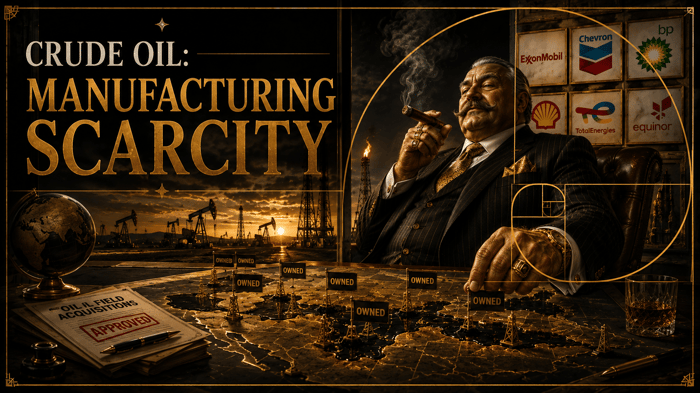
By now, you know the drill-oil isn’t rare; scarcity is manufactured, and the so-called “shortages” are just another way to keep you worried, panicked, distressed, and anxious, which makes you more obedient, easier to control, and monetizable. I have already uncovered a couple of layers of the oil con, exposed the Rockefeller et all playbook, and shown you how every drop is engineered for profit and control.
Smart Meters, Lithium Batteries, and the Fire Racket
The next level of the scam goes like this: it doesn’t stop at the oil well or the gas pump. Government and corporations are partners in a well-oiled Ponzi scheme. Look at Power Companies like PG&E, Hawaiian Electric Company (HECO), and the fires that wiped out towns like Paradise and Lahaina. The victims might get some money from lawsuits, but who actually pays? Insurance companies do, not the power companies. Meanwhile, they increase your rates, throw rolling blackouts, and charge triple during the hours you actually need power. The government collects the fine, PG&E keeps operating at a higher profit, and John Q. Public picks up the tab.
Smart meters are digital grenades bolted to your house. After their rollout, towns like Paradise, Fresno, and Lahaina went up in flames. This is not speculation. ABC30 Action News out of Fresno reported on multiple lawsuits in California, where families like Jose Valdez in Firebaugh and the Sandovals in Kerman are suing PG&E after their homes burned, citing faulty smart meters as the cause. Jose saw the smart meter arc and catch fire with his own eyes. PG&E showed up on scene almost before the fire trucks, ripped the smart meter right off the house, and confiscated the evidence. Even the local fire chief in Firebaugh investigated and found the fire was most likely started by a malfunctioning meter, arcing at the panel and turning a home into a bonfire. They know, and not only do nothing about it, but attempt to coerce you in any way possible to keep the meters on your house. Think about that for a moment.
The story gets even more explosive in Stockton, California. There, a truck crashed into a utility pole, knocking a high-voltage line onto another line and sending a massive surge straight into the neighborhood. More than 8,000 homes lost power. For houses with PG&E smart meters, it was chaos—neighbors reported the meters literally exploding off the walls with a sound like a car bomb. Fires, blackouts, and destroyed electronics, all thanks to a digital meter that couldn’t handle reality.
Here’s the inconvenient fact: homes with old analog meters didn’t explode. The surge hit, and the analog meters just took it. No fire, no popping, no destroyed panels. Only the “upgraded” smart meters short-circuited, caught fire, or burst apart. And because the smart meters were so thoroughly fried, PG&E couldn’t restore power until crews came out to replace every single box. People with smart meters sat in the dark while analog holdouts got their lights back. Those of you who follow me took your smart meters off YEARS ago, and of course they make you pay extra to not have a bomb ready to detonate on the side of your home. Ahhh, lovely group of folks running our power companies.
This wasn’t some rare freak accident. It proves how vulnerable these so-called upgrades really are. The more high-tech and “smart” your meter, the more at risk you are when the grid goes sideways.
The authorities shrug. The CPUC admits safety concerns exist but claims they never found proof the meters caused the fires. PG&E denies everything, hides behind national safety standards, and keeps collecting your data, monitoring your habits, and locking you into their system. This is a key piece to their plan to implement full digital slavery, so burning down a few houses or cities in the process is par for the course. They can surge your grid, cut your power, or fry your electronics with a keystroke. If a fire starts, it is always climate change, bad luck, or your own wiring to blame.
Lithium-ion batteries, sold as green energy, are chemical grenades. Out-of-control fires, toxic smoke, explosions, and nothing stops them once they ignite. Cars burn to the frame on the side of the road, and water does nothing. The more you upgrade, the more danger you bring home. When disaster strikes, insurance companies pay, not the utilities. The cycle repeats, the corporation profits, the government gets its cut, and you are left with another bill and more risk.
This is the same playbook as the oil crisis. Manufacture a disaster, let the public suffer, rake in profits, and keep the real story buried. That is the system. It works exactly as intended.
You see it with PG&E and the fires, and of course you see it again at the pump. The EPA or DOJ hits Big Oil with some headline-grabbing settlement, collects millions, and leaves the rest of us with higher prices and nothing to show for it. Fines aren't punishment; they are incentives for the government to do business with the shadiest businesses who put profit above all else. Can you see how the government is directly incentivized for killing its own people?
The 1970s fuel crisis was supposed to be about running out of oil. That’s what was on TV: endless lines of cars, people panicking, gas stations covered with plastic bags. The story was that OPEC cut us off, the world was running dry, and Americans had to ration and worry. But oil didn’t disappear. The companies squeezed supply, the government played along, and prices shot through the roof. The people running the shortage made a killing. Nothing about it was an accident. Politicians staged hearings, gave speeches, and promised reforms, but the same hands always stayed in control.
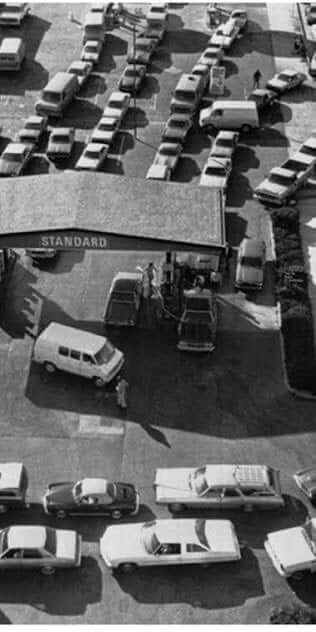
Those gas lines in the seventies were a trial run. Manufacture the shortage, scare the public, jack up the profits, then move on to the next crisis. Toilet paper “shortages” turned people into desperate shoppers, prices soared, and they never came back down. Coffee, chocolate, avocados, baby formula, eggs, lumber; every second, it’s a new “crisis,” a new excuse for higher prices, and a bigger payday for the distributors and brands who control the game. “Fair trade” is slapped on the label to soothe your guilt, but it’s just another marketing ploy to keep you paying a premium.
The Price-Fixing Circus
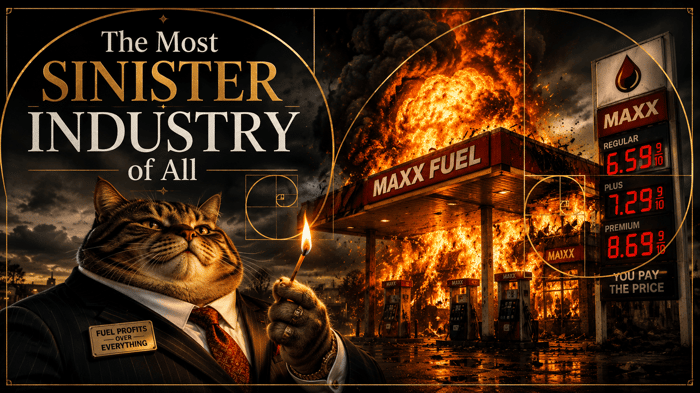
Let’s break down how they play the game today. Price fixing is a web of complex computer algorithms, corporate agreements, and regulatory green lights. The biggest names, Exxon, Chevron, Shell, and their retail partners, don’t have to collude in the open. They let the software do it for them. Kalibrate, OPIS, and other “market intelligence” tools track every price in real time and “suggest” the same inflated numbers to every station in town. The result? Competition is an illusion. You get the same gouged price, no matter where you fill up.
The government pretends to care. The DOJ and FTC pretend to be about “cracking down” on price gouging, but the fines are part of the swindle; I call it the cost of doing business with the mafia. The government needs to take a bite every now and again. The settlements make the headlines, but nothing changes except the price sign.
Leaded Gasoline Era: The Rise, Reign, and Fall of Tetraethyl Lead
Before we get too far into the additives, let's start at the beginning. Keep in mind, gasoline isn't magically better since they removed lead; in fact, as we will learn, it is actually a lot worse. In the early 20th century, the rapid growth of the automobile industry created a need for higher-performance engines. These engines required fuel with higher resistance to knocking, and naturally occurring gasoline was not up to the task. Engineers at General Motors, searching for an effective anti-knock agent, discovered in 1921 that adding a tiny amount of tetraethyl lead (TEL) to gasoline raised its octane dramatically. Charles Kettering and Thomas Midgley, Jr. led the research team, and Midgley famously demonstrated the product by washing his hands in TEL—though he would later suffer from lead poisoning himself.
GM, Standard Oil (now ExxonMobil), and DuPont quickly formed the Ethyl Gasoline Corporation to manufacture and license TEL. They branded their new product as “Ethyl,” avoiding any mention of the word “lead” in advertising and labeling. By 1923, Ethyl gasoline was being marketed across the U.S., and within a decade, most major oil companies had adopted TEL as a standard additive.
From the very beginning, TEL was recognized as a powerful neurotoxin. Workers at manufacturing plants, including the infamous “House of Butterflies” at the Bayway Refinery in New Jersey, suffered hallucinations, madness, and death from acute lead poisoning. Newspapers covered mysterious illnesses and deaths among workers, but the industry insisted the additive was safe when diluted in gasoline.
Despite these warnings, the economic benefits were overwhelming. TEL enabled higher compression engines, better fuel efficiency, and more power—the perfect selling points for a booming car culture. Oil companies and carmakers reaped enormous profits, and the Ethyl Corporation became a powerful industry cartel.
Scientific and Regulatory Battles
By the 1940s and 1950s, researchers like Dr. Alice Hamilton and Dr. Clair Patterson (the latter famous for using isotopic analysis to measure lead in the environment) began documenting the staggering environmental buildup of lead. Patterson’s work showed that lead levels in the atmosphere, oceans, and even ice cores had skyrocketed since TEL was introduced. He faced fierce industry opposition, which funded counter-studies, lobbied regulators, and ran public relations campaigns casting doubt on lead's dangers.
The link between airborne lead from gasoline and public health crises—especially in children—grew impossible to ignore. Studies found lead dust in urban soils, elevated blood lead levels in city dwellers, and correlations with developmental delays and lower IQ.
The Ban and Its Aftermath
Mounting scientific evidence and the growing environmental movement of the 1960s and 1970s finally forced action. In 1970, the U.S. Congress passed the Clean Air Act, giving the newly formed EPA the authority to regulate automotive emissions. The introduction of catalytic converters (which are destroyed by lead) in 1975 further pushed the elimination of TEL from gasoline.
The phaseout began in 1973, with lead content steadily reduced until the final ban on leaded gasoline for on-road vehicles in 1996. The U.S. led, but other countries lagged behind. The United Nations Environment Programme began global campaigns in the early 2000s, and as of 2021, leaded gasoline has been eliminated from most of the world’s supply, an effort credited with major public health gains.
Public Health Impact
At its peak, U.S. drivers burned over 100,000 tons of tetraethyl lead every year. The CDC estimates that blood lead levels in American children dropped by more than 90% between 1976 and 2008 following the phaseout. Researchers have linked this decline to higher IQ scores, better academic achievement, and significant reductions in violent crime—some studies suggest that as much as half of the drop in U.S. violent crime rates since the 1990s can be attributed to removing lead from gasoline.
Industry Deception and Legacy
The Ethyl Corporation, DuPont, and Standard Oil spent decades dismissing or denying health concerns, funding biased research, and attacking scientists. Their lobbying delayed regulation for years, during which millions were exposed to toxic lead.
Clair Patterson, the scientist who documented the true extent of environmental lead, was blackballed from industry conferences and had his lab's funding cut. It took a generation of lawsuits, exposés, and relentless research to finally overcome the industry’s grip on regulators.
TEL dominated the octane-booster market for over 50 years.
Early and obvious warnings about toxicity were ignored or covered up.
The public health cost was massive: lead poisoning, reduced IQ, behavioral and developmental problems, and environmental contamination on a global scale. Remember, Rockefeller wanted a nation of workers, not thinkers.
The phaseout of leaded gasoline is considered one of the greatest public health victories of the 20th century.
The story of TEL is a cautionary tale about industry-driven science, regulatory capture, and the long-term consequences of technological “solutions” that favor profit.
Weights and Measures—Guardians of the Scam
Every city and county has its Department of Weights and Measures as the consumer’s last line of defense. Inspectors show up at gas stations with their clipboards and metal cans, calibrate the pumps, run a simple volume test, and slap a sticker on the machine. I’ve stopped and talked to four different inspectors, caught them calibrating or running tests. Not a single one could explain why my mileage is significantly less at certain stations or why my truck seems to run on fumes after a “full” tank from one chain but not another. Their job is simple: make sure a “gallon” is a gallon, 128 ounces, nothing more.
Of course, they don’t test for energy content, combustion quality, or what’s actually in the fuel. Their only focus is volume: does the pump deliver a full measure, and is there water or sediment in the sample? They’ve never once considered or cared that two gallons of “gasoline” from two stations could deliver wildly different performance in the real world. When I press them about mileage, they look at me like I’m speaking a foreign language. For them, it’s about measurement, not value.
This is where the proprietary blend scam comes in. Each gas retailer buys from a specific refinery, and that refinery adds its own secret sauce, additives, detergents, “enhancers,” all under the banner of brand identity and EPA compliance. Weights and Measures doesn’t care. As long as the pump isn’t shorting you on liquid, they put the sticker on. What’s actually in the gas? How much energy per gallon? How much your mileage drop? That’s between the oil companies and the refineries, and you’re left holding the bill.
Legally, a gas station can sell you a soup that depletes your mileage, makes your car run rough, and sends you back to the pump sooner.
The scam is even clearer with ethanol. The law requires E10 or higher, but Weights and Measures only certify that you’re getting a gallon, not that you’re getting E10. A gallon of E10 has less energy than pure gasoline, but the sticker on the pump doesn’t tell you that. As a consumer, you’re left paying the same price for a weaker product, and nobody checks or cares. The “E10” or “E15” label is based on refinery or distributor paperwork, no on-site testing, no independent verification.
No one checks the energy content, octane, or chemical composition at the pump. “Clean air” claims are tested in EPA or CARB labs, not at the point of sale. There is no routine public oversight. The whole game is built on volume, not value.
Every regulatory layer weights and measures, EPA mandates, state boutique blends adds complexity, but never gives you a clear answer or a way to hold anyone accountable. The industry and regulators keep the rules opaque, the formulas secret, and consumers in the dark.
Until we start demanding real transparency about what’s actually in these “proprietary blends,” every fill-up is a mystery, and the only people who know are the ones profiting from the scheme.
MODERN GASOLINE
After lead was phased out, refiners turned to a new chemical playbook:
Alkylates: High-octane, low-emission, stable hydrocarbons, made by combining isobutane with alkenes in acid-catalyzed reactions. Expensive to produce, so used mainly in premium blends or where regulations are strictest.
Aromatics: Toluene, benzene, and xylene—powerful octane boosters, but also hazardous air pollutants. Federal and California regulations now limit their content, but they still make up a significant part of today’s gasoline.
Ethanol: With an octane rating of 108–113, ethanol is cheap (thanks to government subsidies), fulfills federal Renewable Fuel Standard requirements, and is now the most common U.S. octane booster. It’s labeled “oxygenated,” which regulators and refiners claim means it burns cleaner, but ethanol contains about 67 percent the energy of gasoline, so your miles per gallon drop as the ethanol content rises.
If you set aside atomic and molecular theory, the claim that “ethanol is more oxygenated than gasoline” becomes just another regulatory label—not a fact you can see or prove without a chemistry textbook. Here’s what this would look like in real-world, observable terms:
Ethanol and gasoline are both clear liquids that burn. When you burn ethanol, it smells different, burns with a different flame, and sometimes leaves less visible residue than gasoline.
Regulators and refiners say ethanol “adds oxygen” to fuel. What they mean is that when ethanol is blended into gasoline, engines might run “more completely” or with fewer visible emissions under certain lab conditions. But in the real world, most drivers notice no difference. Watchdog groups and mechanics see E10 and E15 not magically making exhaust disappear, but often making engines run rougher, lowering mileage, and killing small engines. The “complete” burn is mostly a talking point for press releases.
Here’s the label con:
The “oxygenate” label is pure regulatory theater. Supposedly, it means cleaner air, but in real-world use, many engines run worse, get lower mileage, and small engines often fail completely on ethanol blends.
No independent watchdog group has ever shown that E10 or E15 makes a dramatic difference in pollution for the average driver. Some pollutants even go up.
The real reason for the mandate? Quotas, subsidies, and political deals. The science is cherry-picked, the corn and ethanol lobbies get p
Who Profits? Follow the Money
Big Ag: Corn for ethanol is a $25–30 billion annual business, propped up by more than $100 billion in direct federal subsidies since 2005 (Congressional Budget Office). Giants like Archer Daniels Midland (ADM), Cargill, and other food conglomerates cash in on a guaranteed, government-mandated market. The National Corn Growers Association spends millions lobbying Congress to keep the ethanol gravy train running.
Big Chemical: None of this works without billions in pesticides, herbicides, and synthetic fertilizers. Dow, DuPont, Bayer, and Monsanto rake in profits selling the chemicals that drench every acre of corn planted for ethanol. More glyphosate, more atrazine, more runoff, more dead zones, and more destruction of long-term soil health. The chemical lobby and Big Ag are two sides of the same coin, both making a killing. No, for the last time, the soils are not deficient or depleted. They are poisoned.
Oil and Refiners: Oil companies and refiners play the Renewable Identification Number (RIN) system like the stock market. They buy, sell, or bank credits to meet their ethanol quota and game the regulatory system for profit. In 2022 alone, RIN trading hit over $10 billion.
Politicians: Iowa and Illinois are the sacred ground every presidential hopeful must walk. Ethanol is untouchable; no candidate dares question the mandate unless they want to torpedo their campaign in the primaries. Both parties protect the scheme in a permanent, bipartisan protection racket.
The Farmers: Let’s not pretend the farmers are innocent bystanders. For decades, they lined up for subsidies, grew what they were told, and plowed under or destroyed crops when the government paid them to. All for a check. They’ve been selling out the American public and true food security long before anyone started crying about “family farms” getting squeezed out. Now, most are just cogs in the Big Ag machine, willing participants in the racket as long as the money was good, and only complaining when they got squeezed themselves.
The Real Harm
Engines and MPG: E10 drops fuel economy by 3–4%. E85 (85% ethanol) can cut mileage by 25–30%. The Department of Energy’s own data confirms this. Small engines—mowers, boats, motorcycles—often fail outright on ethanol blends, leading to costly repairs and replacements.
Public Health: The EPA’s own 2017 “Biofuels and the Environment” report warned that ethanol mandates have “mixed or negative effects” on air and water quality. Aldehyde emissions, especially formaldehyde and acetaldehyde, are up to 30% higher with ethanol blends.
Food Prices and Global Impact: Diverting 40% of the U.S. corn crop to ethanol drives up food prices worldwide. The World Bank and USDA both found that ethanol mandates contributed to the 2007–2008 global food crisis, pushing millions into hunger. Cha Ching Cha Ching.
Regulatory Capture and the Illusion of Progress
The EPA, incentivized by both Big Ag and Big Oil, signed off on “science” funded by the very industries that profit from the mandate. The RFS was sold as “climate action,” but multiple independent studies (including from the National Academy of Sciences) show that corn ethanol’s full lifecycle carbon emissions are higher than gasoline, once land use, fertilizer, and processing are factored in.
Oil companies play both sides: they complain about the ethanol mandate in public, while quietly profiting from RIN trading and passing off lower-energy blends at full price to consumers. Lobbyists for both industries regularly swap jobs with EPA officials. Regulatory capture is not an accident; it’s actually the point.
The ethanol mandate is not about clean air or energy independence. It’s a taxpayer-funded transfer from the public to the agricultural and refinery lobbies, wrapped in green marketing and enforced by political muscle. Your engine gets less mileage. Your air and water aren’t cleaner. The only numbers guaranteed to rise are corporate profits and campaign donations.
OCTANE and ADDITIVES: ANOTHER MONETARY SQUEEZE
1. What Octane Actually Is
Octane is a rating system; literally a number assigned to fuel based on its ability to resist “knock,” which is premature combustion of the air-fuel mixture in your engine. Knock isn't just an annoying sound; it destroys pistons, cylinder walls, and valves over time. The octane scale uses two reference “hydrocarbons”: iso-octane (which resists knock, set at 100) and n-heptane (which knocks easily, set at 0). A fuel rated at 87 octane performs the same under test as a blend of 87% iso-octane and 13% n-heptane.
2. How Octane Ratings Are Measured
The U.S. uses the Anti-Knock Index (AKI), which averages two lab tests:
Research Octane Number (RON): Simulates knock resistance under mild engine conditions.
Motor Octane Number (MON): Simulates knock resistance under severe, high-speed, high-load engine conditions.
The number you see at the pump is (RON + MON)/2.
Regular: 87 AKI (about 91-92 RON)
Midgrade: 89 AKI (about 93-94 RON)
Premium: 91-93 AKI (about 96-98 RON). European countries display only RON, which is why their numbers seem higher.
3. Chemistry: What Actually Raises Octane
After leaded gasoline was phased out (See section below), refiners swapped one set of chemical tricks for another. Alkylates, expensive to produce but clean and stable, became the high-octane choice for premium blends and markets with strict regulations. Aromatics like toluene, benzene, and xylene—effective but toxic still make up a significant part of American gasoline, despite their links to cancer and smog. Ethanol, pushed as a “green” solution, is cheap and heavily subsidized, but burns with less energy than gasoline, corrodes fuel systems, and often increases harmful emissions like aldehydes and VOCs. The “oxygenate” label is regulatory theater; in the real world, most drivers see no real benefit and plenty of downside.
4. Regional, Seasonal, and Boutique Blends
No national “standard” gasoline recipe exists. Instead, each state and often each city has its own requirements, all supposedly for air quality. California’s CARB blend is among the strictest, with low volatility and strict aromatic limits. Other states, like Arizona and Illinois, have their own “boutique blends.” These special formulations change by season: summer blends use more expensive, lower-volatility chemicals to cut smog, while winter blends are cheaper, more volatile, and burn faster. Altitude differences mean 85 AKI is legal in places like Denver, because lower air pressure reduces knock risk.
This endless patchwork creates chaos. Refineries must flush pipelines and tanks every time they switch blends, slowing production and giving the industry a built-in excuse for “unexpected” shortages and price spikes. You’ll be told it’s for your benefit, but the real result is wild mileage swings, hidden costs, and built-in confusion at the pump. A 2012 Oak Ridge National Laboratory study found boutique blends can have up to 5% less energy per gallon than baseline gasoline, directly impacting your mileage.
Every spring and fall, refineries switch between summer and winter gasoline blends, claiming it’s all about air quality and regulatory compliance. But let’s get real: the timing of these changes isn’t about protecting your lungs; it’s about controlling supply, creating artificial scarcity, and squeezing every penny out of drivers when demand is highest.
Summer blends are supposedly more expensive because they use lower-volatility chemicals to reduce smog. But ask yourself: why does this switch always happen right before Memorial Day, the Fourth of July, and Labor Day, the exact times when road trips and fuel demand spike? Why does the “maintenance” that requires shutting down production and flushing pipelines always coincide with peak travel seasons?
Winter blends are marketed as necessary for cold weather, but they use cheaper, more volatile chemicals that burn faster and deliver less energy per gallon. You get fewer miles, but the industry distracts you with a minor drop in price at the pump. The truth is, the cost difference in production isn’t nearly as big as the price swings you see at the station.
5. Engine Technology and Octane
Modern engines are smarter than ever. Knock sensors, computer-controlled timing, direct injection, and variable valve timing help engines adapt to a range of octane levels. Most cars in the U.S. are designed for 87 AKI. High-performance, turbocharged, or some luxury models require 91 or 93. If you use lower octane than required, your engine will retard timing to avoid knock, which means less power and efficiency. If you use higher octane, you get zero benefit: no more power, no better mileage, no longer engine life. AAA and Consumer Reports have hammered this point: premium is a waste for most cars.
6. Performance and Testing Data
Real-world testing confirms the scam. AAA’s 2016 study tested vehicles designed for regular gas using both regular and premium. No measurable gains in fuel economy or acceleration were observed with premium. Consumer Reports 2019 confirmed no improvement in MPG or power for regular-gas cars filled with premium. The Federal Trade Commission advises: use the grade your manufacturer recommends. Premium “recommended” may mean marginal horsepower gain, but “required” means you actually need it.
Premium costs only a few cents more to produce than regular, but retail markup is usually 20 to 60 cents more per gallon. The margin is pure profit, especially as most drivers don’t need premium at all.
7 Aromatics and Health
Aromatics like benzene and toluene are effective octane boosters, but they’re also linked to increased emissions of hazardous pollutants and are strictly regulated. Reductions in aromatics have driven up demand for alkylate and ethanol.
8. Additives, Detergents, and Aftermarket Products
All gas in the U.S. must meet EPA detergent standards. Some brands market “Top Tier” fuel with more detergents, but independent testing (e.g., AAA, American Automobile Association) shows little effect for most drivers. Aftermarket octane boosters are mostly marketing hype, effective only for racing or tuned engines, and sometimes problematic for modern sensors.
The Pomp and Circumstance of the Gasoline Racket
Before you go, let's finish with a quick look at the endless lawsuits, settlements, and government headlines. Every few years, there’s a new “crackdown”—a multi-million-dollar settlement, a big press conference, and a round of applause for another fake solution. They throw around words like “consumer protection” and “justice served,” but the game never changes. Regulator and corporations play their parts, and the real con keeps rolling.
The “Hot Fuel” lawsuits. For years, oil companies knowingly sold you expanded, lower-energy gasoline in hot weather, giving you less bang for your buck with every gallon. The result? Multi-district litigation, a $24.5 million settlement, and a bunch of stickers on the pumps. Did you get your money back? Did they retrofit the pumps? Of course not. The companies paid a fine, called it a cost of doing business, and kept the system exactly as it was.
The California spot market manipulation. Vitol and SK Energy were caught secretly colluding to drive up prices, pocketing millions while California drivers got fleeced at the pump. The state AG settled for $50 million, and everyone moved on except the people still paying inflated prices.
From Washington State’s carbon market cover-up to the National Whistleblower Center’s reports of reserve fraud, tax haven games, and rigged mineral leases, every time someone tries to expose the truth, they’re forced out, blackballed, or buried in paperwork.
Gasoline that leaves you Fumed
After all this, the gasoline game isn’t just about price at the pump or the sticker on the nozzle. It’s a maze of manipulated blends, useless “protections,” and engineered confusion—designed so you pay more, get less, and never see the playbook. From ethanol mandates to boutique blends, from octane theater to the illusion of competition, it’s all just layers on the same scam. You might think you can outsmart the system, but as long as you’re playing by their rules, you’re the product, not the customer.
Out of the Frying Pan, Into the Fire
The next phase of the con is already here, sold as progress, greenwashed as “sustainability,” and wrapped in the language of climate salvation. Full electrification, digital grids, lithium batteries, and solar fields spreading across the land: all shouted as the answer to oil, but bringing their own pollution, toxic waste, resource wars, surveillance, and engineered dependence.
The final article will show you how the new energy regime electric cars, “net zero” mandates, carbon credits, grid surveillance, and battery fires makes the old gasoline scam look almost quaint. Out of the frying pan, into the fire. The only thing that really changes is whose hand is in your pocket.
Stay tuned. The next chapter is not about freedom from oil—it’s about a new kind of leash.
References
American Automobile Association. (2016). AAA fuel quality research: The impact of gasoline additives. Retrieved from https://newsroom.aaa.com
California Air Resources Board. (2012). Effects of ethanol on emissions. Sacramento, CA: CARB.
Congressional Budget Office. (2009). The impact of ethanol use on food prices and greenhouse-gas emissions. Washington, DC: CBO.
Environmental Protection Agency. (2017). Biofuels and the environment: The second triennial report to Congress. Washington, DC: U.S. EPA.
Environmental Protection Agency. (2011). Regulatory announcement: Phase-out of lead in gasoline. Washington, DC: U.S. EPA.
Environmental Protection Agency. (2022). Renewable Identification Numbers (RINs) under the Renewable Fuel Standard Program. Washington, DC: U.S. EPA.
Government Accountability Office. (2014). Motor fuels: Understanding the factors that influence the retail price of gasoline. (GAO-14-246). Washington, DC: GAO.
National Academy of Sciences. (2011). Renewable fuel standard: Potential economic and environmental effects of U.S. biofuel policy. Washington, DC: The National Academies Press.
Oak Ridge National Laboratory. (2012). Effects of intermediate ethanol blends on legacy vehicles and small non-road engines, report 2. (ORNL/TM-2012/298). Oak Ridge, TN: U.S. Department of Energy.
Patterson, C. C. (1965). Contaminated and natural lead environments of man. Archives of Environmental Health, 11(3), 344–360.
U.S. Department of Energy. (2016). Understanding octane. Office of Energy Efficiency and Renewable Energy, DOE.
World Bank. (2010). Placing the 2006/08 commodity price boom into perspective. Washington, DC: World Bank.