

![Who the F*ck is Leonardo? [Flock Part 4 by Agent131711]](https://dropinblog.net/cdn-cgi/image/fit=scale-down,format=auto,width=700/34264201/files/featured/leonardo.png)
**THIS IS A SERIES! BE SURE TO START AT PART 1! [Click Here]** DISCLAIMER: Everyone mentioned in this article should be considered innocent unless proven guilty in a court of law.
We finished out the last article in this series by discussing Axon, the Flock competitor that is bigger and scarier than Flock, yet few are talking about it. One thing I forgot to mention is who is a massive stockholder in this insane, secretive spy tech that is being rapidly installed across our nation, and the answer to that is none other than the current president, Donald Trump. In fact, the sitting president got incredibly lucky because he invested as much as five million dollars into Axon only two weeks before ICE posted a notice seeking a five-year, $220 million Taser contract for about 17,800 devices, along with unlimited cartridges and training.
Now let's continue on to the next Axon partner that I felt was important enough to write an entire article about: Leonardo.
Leonardo is a lot more than an Axon [Israel] partner.
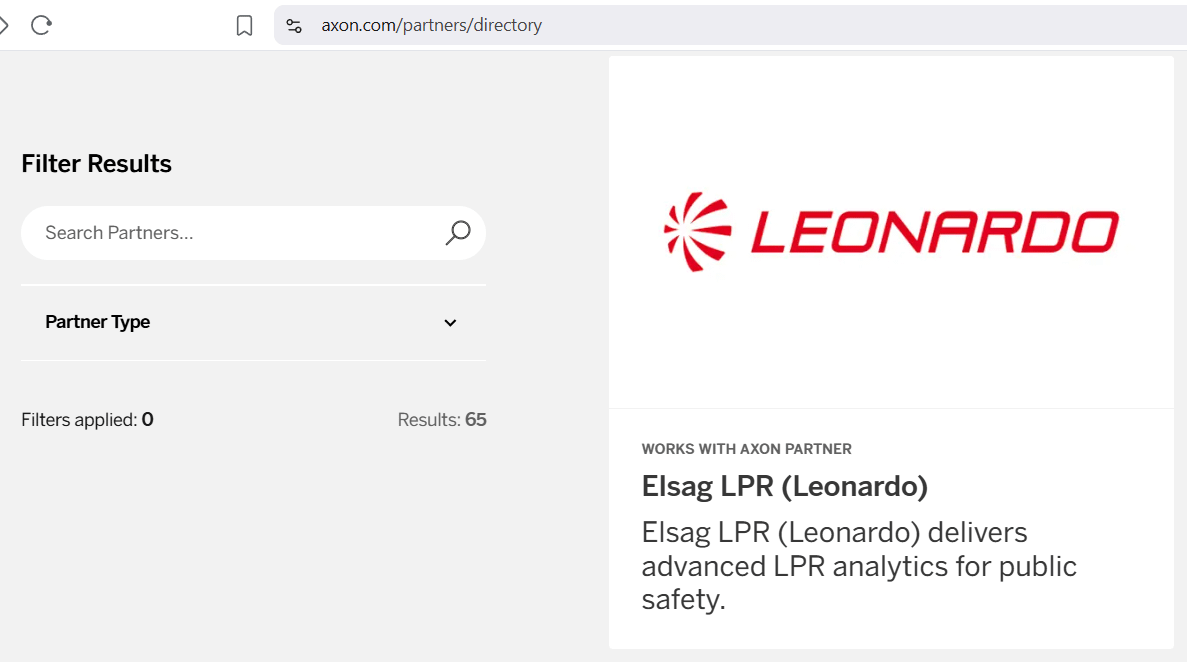
Leonardo specializes in something called “Elsag LPR.”We know LPR stands for “license plate reader,” but what is Elsag? I’ll give you a hint: an Elsag is not a bra for floppy tits.
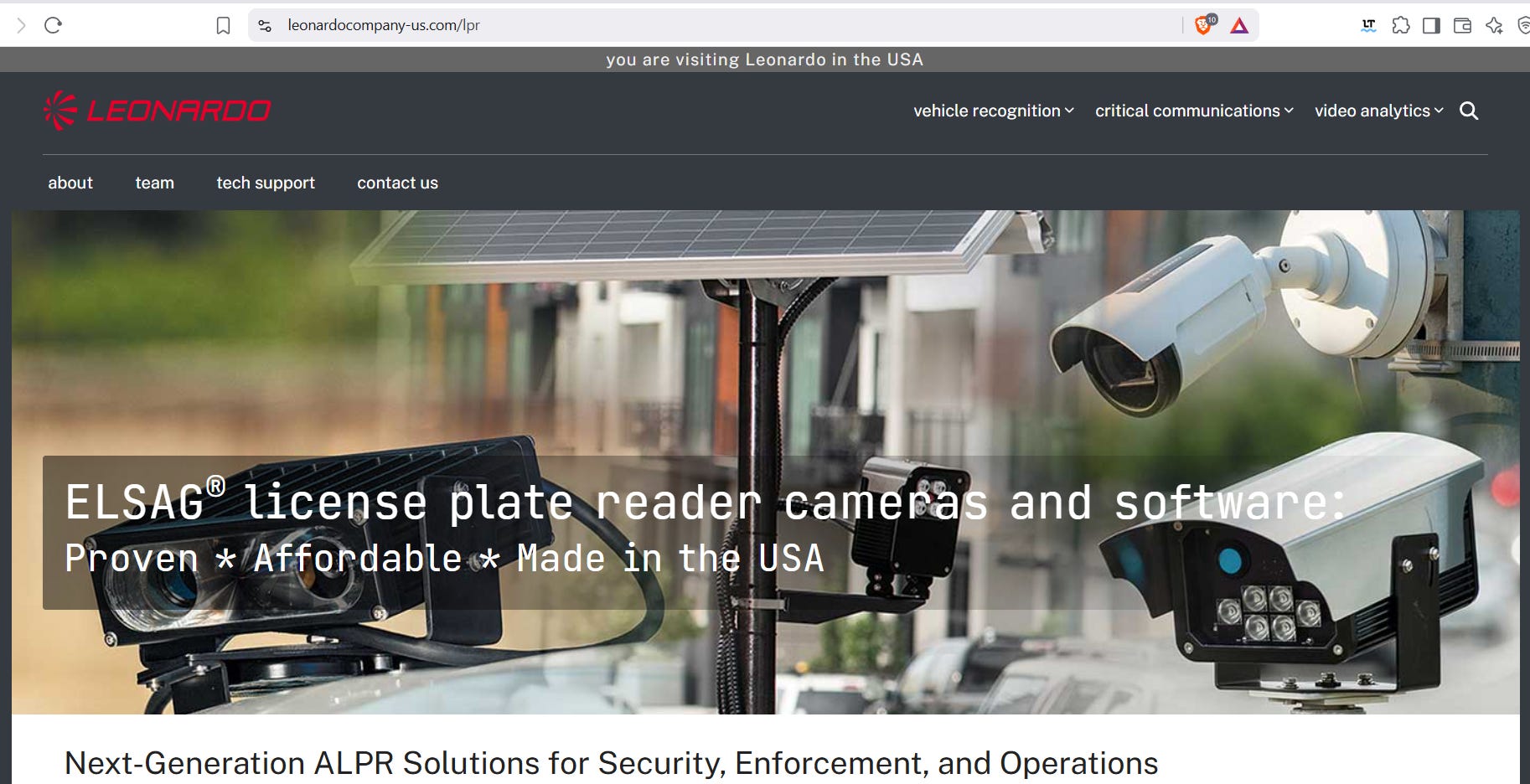
Before I can tell you what it actually is, we have to discuss the linchpin of the whole surveillance network. What is the linchpin? You may be surprised to hear that it’s…
BLUETOOTH
By definition, Bluetooth is “a short-range wireless communication technology standard that allows devices to exchange data over radio waves without the need for cables or physical connections.” In layman’s terms, it is used to send and receive information without a cord. So, for example, if you have a computer and a printer, you would need to plug your printer into your computer to make it work, whereas with Bluetooth, you can wirelessly connect the two devices. When devices are linked together, they are referred to as “paired,” so you pair your printer with your computer one time, and you can wirelessly print all day, every day, without re-syncing it; it’s a one-and-done gig.
Regarding specifically what information is transmitted, it all depends on the device and the purpose of it. All smart appliances use Bluetooth. This means all cell phones, smart cars, fridges, video doorbells, watches, earbuds, the Amazon Echo and similar devices, televisions, gaming consoles, BBQ grills, and even coffee makers—all of these transmit data about us wirelessly. This data often consists of what is called “user profiling,” which can include a user’s past and present purchase records and daily routines, as well as GPS location data (think of Google Maps or AirTags). As the New York Times reported, many stores now use Bluetooth to track the location of individual shoppers down to the inch. That information is often sold or given to advertisers, who then use it to build data profiles on people who were just trying to buy a loaf of bread. How fucked up is it that our grocery stores are pimping us out? We never asked them to surveil us, let alone sell the data they harvested on us to a third party. It’s just so insane.
After the data is sold or given away, the companies that obtain the it can then analyze it, share it, sell it, or provide it to the government entity of their choice, and all of this is 100% legal. Yes, it is 100% legal for the grocery store to spy on us and our children like private detectives and then sell every last stitch of evidence they gathered to some entity, which will then resell it, add it to databases, or do whatever their little greedy hearts desire with it.
Unless you’re into true crime like I am, you may not have known that the Bluetooth connections on Fitbits have been used to solve murders. In the Connie Dabate murder case (2015), Connie’s husband, Richard, claimed a masked intruder shot his wife, but Connie’s Fitbit data showed she was active and moving around a full hour after her husband claimed she was already dead. Because of the smartwatch, Richard was convicted of her murder and sentenced to 65 years in prison. This wasn’t a one-off. Fitbit data led to the arrest of a California man for the murder of his stepdaughter, Karen Navarra.
And even if you don’t have a Fitbit, your cell phone may have the same features as one. These features are sold to us as assorted health apps, which are often built into our devices. Some of these apps cannot be uninstalled. We are told these calculate our steps and provide other fitness data. What we are not told is this data can be examined and even used against us, such as in a criminal case in Germany involving a man named Hussein Khavari. Here, police accessed the suspect’s health app data and concluded that his phone showed “strenuous activity,” which investigators insisted was when he dragged the dead body and climbed stairs. So, without any real evidence, let alone eyewitnesses or a murder weapon, Mr. Khavari was sentenced to life in prison, all because of a health app.
But it’s not just smartwatches and health apps that are being used to track us; it’s also Wi-Fi router logs and geofencing. You see, when your phone connects to a Wi-Fi network, there is a record made of that connection because, of course, there is a record. We can’t burp without there being a record of it somewhere. The Wi-Fi connection establishes that you were in the proximity of the Anderson’s house on Tuesday morning at 7 am. Geofencing is when a digital perimeter is created using GPS data. For example, a 600-foot perimeter around the Anderson’s house—that’s a geofence.
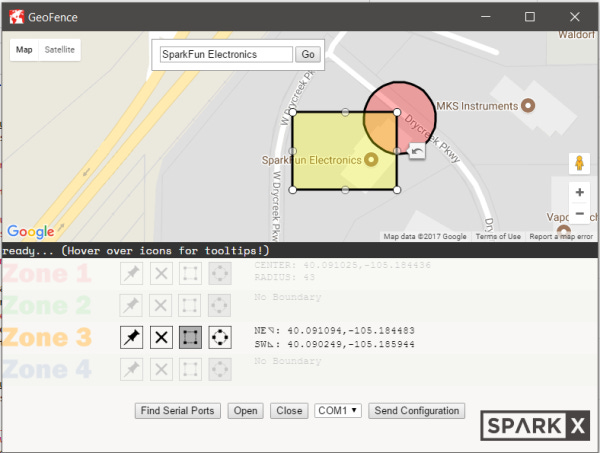
Law enforcement has utilized data from connected home and business routers, alongside device location information, to map out devices connected or active near a crime scene.
Google Database is a key player in the people-tracking industry, and it aids in geofencing. The tech giant stores location history in a database known as Sensorvault, and, according to the New York Times, these records span back at least a decade and include hundreds of millions of devices worldwide. If you think you can’t possibly be a part of this database, think again.
In 2018, the home of a couple in a small town in Minnesota was robbed. Google Database identified all devices that were active near the crime scene. Detectives then used the victims’ home Wi-Fi network to create a geofence. This information was used to identify people whose smartphones literally linked them to the area of the crime. Weeks later, three suspects were arrested in the burglary and charged.
Further, entities like MoocherHunter use unsecured wireless router signals to reverse trace the people using them. And even that isn’t the end of it. This next story will shock you. A man named Ross Compton said he was sleeping when his house in Middletown, Ohio, caught fire back in September 2016. He said he grabbed some possessions and jumped out a window. Investigators pulled data from, of all places, his pacemaker, which, according to a cardiologist, proved Compton was not asleep. Because of the pacemaker records, he was charged with aggravated arson and insurance fraud. As you can see, Bluetooth plays the key role in tracking us. Now let’s get back to Leonardo.
ELSAG
So, to get back to ELSAG, while America was worried about Flock cameras, Leonardo, a defense contractor, partnered with Axon and released their new system, ELSAG SignalTrace, which not only reads your license plate but also reads all of your Bluetooth devices and “other consumer electronics.”
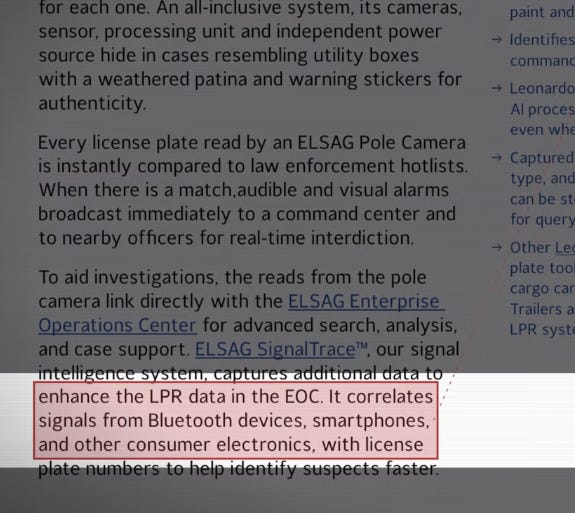
This means that when we drive past a Signal Trace device, it doesn’t just photograph the car. It grabs the wireless signals leaking out of every device inside it: our phone, smartwatch, earbuds, fitness tracker, the car’s own Bluetooth, the key fob, and even the dog’s microchip. This data, combined with our license plates, vehicle makes, models, damages, and bumper stickers, is then referred to as a “fingerprint,” which is stored for later use.
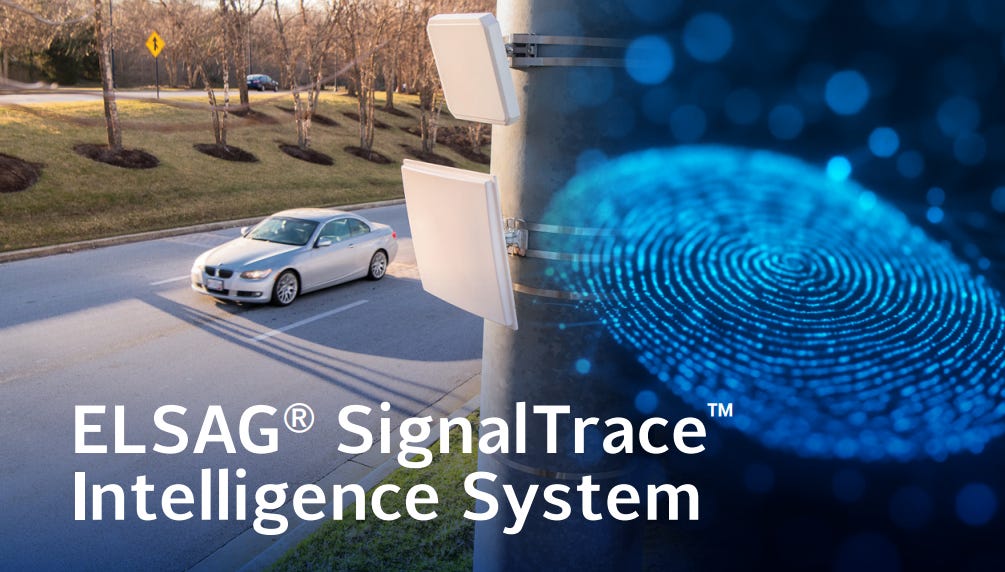
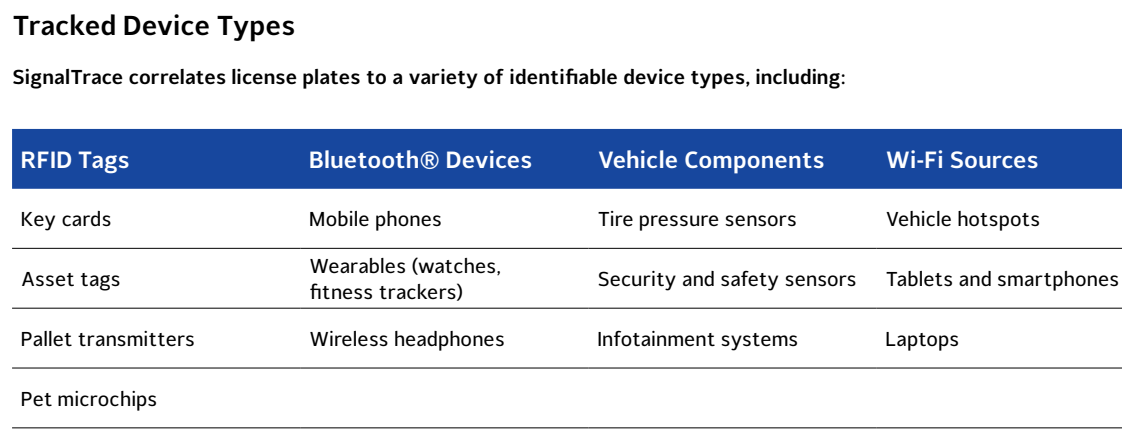
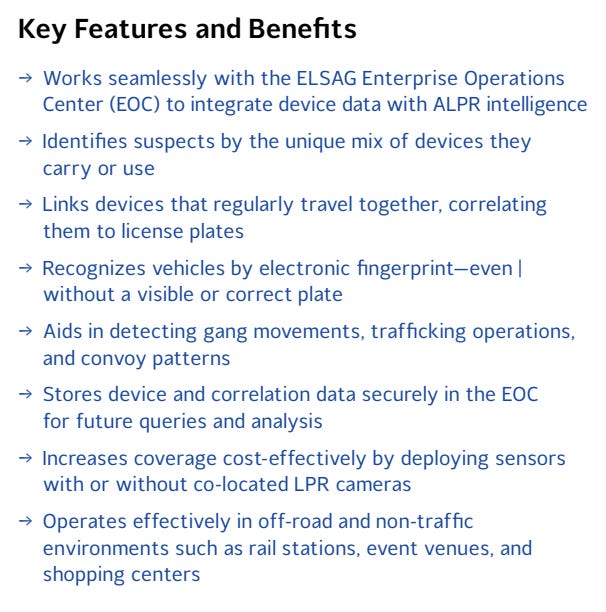
The reason they refer to it as a fingerprint or signature is because the information your vehicle emits is custom. As Leonardo says on their site, “While 70 cars in 100 may contain iPhones, only one will have an iPhone 13rev2, an Audi radio, a pair of Bose headphones, a Garmin sports watch, a key finder, and the license plate ABC-1234. The collection of data represented by these specific things is an electronic signature.”
This means these cameras know more about your personal life than your own mother. They know how many ladies you met off Tinder and where the two of you went, including the trip to Walmart to grab some wine. Further, they know what your dates did before and after they left. Creepy, isn’t it?
Earlier I mentioned pairing; once the devices are paired together, they don’t have to keep being re-synced. This leads fellow researchers to claim that once linked through Bluetooth, we can be tracked anywhere without having to resync. It’s like having an ankle monitor that the government and strangers watch in real time. Can we agree that these spy cameras make Flock cams look like a joke? More on this later in this publication.
All of this leads us to ask, “Who exactly is this Leonardo company?” and here is where the story takes an even more nefarious turn…
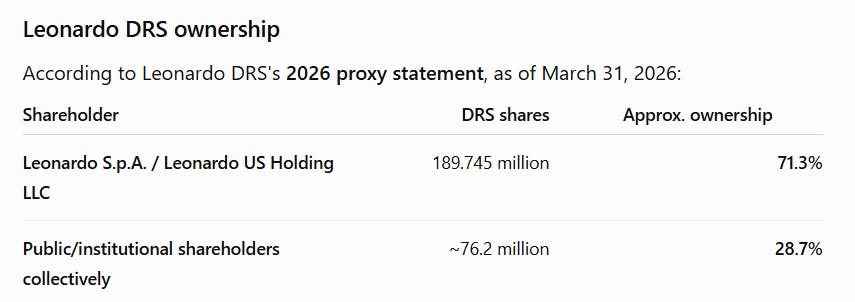
Leonardo is an Italian multinational company that specializes in aerospace, defense, and security. The company is headquartered in the pope’s Rome, but it has 180 sites worldwide. Leonardo is the 12th largest defense contractor in the world based on 2020 revenues. An even greater cause for concern is that Leonardo is partially owned by the Italian government. Fellow researchers will tell you the government owns 30.2% of the company, but that is only a half-truth. The Italian government owns approximately 30.2% of Leonardo S.p.A., which in turn owns approximately 71.3% of Leonardo DRS.
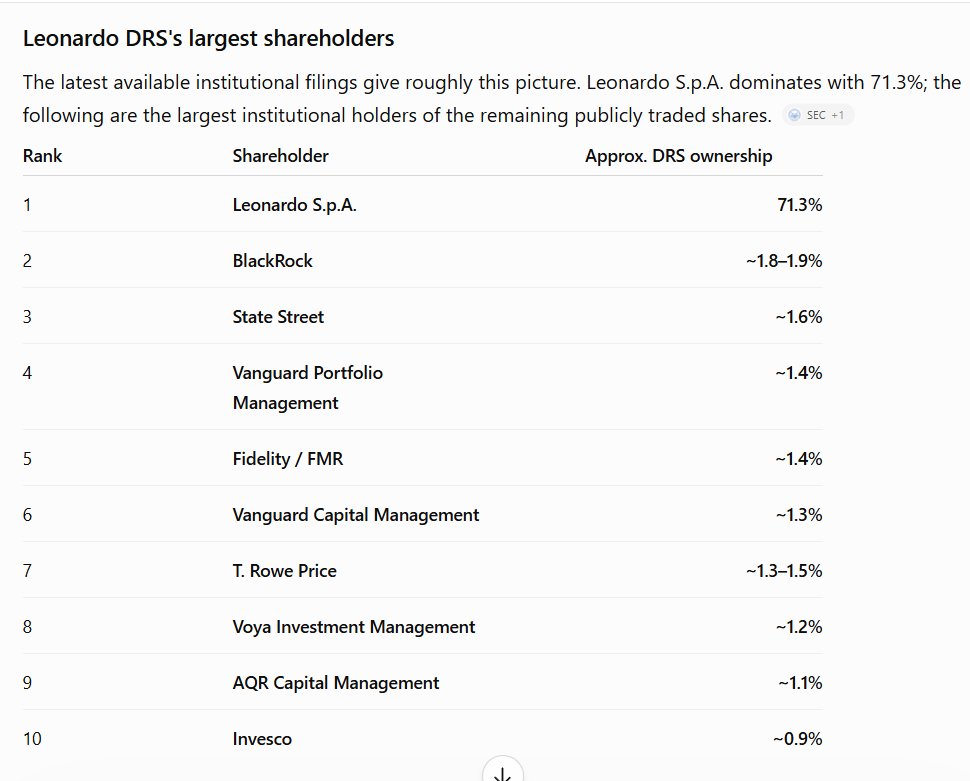
The second largest shareholder is Blackrock, with only 1.9%, which, although it sounds microscopic, is actually equal to over five million shares because this is a massive company.
Here’s where the plot thickens. Although Italy holds such a large share in Leonardo, the company is not an outright Italian company—and this is why it is always so important to rewind the clock as far back as possible to understand the deeper story.
Leonardo DRS traces its origins to two American engineers: Leonard Newman and David Gross. They founded the company that became DRS Technologies, which is now Leonardo DRS. So when you hear the name “DRS,” it means Leonardo. Capisci?
Leonard Newman was an electrical engineer at Loral Corporation before founding DRS with David Gross. Loral Corporation was a US defense contractor. Loral was purchased by Jewish businessman Bernard L. Schwartz. Fun fact: Bernard celebrated his 71st birthday with Bill and Hillary Clinton at the White House—remember that name, Bill Clinton, because it will come up again.
While employed by Loral, Newman was working on technology for the US Navy. One patent, which his name is on, was for an integrated display system for antisubmarine-warfare missions. This is of interest because this display included information obtained through sensors that helped operators make decisions. This patent dates back to the 1970s.
Skipping ahead to 2008: DRS was acquired by Italy's Finmeccanica (now known as Leonardo S.p.A.). Finmeccanica shelled out approximately 5.2 billion dollars for DRS, and after acquisition, the company was made private—you know what that means (no FOIA requests). So right about now you’re thinking that if Italy’s company Finmeccanica bought it, then obviously this is an Italian-owned company, but if we peek under the hood, we find some startling details about this acquisition.
This sale is incredibly interesting because two competitors both made higher offers, yet Finmeccanica was chosen to sell it to. How much higher were those bids? Are we talking about a couple thousand dollars? No, we are talking about roughly 181 million dollars. And being that this was a public company that had shareholders to answer to, it would have been most logical to accept the highest offer, right? Yet the company that bid four dollars more per share was never even given a fair chance; their $85 a share offer was scoffed at, then DRS chose to sell to Finmeccanica at only $81 a share. Why would any company choose the lesser offer? “Make it make sense!” you shout. To which I reply, “Try this on for size.”
Acquisition negotiations were overseen by The Cohen Group, which is a Washington-based consulting firm founded by former Defense Secretary William Cohen. Who is William Cohen? A Russian Jew who served in the US Senate then served as secretary of defense from 1997 to 2001 under President Bill Clinton—see, there’s that name again.
To make a long story short, the United States claimed that, because DRS was a US military contractor, our military secrets could fall into the wrong hands. It was allegedly because of this fear that Finmeccanica ultimately agreed to a very unique business structure. To summarize without boring you with details:
“Sensitive Operations” would be placed under proxy ownership. A proxy means someone who is acting on behalf of someone else. In this instance, because of the United States military’s tight-knit relationship with DRS, a “FOCI” agreement was deployed. FOCI means Foreign Ownership, Control, or Influence. The resulting FOCI arrangement left Leonardo with ownership of the company but transferred the voting rights attached to its majority stake to five US proxy holders. Additionally, 35% of DRS's revenues were to become a part of the proxy agreement if the Department of Defense wanted them to.
More specifically, the 2025 amended proxy agreement requires five U.S.-approved proxy holders to vote the shares owned by Leonardo US Holdings. These individuals must have the same rights as the owners of the company. So you see, things are not as they seem by outward appearance. Even though the company is owned by Italy on paper and even though the Italian government has a massive stake in it, it is not fully controlled by Italy.
I have been unsuccessful at figuring out who the original 2008 proxies were, but I can introduce you to the five current individuals.
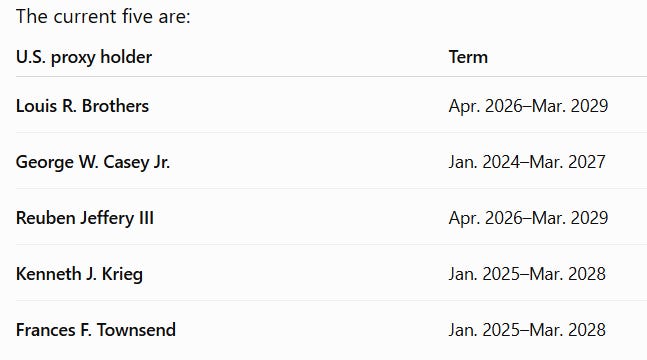
Reuben Jeffery III was a Goldman Sachs fellow who became the Under Secretary of State for Economic, Business, and Agricultural Affairs under George W. Bush, but now Reuben is the president, chief executive officer, and member of the board of Rockefeller & Co. and Rockefeller Financial Services, Inc. He is also a member of the International Advisory Committee of J. Rothschild Capital Management Limited. So this guy, aside from being a Rockefeller bro, is an investment firm fellow.
Louis R. Brothers served as Under Secretary for Science and Technology at the US Department of Homeland Security as well as Deputy Assistant Secretary of Defense for Research at the Department of Defense under President Barack Obama. He now serves as an operating partner at AE Industrial Partners, a massive investment firm that is contracted by the DoD. Yep, his previous employer, the Department of Defense, is now his client. So this guy is also an investment firm fellow. It’s quite strange how these investment guys go from a high-up position in the US government to an investment company and now are in control of a surveillance system that is being quietly installed across our nation. Let’s continue on with the proxies:
Kenneth J. Kreig is the founder of Samford Global Strategies, which appears to be yet another investment firm, and Kreig is also the former undersecretary of the Department of Defense for acquisition, technology, and logistics.
Then there’s Frances F. Townsend, who was an analyst for CBS News prior to becoming senior counsel at Activision Blizzard (the American video game maker who has produced games like Call of Duty and Candy Crush Saga). Townsend spent 13 years at the US Department of Justice under the administrations of Presidents Skull and Bones George H. W. Bush, Bill Clinton, and Skull and Bones George W. Bush.
The last proxy is George W. Casey, who is a retired four-star general who was also the 36th Chief of Staff of the United States Army under US Presidents George W. Bush and Barack Obama.
So that gives you an idea of who is controlling a substantial part of Leonardo. As you can see, it is not necessarily the Italian government that is behind the Elsag SignalTrace that will be used to push America into the age of AI policing; it is our own government doing so by proxy—and the majority of these individuals with control are in the investments industry. I should also point out that it is not the (air quotes) “Italian company,” Leonardo, that is selling this stuff to our cities.
According to fellow researchers, the sale of the surveillance tech is being carried out by an American company called Vetted Security Solutions as well as its sister company, Odin Risk Solutions. Both are owned by Vetted Holdings, which is based in St. Petersburg, Florida.
Vetted Holdings is a new company. Their legal paperwork was filed in 2020. They operate out of this warehouse. These entities sure seem to be popping up like daisies.
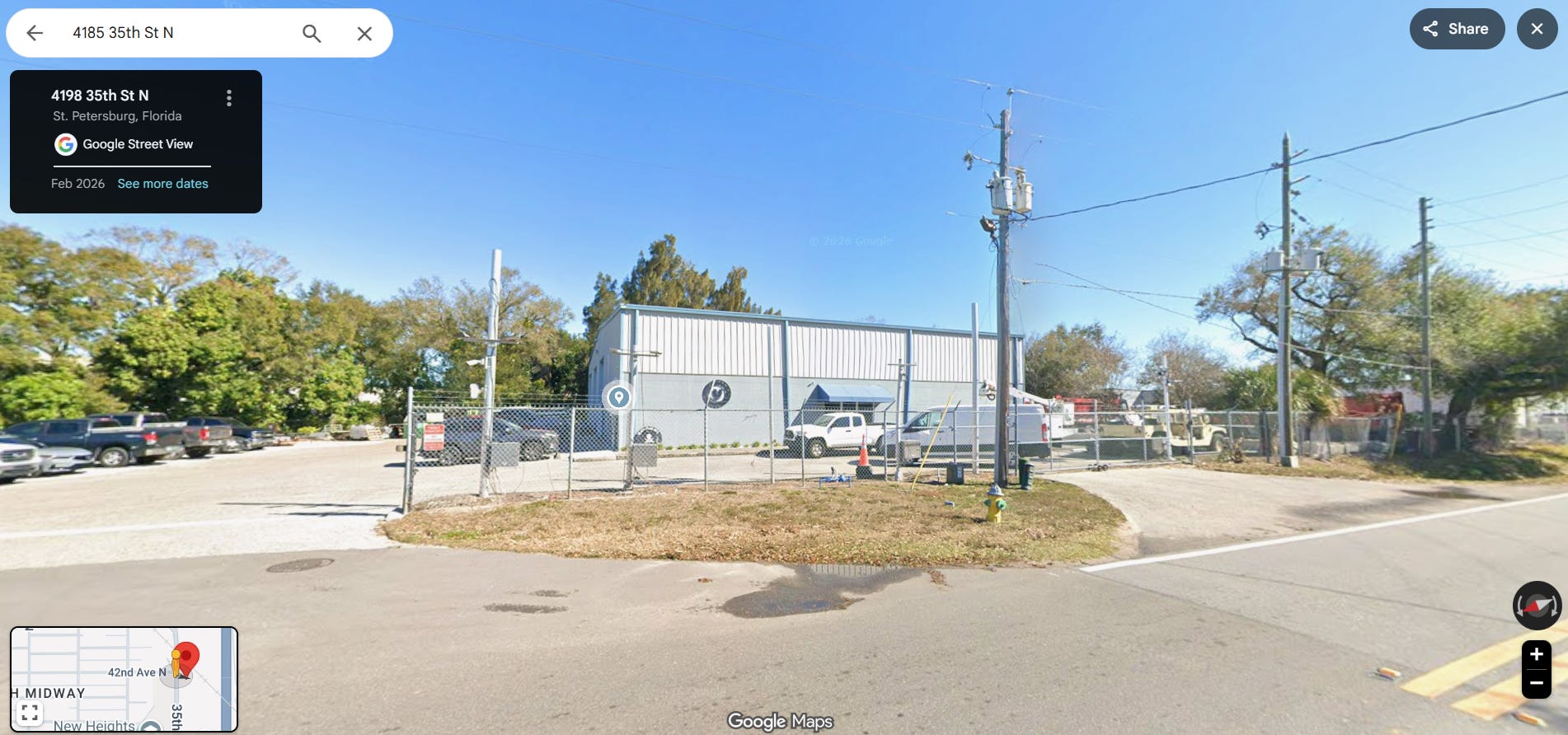
They haven’t posted on Facebook since 2021 and have basically no following, yet they are a massive company—a massive, quiet company.
Despite not having a following, this US company is the one who is pushing the surveillance tech into our communities by propositioning our local governments under the guise of safety and crime fighting. And being that Vetted and Odin are American companies, it looks good on paper.
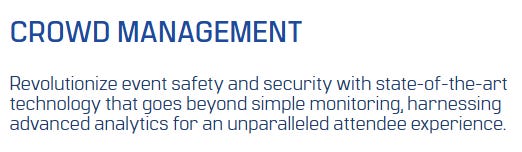
Now let me point this out to you: on the Vetted Security Solutions website, they use this fucky font that is difficult to read.
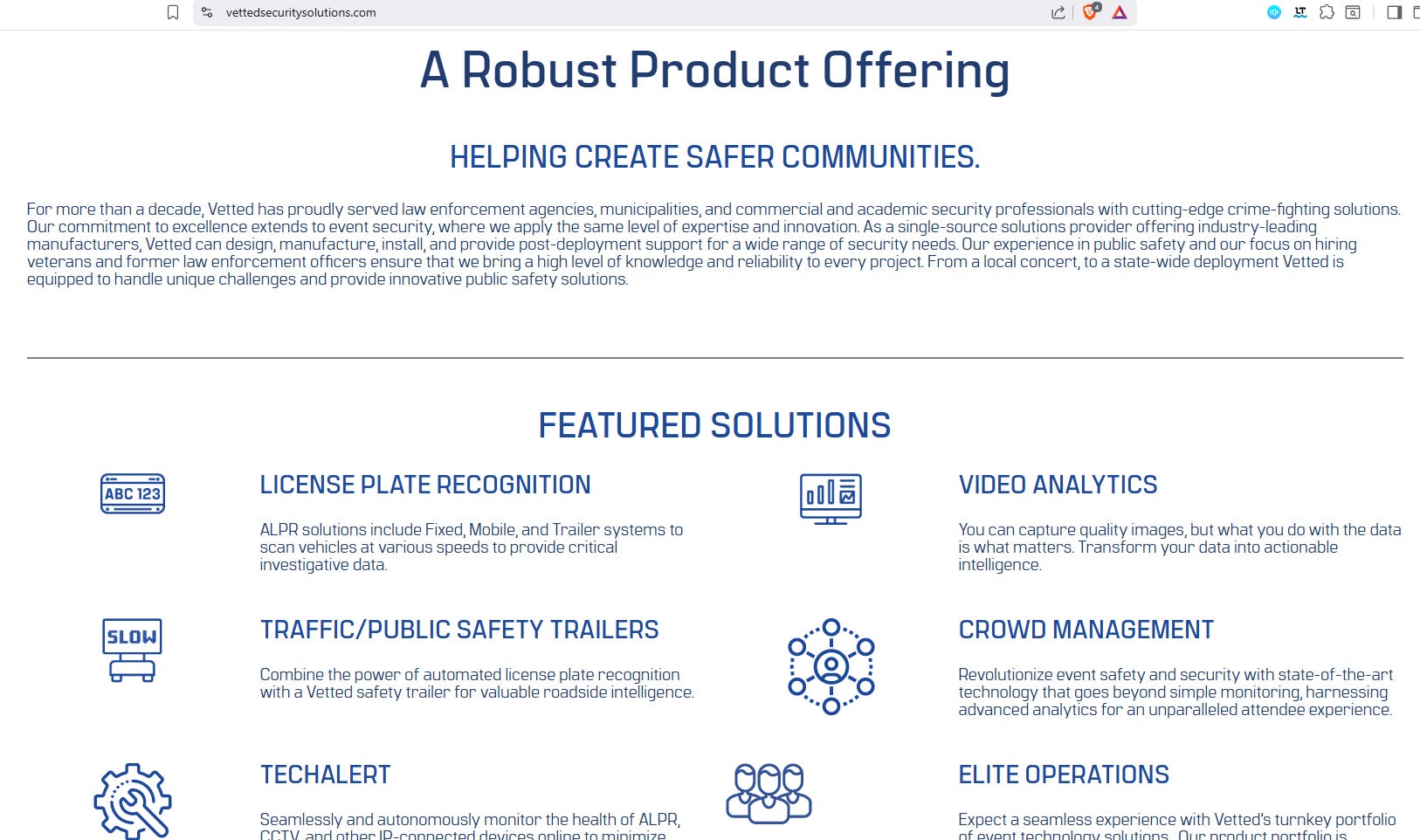
Not to harp on the site, but I don’t know who would ever select a boxy font like this for a website. Fucky really is the best word I can think of to describe it. Not only is it fucky, it’s also blue. It’s a horrific website that looks like a 5th grader made it on recess.
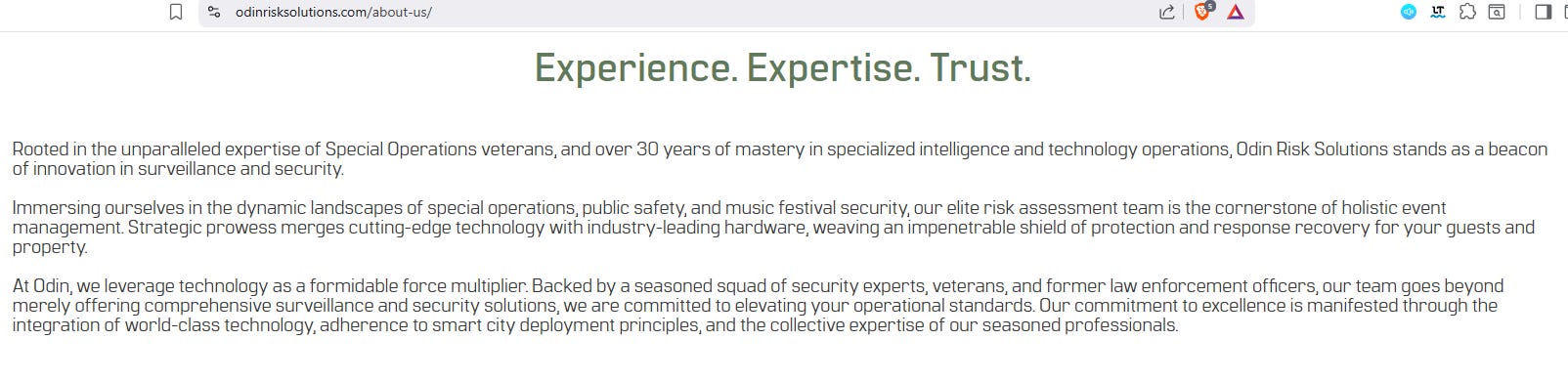
On Odin’s website, we see the same awful font. Instead of fucky and blue, Odin’s site is fucky and green.
Then I came across this site, ICU Technologies, which should be completely unrelated to the aforementioned companies, but…
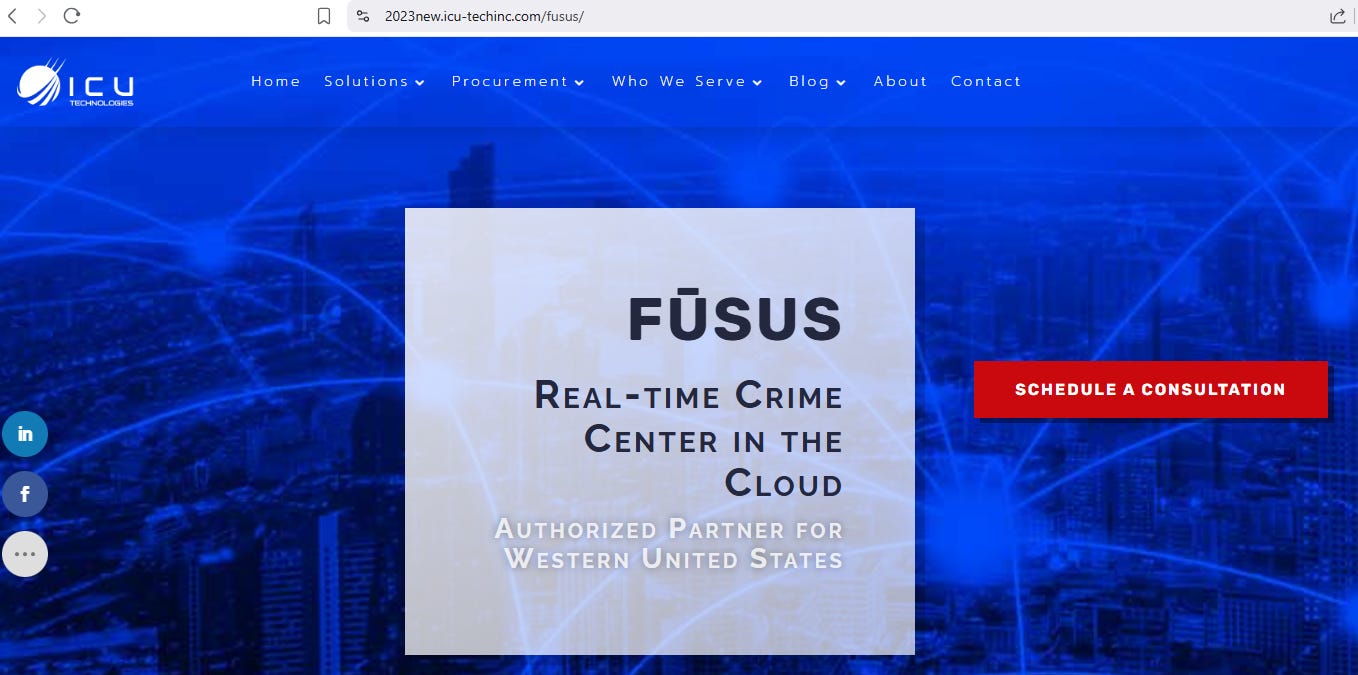
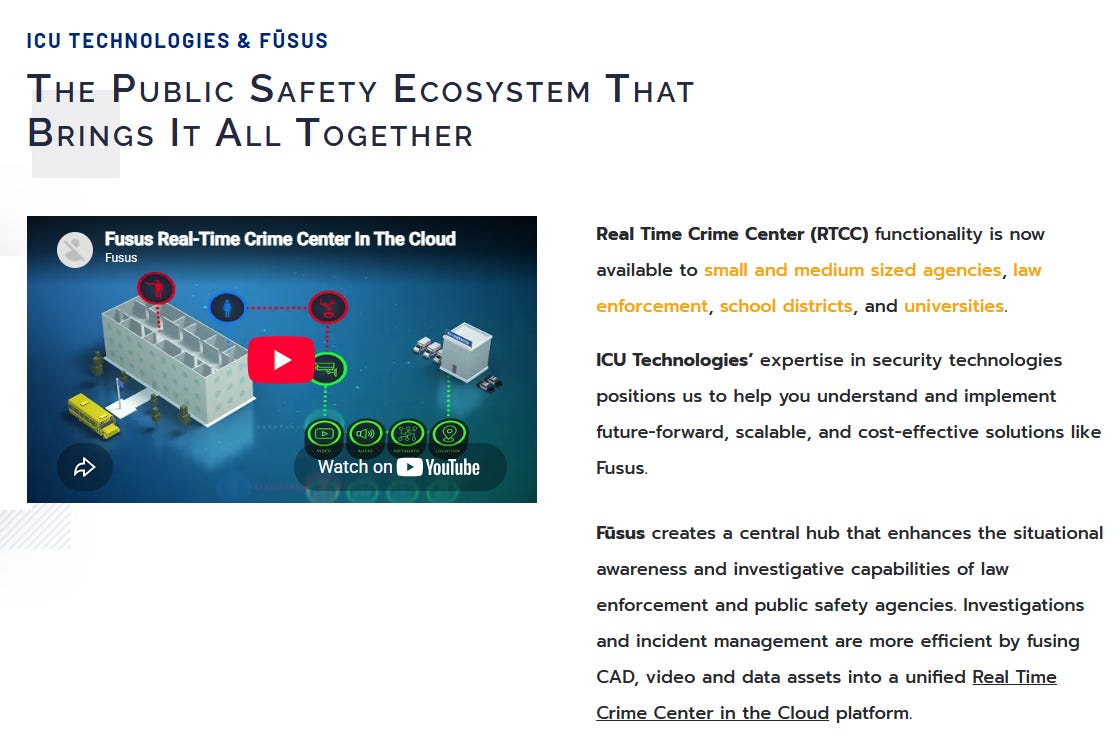
Not only is this site using the same, or a very similar, fucky font and blue text, it is selling the same technology.
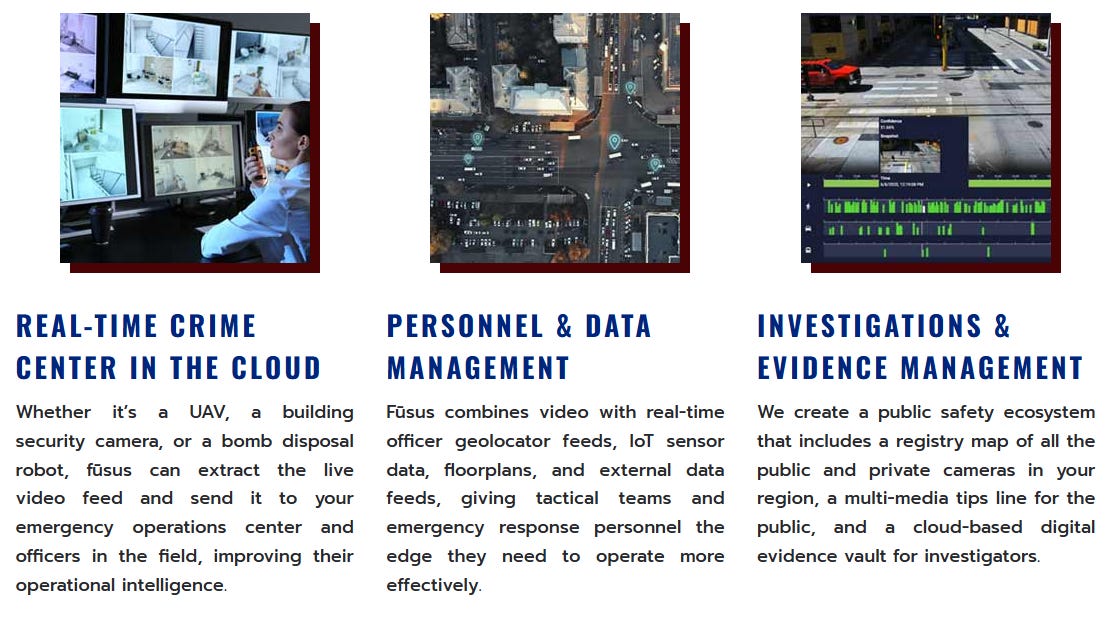

So it seems as if there are a plethora of small companies that appear to all be operated by the same bigger entity, but they give an illusion of a bunch of independent small businesses selling this tech. This really bothered me.
Ok, so, while we were all screaming about the Flock cameras, which we could see going up all over without our knowledge, let alone our permission, Leonardo, through its Florida-based entities, Odin and Vetted Security Solutions (both operating under Vetted Holdings), discreetly pushed its less obvious tech into our towns.
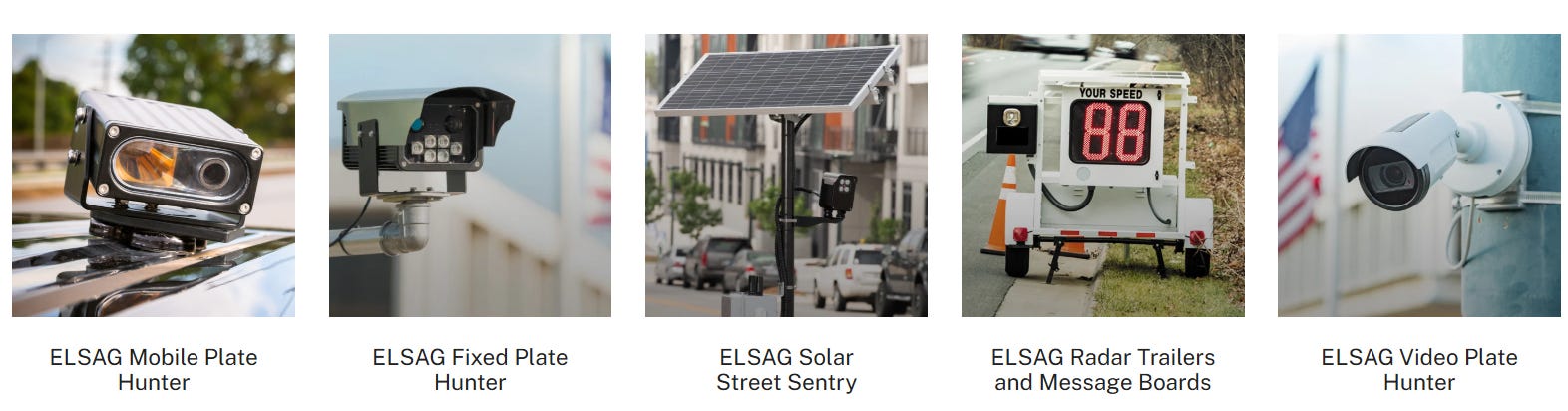
Then, once the tech was installed, something happened. It was kind of a bait-and-switch, per se. It was around a year ago that Leonardo applied for a new US patent. This patent is a software upgrade for their existing technology. This means what has been installed all over America doesn’t need to be replaced; it just needs the newest update, which can be done remotely. And by the way, the patent for the upgrade was expedited and granted in record time. Most inventors wait around two years for patent approval, but not Leonardo. Their patent was given the green light in about five months.
When the wireless system upgrade is (or was) performed on the already installed Leonardo poles with devices, the Bluetooth tracking system is live.
In addition to everything we have already discussed, in 2022, Leonardo acquired Israel’s radar maker, RADA.
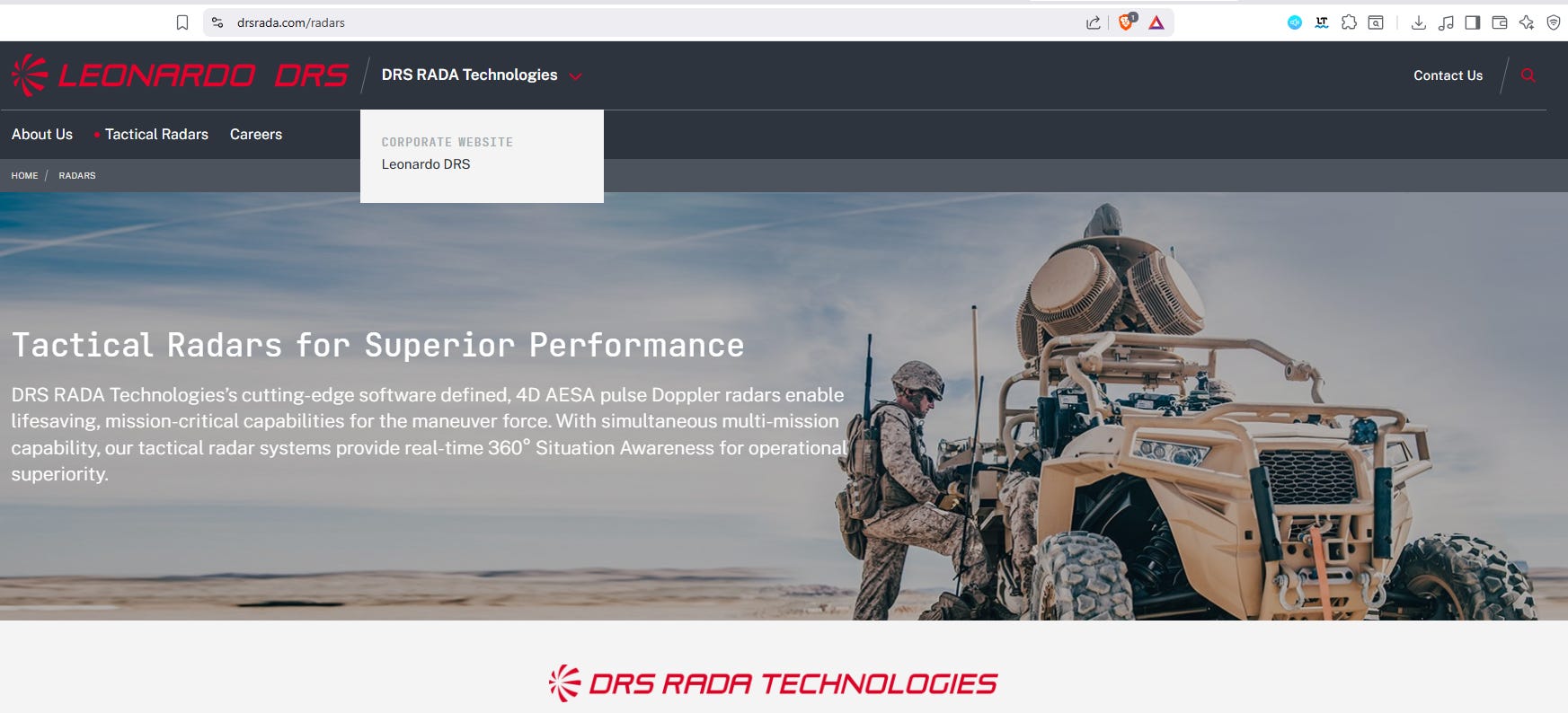
Rada makes “hemispheric 3D perimeter surveillance” technology.
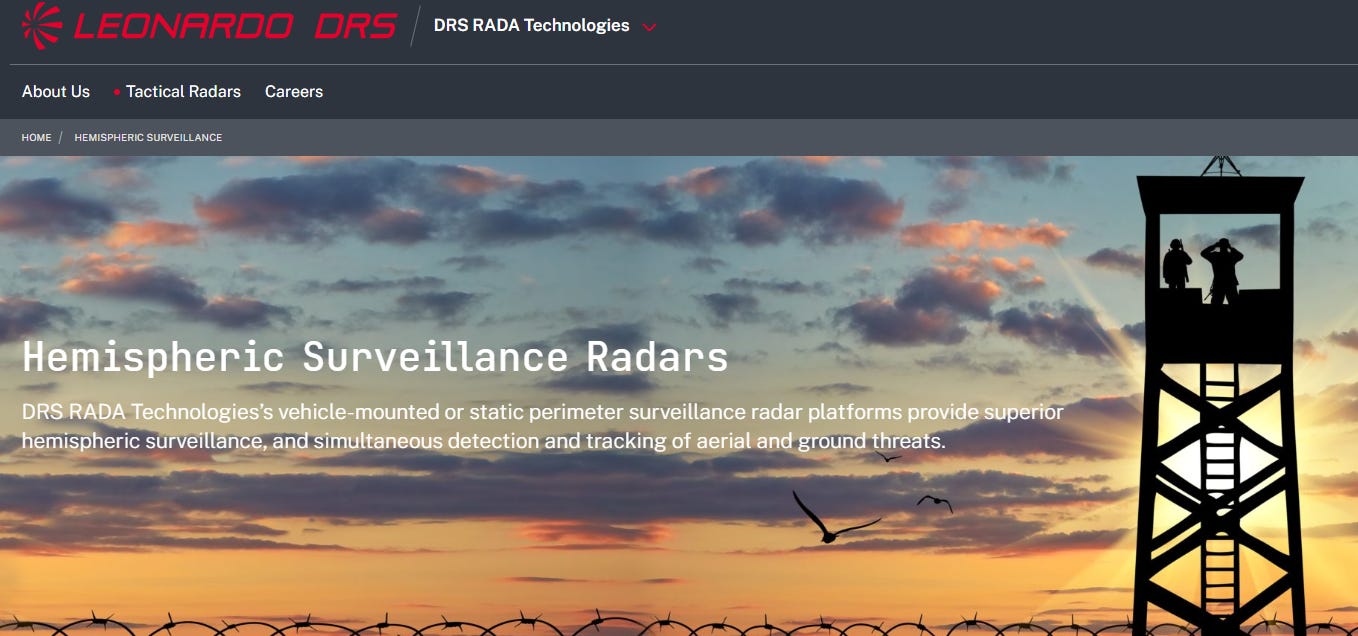
Their tech can track everything from small and slow aircraft to drones to vehicles, vessels, pedestrians, and more.
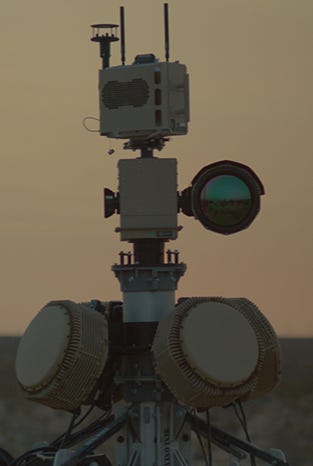
Under the terms of the acquisition, RADA became a wholly owned Israeli subsidiary of Leonardo and continued to operate its business unit within the company. So, once again, we have another Israeli company that oversees the mass surveillance of America. Now let’s put all of this on ice for a moment.
If you think what you have read thus far is scary, wait until you hear this…
NEXT READ: WHAT IS "COBWEBS”? The Shadow Company You Need to Know About [Flock Part 5]
Hey! Thanks for reading. If you haven’t yet, be sure to sign up for my six-week course, The False Flag Masterclass. It starts September 24th! Best of all, the class is only $25 total for all six weeks! No subscription is needed, and there is nothing else to buy. This class will be livestreamed, but if you can’t make the stream, the replay will be available after the stream has ended. Check out the week-by-week syllabus and enroll on Shadowbanned Library. 
Also, be sure to pick up a ticket to Truth Be Told! Five of your favorite content creators will be giving a one-hour presentation on the topic of their choice. Come watch Unbekoming, David Parker, Jamie Andrews, Medicine Girl, and me put on a 6-hour show on September 17th! Get your ticket today. USE COUPON CODE "AGENT" AND GET $5 OFF!
Be sure to subscribe so my articles get sent to your email!
Want to support my work? Buy Me a Coffee or Make a Ko-Fi Donation:
If you want to make sure you are updated when new articles, eBooks, events, and podcasts are released, be sure to sign up for WhatsApp notifications:
![Epstein, Ring Doorbells & Axon: Israel Controls America's National Security [Flock Part 3 by Agent131711]](https://dropinblog.net/cdn-cgi/image/fit=scale-down,format=auto,width=700/34264201/files/featured/epstein-ring-axon.png)
![Flock: The Secret Warehouse & Front Companies [Part 2 by Agent131711]](https://dropinblog.net/cdn-cgi/image/fit=scale-down,format=auto,width=700/34264201/files/featured/flock-2.png)
![HELP! I'm Being STALKED! [Flock Part 1 by Agent131711]](https://dropinblog.net/cdn-cgi/image/fit=scale-down,format=auto,width=700/34264201/files/featured/flock-1.png)
![I Made a Huge Decision [by Agent131711]](https://dropinblog.net/cdn-cgi/image/fit=scale-down,format=auto,width=700/34264201/files/featured/decision.png)
![DEBUNKING Dr. Thorp, McCullough & Drew's New Ivermectin-Cancer Study [Part 3 Cancer: The Final Chapter by Agent131711]](https://dropinblog.net/cdn-cgi/image/fit=scale-down,format=auto,width=700/34264201/files/featured/debunk-2.png)
![The Mind-Blowing 1917 Cancer Journal - Tumors and More [Cancer Part 2 by Agent131711]](https://dropinblog.net/cdn-cgi/image/fit=scale-down,format=auto,width=700/34264201/files/featured/cancer-2.png)
![How The Nazis Hoaxed Germany [WWII Part 12 by Agent131711]](https://dropinblog.net/cdn-cgi/image/fit=scale-down,format=auto,width=700/34264201/files/featured/how-the-nazis-hoaxed.png)
![Choosing the Chosen People [WWII Part 11 by Agent131711]](https://dropinblog.net/cdn-cgi/image/fit=scale-down,format=auto,width=700/34264201/files/featured/chosen.png)
![The Never Before Told Story of CANCER [Part 1 By Agent131711]](https://dropinblog.net/cdn-cgi/image/fit=scale-down,format=auto,width=700/34264201/files/featured/cancer-thumbnail-1.png)
![Blackrock & Wall Street NEED Mass Incarcerations [Prison Profits Part 2 by Agent131711]](https://dropinblog.net/cdn-cgi/image/fit=scale-down,format=auto,width=700/34264201/files/featured/prison-profits-part-2.png)

