

Why is a 60-year-old molecule suddenly growing like a Silicon Valley startup?
Before you can sell a sleeper pharmaceutical drug to a skeptical population, you need a compelling story. The health industry specializes in creating such narratives, spinning inexpensive raw materials into desirable products. If you convince consumers that what they ingest is vital for cellular detoxification, mitochondrial function, or longevity, few pause to consider the compound's origin or manufacture.
Smart Snippet™ | BuyMeACoffee: MEDICINE GIRL
Smart Snippet™ | Subscribe Box MEDICINE GIRL
Almost no one I talk to knows what a market analysis is or how to factor a CAGR. Yet they beLIEve their for-profit savior hero on a black scrying mirror tells them it’s good, and down the hatch it goes. The same folks have no problem spending 2 hours at a grocery store poring over the ingredients of their taco sauce or bioengineered egg bites. But when it comes to equally, if not more, toxic chemicals that go into ALL vitamins and supplements, the rose colored blinders go up.
The reality behind many industrial amino-acid supply chains is far less glamorous. Keratin-rich biological materials, human hair from barbershops, feathers from poultry processing plants, and other protein waste streams have historically been used as cheap feedstock for producing sulfur-containing amino acids such as cysteine. Those amino acids can then be chemically modified into a range of derivatives, one of which is the compound known as N-acetylcysteine, or NAC.
Before we explore how NAC became a modern wellness obsession, it’s important to first understand its origins in the medical and pharmaceutical world.
The p-HARM-aceutical Roots
NAC did not start its life in supplement bottles or influencer stacks. It started in the pharmaceutical labs and used hospitals. Like several other drugs that have wandered through cycles of public fascination and controversy, Ivermectin, Hydroxychloroquine, DMSO, Tylenol, Morphine, and N-acetylcysteine were originally developed as a practical medical intervention designed to “solve” a very specific problem: acetaminophen poisoning.
Doctors discovered that NAC could help replenish glutathione levels in the liver and neutralize the toxic metabolites produced when acetaminophen accumulates in the body. In emergency medicine, the drug became an established treatment protocol for patients who had taken too many painkillers, whether intentionally or by accident. In those situations, NAC could mean the difference between recovery and catastrophic liver damage.
Though I am critical of the medical-industrial complex, there are times when modern medicine delivers: in true emergencies, trained professionals and effective interventions, like NAC, play a crucial role. However, outside of acute cases, I remain removed from the system.
However, to fully understand how NAC became so influential, we need to trace its use as it expanded well beyond emergency medicine into new territories.
At this point, the transformation begins: this relatively obscure pharmaceutical slowly migrated from the controlled world of hospital pharmacology into online wellness stores, biohacking forums, health and wellness podcasts, and influencer affiliate links with customized promotion codes. During this transition, its identity began to shift. No longer presented primarily as a medical antidote, NAC was rebranded by the natural health industry as a detox enhancer, mitochondrial support, glutathione booster, and a cornerstone of cellular health. These are claims used to market the product, but proof is rarely required. This major shift in how NAC is viewed and marketed raises an important question.
How does a decades-old pharmaceutical compound move from emergency room antidote to influencer-promoted wellness staple? Remember, they can prove this in their peer-reviewed studies and journal articles, FUNDED BY the companies that own the supplements or the chemicals that make them. James Corbett spells it out point by point in his 30-minute video, “The Crisis of Science.”
Highly recommend listening to his video before you jump to conclusions, and paying attention to and investing energy in evidence from industries siphoning profits from your wallets.
To better understand this transformation, let’s now examine the history of the drug—how it was discovered, produced, and evolved from humble beginnings into a global phenomenon. This closer look reveals that what seems like a simple supplement trend is actually the leading edge of a much larger story.
And much more profitable.
A 2 Billion Dollar Empire and a Rising Projected CAGR of an UNHEARD of 19%
Industries built on supplements and pharmaceuticals have mastered belief marketing. Each year brings a new miracle compound and study, spread by influencers and brands. Underneath is powerful economic machinery that you and I can’t access, lacking the industry’s resources and influence over research and education. They control the narrative—and thus, the market.
4967eb27-ddd8-4add-90a8-045585d52b4c_2474x1098.jpg
When you strip away the marketing language and look at the numbers, NAC stops looking like a fringe supplement trend and becomes something far more serious: a rapidly expanding global industry.
Estimates place the current global NAC market at roughly $2 billion, with projections suggesting it could reach $8 billion or more within the next decade.
The key number behind that projection is the compound annual growth rate (CAGR). In simple terms, CAGR measures how quickly an industry grows when that growth compounds year after year. Most mature industries grow slowly. A typical pharmaceutical market might expand by 3–6 percent annually, while a strong supplement category might grow by 7–10 percent.
The NAC market is projected to grow at roughly 19 percent per year.
At that pace, the market doesn’t just grow — it doubles roughly every four years. What begins as a niche compound can quickly turn into a multi-billion-dollar industry.
And when an industry grows that fast, money moves in.
As the industry expands, manufacturers scale up, new brands emerge, and influencers market NAC for various health claims. Everyone seeks profit, often without scrutiny. Industry players understand this dynamic and exploit it.
03fcb857-1187-4837-b1b9-1484cba71bdf_2692x1610.jpg
Repurposing drugs is lucrative; older compounds require less regulatory investment. Cheaply produced compounds refined at scale become irresistible when demand rises. Industry tactics become clear upon close examination, and regulatory bodies may play both sides to serve their interests.
190dd684-abca-4a75-99f0-3d84e4c08f81_832x806.jpg
a68911b8-1db2-4df0-8c82-00f013a9da14_854x1488.jpg
The NAC story stops being about a life-saving medication and becomes one of global markets. Like other drugs that surged in media narratives, old compounds generate billions when demand is high. Actual medical need often pales in comparison to economic opportunity, with supplement and pharmaceutical industries often owned by the same companies.
And once that kind of money enters the system, the narrative surrounding the compound inevitably changes.
Which raises the obvious question.
How did a hospital antidote with relatively narrow medical use migrate into the supplement world and become a cultural phenomenon promoted across podcasts, wellness blogs, and influencer channels?
To answer that, we have to return to the beginning and trace the molecule's origins.
The Birth of NAC
To understand how NAC became a modern supplement phenomenon, we have to go back to its origins.
N-acetylcysteine did not originate in the wellness industry, and it certainly wasn’t designed as a longevity supplement. It was developed in pharmaceutical research as a derivative of the amino acid cysteine, a sulfur-containing compound involved in the body’s alleged antioxidant systems. I’m not buying it and will do a deep dive into the research in a future article, but for now, we have to rely on those profiting from our ignorance to tell us the truth. By chemically modifying cysteine via acetylation, researchers created a more stable molecule that could be used medically.
The drug first appeared in clinical medicine as a mucolytic, meaning it helped break down thick mucus in the respiratory system. Hospitals used it in patients with chronic bronchitis and other lung conditions because it could disrupt the chemical bonds that make mucus viscous and difficult to clear. The problem is that it dries out the mucus, and you need to cough it up along with the offending toxins to get healthy. This just traps the toxins in the dried, absorbed mucus if you were thinking of trying this at home.
But NAC’s most important medical use emerged when physicians began confronting acetaminophen toxicity.
Acetaminophen, the active ingredient in drugs like Tylenol, is toxic and dangerous at normal doses but becomes deadly when the liver is overwhelmed by excessive intake. When that happens, the body produces toxic metabolites that damage liver cells. NAC was found to interrupt this process by restoring the liver’s glutathione supply, a molecule they say the body uses to neutralize those toxic byproducts.
Administered quickly enough, NAC could prevent severe liver damage.
That discovery turned the compound into a standard treatment for acetaminophen overdose. Emergency departments around the world began using NAC infusions or oral formulations to stabilize patients whose livers were under chemical attack.
For decades, that was NAC’s identity.
It was a hospital drug used in very specific medical situations. Outside emergency medicine and respiratory care, few people had ever heard of it.
It was simply a pharmaceutical tool.
From Barbershop Floor to Chemical Reactor
e941bb72-ba46-4f97-a42b-672eb89290d1_1024x608.jpg
Before NAC becomes a white capsule sold as a wellness supplement, its journey begins somewhere far less glamorous.
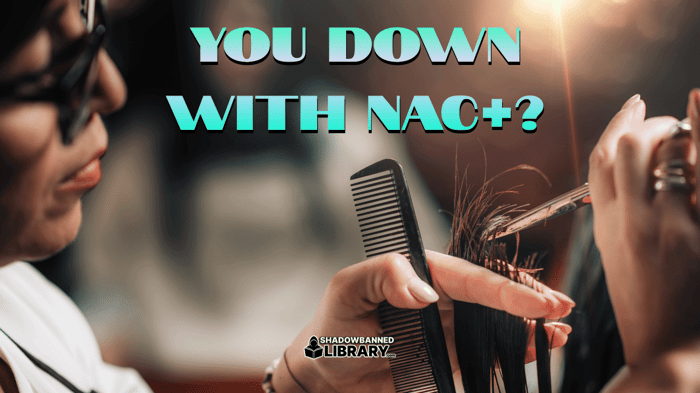
This story begins on the floor of a barbershop.
Across parts of Asia, sacks of human hair are collected from salons and barbershops and sold into industrial supply chains. The same thing happens in poultry processing plants, where mountains of discarded duck and chicken feathers accumulate every day. What most people consider biological waste is actually a valuable raw material for chemical manufacturers.
Hair and feathers are built largely from keratin, a dense structural protein packed with sulfur-rich amino acids. One of those amino acids is cysteine—the key ingredient required to manufacture N-acetylcysteine.
So the clippings don’t always end up in the trash.
They are gathered, dried, packed into large sacks, and shipped to industrial processors, where the keratin is chemically broken down. Inside those facilities, the material is subjected to acid hydrolysis, a process that uses powerful reagents to break the protein apart and release its component amino acids.
Large reactors filled with shredded hair or feather meal are treated with hydrochloric acid, sometimes under high heat and pressure, dissolving the keratin structure and freeing the amino acids locked inside the protein chains. The mixture forms a thick chemical slurry, known as a hydrolysate, that contains cysteine and several other amino acids.
From that slurry, the cysteine is separated and purified. Once the precursor amino acid is isolated, the next stage of the process begins.
This is where the NAC compound is actually produced.
In industrial synthesis, purified L-cysteine is dissolved in a solvent—often water, methanol, or tetrahydrofuran—inside a glass-lined chemical reactor designed to handle corrosive reagents. The pH of the mixture is raised using sodium hydroxide, preparing the amino acid for the reaction that follows.
Next comes the key step: acetylation.
An acetylating reagent, such as acetic anhydride, is slowly added to the reactor while the mixture is heated to around 40–60°C and continuously stirred. In some methods, a small amount of sulfuric acid is introduced as a catalyst to speed the reaction.
Chemically, what happens is simple.
The acetyl group from the acetic anhydride attaches itself to the amino group on the cysteine molecule. When the reaction finishes, the result is a new compound:
N-acetyl-L-cyshteine.
The reaction also produces acetic acid as a byproduct.
At this stage, the liquid mixture contains NAC, solvents, salts, and leftover reagents. To isolate the final compound, technicians adjust the pH again with hydrochloric acid, forcing NAC to crystallize from solution as the mixture cools.
The crystals are then separated using industrial centrifuges or filtration systems. To achieve pharmaceutical-grade purity, the crude crystals are dissolved again and purified through recrystallization, often using a mixture of water and ethanol.
Activated carbon may be added during this step to remove coloration and impurities.
Finally, the purified crystals were washed. d, dried under vacuum dryers, and milled into a fine white powder. That powder is what pharmaceutical companies and supplement manufacturers purchase in bulk.
Once it leaves the factory, the industrial chemistry disappears from the story.
Consumers encounter NAC as a sleek capsule marketed for detoxification, mitochondrial function, or cellular protection. The manufacturing pipeline that produced it—hair or feathers reduced to amino acids, acids, and solvents reacting in chemical reactors, crystallization tanks, and filtration systems—is rarely part of the conversation.
And that matters, because NAC itself is not a natural compound found freely in nature. It is a chemically modified derivative created through industrial synthesis. The body may metabolize it into components it recognizes, but the molecule itself originates in the world of chemical manufacturing.
That distinction is often lost once the compound enters the supplement market.
When people report feeling a burst of energy or mental clarity after taking NAC, the explanation offered in marketing materials usually involves detoxification or antioxidant support. But biologically, the body often responds to foreign chemicals by activating stress pathways and hormonal responses designed to maintain balance.
In other words, what some people interpret as a “boost” may simply be the body’s reaction to the introduction of a synthetic compound, adjusting its internal chemistry in response.
Whether that reaction represents benefit, compensation, or simple symptom suppression is a much larger debate—one that becomes easier to ignore once a compound has been successfully packaged and promoted as a wellness product.
And by the time NAC reaches supplement shelves, that packaging is already complete.
The chemistry has done its work.
What Happens When a Healthy Person Takes NAC?
In medicine, NAC is used for a very specific job: reversing acetaminophen poisoning. It works by supplying cysteine, which helps the liver regenerate glutathione, the molecule that neutralizes the toxic metabolite produced when acetaminophen is broken down. In that situation, NAC acts as a targeted antidote and can prevent severe liver injury if administered in time.
Outside that context, the picture becomes less clear.
These uncertainties have been one reason regulators have paid attention to how NAC is marketed. For years, the compound was sold freely as a dietary supplement, often promoted online as a broad “detox” compound or antioxidant cure-all. But in 2020, the U.S. Food and Drug Administration issued warning letters to several companies marketing NAC products, arguing that because NAC had originally been approved as a drug decades earlier, it technically did not qualify as a dietary supplement ingredient under existing regulations. The move briefly caused retailers like Amazon to remove NAC products from their platforms and sparked a debate across the supplement industry.
The controversy highlighted a larger issue: a compound developed for a narrow medical purpose had gradually been repackaged as a daily wellness product. While NAC continues to be studied for various potential uses, regulatory agencies have repeatedly warned companies against promoting it as a universal detox remedy or disease treatment without adequate evidence.
Which leaves a lingering question at the center of the NAC boom.
If a molecule was designed primarily as an antidote for a specific poisoning scenario, what exactly happens when it becomes a routine supplement for otherwise healthy people? We will never know because you will never have a human isolated for 1-5 years, taking only NAC along with a healthy diet. It is not possible, so we have to look directly at the chemicals used and the direct effects of ingesting synthetic chemicals derived from barbershop hair and feathers.
Possible Long-Term Issues with Regular NAC Use
Once NAC enters the supplement market, it is often marketed as a harmless antioxidant—something closer to a vitamin than a pharmacologically active compound. But the chemistry and physiology behind NAC suggest a far more complicated picture.
NAC is not an inert nutrient. It actively alters several biochemical systems in the body, and that is precisely why it functions as an antidote in cases of acetaminophen toxicity. Outside that emergency context, however, repeated long-term exposure raises several questions that are still being studied.
One of the most well-documented properties of NAC is its vasodilatory effect. The compound can influence nitric oxide signaling pathways and relax blood vessels, which, in some medical contexts, can help improve circulation.
But vasodilation comes with consequences.
Lowering vascular resistance can lead to hypotension, or dangerously low blood pressure. Drug interaction warnings specifically note that NAC should not be combined with medications such as nitroglycerin, because the combined vasodilatory effects can produce severe drops in blood pressure along with intense headaches and dizziness.
Blood pressure is tightly regulated for a reason. If it drops too low, organs such as the kidneys and brain receive less blood flow, which can place stress on tissues that depend on constant oxygen and nutrient delivery. Haven’t we learned by now that you can’t jack up one system in the body without robbing from another? Interfering with the body's natural functions never leads to success. Just read the comments in my magnesium article or my DMSO article. Commenters lament how wonderful the drugs are in taking away their multiple ailments. Why do you have multiple ailments, joint aches, and pains? Because you are consuming pharmaceuticals and toxins. You guys can’t have it both ways. Vaccines can’t be the sweat of Satan, made by convicted felons with intent to harm your body and make really great drugs that are super great to take long term. Everyone will admit that taking a blood pressure drug long-term damages the kidneys. Yet taking a blood pressure drug long-term that has a different label on it? You seem fine with that. At the end of the CVS line, it is the same thing.
Kidney Function and Renal Stress
NAC has sometimes been studied as a protective compound in acute medical situations, particularly during contrast-induced kidney stress or toxic injury. But research exploring longer-term exposure has produced more mixed findings.
Some experimental studies have suggested that prolonged NAC use after kidney injury may impair recovery of normal renal function, as evidenced by elevated serum creatinine and reduced creatinine clearance.
The kidneys rely heavily on stable blood flow and tightly balanced oxidative signaling to maintain filtration. When compounds alter vascular tone or antioxidant balance, renal physiology is affected in ways that are not always immediately obvious.
Redox Imbalance and “Reductive Stress”
The wellness industry frequently frames antioxidants as universally beneficial. Reactive oxygen species are often described as harmful molecules, but they also serve as critical signaling messengers within cells. These molecules help regulate immune responses, metabolism, and mitochondrial activity.
Large amounts of synthetic antioxidant compounds disrupt that signaling system.
Researchers sometimes refer to this condition as reductive stress, essentially the opposite side of oxidative stress. When the antioxidant activity of synthetic toxins becomes excessive, cellular communication pathways become distorted. In other words, the same chemistry that allows NAC to neutralize toxic metabolites in a poisoned liver alters normal signaling pathways when used chronically in healthy individuals.
Effects on Platelets and Bleeding Risk
NAC has also been shown to influence platelet aggregation, the mechanism that allows blood to clot when vessels are damaged, and can increase bleeding risk.
This is one of the reasons NAC has historically been administered under medical supervision when used in pharmaceutical settings.
Gastrointestinal Reactions
The most common side effects listed in drug references are gastrointestinal.
Long-term or high-dose NAC use frequently produces nausea, vomiting, abdominal discomfort, diarrhea, and indigestion. Hmmm? What else causes these symptoms? Oh yes, poisons cause these symptoms. The warnings appear frequently in both pharmaceutical drug labeling and supplement safety summaries.
While these reactions are rarely life-threatening, they illustrate an important point: NAC interacts with the body strongly enough to produce noticeable physiological responses. Your body is desperately trying to get rid of the toxins you keep carelessly ingesting.
The Quality Question
Another factor that rarely enters the marketing narrative is manufacturing quality.
Pharmaceutical-grade NAC must meet strict purity and residual solvent standards. But the global supplement market includes products sourced from a wide range of manufacturers, and quality control is anyone’s guess. Meaning, influencers will go with the highest payout, and manufacturers will go with the cheapest source. Their expenses include the advertisement and the fancy label on the 40-gallon drums from China to capitalize.
Trace impurities such as residual solvents, heavy metals, or reaction byproducts are widely variable in lower-cost supply chains.
The Bigger Question
NAC was developed and approved for specific ACUTE medical circumstances, particularly acetaminophen toxicity. Which brings us back to the central question surrounding the NAC boom.
If a compound was designed as a pharmaceutical antidote for a specific poisoning scenario, what exactly happens when it becomes a daily supplement for otherwise healthy people?
The answer is still being ignored for profit purposes.
The Duck Test
At the end of this story, the chemistry isn’t really the point.
If a substance is developed in pharmaceutical research, manufactured through pharmaceutical chemistry, and used to alter the body’s biological systems, what exactly separates it from a drug? Nothing. It was a drug, it is a drug, and will always be a drug. Just like all other vitamins and supplements made from synthetic chemicals.
The modern wellness marketplace thrives on that distinction. A compound can move from hospital protocol to supplement aisle simply by changing the story surrounding it. The language shifts from “drug” to “biohack,” from “treatment” to “optimization,” and suddenly the skepticism that people normally apply to pharmaceuticals disappears.
That is where discernment matters.
Many people proudly say they avoid prescription medications, yet they swallow handfuls of capsules promoted by influencers or podcasts without asking the same questions they would ask about a prescription drug. The marketing narrative replaces critical thinking with blind cult-like faith in their for-profit leaders.
At some point, it becomes worth applying a simple test.
If something originated as a pharmaceutical, works by altering biochemical pathways identical to a pharmaceutical, and is manufactured using the same industrial chemistry used to produce pharmaceuticals… then perhaps it deserves to be examined with the same level of skepticism.
Because once marketing replaces logic, the consumer stops being a participant in the conversation.
They simply become the market. And once we have an industry, it never leaves. Just ask the Vitamin D industry how it works.
References
Aldini, G., Altomare, A., Baron, G., Vistoli, G., Carini, M., Borsani, L., & Sergio, F. (2018). N-Acetylcysteine as an antioxidant and disulfide-breaking agent: The reasons why. Free Radical Research, 52(7), 751–762. https://doi.org/10.1080/10715762.2018.1468564
Bavarsad Shahripour, R., Harrigan, M. R., & Alexandrov, A. V. (2014). N-acetylcysteine (NAC) in neurological disorders: Mechanisms of action and therapeutic opportunities. Brain and Behavior, 4(2), 108–122. https://doi.org/10.1002/brb3.208
Dean, O., Giorlando, F., & Berk, M. (2011). N-Acetylcysteine in psychiatry: Current therapeutic evidence and potential mechanisms of action. Journal of Psychiatry & Neuroscience, 36(2), 78–86. https://doi.org/10.1503/jpn.100057
Food and Drug Administration. (2022). Policy regarding N-acetyl-L-cysteine (NAC). U.S. Department of Health and Human Services.
Food and Drug Administration. (2020). Warning letters issued to companies marketing N-acetyl-L-cysteine products. U.S. Department of Health and Human Services.
Prescott, L. F., Illingworth, R. N., Critchley, J. A., Stewart, M. J., Adam, R. D., & Proudfoot, A. T. (1979). Intravenous N-acetylcysteine: The treatment of choice for paracetamol poisoning. British Medical Journal, 2(6198), 1097–1100. https://doi.org/10.1136/bmj.2.6198.1097
Rumack, B. H., & Matthew, H. (1975). Acetaminophen poisoning and toxicity. Pediatrics, 55(6), 871–876.
Rushworth, G. F., & Megson, I. L. (2014). Existing and potential therapeutic uses for N-acetylcysteine: The need for conversion to intracellular glutathione for antioxidant benefits. Pharmacology & Therapeutics, 141(2), 150–159. https://doi.org/10.1016/j.pharmthera.2013.09.006
Samuni, Y., Goldstein, S., Dean, O. M., & Berk, M. (2013). The chemistry and biological activities of N-acetylcysteine. Biochimica et Biophysica Acta (BBA) – General Subjects, 1830(8), 4117–4129. https://doi.org/10.1016/j.bbagen.2013.04.016
Smilkstein, M. J., Knapp, G. L., Kulig, K. W., & Rumack, B. H. (1988). Efficacy of oral N-acetylcysteine in the treatment of acetaminophen overdose. New England Journal of Medicine, 319(24), 1557–1562. https://doi.org/10.1056/NEJM198812153192401
U.S. Pharmacopeial Convention. (2023). United States Pharmacopeia and National Formulary (USP–NF). Rockville, MD: USP.
Wacker Chemie AG. (2018). Biotechnological production of L-cysteine via microbial fermentation. Wacker Biotechnology Publications.
Xu, Y., Zhou, L., & Wang, J. (2017). Production methods and industrial synthesis of N-acetyl-L-cysteine. Journal of Chemical Technology & Biotechnology, 92(11), 2720–2728. https://doi.org/10.1002/jctb.5251
Zafarullah, M., Li, W. Q., Sylvester, J., & Ahmad, M. (2003). Molecular mechanisms of N-acetylcysteine actions. Cellular and Molecular Life Sciences, 60(1), 6–20. https://doi.org/10.1007/s000180300001
Zion Market Research. (2023). N-Acetylcysteine (NAC) market size, share, growth analysis, 2023–2032.
https://www.zionmarketresearch.com